Closed
2929 Allen Pkwy STE. 200, Houston, TX 77019
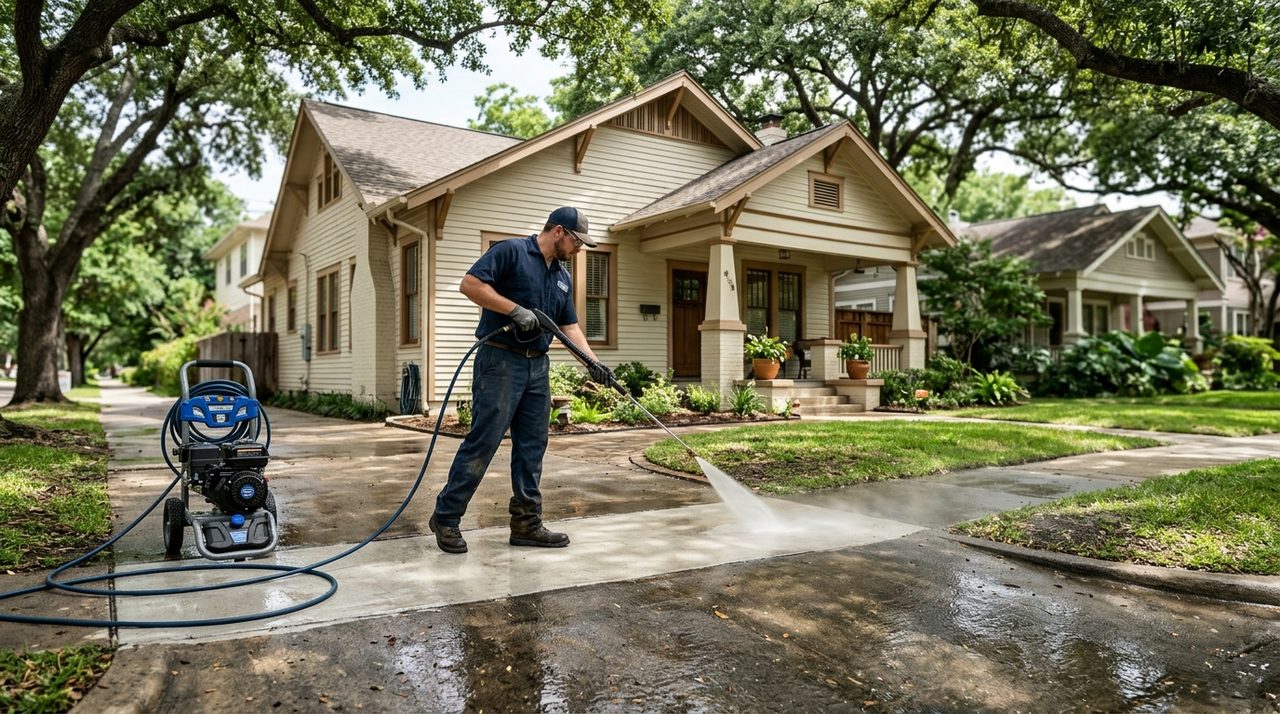
River Oaks estates — Tudor Revival facades, century-old brick garden walls, and limestone-clad motor courts spanning 10,000-plus square feet — face exterior maintenance demands that go far beyond a suburban rinse-down: Houston's 75%-plus average humidity breeds Gloeocapsa magma black algae on every porous surface within a season, while ROPO deed restrictions mean a visibly stained driveway or green-streaked porte-cochère is an enforceable appearance violation, not just an aesthetic inconvenience. Understanding which surfaces can tolerate pressure, which require soft-wash chemistry, and how TCEQ wastewater rules apply to chemical runoff on these bayou-adjacent lots is what separates competent work from costly mistakes on properties where replacement limestone or hand-made brick can run thousands per square foot.
Ranked by verified Google rating × review volume × verification tier. How we rank →
Some highly-rated pros serve River Oaks from nearby and may not keep a River Oaks street address. Those are listed under "Also serving River Oaks" with their real city and distance, so you always know where each business is based.
2929 Allen Pkwy STE. 200, Houston, TX 77019
Highly-rated pros based nearby who cover River Oaks. Distance shown from the River Oaks area.
Serving River Oaks Based in Upper Kirby · 1.1 mi away
Serving River Oaks Based in Upper Kirby · 1.2 mi away
Serving River Oaks Based in Galleria · 1.3 mi away
Serving River Oaks Based in Lazybrook / Timbergrove · 1.6 mi away
Serving River Oaks Based in West University · 1.7 mi away
Serving River Oaks Based in West University · 2 mi away
Serving River Oaks Based in Lazybrook / Timbergrove · 2 mi away
Serving River Oaks Based in Lazybrook / Timbergrove · 2.1 mi away
Serving River Oaks Based in Tanglewood · 2.3 mi away
Why it matters to you
The English Tudor, Spanish Colonial Revival, and Georgian estates that define the original River Oaks plat were built in the 1920s and 1930s using soft, hand-laid brick, lime mortar, and quarried limestone — materials fundamentally different from modern pressure-rated concrete block. Standard high-pressure washing (above 800–1,000 PSI) on these surfaces etches mortar joints, blows out lime pointing, and permanently pits soft stone, damage that a City of Houston building permit cannot undo and that restoration masons bill at a premium. Houston's chronic humidity means mold and Gloeocapsa magma black algae genuinely need to be removed, but the method must match the material.
What a good pro does
A competent operator assesses wall construction era before selecting equipment — soft-wash (100–500 PSI) paired with a dilute sodium hypochlorite or quaternary ammonia solution is the appropriate approach for pre-WWII masonry on River Oaks estates. The operator should document surface condition with photos before work begins and rinse at low pressure to avoid forcing solution into open mortar joints. No City of Houston permit is required for routine residential pressure washing, but chemical applicators using products that qualify as pesticides under Texas Department of Agriculture definitions must hold a TDA applicator credential.
Sources: City of Houston Permitting Center, Local HOA / deed restrictions (see area profile)
Why it matters to you
River Oaks Property Owners, Inc. (ROPO) enforces recorded deed restrictions across the platted sections of the neighborhood, and exterior cleanliness — including driveways, courtyard walls, and front-facing fences — falls within the scope of those restrictions. An algae-stained limestone motor court or a mud-streaked brick garden wall visible from the street can trigger a written ROPO notice with a defined cure window. Because River Oaks lots often feature elaborate hardscape in premium materials (bluestone, travertine, antique brick), the cost of ignoring cumulative biological staining is compounded by the premium cost of eventual restoration.
What a good pro does
Schedule pressure or soft-wash service before visible staining reaches the point of notice — for most River Oaks properties that means an annual exterior wash in spring or early summer, when Houston's wet season has deposited maximum organic material on porous surfaces. Post-cleaning application of a penetrating biocide sealer on concrete and masonry surfaces measurably extends the clean interval by inhibiting algae recolonization. Homeowners should confirm that any chemical products used comply with ROPO aesthetic requirements and that work is completed within any HOA cure window if a notice has already been issued.
Sources: Local HOA / deed restrictions (see area profile)
Why it matters to you
The western and southern edges of River Oaks abut Buffalo Bayou, and even interior blocks drain through Harris County's storm sewer network directly to that bayou system and ultimately Galveston Bay. TCEQ regulations and City of Houston ordinance prohibit pressure-wash wastewater containing degreasers, algaecides, or chemical cleaners from entering storm drains — a rule that is more than theoretical on River Oaks streets where drain inlets are within feet of motor court aprons and expansive driveway surfaces. Commercial-strength degreaser used to lift oil staining from a large limestone or concrete driveway generates wash water that cannot simply sheet off into the curb.
What a good pro does
For jobs involving chemical degreasers or high-volume algaecide application on large River Oaks driveways and motor courts, a compliant operator uses a surface vacuum recovery system or wet-vac berms to collect and contain wash water, which is then disposed of at an approved facility rather than discharged to the storm system. Homeowners should ask any bidder directly how they handle wastewater containment on chemical wash jobs — operators working near Buffalo Bayou's greenway should be especially prepared to demonstrate TCEQ-compliant practices, as the city's stormwater enforcement focus on bayou-adjacent corridors is documented.
Sources: Texas Commission on Environmental Quality, City of Houston Permitting Center
Why it matters to you
While some River Oaks homes feature slate or clay tile, a significant portion of the neighborhood's post-1980 rebuilds and renovated estates use architectural asphalt shingles — many now 15–25 years old and visibly streaked with the black algae bands characteristic of Houston's humid climate. At that age, granule adhesion is already reduced, and any pressure above 500 PSI directed at the shingle surface accelerates granule loss in a way that voids most manufacturer warranties and reduces the roof's remaining effective life. ROPO's visibility standards mean a green or black-streaked roof on a street-facing slope is a compliance and curb-appeal problem simultaneously.
What a good pro does
Roof cleaning on River Oaks estates should be performed exclusively via low-pressure soft-wash — a dilute sodium hypochlorite solution applied at near-zero PSI and allowed to dwell before a gentle rinse. On large 5,000–10,000-square-foot estate footprints with complex multi-pitch rooflines, the job requires experienced operators comfortable with safe steep-pitch access, and the quote should reflect that complexity — roof soft-wash on a large River Oaks home typically runs at a premium above the Houston metro estimate of $300–$600 for a standard single-story. No City of Houston permit is required for cleaning, but homeowners should verify their roofing manufacturer's warranty language around cleaning methods before work begins.
Sources: City of Houston Permitting Center, Local HOA / deed restrictions (see area profile), International Residential Code (as adopted by City of Houston)
Hiring pressure washing in River Oaks? River Oaks is Houston's premier residential neighborhood, featuring 1920s–1930s estate homes alongside modern luxury rebuilds on large lots. Homeowners face a unique combination of mandatory HOA oversight from River Oaks Property Owners, Inc. (ROPO), strict deed restrictions, and the maintenance demands of aging pier-and-beam foundations, mature tree root systems, and historic-era plumbing and electrical. Contractors working here must navigate both high client expectations and the regulatory requirements of the City of Houston permitting process.
Building era
1920s–1930s (original build-out), with significant post-1980 and 2000s-present luxury infill and teardown rebuilds.
Typical style
English Tudor, Spanish Colonial Revival, Georgian, Colonial, and contemporary custom luxury homes.
Foundations
Mixed — older homes predominantly pier-and-beam; newer construction and rebuilds typically slab-on-grade with post-tension or drilled piers.
Common systems
Original homes may retain cast-iron drain lines, galvanized supply piping, and older panel boxes requiring upgrades. Newer builds feature modern PEX/copper plumbing, 200+ amp electrical panels, and high-efficiency zoned HVAC systems. Mature-era homes often have outdated ductwork and window-unit retrofits.
What that means for repairs
Teardown-and-rebuild activity is extremely common on original lots, as land values far exceed structure values for many older homes. Whole-house gut renovations of surviving 1920s–1940s estates are also frequent, typically involving foundation leveling, full re-plumbing, electrical panel upgrades, and HVAC modernization while preserving architectural character.
Permit jurisdiction
Houston Permitting Center (City of Houston).
HOA & deed restrictions
Core River Oaks platted sections (e.g., River Oaks Sec 01) are governed by River Oaks Property Owners, Inc. (ROPO) — a mandatory HOA/POA with recorded deed restrictions. Adjacent pockets such as Huldy Street Terrace / Shepherd Crest near the River Oaks Shopping Area have no HOA. Condominiums like River Oaks Gardens are governed by their own condo associations (e.g., River Oaks Gardens Council of Co-Owners). Related civic organizations in the broader super neighborhood include Avalon Property Owners Association and West Lane Place Civic Association.
Historic districts
No City of Houston historic district designation confirmed. River Oaks is deed-restricted through its original master-planned community covenants, but this is a private restriction, not a Houston Archaeological and Historical Commission (HAHC) overlay.
Contractor note
ROPO and section POAs actively monitor and may require pre-approval for exterior modifications, fencing, and new construction visible from the street. Contractors should verify both City of Houston permit requirements and HOA/deed restriction compliance before beginning any exterior or structural work.
FEMA flood zone
FEMA Zone X (low flood risk) per official NFHL data. However, the neighborhood's western edge borders Buffalo Bayou, and localized street flooding can occur during extreme rainfall events despite the low-risk designation.
Hurricane Harvey impact
Not confirmed with specific damage data from research — River Oaks experienced some flooding during Hurricane Harvey (2017), particularly in areas closest to Buffalo Bayou. The neighborhood's elevation and drainage infrastructure offered relative protection to many homes, but properties along the bayou corridor and lower-lying lots did sustain water damage. Check Harris County Flood Control District records for property-specific Harvey inundation data.
Heat & humidity load
Houston's extreme summer heat and humidity place heavy demands on HVAC systems in River Oaks' large-footprint homes, especially older estates with poor insulation and aging ductwork. Mature tree canopy provides shade but contributes to foundation movement through root-driven soil moisture changes. Pier-and-beam crawl spaces in original homes require ventilation monitoring to prevent moisture-related wood damage.
Working with contractors here
The most common contractor work in River Oaks includes foundation repair and leveling on 1920s–1940s pier-and-beam structures, whole-house re-plumbing to replace cast-iron and galvanized lines, electrical panel upgrades from 100-amp to 200+ amp service, and full HVAC system replacements with zoned systems for 5,000–16,000+ square foot homes. Teardown-and-rebuild projects are a significant portion of new construction activity, requiring demolition, site engineering, and ground-up custom builds. Contractors should expect extended project timelines due to ROPO architectural review, City of Houston permitting for demolitions and new construction, and the high-end finish expectations of River Oaks homeowners. Job scoping must account for mature tree preservation ordinances, potential asbestos and lead paint in pre-1980 structures, and limited staging space on densely landscaped lots.
Local Tip
Always ask for a written estimate before work begins. Texas contractors are required to provide one on jobs over $1,000.
River Oaks is Houston's premier residential neighborhood, featuring 1920s–1930s estate homes alongside modern luxury rebuilds on large lots. Homeowners face a unique combination of mandatory HOA oversight from River Oaks Property Owners, Inc. (ROPO), strict deed restrictions, and the maintenance demands of aging pier-and-beam foundations, mature tree root systems, and historic-era plumbing and electrical. Contractors working here must navigate both high client expectations and the regulatory requirements of the City of Houston permitting process.
Source: U.S. Census Bureau, ACS 5-Year 2023
Most of River Oaks maps to FEMA Zone X (low mapped flood risk), but Houston's flash-flood reality means even low-risk blocks benefit from smart drainage and storm-hardened installs; risk climbs sharply on blocks nearest Buffalo Bayou, where it varies parcel to parcel.
Source: FEMA National Flood Hazard Layer (NFHL). Flood zones vary by parcel — verify your individual FIRM panel.
Sources: City of Houston Permitting Center
Sources: Local HOA / deed restrictions (see area profile)
Sources: Texas Commission on Environmental QualityFEMA National Flood Hazard Layer (NFHL)
Sources: Texas Commission on Environmental QualityLocal HOA / deed restrictions (see area profile)