1213 Ruthven St, Houston, TX 77019
Best Landscapers in River Oaks
River Oaks's large, densely canopied lots — many featuring live oaks, Southern magnolias, and specimen trees planted alongside 1920s–1930s estate homes — create landscaping challenges that go well beyond routine mowing: root systems threaten both the mixed pier-and-beam and slab foundations common here, ROPO deed restrictions govern what can be planted or altered at the streetscape, and the City of Houston Permitting Center must sign off on new irrigation and significant grading work before a shovel breaks ground. Getting landscaping right in River Oaks means navigating three simultaneous layers of oversight — city permits, ROPO architectural review, and TCEQ irrigation licensing — while respecting irreplaceable mature trees that can take a century to grow back.
Verified against Google Business data
Updated 2026
See the 10 Landscapers Serving River Oaks 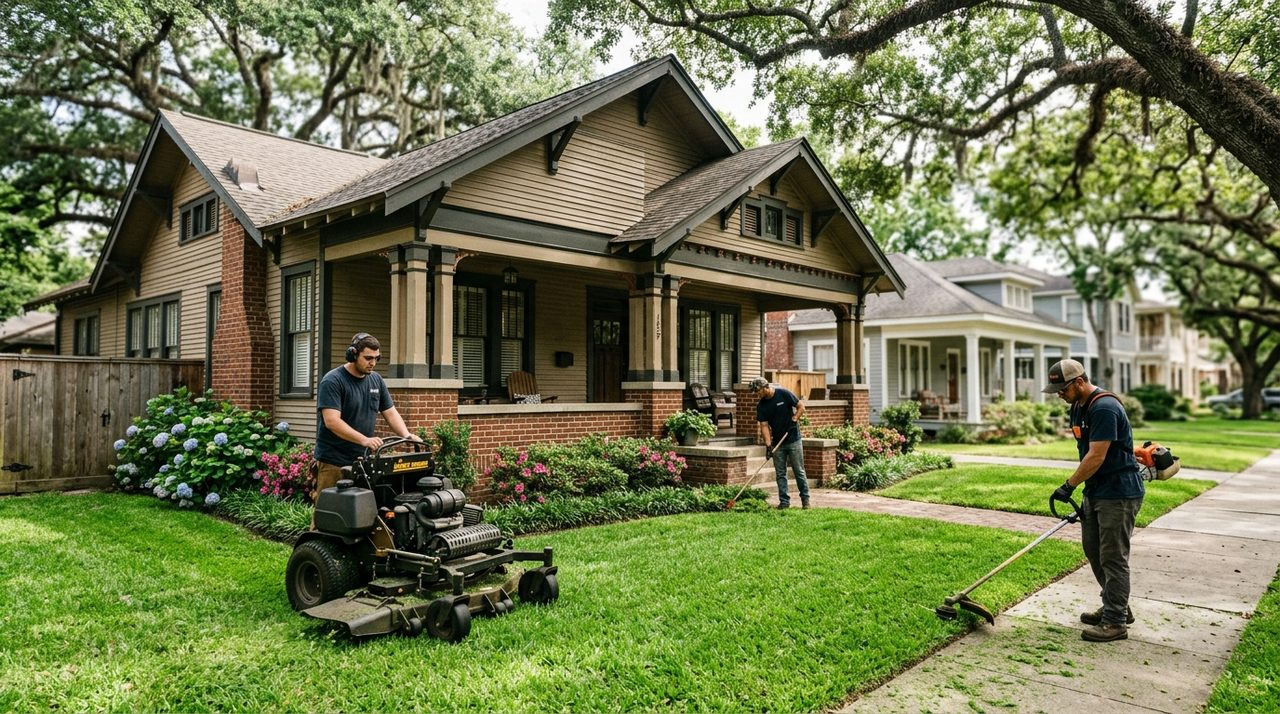
- Median home built
- 2001
- Median home value
- $724,900
- FEMA flood zone
- X (low)
- Typical cost (est.)
- $4,500–$18,000+ for design-and-install; $160–$220/mo maintenance contracts
- Most common local issue
- Mature tree root encroachment on pier-and-beam and slab foundations
Ranked by verified Google rating × review volume × verification tier. How we rank →
Some highly-rated pros serve River Oaks from nearby and may not keep a River Oaks street address. Those are listed under "Also serving River Oaks" with their real city and distance, so you always know where each business is based.
Min rating:
10 resultsBased in River Oaks
Also serving River Oaks
Highly-rated pros based nearby who cover River Oaks. Distance shown from the River Oaks area.
Serving River Oaks Based in Galleria · 1.1 mi away
Closed
Serving River Oaks Based in Upper Kirby · 1.3 mi away
Closed
Serving River Oaks Based in Lazybrook / Timbergrove · 2.6 mi away
Closed
Serving River Oaks Based in Spring Branch · 2.9 mi away
Closed
Serving River Oaks Based in Spring Branch · 2.9 mi away
Closed
Serving River Oaks Based in Bellaire · 3.2 mi away
Serving River Oaks Based in Lazybrook / Timbergrove · 3.3 mi away
Closed
Serving River Oaks Based in Bellaire · 3.5 mi away
Closed
Serving River Oaks Based in Bellaire · 3.7 mi away
Landscapers in River Oaks: What You Should Know
Century-Old Tree Roots Threatening Mixed Pier-and-Beam and Slab Foundations
Why it matters to you
River Oaks's 1920s–1940s estates frequently sit on pier-and-beam foundations, while teardown rebuilds and later additions are slab-on-grade — sometimes on the same lot. The neighborhood's signature live oaks and Southern magnolias, some dating to original buildout, have root systems that extend well beyond drip lines and interact with Houston's expansive Beaumont clay to cause differential moisture conditions under both foundation types. A single mature live oak planted too close to a 1930s pier-and-beam structure can accelerate soil desiccation cycles that loosen mortar around piers, while the same species within 10–15 feet of a post-tension slab on a neighboring rebuild risks undermining the uniform moisture zone engineers designed for.
What a good pro does
A qualified landscaper working in River Oaks should assess existing root zones before any planting or bed renovation and advise on linear root barriers — typically HDPE panels installed 24–36 inches deep — when new trees are sited near foundation edges. For clients planning teardown-rebuilds, coordinate species placement with the site's structural engineer before ROPO submittal, since root exclusion zones are increasingly specified in River Oaks foundation engineering packages. No city permit is required for tree planting itself, but grading or drainage work tied to root management may trigger a City of Houston site-work permit.
Sources: City of Houston Permitting Center, International Residential Code (as adopted by City of Houston)
ROPO Deed Restrictions and Architectural Review on Landscape Alterations
Why it matters to you
The core platted sections of River Oaks — governed by River Oaks Property Owners, Inc. (ROPO) — carry recorded deed restrictions that give ROPO authority to review and approve exterior landscape changes visible from the street, including fence lines, landscape walls, new tree placements, and hardscape expansions. Homeowners who hire a landscaper to install a new front-yard hedge row, replace a boundary wall with a planted berm, or add a decorative iron gate on a pier column can receive a ROPO removal notice if approval was not obtained in advance. Adjacent pockets such as Huldy Street Terrace near the River Oaks Shopping Area are outside ROPO's jurisdiction, so confirming your specific lot's deed-restriction status before contracting is essential.
What a good pro does
Ask your landscaper to document proposed plant species, placement dimensions, wall heights, and hardscape materials in a submittal package formatted for ROPO's architectural review process before any installation begins. Good River Oaks landscapers maintain familiarity with ROPO's current standards — including setbacks from property lines and restrictions on turf species substitutions in front yards — and build the review timeline (typically several weeks) into project scheduling so City of Houston permits and ROPO approval can proceed in parallel rather than sequentially.
Sources: Local HOA / deed restrictions (see area profile), City of Houston Permitting Center
Irrigation Permits, TCEQ Licensing, and Backflow Testing on High-Value Properties
Why it matters to you
River Oaks lots average among the largest in the Inner Loop — many original estates exceed 15,000–20,000 square feet of grounds — making multi-zone irrigation systems both economically necessary and technically complex. Texas requires a TCEQ-licensed Irrigator to design and install any new system or materially modify an existing one; the City of Houston Permitting Center also requires a permit before new irrigation installation begins. Backflow prevention devices protecting the potable water supply must meet TCEQ Chapter 344 requirements and be tested annually by a separately licensed TCEQ Backflow Prevention Assembly Tester. Homeowners in River Oaks regularly discover that the landscaping company they hired for planting does not hold these licenses and must subcontract irrigation work, adding coordination complexity on estates with elaborate existing drip and spray zone layouts.
What a good pro does
Before signing a landscape contract that includes irrigation, confirm in writing whether the firm holds a TCEQ Irrigator license in-house or subcontracts it, and ask to see the sub's license number for independent verification on the TCEQ public lookup. Budget for the City of Houston irrigation permit fee and annual backflow test as fixed line items — neither is optional. On River Oaks estates with aging 1980s–1990s irrigation infrastructure, a TCEQ-licensed irrigator performing the City-permitted installation can simultaneously flag deteriorated heads and zone valve failures that a basic landscaping crew would miss.
Sources: Texas Commission on Environmental Quality, City of Houston Permitting Center
Post-Storm Canopy Loss and Beryl-Era Replanting on Wooded Estates
Why it matters to you
Beryl (July 2024) and the May 2024 derecho caused substantial canopy damage across Houston's Inner Loop, and River Oaks's densely treed lots absorbed significant losses — mature shade trees uprooted in saturated clay after weeks of prior rain, and brittle canopy species brought down onto historically significant structures. Because River Oaks's most desirable properties are defined in part by their mature tree canopy, losing even one large live oak or magnolia represents both an aesthetic and an economic setback that takes decades to fully recover. The combination of shallow clay rooting conditions and the neighborhood's history of storm events since Harvey (2017) means replanting decisions must account for wind-resistance ratings and root anchorage, not just ornamental preference.
What a good pro does
Post-storm replanting in River Oaks should prioritize native and proven wind-tolerant species — live oak, cedar elm, and bald cypress — over brittle alternatives such as Bradford pear or Leyland cypress, which have poor wind-load performance records in Houston's documented storm history. Storm debris removal from large canopy trees runs an estimated $800–$3,500 per tree depending on size and fall location (estimates only); demand pricing surges immediately after major events, so contracting debris removal early with a firm that holds a Texas Department of Agriculture pesticide applicator license for any concurrent herbicide stump treatment keeps the project in one qualified hand. Verify any tree removal or significant pruning against ROPO deed restrictions, which may require notification even for storm-damaged specimens.
Sources: Local HOA / deed restrictions (see area profile), Texas Department of Licensing & Regulation, Harris County Flood Control District
Landscapers in River Oaks: What You Should Know
Hiring landscapers in River Oaks? River Oaks is Houston's premier residential neighborhood, featuring 1920s–1930s estate homes alongside modern luxury rebuilds on large lots. Homeowners face a unique combination of mandatory HOA oversight from River Oaks Property Owners, Inc. (ROPO), strict deed restrictions, and the maintenance demands of aging pier-and-beam foundations, mature tree root systems, and historic-era plumbing and electrical. Contractors working here must navigate both high client expectations and the regulatory requirements of the City of Houston permitting process.
- Housing era
- 1920s–1930s (original build-out), with significant post-1980 and 2000s-present luxury infill and teardown rebuilds
- Foundation
- Mixed — older homes predominantly pier-and-beam
- Flood zone
- FEMA Zone X (low flood risk) per official NFHL data
- Permits
- Houston Permitting Center (City of Houston)
Housing stock & systems
Building era
1920s–1930s (original build-out), with significant post-1980 and 2000s-present luxury infill and teardown rebuilds.
Typical style
English Tudor, Spanish Colonial Revival, Georgian, Colonial, and contemporary custom luxury homes.
Foundations
Mixed — older homes predominantly pier-and-beam; newer construction and rebuilds typically slab-on-grade with post-tension or drilled piers.
Common systems
Original homes may retain cast-iron drain lines, galvanized supply piping, and older panel boxes requiring upgrades. Newer builds feature modern PEX/copper plumbing, 200+ amp electrical panels, and high-efficiency zoned HVAC systems. Mature-era homes often have outdated ductwork and window-unit retrofits.
What that means for repairs
Teardown-and-rebuild activity is extremely common on original lots, as land values far exceed structure values for many older homes. Whole-house gut renovations of surviving 1920s–1940s estates are also frequent, typically involving foundation leveling, full re-plumbing, electrical panel upgrades, and HVAC modernization while preserving architectural character.
Permits & restrictions
Permit jurisdiction
Houston Permitting Center (City of Houston).
HOA & deed restrictions
Core River Oaks platted sections (e.g., River Oaks Sec 01) are governed by River Oaks Property Owners, Inc. (ROPO) — a mandatory HOA/POA with recorded deed restrictions. Adjacent pockets such as Huldy Street Terrace / Shepherd Crest near the River Oaks Shopping Area have no HOA. Condominiums like River Oaks Gardens are governed by their own condo associations (e.g., River Oaks Gardens Council of Co-Owners). Related civic organizations in the broader super neighborhood include Avalon Property Owners Association and West Lane Place Civic Association.
Historic districts
No City of Houston historic district designation confirmed. River Oaks is deed-restricted through its original master-planned community covenants, but this is a private restriction, not a Houston Archaeological and Historical Commission (HAHC) overlay.
Contractor note
ROPO and section POAs actively monitor and may require pre-approval for exterior modifications, fencing, and new construction visible from the street. Contractors should verify both City of Houston permit requirements and HOA/deed restriction compliance before beginning any exterior or structural work.
Flood & weather
FEMA flood zone
FEMA Zone X (low flood risk) per official NFHL data. However, the neighborhood's western edge borders Buffalo Bayou, and localized street flooding can occur during extreme rainfall events despite the low-risk designation.
Hurricane Harvey impact
Not confirmed with specific damage data from research — River Oaks experienced some flooding during Hurricane Harvey (2017), particularly in areas closest to Buffalo Bayou. The neighborhood's elevation and drainage infrastructure offered relative protection to many homes, but properties along the bayou corridor and lower-lying lots did sustain water damage. Check Harris County Flood Control District records for property-specific Harvey inundation data.
Heat & humidity load
Houston's extreme summer heat and humidity place heavy demands on HVAC systems in River Oaks' large-footprint homes, especially older estates with poor insulation and aging ductwork. Mature tree canopy provides shade but contributes to foundation movement through root-driven soil moisture changes. Pier-and-beam crawl spaces in original homes require ventilation monitoring to prevent moisture-related wood damage.
Working with contractors here
The most common contractor work in River Oaks includes foundation repair and leveling on 1920s–1940s pier-and-beam structures, whole-house re-plumbing to replace cast-iron and galvanized lines, electrical panel upgrades from 100-amp to 200+ amp service, and full HVAC system replacements with zoned systems for 5,000–16,000+ square foot homes. Teardown-and-rebuild projects are a significant portion of new construction activity, requiring demolition, site engineering, and ground-up custom builds. Contractors should expect extended project timelines due to ROPO architectural review, City of Houston permitting for demolitions and new construction, and the high-end finish expectations of River Oaks homeowners. Job scoping must account for mature tree preservation ordinances, potential asbestos and lead paint in pre-1980 structures, and limited staging space on densely landscaped lots.
Local Tip
Always ask for a written estimate before work begins. Texas contractors are required to provide one on jobs over $1,000.
About River Oaks
River Oaks is Houston's premier residential neighborhood, featuring 1920s–1930s estate homes alongside modern luxury rebuilds on large lots. Homeowners face a unique combination of mandatory HOA oversight from River Oaks Property Owners, Inc. (ROPO), strict deed restrictions, and the maintenance demands of aging pier-and-beam foundations, mature tree root systems, and historic-era plumbing and electrical. Contractors working here must navigate both high client expectations and the regulatory requirements of the City of Houston permitting process.
- Median year built
- 2001
- Median home value
- $724,900
- Owner-occupied
- 41.2%
- Population
- 23,662
- Housing units
- 14,387
- Median income
- $108,353
Source: U.S. Census Bureau, ACS 5-Year 2023
Flood & storm risk
FEMA Zone XLow flood riskMost of River Oaks maps to FEMA Zone X (low mapped flood risk), but Houston's flash-flood reality means even low-risk blocks benefit from smart drainage and storm-hardened installs; risk climbs sharply on blocks nearest Buffalo Bayou, where it varies parcel to parcel.
Source: FEMA National Flood Hazard Layer (NFHL). Flood zones vary by parcel — verify your individual FIRM panel.
Frequently Asked Questions
Does the City of Houston require a permit for grading or drainage work on my River Oaks lot, and who files it?
Yes — the City of Houston Permitting Center (not a suburban permit office) requires a permit for grading work that materially alters drainage patterns on your property, and your landscaper or their licensed engineer of record files it on your behalf. River Oaks lots near Buffalo Bayou can involve additional Harris County Flood Control District review depending on proximity to the bayou corridor, even though most of the neighborhood maps FEMA Zone X. Budget two to four weeks of lead time for permit issuance before a drainage correction project can break ground.
Sources: City of Houston Permitting CenterHarris County Flood Control District
My 1920s–1930s River Oaks estate has a pier-and-beam foundation. Does that change how close a landscaper can plant trees compared to a slab home?
Pier-and-beam foundations in original River Oaks homes are more forgiving of moisture variation than slab-on-grade, but large-caliper trees planted within 10–15 feet of the beam line can still undermine wood piers and grade beams by drying clay soil unevenly or by physically displacing aging concrete piers as root systems mature. A qualified River Oaks landscaper should recommend root-barrier installation and minimum setback distances even on pier-and-beam structures, and should coordinate with your foundation contractor if any existing piers have already settled. This is a different calculus than the flat-setback rule used on post-tension slabs common in newer teardown rebuilds on the same street.
How far in advance should I submit a landscape plan to ROPO before my landscaper can start visible exterior work?
River Oaks Property Owners, Inc. (ROPO) requires advance architectural review for exterior changes visible from the street — including new tree placements, hardscape additions, fencing, and changes to front-yard grade — and their review cycles typically run four to eight weeks, though complex plans or resubmittals can extend that timeline. Experienced River Oaks landscapers build the ROPO review window into the project schedule before any site prep begins, because work started without approval can trigger a stop-work order and mandatory removal at the homeowner's expense. Verify which ROPO section your lot falls under, as deed restriction language varies slightly across the platted sections.
Sources: Local HOA / deed restrictions (see area profile)
After Beryl (2024) took out several large canopy trees on my block, is there a best season to replant specimen live oaks and Southern magnolias in River Oaks?
October through early March is the preferred planting window for large-caliper live oaks and magnolias in the Houston area — cooler soil temperatures reduce transplant shock, and winter rainfall (when it comes) helps root establishment before the brutal summer heat load arrives. Post-Beryl demand drove nursery stock of specimen-size live oaks very tight in late 2024, so confirm availability with your landscaper before scheduling, and expect premium pricing on balled-and-burlapped trees 4-inch caliper and above. Avoid midsummer planting on River Oaks's open, sun-exposed boulevard sections unless a dedicated irrigation program is already in place.
My landscaper said irrigation installation requires a separate TCEQ license — does that mean my general landscaping company can't legally handle the irrigation portion on my River Oaks property?
Correct: Texas law requires that any irrigation system design and installation be performed by or under the direct on-site supervision of a TCEQ-licensed Irrigator, and backflow preventer testing must be done by a separately licensed Backflow Prevention Assembly Tester — your general landscaper cannot legally perform these tasks without holding or subcontracting those licenses. The City of Houston Permitting Center also requires a permit before new irrigation systems are installed, so your project requires both TCEQ license verification and a pulled permit before work begins. Ask any candidate landscaper to show you their TCEQ irrigator license number, which you can verify on the TCEQ database.
Sources: Texas Commission on Environmental QualityCity of Houston Permitting Center
What's a realistic cost estimate and timeline for a full front-and-back landscape design-and-install on a large River Oaks lot, including the ROPO review period?
On a typical River Oaks estate lot — often 15,000 to 25,000+ square feet with significant existing tree canopy and formal garden areas — full design-and-install projects commonly run $12,000–$30,000+ as an estimate, depending on hardscape scope, specimen tree size, irrigation complexity, and grade correction needs; simpler planting-only refreshes on smaller footprints can land in the $5,000–$10,000 range. Total project timeline from initial design to crew completion typically runs three to five months when you factor in the ROPO architectural review period (four to eight weeks), City of Houston permit processing, and nursery lead times for large-caliper specimen trees. These are estimates — get itemized bids from at least two firms experienced with deed-restricted inner-loop properties.
Sources: Local HOA / deed restrictions (see area profile)City of Houston Permitting Center