Closed
1105 Avenue H H Unit B1, Galveston, TX 77550
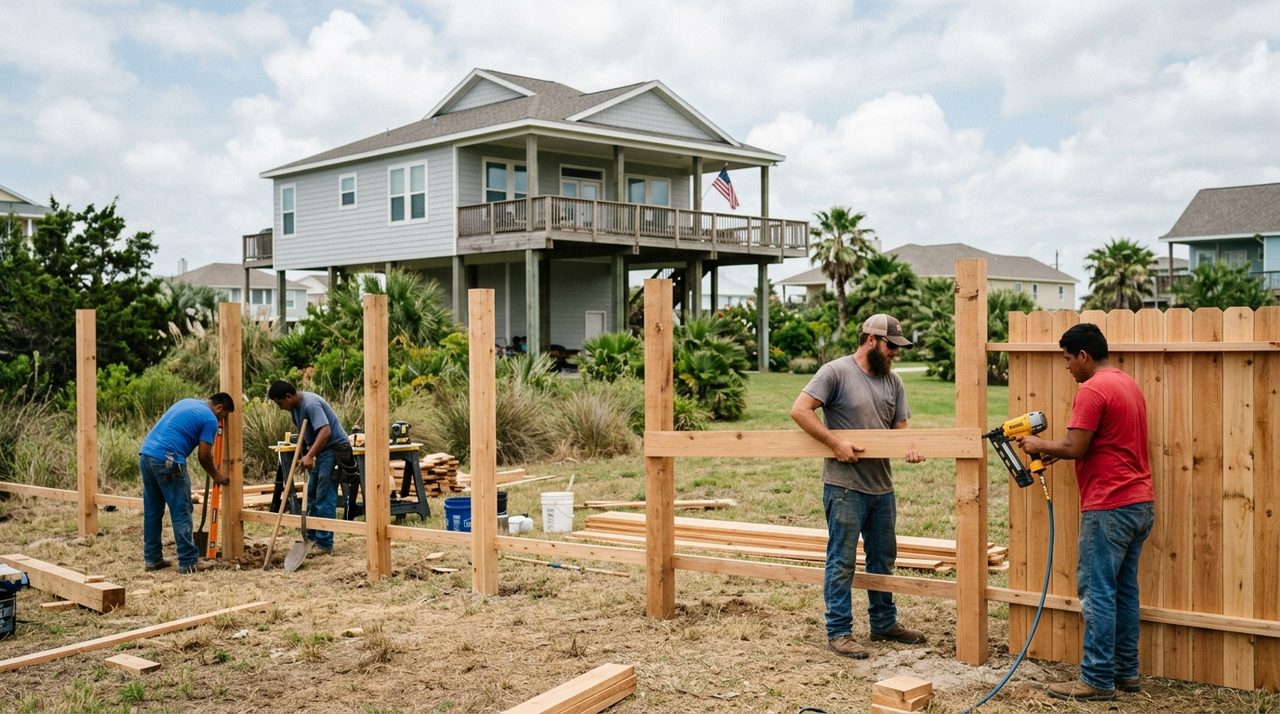
Galveston's coastal island setting makes fence installation one of the more technically demanding home projects on the Texas Gulf Coast: properties across much of the island sit in FEMA Zone AE, salt air attacks fasteners and lumber within years, and every major wind event — from Harvey in 2017 to Beryl in 2024 — reduces privacy fences to debris fields. Understanding how flood-zone rules, hurricane wind loads, and the City of Galveston Development Services Department's permitting requirements interact before a single post goes in the ground is the difference between a fence that survives and one that becomes a neighbor's problem during the next surge event.
Ranked by verified Google rating × review volume × verification tier. How we rank →
1105 Avenue H H Unit B1, Galveston, TX 77550
6341 Stewart Rd #400, Galveston, TX 77551
4701 Avenue N, Galveston, TX 77551
5620 Avenue Q, Galveston, TX 77551
Why it matters to you
Nearly all of Galveston Island is mapped in FEMA Zone AE, including coastal high-hazard sub-zones, where solid privacy fences act as debris catchers during surge events — raising water levels and damaging neighboring properties. The City of Galveston's floodplain regulations, enforced through its Development Services Department, restrict or prohibit solid fencing within floodways and floodplains on affected parcels, meaning a standard 6-ft board-on-board cedar fence that would be routine in a Houston suburb may require a floodplain development permit or may not be approvable at all on your specific lot.
What a good pro does
Before signing any fence contract, confirm your parcel's exact FEMA flood zone designation and whether a floodplain development permit is required through the City of Galveston Development Services Department — this is separate from a standard building permit. A qualified contractor working on the island should be familiar with breakaway-panel and open-picket fence designs that allow water and debris to pass through rather than accumulate, which are far more likely to receive floodplain approval on AE-mapped lots than solid privacy fence systems.
Sources: FEMA National Flood Hazard Layer (NFHL), Municipal permit office (see area profile)
Why it matters to you
Galveston sits directly in TWIA territory and has absorbed repeated catastrophic wind events: Hurricane Ike's surge and winds in 2008, Harvey's outer bands in 2017, and Beryl's direct landfall in July 2024 all demonstrated that standard 6-ft cedar privacy fences with posts embedded 24–30 inches are routinely destroyed wholesale on the island. The combination of Gulf-facing wind exposure, the lack of inland tree buffers across much of the island, and the high percentage of raised or pier-and-beam foundations (which create air gaps that increase fence lateral load) makes Galveston one of the most demanding fence environments in the state.
What a good pro does
A contractor with genuine coastal experience will specify deeper post embedment — typically 36–42 inches where soil conditions and flood rules allow — use hurricane-rated post brackets or surface mounts on elevated structures, and favor open-picket or shadowbox fence designs over full solid panels to reduce wind-load surface area. Cost estimates for storm-grade fence installation on Galveston Island should realistically fall at the higher end of the $18–$30 per linear foot cedar range or shift toward corrosion-resistant ornamental aluminum at $30–$55 per linear foot installed; these are estimates only and quotes will vary by site conditions.
Sources: Texas Windstorm Insurance Association (TWIA), International Residential Code (as adopted by City of Houston), Municipal permit office (see area profile)
Why it matters to you
Galveston's year-round Gulf humidity — combined with direct salt air off the Gulf of Mexico and Galveston Bay — creates a corrosion environment that is categorically different from inland Houston neighborhoods. Standard galvanized nails, screws, and post-cap hardware that might last a decade in Meyerland or Pearland can rust through and fail within two to four years at ground-level coastal exposure on the island. Similarly, untreated or standard pressure-treated pine fence boards absorb salt moisture and degrade far faster than the manufacturer's ratings assume for non-coastal conditions, a particular concern given that Galveston's housing stock includes everything from 1880s Victorian-era properties to modern beach developments built in the last decade.
What a good pro does
Specify marine-grade stainless steel (Type 304 or 316) or hot-dipped galvanized hardware — not electroplated — as the baseline for any exterior fence work on the island. Cedar heartwood or composite decking-style fence boards outperform standard pine in salt-air conditions. For ornamental or decorative fencing visible from the street, powder-coated aluminum is a better long-term value than wrought iron, which will require repainting within a few years of coastal exposure. Ask any contractor for documentation that the specific fasteners and lumber grades they intend to use are rated for marine or coastal exposure environments.
Sources: International Residential Code (as adopted by City of Houston), Local HOA / deed restrictions (see area profile)
Why it matters to you
Galveston is entirely outside the City of Houston's jurisdiction: permits for fences within Galveston city limits are issued by the City of Galveston Development Services Department, and homeowners in unincorporated parts of Galveston County fall under Galveston County's own rules. Texas does not require a state license for fence contractors, meaning any individual can legally bid fence work on the island, but installing a fence without the required local permit — or without floodplain development review on AE-mapped lots — can result in forced removal at the homeowner's expense. Properties within one of the City of Galveston's local historic districts, which are governed entirely by Galveston's own preservation ordinances, may also require architectural review before a fence permit is approved.
What a good pro does
Confirm your fence project's permit requirements directly with the City of Galveston Development Services Department before work begins; do not assume that a contractor's general experience with Houston-area permitting translates to Galveston's process. If your property is in a recorded historic district, request written documentation from the City of Galveston's historic preservation office confirming fence height, material, and style acceptability before purchasing materials. HOA or deed-restriction obligations, if any, are recorded with the Galveston County Clerk and represent a separate legal requirement from city permits.
Sources: Municipal permit office (see area profile), Local HOA / deed restrictions (see area profile), FEMA National Flood Hazard Layer (NFHL)
Hiring fence builders in Galveston? Galveston's housing stock spans from historic 19th-century Victorian homes to modern beach developments, creating an exceptionally diverse home service landscape. Homeowners must contend with persistent salt air corrosion, high flood risk across much of the island, and hurricane exposure that drives demand for wind-resistant roofing, elevated foundations, and robust moisture management. Permit jurisdiction falls under the City of Galveston Development Services Department or Galveston County, never the City of Houston Permitting Center.
Building era
Highly mixed — 1800s historic core through 21st-century beach and master-planned construction.
Typical style
Mix of Victorian, Gulf Coast vernacular, raised beach houses, mid-century ranch, and modern coastal developments; no single dominant style across the area.
Foundations
Mixed — many historic and coastal homes on pier-and-beam or raised pilings; newer mainland construction often slab-on-grade. Not confirmed at subdivision level — check property records.
Common systems
Older homes may have outdated electrical and galvanized plumbing requiring upgrades; coastal properties require corrosion-resistant HVAC equipment rated for salt air environments; newer builds typically feature modern central HVAC and PEX or copper plumbing.
What that means for repairs
Historic restoration is common in Galveston's core; coastal properties frequently undergo elevation projects, hurricane hardening, and replacement of salt-air-corroded exterior systems. Flood damage repair drives significant renovation activity across all housing types.
Permit jurisdiction
City of Galveston Development Services Department (within city limits); individual incorporated cities handle their own permitting elsewhere in Galveston County; unincorporated areas fall under Galveston County jurisdiction. Not the City of Houston Permitting Center.
HOA & deed restrictions
No county-wide mandatory HOA. HOAs exist at the subdivision, condo, and master-planned community level. Many single-family homes in Galveston have no HOA. Check deed restrictions recorded with the Galveston County Clerk for specific properties.
Historic districts
No City of Houston historic district designation — Galveston is outside Houston's jurisdiction. The City of Galveston maintains its own historic preservation program and local historic districts, governed by Galveston's ordinances separate from Houston's HAHC.
Contractor note
Contractors must verify whether work falls within City of Galveston, another incorporated Galveston County city, or unincorporated county jurisdiction, as permitting requirements and floodplain regulations differ significantly. Properties in local historic districts within the City of Galveston may require additional preservation review separate from any Houston process.
FEMA flood zone
FEMA Zone AE (high flood risk) — source: fema_nfhl. Galveston's island geography and coastal exposure create significant flood risk from both storm surge and rainfall. Proximity to the Gulf of Mexico and Galveston Bay compounds risk across most of the area.
Hurricane Harvey impact
Hurricane Harvey's flood impacts in Galveston County were highly localized and varied by precise location — bayfront vs. mainland interior, creek proximity, and elevation. Specific street-level flooding data for this area could not be confirmed without a more precise subdivision or address — check FEMA Harvey flood inundation maps and Galveston County floodplain administrator reports for property-specific history.
Heat & humidity load
Extreme humidity and salt air accelerate corrosion of HVAC condensers, metal roofing components, and exterior fasteners. Summer heat combined with coastal moisture drives high demand for dehumidification, mold remediation, and HVAC maintenance. Prolonged UV exposure degrades exterior paint and sealants faster than inland areas.
Working with contractors here
Contractors in Galveston most commonly work on flood damage repair, foundation elevation projects, hurricane-hardening (impact windows, fortified roofing), and replacement of salt-air-corroded exterior systems including HVAC condensers, metal railings, and fasteners. The wide range of housing eras means contractors must be prepared for both historic restoration requiring period-appropriate materials and modern coastal construction techniques. Job scoping should always include assessment of flood history, current elevation relative to base flood elevation, and whether the property falls within a City of Galveston historic district requiring preservation review. Corrosion-resistant materials and marine-grade hardware should be specified as standard for any exterior work.
Local Tip
Always ask for a written estimate before work begins. Texas contractors are required to provide one on jobs over $1,000.
Galveston's housing stock spans from historic 19th-century Victorian homes to modern beach developments, creating an exceptionally diverse home service landscape. Homeowners must contend with persistent salt air corrosion, high flood risk across much of the island, and hurricane exposure that drives demand for wind-resistant roofing, elevated foundations, and robust moisture management. Permit jurisdiction falls under the City of Galveston Development Services Department or Galveston County, never the City of Houston Permitting Center.
Source: U.S. Census Bureau, ACS 5-Year 2023
On Galveston Island, storm surge and Gulf wind are the defining hazards: much of Galveston sits in FEMA Zone AE coastal high-hazard territory, so wind-rated, elevation- and surge-aware work is the baseline, not an upgrade.
Source: FEMA National Flood Hazard Layer (NFHL). Flood zones vary by parcel — verify your individual FIRM panel.
Sources: Municipal permit office (see area profile)FEMA National Flood Hazard Layer (NFHL)
Sources: FEMA National Flood Hazard Layer (NFHL)Harris County Flood Control District
Sources: Municipal permit office (see area profile)
Sources: Municipal permit office (see area profile)