2024 Seawall Blvd, Galveston, TX 77550
Best Landscapers in Galveston, TX
Galveston's island setting places virtually every residential lot inside FEMA Zone AE, meaning landscaping here is inseparable from flood resilience, salt-air plant selection, and hurricane-wind species choices that simply don't apply on the Houston mainland. With a housing stock spanning 19th-century Victorian homes through modern pier-and-piling beach houses, and permits issued by the City of Galveston Development Services Department rather than any Houston office, landscape work on the island requires a contractor who understands coastal soil chemistry, surge-deposit cleanup, and the specific design and licensing rules that govern Galveston's jurisdiction.
Verified against Google Business data
Updated 2026
See the 10 Landscapers Serving Galveston 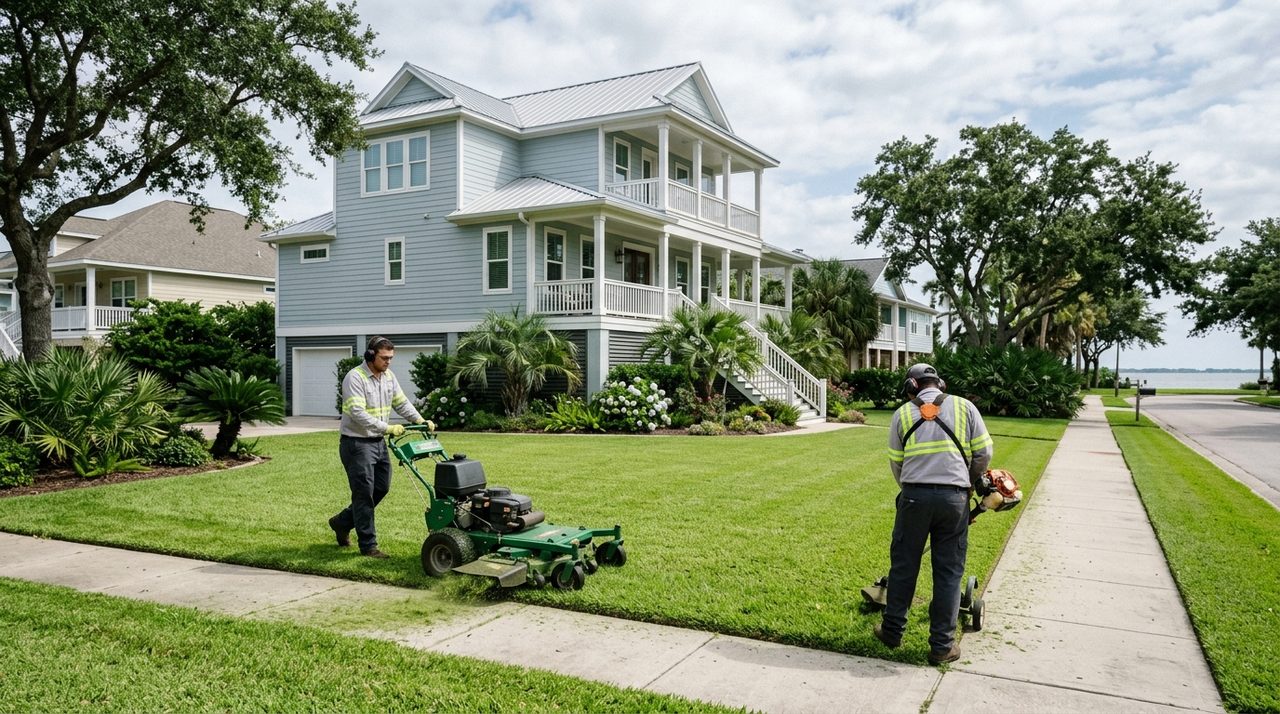
- Median home built
- 1973
- Median home value
- $294,300
- FEMA flood zone
- AE (high)
- Typical cost (est.)
- $1.00–$1.75/sq ft sod; $2,500–$7,500 drainage correction; $800–$3,500 per large storm-damaged tree removal
- Most common local issue
- Salt-spray die-off and surge-deposited silt killing established plantings after Gulf storm events
Ranked by verified Google rating × review volume × verification tier. How we rank →
Some highly-rated pros serve Galveston from nearby and may not keep a Galveston street address. Those are listed under "Also serving Galveston" with their real city and distance, so you always know where each business is based.
Min rating:
10 resultsBased in Galveston
5914 Seawall Blvd, Galveston, TX 77551
1402 Seawall Blvd, Galveston, TX 77550
2014 45th St, Galveston, TX 77550
Closed
5910 Broadway Avenue J, Galveston, TX 77551
Closed
4723 Woodrow Ave, Galveston, TX 77551
Open Now
6702 Seawall Blvd, Galveston, TX 77551
Closed
814 61st St, Galveston, TX 77551
Also serving Galveston
Highly-rated pros based nearby who cover Galveston. Distance shown from the Galveston area.
Closed
Serving Galveston Based in La Marque · 4.2 mi away
Landscapers in Galveston: What You Should Know
Post-Surge Soil Contamination & Replanting After Gulf Inundation
Why it matters to you
Galveston sits in FEMA Zone AE coastal high-hazard territory, and storm surge from events like Harvey (2017) and Beryl (2024) deposits salt-laden silt across residential lots, raises soil pH, creates anaerobic layers that suffocate root systems, and introduces heavy metals and invasive weed seeds that linger for seasons. For the island's Victorian-era and mid-century ranch homes — many of which sit on pier-and-beam or piling foundations rather than slabs — floodwater recedes under the house as well as across the yard, compounding soil saturation and fungal problems at the planting beds surrounding the structure.
What a good pro does
A qualified landscaper should pull soil samples before replanting anything post-surge and test for salinity, pH, and organic matter; amendment with gypsum can help displace sodium ions in salt-impacted clay layers. Grade restoration must be confirmed against the property's current base flood elevation on file with the City of Galveston Development Services Department before any fill is added, since unpermitted grading that alters drainage on the island can trigger floodplain compliance reviews.
Sources: FEMA National Flood Hazard Layer (NFHL), Municipal permit office (see area profile), Harris County Flood Control District
Hurricane & Derecho Wind Damage: Species Selection Matters on the Seawall Side
Why it matters to you
Galveston's open Gulf exposure means wind loads that overwhelm tree species that survive just fine 30 miles inland in Houston's Meyerland or Memorial neighborhoods. Bradford pears, Leyland cypress, and large-canopied trees with shallow root anchoring in the island's sandy-clay mix are routinely snapped or uprooted when Category 1 or stronger storms make landfall; Beryl (2024) stripped canopy from dozens of island properties in a single pass. Because much of Galveston's tree-lined residential core dates to the late 19th and early 20th centuries, mature specimen trees are both high-value and high-risk, and post-storm debris removal on a barrier island faces logistical constraints that drive costs above mainland norms — estimates for large-tree removal commonly run $800–$3,500 per tree, with surge-demand pricing after major events.
What a good pro does
A knowledgeable landscaper advises homeowners on wind-resistance ratings for replacement species — live oaks, sabal palms, and vitex have documented track records in Gulf Coast conditions — and can stake and anchor new plantings appropriately for the root-zone soil conditions on a given lot. Post-storm debris removal on the island requires hauling coordination with City of Galveston solid-waste protocols; your contractor should clarify the debris-staging and pickup timeline before beginning chainsaw work.
Sources: Municipal permit office (see area profile), Local HOA / deed restrictions (see area profile)
Salt-Air Stress, Coastal Soil Chemistry & Plant Palette Reality
Why it matters to you
Unlike Houston's inner loop, where the primary soil challenge is expansive Beaumont Black clay, Galveston's island soil combines fine sandy fill, shell-fragment substrate, and residual salt accumulation from spray and surge, creating conditions that kill standard Houston nursery staples rapidly. Homeowners accustomed to lush tropical plantings common in Montrose or River Oaks — bougainvillea, sago palms, crape myrtles in exposed beds — find those same plants struggle or fail along Galveston's gulf-facing lots where salt-spray stress combines with high wind and periodic inundation.
What a good pro does
An experienced coastal landscaper specifies halophyte-tolerant or salt-spray-rated species for exposed beds: sea oats, railroad vine, gulf muhly grass, native yaupon holly, and dwarf palmetto handle island conditions without the die-back cycles that force repeated replanting. For beds closer to historic structures in Galveston's local historic districts, any landscape alterations visible from the street may require review under the City of Galveston's own preservation ordinances — confirm with the Development Services Department before installing hardscape borders or removing mature vegetation near a contributing structure.
Sources: Municipal permit office (see area profile), Local HOA / deed restrictions (see area profile)
Irrigation Permitting, Backflow Rules & Salt-Water Intrusion Risk
Why it matters to you
Installing or modifying an irrigation system anywhere on Galveston Island requires both a TCEQ-licensed irrigator and a permit from the City of Galveston Development Services Department — not the City of Houston Permitting Center, which has no jurisdiction here. The backflow preventer protecting the potable water supply must meet TCEQ Chapter 344 requirements and be tested annually by a separately licensed backflow prevention assembly tester; on a coastal barrier island where the shallow water table can carry salt intrusion, an improperly installed or failed backflow device poses a direct drinking-water risk that regulators treat seriously.
What a good pro does
Before any irrigation contractor breaks ground, verify their active TCEQ irrigator license and confirm that a City of Galveston irrigation permit has been issued — both are homeowner-verifiable steps that protect you from fines and re-installation costs if code enforcement flags unpermitted work. Smart-controller retrofits calibrated to Gulf Coast evapotranspiration rates also make practical sense here, because the island's high humidity and sea-breeze cooling reduce actual turf water demand compared to western Houston suburbs, and over-irrigation in salt-affected soils accelerates ion uptake stress in roots.
Sources: Texas Commission on Environmental Quality, Municipal permit office (see area profile)
Landscapers in Galveston: What You Should Know
Hiring landscapers in Galveston? Galveston's housing stock spans from historic 19th-century Victorian homes to modern beach developments, creating an exceptionally diverse home service landscape. Homeowners must contend with persistent salt air corrosion, high flood risk across much of the island, and hurricane exposure that drives demand for wind-resistant roofing, elevated foundations, and robust moisture management. Permit jurisdiction falls under the City of Galveston Development Services Department or Galveston County, never the City of Houston Permitting Center.
- Housing era
- Highly mixed — 1800s historic core through 21st-century beach and master-planned construction
- Foundation
- Mixed — many historic and coastal homes on pier-and-beam or raised pilings
- Flood zone
- FEMA Zone AE (high flood risk) — source
- Permits
- City of Galveston Development Services Department (within city limits)
Housing stock & systems
Building era
Highly mixed — 1800s historic core through 21st-century beach and master-planned construction.
Typical style
Mix of Victorian, Gulf Coast vernacular, raised beach houses, mid-century ranch, and modern coastal developments; no single dominant style across the area.
Foundations
Mixed — many historic and coastal homes on pier-and-beam or raised pilings; newer mainland construction often slab-on-grade. Not confirmed at subdivision level — check property records.
Common systems
Older homes may have outdated electrical and galvanized plumbing requiring upgrades; coastal properties require corrosion-resistant HVAC equipment rated for salt air environments; newer builds typically feature modern central HVAC and PEX or copper plumbing.
What that means for repairs
Historic restoration is common in Galveston's core; coastal properties frequently undergo elevation projects, hurricane hardening, and replacement of salt-air-corroded exterior systems. Flood damage repair drives significant renovation activity across all housing types.
Permits & restrictions
Permit jurisdiction
City of Galveston Development Services Department (within city limits); individual incorporated cities handle their own permitting elsewhere in Galveston County; unincorporated areas fall under Galveston County jurisdiction. Not the City of Houston Permitting Center.
HOA & deed restrictions
No county-wide mandatory HOA. HOAs exist at the subdivision, condo, and master-planned community level. Many single-family homes in Galveston have no HOA. Check deed restrictions recorded with the Galveston County Clerk for specific properties.
Historic districts
No City of Houston historic district designation — Galveston is outside Houston's jurisdiction. The City of Galveston maintains its own historic preservation program and local historic districts, governed by Galveston's ordinances separate from Houston's HAHC.
Contractor note
Contractors must verify whether work falls within City of Galveston, another incorporated Galveston County city, or unincorporated county jurisdiction, as permitting requirements and floodplain regulations differ significantly. Properties in local historic districts within the City of Galveston may require additional preservation review separate from any Houston process.
Flood & weather
FEMA flood zone
FEMA Zone AE (high flood risk) — source: fema_nfhl. Galveston's island geography and coastal exposure create significant flood risk from both storm surge and rainfall. Proximity to the Gulf of Mexico and Galveston Bay compounds risk across most of the area.
Hurricane Harvey impact
Hurricane Harvey's flood impacts in Galveston County were highly localized and varied by precise location — bayfront vs. mainland interior, creek proximity, and elevation. Specific street-level flooding data for this area could not be confirmed without a more precise subdivision or address — check FEMA Harvey flood inundation maps and Galveston County floodplain administrator reports for property-specific history.
Heat & humidity load
Extreme humidity and salt air accelerate corrosion of HVAC condensers, metal roofing components, and exterior fasteners. Summer heat combined with coastal moisture drives high demand for dehumidification, mold remediation, and HVAC maintenance. Prolonged UV exposure degrades exterior paint and sealants faster than inland areas.
Working with contractors here
Contractors in Galveston most commonly work on flood damage repair, foundation elevation projects, hurricane-hardening (impact windows, fortified roofing), and replacement of salt-air-corroded exterior systems including HVAC condensers, metal railings, and fasteners. The wide range of housing eras means contractors must be prepared for both historic restoration requiring period-appropriate materials and modern coastal construction techniques. Job scoping should always include assessment of flood history, current elevation relative to base flood elevation, and whether the property falls within a City of Galveston historic district requiring preservation review. Corrosion-resistant materials and marine-grade hardware should be specified as standard for any exterior work.
Local Tip
Always ask for a written estimate before work begins. Texas contractors are required to provide one on jobs over $1,000.
About Galveston
Galveston's housing stock spans from historic 19th-century Victorian homes to modern beach developments, creating an exceptionally diverse home service landscape. Homeowners must contend with persistent salt air corrosion, high flood risk across much of the island, and hurricane exposure that drives demand for wind-resistant roofing, elevated foundations, and robust moisture management. Permit jurisdiction falls under the City of Galveston Development Services Department or Galveston County, never the City of Houston Permitting Center.
- Median year built
- 1973
- Median home value
- $294,300
- Owner-occupied
- 46.7%
- Population
- 53,348
- Housing units
- 34,921
- Median income
- $57,216
Source: U.S. Census Bureau, ACS 5-Year 2023
Flood & storm risk
FEMA Zone AEHigh flood riskOn Galveston Island, storm surge and Gulf wind are the defining hazards: much of Galveston sits in FEMA Zone AE coastal high-hazard territory, so wind-rated, elevation- and surge-aware work is the baseline, not an upgrade.
Source: FEMA National Flood Hazard Layer (NFHL). Flood zones vary by parcel — verify your individual FIRM panel.
Frequently Asked Questions
Do I need a permit from the City of Galveston to install a retaining wall or do grading work in my yard?
Permits for retaining walls and grading work on Galveston Island are issued by the City of Galveston Development Services Department — not the City of Houston Permitting Center, which has no jurisdiction here. Because virtually all Galveston residential lots fall within FEMA Zone AE, grading changes that alter drainage patterns can also trigger floodplain compliance review, so your landscaper should confirm scope with Development Services before breaking ground. Unpermitted grading in an AE zone can complicate flood insurance claims and future elevation certificates.
Sources: Municipal permit office (see area profile)FEMA National Flood Hazard Layer (NFHL)
My Galveston home was built in the 1890s and sits on pier-and-beam — does that change how a landscaper should plant trees near the foundation?
Older pier-and-beam and raised historic homes on the island are somewhat less vulnerable to the differential-settlement root damage that plagues slab-on-grade mainland houses, but root intrusion into pier footings and moisture-trapping plantings against wood sills are still genuine risks. A landscaper experienced with Galveston's historic core should keep large-rooted species — live oaks, oleanders grown as trees — at least 8–10 feet from wood piers and avoid dense foundation plantings that hold salt-laden moisture against aging lumber. If your home falls within one of Galveston's local historic districts, any significant landscape alterations near the structure may also require a preservation review under the City of Galveston's own ordinances, separate from any Houston process.
Sources: Municipal permit office (see area profile)
How long after a Gulf surge event should I wait before replanting beds, and what's a realistic cost estimate for restoring a Galveston yard after inundation?
Most experienced island landscapers recommend waiting at least four to eight weeks after surge inundation before replanting — soil needs time to drain, and a salt-flush irrigation cycle or rainfall helps leach chloride levels down to ranges plants can tolerate; a soil conductivity test (typically $50–$150 as an estimate) confirms when conditions are safe. Budget estimates for a full front-and-back replant on a typical Galveston lot after a moderate surge event run roughly $4,500–$12,000 depending on silt removal volume, amendment needs, and whether sod must be relaid; post-major-storm demand pricing can push those figures higher. Surge-deposited silt layers can also alter your lot's grading and impede drainage, so factor in the possibility of French drain or swale work alongside replanting.
Does Galveston have HOA rules I need to worry about before my landscaper starts a project?
Galveston has no county-wide mandatory HOA, and a large share of single-family homes on the island — particularly in the historic core and older beach-side blocks — carry no active HOA at all. However, deed restrictions recorded with the Galveston County Clerk can still specify approved plant species, fence heights, or hardscape materials even on properties without a formal HOA, so your landscaper should ask you to pull the deed before finalizing a design. Condo associations and some newer coastal subdivisions do have active architectural review boards, so confirm your specific property's status before purchasing plants or materials.
Sources: Local HOA / deed restrictions (see area profile)
When is the worst time of year to install new sod or plantings on Galveston Island, and is there a window that works best?
Late June through August is the most challenging installation window on the island: soil temperatures above 95°F, peak salt-spray load from prevailing Gulf winds, and the height of hurricane season combine to stress newly planted material before roots can establish. The sweet spot for sod and most ornamental installation is mid-October through early April, when temperatures are moderate, humidity-driven fungal pressure (brown patch, take-all root rot) drops significantly, and storms are less frequent. If a post-storm replant forces a summer job, your landscaper should plan for more intensive temporary irrigation and select only the most salt- and heat-tolerant species from the outset.
My landscaper says they need a TCEQ license to install or modify irrigation on my Galveston property — is that really true, and do I need a separate City of Galveston permit?
Yes on both counts: Texas law requires that any new irrigation system design and installation be performed by — or directly supervised by — a TCEQ-licensed Irrigator, and backflow prevention devices must meet TCEQ Chapter 344 requirements and be tested annually by a separately licensed backflow tester. On top of the state license requirement, the City of Galveston requires a permit before a new irrigation system is installed; your landscaper should pull that permit through the City of Galveston Development Services Department, not any Houston office. Given the island's saltwater intrusion risk in shallow groundwater, a licensed irrigator should also verify that your backflow assembly is rated for coastal conditions and positioned above base flood elevation.
Sources: Texas Commission on Environmental QualityMunicipal permit office (see area profile)