Open Now
1725 Blalock Rd, Houston, TX 77080
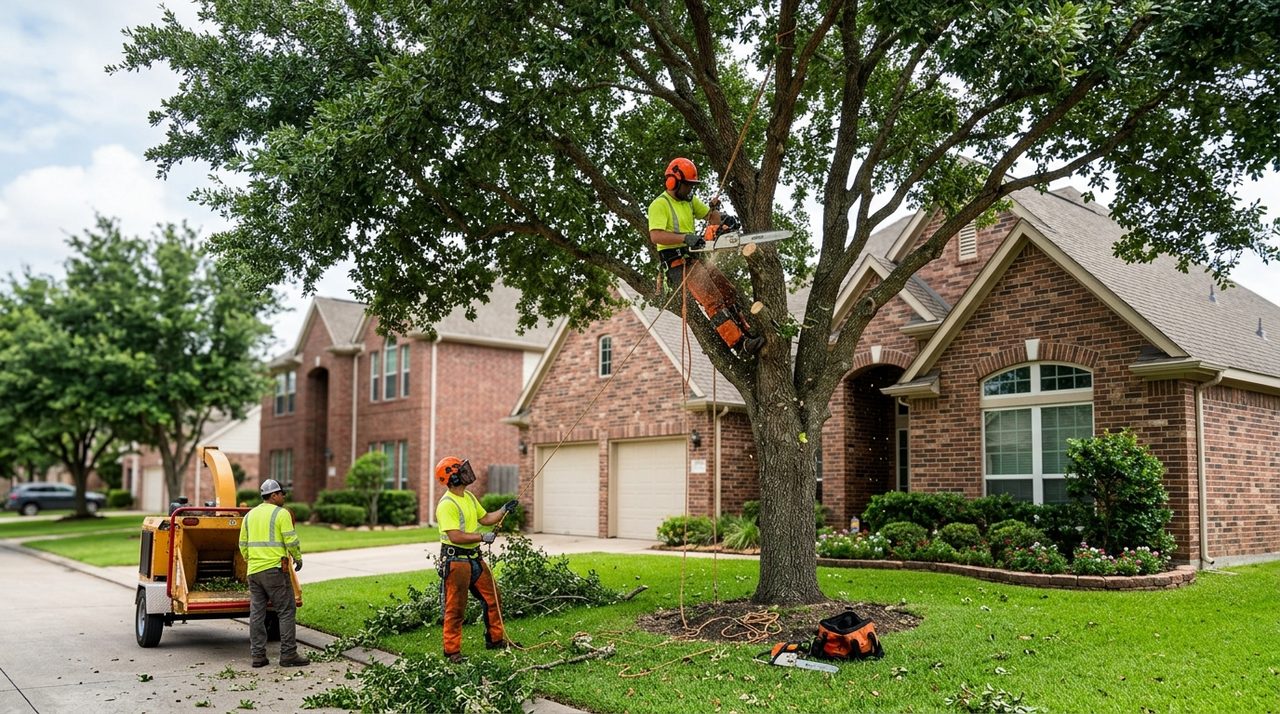
Spring Branch's blocks of 1950s–1960s brick ranch homes were planted with live oaks and water oaks that are now 60-plus years old, their surface roots working against slab foundations on the same expansive Harris County black clay that regularly calls for foundation leveling here. Add the rapid teardown-and-rebuild churn that has replaced dozens of originals with two-story infill townhomes, and tree removal in Spring Branch sits at the intersection of root-versus-slab urgency and active construction-site clearance — both under City of Houston permit jurisdiction with no state arborist license required. Understanding the local soil reality, per-subdivision deed restriction patchwork, and how storm-surge pricing works after events like the May 2024 derecho will save Spring Branch homeowners real money and prevent costly mistakes.
Ranked by verified Google rating × review volume × verification tier. How we rank →
Some highly-rated pros serve Spring Branch from nearby and may not keep a Spring Branch street address. Those are listed under "Also serving Spring Branch" with their real city and distance, so you always know where each business is based.
1725 Blalock Rd, Houston, TX 77080
11222 Katy Fwy, Houston, TX 77043
10928 Day Rd #5, Houston, TX 77043
9210 Clay Rd, Houston, TX 77080
2302 Campbell Rd, Houston, TX 77080
1653 Oak Tree Dr, Houston, TX 77080
10523 Norton Dr, Houston, TX 77043
2700 Palo Pinto Dr, Houston, TX 77080
Highly-rated pros based nearby who cover Spring Branch. Distance shown from the Spring Branch area.
Serving Spring Branch Based in Lazybrook / Timbergrove · 0.1 mi away
Serving Spring Branch Based in Lazybrook / Timbergrove · 1.2 mi away
Why it matters to you
The brick ranch homes built across Spring Branch in the 1950s and 1960s were planted with live oaks and water oaks that have now spent six decades pushing surface-feeding roots through Houston's expansive Beaumont black clay. On slab-on-grade construction — the dominant foundation type on these lots — root-driven moisture variation causes slab edges to heave and crack, and the same clay that forces periodic foundation leveling in this neighborhood is also the medium those roots exploit most aggressively. If the tree is within 20 feet of the foundation, the root system is almost certainly already beneath the slab perimeter.
What a good pro does
A qualified arborist should probe the root zone before quoting removal, not just eyeball canopy spread, because the excavation required to extract major lateral roots without further disturbing the slab changes the job scope and cost significantly. After removal, stump grinding to at least 12 inches below grade is essential on Spring Branch's clay soils — shallow grinding leaves a decomposing mass that continues to alter local moisture content and soil volume directly under your foundation. Expect mid-size water oak removal near a structure to run $900–$1,800 (estimated) with stump grinding quoted separately at $150–$400.
Sources: City of Houston Permitting Center
Why it matters to you
Spring Branch's residential blocks carry a dense canopy of mature oaks accumulated over seven decades of continuous occupancy, making the neighborhood particularly exposed to the pricing and contractor-quality problems that follow major storm events. The May 2024 derecho tracked straight-line winds through west Houston and left widespread canopy damage across this part of the metro; Hurricane Beryl followed in July 2024. After each event, legitimate local crews are backlogged for weeks, and out-of-state operators who arrive in force routinely quote 40–80% above normal rates while sometimes carrying inadequate insurance or no local track record.
What a good pro does
Before any post-storm removal, ask for a current certificate of liability insurance naming you as an additional insured — a real company will provide it without hesitation. Verify ISA Certified Arborist credentials through the ISA's public online directory, which takes about 90 seconds. If your damaged tree is only hanging rather than actively threatening a structure, it is generally safer to wait two to three weeks for the surge to ease than to hire an unverified crew at peak panic pricing. Document storm damage with dated photos and retain all invoices if you carry a homeowners policy, as tree removal costs are sometimes partially covered when the damage is storm-caused.
Sources: City of Houston Permitting Center
Why it matters to you
Spring Branch has no single area-wide HOA, but recorded deed restrictions exist at the individual subdivision level across the neighborhood and enforcement vigor varies. Subdivisions such as Spring Branch Estates and Spring Branch Estates II have mandatory HOAs with formal architectural review processes, while many adjacent blocks are governed only by voluntary civic associations with no real enforcement mechanism. Homeowners who assume Spring Branch is restriction-free and remove a large-caliper tree without checking their specific plat have sometimes faced neighbor-initiated deed restriction complaints and, in the worst cases, forced-replanting demands.
What a good pro does
Pull your property's recorded restrictions from Harris County Clerk records (searchable online by subdivision name) before scheduling any removal, and check for language specifying minimum trunk diameter thresholds — typically 6 to 8 inches DBH — that trigger review. If your subdivision has an active mandatory HOA, submit the tree-removal request in writing to the architectural committee and wait for written approval; verbal permission is not enforceable protection. The City of Houston itself does not require a permit for removing a tree on private property, so the only regulatory hurdles in Spring Branch are at the deed-restriction level, not the municipal permit office.
Sources: City of Houston Permitting Center, Local HOA / deed restrictions (see area profile)
Why it matters to you
The constant teardown-and-rebuild activity in Spring Branch — where lot values have supported demolishing original 1950s ranch homes since the early 2000s — creates exactly the kind of disturbed, open soil that Chinese tallow (Triadica sebifera, a state-listed invasive in Texas) colonizes fastest. Tallow seedlings appear within a single growing season on cleared lots, and an ignored sapling becomes a 15-foot tree with an aggressive root system in just two to three years. Tallow roots are documented to crack hardscape and invade drainage infrastructure — a real concern on blocks where both vintage cast-iron drain lines and new PVC laterals coexist side by side in Spring Branch's mixed housing stock.
What a good pro does
Stump grinding alone is not sufficient for Chinese tallow — the root crown resprouts vigorously unless treated with a cut-stump herbicide application (typically triclopyr-based) immediately after cutting, before the sap recedes. Texas A&M AgriLife Extension guidelines recommend treating cut surfaces within minutes of the cut for maximum efficacy. Homeowners on lots adjoining undeveloped or recently cleared parcels should budget for annual inspection and early-stage tallow removal, because catching a two-inch sapling costs far less than extracting a mature tallow whose roots are already targeting a slab or driveway apron.
Hiring tree removal in Spring Branch? Spring Branch's housing stock is dominated by 1950s–1960s single-family brick ranch homes on slab foundations, creating consistent demand for foundation repair, re-plumbing, and electrical upgrades. Ongoing teardown-and-rebuild activity means contractors regularly encounter both vintage systems and modern infill construction side by side. Deed restrictions and HOA rules vary subdivision by subdivision, so contractors should verify requirements on a per-project basis.
Building era
Primarily 1950s–1960s, with significant infill and townhome construction from the 2000s onward.
Typical style
One-story brick ranch houses (original stock); two-story contemporary/transitional homes and townhomes (infill).
Foundations
Predominantly concrete slab-on-grade for original 1950s–1960s homes; some pier-and-beam in earlier or custom structures. Confirm per-property via inspection or appraisal records.
Common systems
Original homes often have galvanized steel or cast-iron drain plumbing, older electrical panels (60–100 amp), and aging central HVAC units. Many properties have been partially updated but may still have legacy piping and wiring. Newer infill homes feature modern PEX plumbing, 200-amp panels, and high-efficiency HVAC systems.
What that means for repairs
Teardown-and-rebuild activity is very common as lot values support new construction. Remaining original homes frequently undergo whole-house renovations including re-plumbing (replacing galvanized lines), electrical panel upgrades, HVAC replacement, and kitchen/bath remodels. Foundation leveling is a recurring need on slab homes due to expansive clay soils.
Permit jurisdiction
City of Houston — Houston Permitting Center (Spring Branch is within Houston city limits).
HOA & deed restrictions
No single area-wide mandatory HOA. Voluntary civic associations (e.g., Spring Branch Civic Association, Spring Branch Oaks Civic Association) cover much of the older residential area. Some platted subdivisions have mandatory HOAs with recorded deed restrictions and mandatory assessments (e.g., Spring Branch Estates, Spring Branch Estates II). At least six mandatory HOAs are registered in the broader Spring Branch area. Deed restrictions are common at the subdivision level but vary by plat—check Harris County Clerk records for each property.
Historic districts
No City of Houston historic district designation confirmed.
Contractor note
Because deed restrictions and HOA requirements vary by subdivision, contractors should confirm any architectural review, fence/accessory structure, and material restrictions before beginning work. The City of Houston permitting process applies to all structural, electrical, plumbing, and mechanical work.
FEMA flood zone
FEMA Zone X (low flood risk) per the official NFHL API. However, Spring Branch is bisected by several tributaries of White Oak Bayou and Spring Branch Creek, and localized street flooding can still occur during heavy rain events. Property-level flood risk should be verified, especially for lots near drainage channels.
Hurricane Harvey impact
Research did not return specific Harvey damage documentation for this civic-association-defined area of Spring Branch. Broader media and City of Houston reporting indicate that portions of the Spring Branch area experienced significant flooding during Harvey, particularly near bayou tributaries and low-lying streets. Homeowners and contractors should check individual property flood claims history through FEMA and the Harris County Flood Control District for site-specific impact data.
Heat & humidity load
Extended Houston summers with sustained 95°F+ temperatures and high humidity stress aging HVAC systems and accelerate attic insulation degradation in 1950s–1960s ranch homes. Slab-on-grade foundations on expansive clay soils are vulnerable to differential settlement during summer drought cycles. Exterior paint and caulking on older brick veneer homes deteriorate quickly in UV-intense conditions.
Working with contractors here
The most common work in Spring Branch involves updating the mechanical and plumbing systems in 1950s–1960s ranch homes—re-plumbing galvanized supply lines, replacing cast-iron drains, upgrading electrical panels, and installing modern HVAC systems. Foundation repair is a perennial need due to expansive clay soils and slab-on-grade construction. Teardown-and-rebuild projects are frequent, requiring contractors familiar with City of Houston new-construction permitting and lot-specific deed restriction compliance. For renovation jobs on older homes, contractors should budget for potential asbestos abatement (siding, flooring, duct insulation) and lead paint remediation. Scoping should account for the wide variation between unrenovated originals and partially updated homes on the same block.
Local Tip
Always ask for a written estimate before work begins. Texas contractors are required to provide one on jobs over $1,000.
Spring Branch's housing stock is dominated by 1950s–1960s single-family brick ranch homes on slab foundations, creating consistent demand for foundation repair, re-plumbing, and electrical upgrades. Ongoing teardown-and-rebuild activity means contractors regularly encounter both vintage systems and modern infill construction side by side. Deed restrictions and HOA rules vary subdivision by subdivision, so contractors should verify requirements on a per-project basis.
Source: U.S. Census Bureau, ACS 5-Year 2023
Most of Spring Branch maps to FEMA Zone X (low mapped flood risk), but Houston's flash-flood reality means even low-risk blocks benefit from smart drainage and storm-hardened installs.
Source: FEMA National Flood Hazard Layer (NFHL). Flood zones vary by parcel — verify your individual FIRM panel.
Beryl 2024 left tens of thousands of trees down across the Houston area, and lower-flood-risk zones like Spring Branch were not spared from wind-throw damage that crushed vehicles, fences, and rooflines. Scheduling removal of any large tree with a cavity, dead crown, or proximity to your home now means you are not competing for post-storm crews when wait times stretch to weeks. In-city Spring Branch work falls under City of Houston floodplain and permitting rules.
Proactive removal of trees with significant deadwood or structural defects in Spring Branch costs a fraction of the emergency extraction and roof repair that follows a thunderstorm failure. Severe storms in the Houston area can produce 70-plus mph gusts with almost no advance warning, which means the pre-storm window is the only realistic time to act before a low-flood-risk yard becomes a debris field. Confirm the current FEMA panel for your Spring Branch parcel — the area maps to Zone X, but adjacent lots can differ.
Freeze-cracked bark and split branch unions caused by Uri 2021 left thousands of Houston-area trees with compromised structural integrity that persisted well into subsequent years, so Spring Branch homeowners should request a post-freeze assessment even if no immediate failure occurred. A licensed contractor can identify cold-induced damage that will accelerate decay and create a hazard within one to three growing seasons. With a median build year of 1978, the older building stock here is more exposed to hard-freeze damage than newer construction. Confirm the current FEMA panel for your Spring Branch parcel — the area maps to Zone X, but adjacent lots can differ.
Sources: FEMA National Flood Hazard Layer (NFHL), Ready.gov -- Hurricanes, CenterPoint Energy -- Storm Center, City of Houston -- Emergency Preparedness, Ready.gov -- Winter Weather, Harris County Flood Control District
Houston-specific estimators to plan your project before you call a pro. All results are planning estimates — a licensed local pro confirms the details on site.
Grouped by mature root aggression & water demand.
Trunk center to the nearest exterior wall.
The root zone likely reaches your foundation's soil during Houston's dry summers, when clay shrinks most. Watch for sticking doors and diagonal cracks, keep soil moisture even with a soaker hose during drought, and have a foundation pro evaluate if you see any movement.
Find a Houston foundation pro →This is a planning estimate only — actual requirements depend on an on-site assessment by a licensed Houston pro. Guidance is based on general species root behavior in expansive clay, not a soil test.
Disconnect & drain every outdoor hose bib
Remove hoses, drain the spigots, and cover each with an insulated faucet sock. Un-drained hose bibs are the #1 burst point in a Houston freeze.
Insulate exposed pipes in the attic & garage
Wrap any pipe in an unconditioned space (attic runs, garage walls) with foam sleeves. Houston homes rarely insulate these because they only matter a few nights a year — which is exactly why they burst.
Open cabinet doors & keep a pencil-width drip
On hard-freeze nights, open kitchen/bath cabinets so warm air reaches the pipes and let faucets on exterior walls drip to relieve pressure.
Protect the attic/garage water heater & its lines
An attic or garage tank sits in unconditioned space. Insulate the cold-inlet and hot-outlet lines and confirm the emergency drain pan is clear so a leak doesn't reach the ceiling.
This is a planning estimate only — actual requirements depend on an on-site assessment by a licensed Houston pro. If a pipe has already burst, shut off your main water supply and call a licensed Houston plumber immediately — freeze bursts flood fast.
Sources: City of Houston Permitting CenterLocal HOA / deed restrictions (see area profile)
Sources: FEMA National Flood Hazard Layer (NFHL)City of Houston Permitting Center
Sources: Local HOA / deed restrictions (see area profile)City of Houston Permitting Center