1630 Elmview Dr, Houston, TX 77080
Best Plumbers in Spring Branch
Spring Branch's block-by-block mix of unrenovated 1950s–1960s brick ranch homes and modern infill townhomes creates a plumbing landscape unlike almost anywhere else inside the Loop — a single street can hold a home with original galvanized steel supply lines and cast-iron drains next door to a 2015 build with full PEX throughout. Houston's expansive Beaumont/Houston Black clay soil keeps bearing down on those original slab foundations, and every permit for the area runs through the City of Houston Permitting Center, not a suburban office. Understanding which vintage your home represents — and what systems are hiding under the slab or behind the walls — determines nearly every cost and code decision a plumber will face here.
Verified against Google Business data
Updated 2026
See the 10 Plumbers Serving Spring Branch 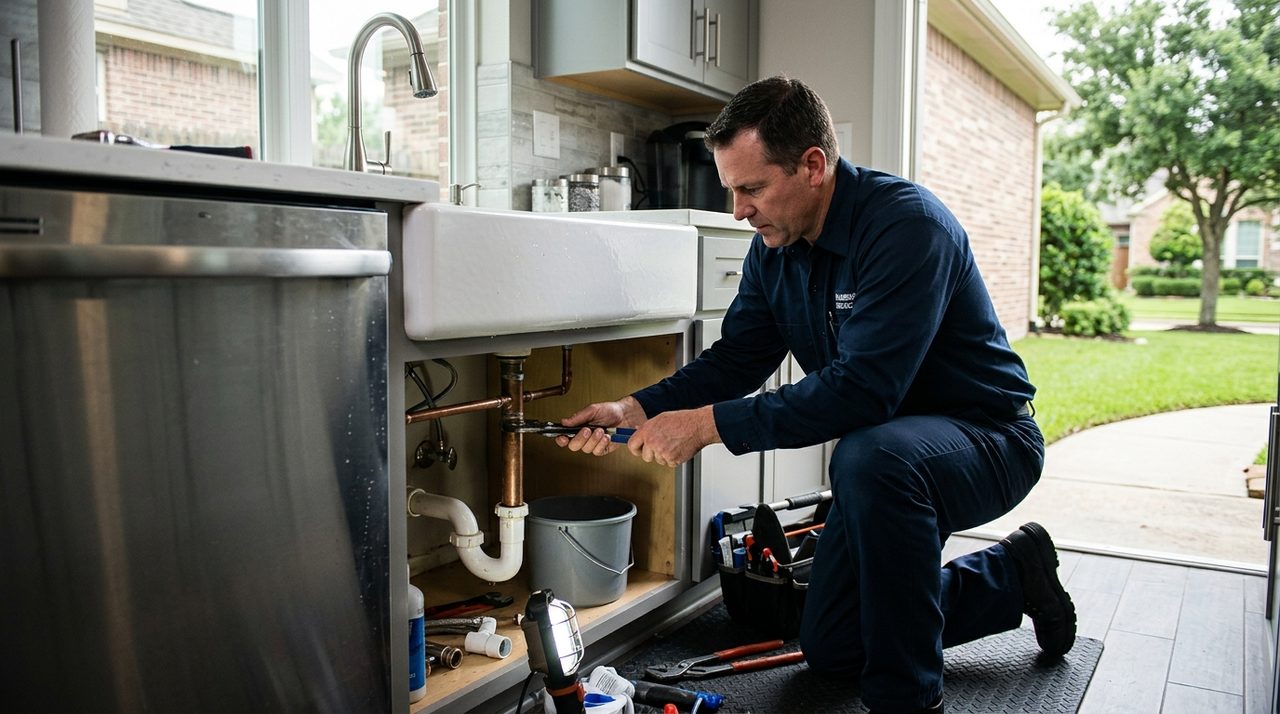
- Median home built
- 1978
- Median home value
- $640,789
- FEMA flood zone
- X (low)
- Typical cost (est.)
- $900–$12,000+
- Most common local issue
- Galvanized/cast-iron system replacement in 1950s–60s ranch homes
Ranked by verified Google rating × review volume × verification tier. How we rank →
Some highly-rated pros serve Spring Branch from nearby and may not keep a Spring Branch street address. Those are listed under "Also serving Spring Branch" with their real city and distance, so you always know where each business is based.
Min rating:
10 resultsBased in Spring Branch
Closed
1654 Oak Tree Dr, Houston, TX 77080
Closed
10607 Stebbins Cir, Houston, TX 77043
Open Now
825 Town and Country Blvd Suite 1200, Houston, TX 77024
2502 Valleyfield Dr, Houston, TX 77080
Closed
2870 Gessner Rd Unit C013, Houston, TX 77080
Also serving Spring Branch
Highly-rated pros based nearby who cover Spring Branch. Distance shown from the Spring Branch area.
Closed
Serving Spring Branch Based in Lazybrook / Timbergrove · 0.2 mi away
Closed
Serving Spring Branch Based in Lazybrook / Timbergrove · 0.3 mi away
Open Now
Serving Spring Branch Based in Lazybrook / Timbergrove · 0.7 mi away
Open Now
Serving Spring Branch Based in Lazybrook / Timbergrove · 2.1 mi away
Plumbers in Spring Branch: What You Should Know
Failing Galvanized Supply Lines in Spring Branch's Original Ranch Homes
Why it matters to you
Homes built in Spring Branch during the 1950s and 1960s were routinely plumbed with galvanized steel supply piping that has a functional lifespan of 40–70 years — meaning virtually every unrenovated original in the neighborhood is at or past the point of interior rust buildup, pinhole leaks, and sharply restricted flow at showers and faucets. Because many of these ranch homes have been partially renovated (kitchen updated, bathrooms touched up) without a full repipe, it's common to find modern fixtures fed by corroded galvanized risers that strangle water pressure and shed rust into the line. A whole-home repipe from galvanized to PEX in a typical 1,400–1,800 sq ft Spring Branch ranch runs an estimated $4,000–$10,000 installed, and the wide range reflects whether the slab penetrations require rerouting above the slab or through walls.
What a good pro does
A licensed Texas State Board of Plumbing Examiners (TSBPE) master plumber should perform a full pressure test and flow assessment before proposing a scope — partial repiping can shift the weakest-point failure to an untouched section of pipe within a year. Because a whole-home repipe in a City of Houston property requires a plumbing permit and inspection through the Houston Permitting Center, verify that your plumber pulls the permit in their name (not yours) and schedules the rough-in inspection before walls are closed. Ask for the TSBPE license number and confirm it is current on the board's public lookup before signing any contract.
Sources: Texas State Board of Plumbing Examiners, City of Houston Permitting Center
Cast-Iron Drain Line Corrosion and Collapse Beneath the Slab
Why it matters to you
Spring Branch's 1950s–1960s ranch homes were built with hub-and-spigot cast-iron drain and sewer lines that run beneath and through the concrete slab — the same slab that Houston's expansive Beaumont clay has been flexing, swelling, and shrinking under for six decades. That soil movement cracks pipe joints, while the acidic Houston-area clay accelerates external corrosion. Camera inspections in these homes routinely reveal channeling (erosion at the bottom of the pipe from decades of sewage flow), cracked bells at hub joints, and in some cases partial mid-run collapses that don't show as a dramatic backup but slowly drain the backyard or cause persistent slow drains on one side of the house. Replacement from the interior cleanout to the city tap, whether by open-trench tunneling under the slab or pipe-bursting, typically runs $3,500–$10,000+ depending on run length and soil access conditions — estimates vary significantly by project.
What a good pro does
A sewer camera inspection (roughly $150–$350 as a standalone service in the Houston market) is the only reliable way to see what you have before committing to a repair strategy; do not accept a diagnosis based on flow rate alone in a home of this age. If replacement is confirmed, a TSBPE-licensed plumber must pull a City of Houston plumbing permit for any drain-line work beyond cleanout snaking. Tunneling under the slab rather than jackhammering can preserve finished floors, but it requires adequate access and a plumber experienced with this method on slab homes — ask specifically whether they have done tunnel work in Spring Branch's dense clay.
Sources: Texas State Board of Plumbing Examiners, City of Houston Permitting Center, International Residential Code (as adopted by City of Houston)
Slab Leaks from Sixty Years of Clay Soil Movement
Why it matters to you
Spring Branch sits on Houston's notorious expansive Beaumont/Houston Black clay, and the original 1950s–1960s ranch homes on slab-on-grade foundations have had roughly six decades for seasonal moisture cycles to flex, crack, and stress any copper supply lines encased under the concrete. Unlike newer construction where PEX was used from the start, many unrenovated and partially renovated Spring Branch homes still carry their original under-slab copper — and those lines are now in the highest-risk window for slab leaks. Warning signs include unexplained spikes on the water bill, warm spots on the floor, or the sound of running water with all fixtures off. A single slab-leak repair with jackhammer access and copper re-route runs an estimated $1,500–$4,500; homeowners in homes that have had one leak on original copper should ask about a full above-slab reroute to PEX to prevent recurrence.
What a good pro does
Electronic leak detection (acoustic or thermal) is the correct first step — it localizes the break before any concrete is opened and is now standard practice for reputable Houston plumbers. If the leak is confirmed, the City of Houston requires a plumbing permit even for a slab repair, so insist your TSBPE-licensed plumber pull the permit through the Houston Permitting Center before jackhammer work begins. Homeowners' insurance policies vary widely on slab-leak coverage; document the detection report and any damage photos before repair begins, as insurers may require them for a restoration claim.
Sources: Texas State Board of Plumbing Examiners, City of Houston Permitting Center, Harris County Flood Control District
Water Heater Replacement: Permits, Location, and Hard-Water Realities
Why it matters to you
Many of Spring Branch's brick ranch homes have water heaters installed in garages or attic closets — locations that in Houston's near-100% summer humidity accelerate anode rod corrosion and shorten tank life to 8–10 years, sometimes less. Harris County municipal water in this part of the metro can carry moderate mineral hardness that further drives sediment buildup in aging tanks, and a failed water heater in an attic location carries real risk of ceiling damage before the homeowner notices. Teardown-and-rebuild infill townhomes on the same block often specify tankless units, which require gas line upsizing and Category III or PVC venting that can be visible on an exterior wall — a detail that matters if the specific subdivision plat has recorded deed restrictions.
What a good pro does
A 50-gallon gas tank replacement in a standard Spring Branch garage location runs an estimated $900–$1,800 installed; a tankless gas unit with proper venting runs $2,000–$4,500 installed — both are 2024 Houston-market estimates and permit fees add to these figures. The City of Houston requires a plumbing permit for any water heater replacement, and the Houston Permitting Center inspection must be completed before the water heater is permanently enclosed. Before a tankless install, ask your TSBPE-licensed plumber to assess existing gas line capacity — many 1960s Spring Branch homes were sized for appliance loads that predate a modern tankless demand — and check Harris County Clerk deed restriction records for your specific plat if the vent location will be exterior-facing.
Sources: Texas State Board of Plumbing Examiners, City of Houston Permitting Center, Local HOA / deed restrictions (see area profile)
Plumbers in Spring Branch: What You Should Know
Hiring plumbers in Spring Branch? Spring Branch's housing stock is dominated by 1950s–1960s single-family brick ranch homes on slab foundations, creating consistent demand for foundation repair, re-plumbing, and electrical upgrades. Ongoing teardown-and-rebuild activity means contractors regularly encounter both vintage systems and modern infill construction side by side. Deed restrictions and HOA rules vary subdivision by subdivision, so contractors should verify requirements on a per-project basis.
- Housing era
- Primarily 1950s–1960s, with significant infill and townhome construction from the 2000s onward
- Foundation
- Predominantly concrete slab-on-grade for original 1950s–1960s homes
- Flood zone
- FEMA Zone X (low flood risk) per the official NFHL API
- Permits
- City of Houston — Houston Permitting Center (Spring Branch is within Houston city limits)
Housing stock & systems
Building era
Primarily 1950s–1960s, with significant infill and townhome construction from the 2000s onward.
Typical style
One-story brick ranch houses (original stock); two-story contemporary/transitional homes and townhomes (infill).
Foundations
Predominantly concrete slab-on-grade for original 1950s–1960s homes; some pier-and-beam in earlier or custom structures. Confirm per-property via inspection or appraisal records.
Common systems
Original homes often have galvanized steel or cast-iron drain plumbing, older electrical panels (60–100 amp), and aging central HVAC units. Many properties have been partially updated but may still have legacy piping and wiring. Newer infill homes feature modern PEX plumbing, 200-amp panels, and high-efficiency HVAC systems.
What that means for repairs
Teardown-and-rebuild activity is very common as lot values support new construction. Remaining original homes frequently undergo whole-house renovations including re-plumbing (replacing galvanized lines), electrical panel upgrades, HVAC replacement, and kitchen/bath remodels. Foundation leveling is a recurring need on slab homes due to expansive clay soils.
Permits & restrictions
Permit jurisdiction
City of Houston — Houston Permitting Center (Spring Branch is within Houston city limits).
HOA & deed restrictions
No single area-wide mandatory HOA. Voluntary civic associations (e.g., Spring Branch Civic Association, Spring Branch Oaks Civic Association) cover much of the older residential area. Some platted subdivisions have mandatory HOAs with recorded deed restrictions and mandatory assessments (e.g., Spring Branch Estates, Spring Branch Estates II). At least six mandatory HOAs are registered in the broader Spring Branch area. Deed restrictions are common at the subdivision level but vary by plat—check Harris County Clerk records for each property.
Historic districts
No City of Houston historic district designation confirmed.
Contractor note
Because deed restrictions and HOA requirements vary by subdivision, contractors should confirm any architectural review, fence/accessory structure, and material restrictions before beginning work. The City of Houston permitting process applies to all structural, electrical, plumbing, and mechanical work.
Flood & weather
FEMA flood zone
FEMA Zone X (low flood risk) per the official NFHL API. However, Spring Branch is bisected by several tributaries of White Oak Bayou and Spring Branch Creek, and localized street flooding can still occur during heavy rain events. Property-level flood risk should be verified, especially for lots near drainage channels.
Hurricane Harvey impact
Research did not return specific Harvey damage documentation for this civic-association-defined area of Spring Branch. Broader media and City of Houston reporting indicate that portions of the Spring Branch area experienced significant flooding during Harvey, particularly near bayou tributaries and low-lying streets. Homeowners and contractors should check individual property flood claims history through FEMA and the Harris County Flood Control District for site-specific impact data.
Heat & humidity load
Extended Houston summers with sustained 95°F+ temperatures and high humidity stress aging HVAC systems and accelerate attic insulation degradation in 1950s–1960s ranch homes. Slab-on-grade foundations on expansive clay soils are vulnerable to differential settlement during summer drought cycles. Exterior paint and caulking on older brick veneer homes deteriorate quickly in UV-intense conditions.
Working with contractors here
The most common work in Spring Branch involves updating the mechanical and plumbing systems in 1950s–1960s ranch homes—re-plumbing galvanized supply lines, replacing cast-iron drains, upgrading electrical panels, and installing modern HVAC systems. Foundation repair is a perennial need due to expansive clay soils and slab-on-grade construction. Teardown-and-rebuild projects are frequent, requiring contractors familiar with City of Houston new-construction permitting and lot-specific deed restriction compliance. For renovation jobs on older homes, contractors should budget for potential asbestos abatement (siding, flooring, duct insulation) and lead paint remediation. Scoping should account for the wide variation between unrenovated originals and partially updated homes on the same block.
Local Tip
Always ask for a written estimate before work begins. Texas contractors are required to provide one on jobs over $1,000.
About Spring Branch
Spring Branch's housing stock is dominated by 1950s–1960s single-family brick ranch homes on slab foundations, creating consistent demand for foundation repair, re-plumbing, and electrical upgrades. Ongoing teardown-and-rebuild activity means contractors regularly encounter both vintage systems and modern infill construction side by side. Deed restrictions and HOA rules vary subdivision by subdivision, so contractors should verify requirements on a per-project basis.
- Median year built
- 1978
- Median home value
- $640,789
- Owner-occupied
- 52.3%
- Population
- 157,142
- Housing units
- 65,035
- Median income
- $90,513
Source: U.S. Census Bureau, ACS 5-Year 2023
Flood & storm risk
FEMA Zone XLow flood riskMost of Spring Branch maps to FEMA Zone X (low mapped flood risk), but Houston's flash-flood reality means even low-risk blocks benefit from smart drainage and storm-hardened installs.
Source: FEMA National Flood Hazard Layer (NFHL). Flood zones vary by parcel — verify your individual FIRM panel.
Houston Storm Readiness in Spring Branch
Hurricane & flooding
After any landfalling hurricane, Spring Branch homes on pier-and-beam or slab foundations can experience subtle soil movement that stresses water supply lines at their slab entry points — schedule a post-storm leak check with a plumber even if you see no visible damage. Harvey 2017 generated thousands of delayed slab-leak calls weeks after the storm as saturated soils shifted and dried unevenly under Houston foundations. In-city Spring Branch work falls under City of Houston floodplain and permitting rules.
Severe storms & hail
After a severe storm drops several inches of rain quickly in Spring Branch, watch your water meter for movement with all fixtures off, because the pressure differential from municipal system fluctuations during a storm can reveal a previously borderline slab leak. CenterPoint power outages that accompany severe storms also allow water heater temperatures to drop and then spike on restoration, occasionally loosening sediment-coated anode rods or accelerating existing corrosion — worth a plumber's check if your unit is more than eight years old. Confirm the current FEMA panel for your Spring Branch parcel — the area maps to Zone X, but adjacent lots can differ.
Ice storms & freezes
If a pipe bursts during an ice storm in Spring Branch, close the main shutoff immediately and call a plumber before opening any faucets to drain the system — allowing full flow before a plumber has assessed the break location can send hundreds of gallons through wall cavities before anyone knows where the split is. Uri 2021 showed that the secondary water damage from delayed shutoff actions cost far more than the pipe repair itself. With a median build year of 1978, the older building stock here is more exposed to hard-freeze damage than newer construction. Confirm the current FEMA panel for your Spring Branch parcel — the area maps to Zone X, but adjacent lots can differ.
Sources: FEMA National Flood Hazard Layer (NFHL), Ready.gov -- Hurricanes, CenterPoint Energy -- Storm Center, City of Houston -- Emergency Preparedness, Ready.gov -- Winter Weather, Harris County Flood Control District
Free Spring Branch Tools & Calculators
Houston-specific estimators to plan your project before you call a pro. All results are planning estimates — a licensed local pro confirms the details on site.
Houston Freeze Prep & Pipe Insulation Checklist
Open full tool & FAQ →Your freeze checklist — 4 tasks
- 1
Disconnect & drain every outdoor hose bib
Remove hoses, drain the spigots, and cover each with an insulated faucet sock. Un-drained hose bibs are the #1 burst point in a Houston freeze.
- 2
Insulate exposed pipes in the attic & garage
Wrap any pipe in an unconditioned space (attic runs, garage walls) with foam sleeves. Houston homes rarely insulate these because they only matter a few nights a year — which is exactly why they burst.
- 3
Open cabinet doors & keep a pencil-width drip
On hard-freeze nights, open kitchen/bath cabinets so warm air reaches the pipes and let faucets on exterior walls drip to relieve pressure.
- 4
Protect the attic/garage water heater & its lines
An attic or garage tank sits in unconditioned space. Insulate the cold-inlet and hot-outlet lines and confirm the emergency drain pan is clear so a leak doesn't reach the ceiling.
This is a planning estimate only — actual requirements depend on an on-site assessment by a licensed Houston pro. If a pipe has already burst, shut off your main water supply and call a licensed Houston plumber immediately — freeze bursts flood fast.
Frequently Asked Questions
Do I need a permit to repipe my 1960s Spring Branch ranch home, and who actually issues it?
Yes — any whole-home repipe, whether replacing galvanized supply lines or cast-iron drains, requires a plumbing permit in Spring Branch because the neighborhood falls entirely within Houston city limits. You pull that permit through the City of Houston Permitting Center (not a suburban office), and the supervising plumber must hold a current Texas State Board of Plumbing Examiners license that your contractor should be able to look up on the TSBPE public directory before work starts. Plan for at least one city inspection before walls or slabs are closed up, and confirm the permit is in your contractor's name or the licensed master plumber's name — not just a verbal promise.
Sources: City of Houston Permitting CenterTexas State Board of Plumbing Examiners
My Spring Branch home's deed says it's in a civic association area — do I need HOA approval before a plumber can replace an exterior cleanout or reroute a gas line?
It depends on which subdivision plat your property falls under, because Spring Branch has no single area-wide mandatory HOA — some blocks have only voluntary civic associations (like the Spring Branch Civic Association) with no architectural-review authority, while recorded mandatory HOAs in places like Spring Branch Estates do have enforceable deed restrictions. Pull your specific plat from the Harris County Clerk's records before scheduling any exterior plumbing work such as cleanout relocation, tankless water heater venting, or gas meter repositioning, because getting city-permitted work forced out after the fact is far more expensive than a two-week HOA review upfront.
Sources: Local HOA / deed restrictions (see area profile)
After Winter Storm Uri burst pipes in so many Houston homes, should I have my Spring Branch house pressure-tested even if I didn't see obvious damage at the time?
Yes, especially if your home is an original 1950s–1960s build that still has galvanized steel supply lines or any copper runs through uninsulated attic space — those materials are far more susceptible to micro-fractures that don't bleed until pressure is applied or temperatures swing again. A licensed plumber can perform a static pressure test (typically a modest service call fee, estimated $150–$350) to confirm your supply system is holding without active leaks, and it's worth documenting before the next forecast freeze since insurance adjusters increasingly ask whether a home was inspected after Uri. Spring Branch's mostly Zone X flood status means freeze damage — not flood — is the more likely insurance trigger for plumbing claims in this neighborhood.
Sources: Texas State Board of Plumbing ExaminersFEMA National Flood Hazard Layer (NFHL)
How long does a typical City of Houston plumbing permit and inspection take for a water heater replacement in Spring Branch, and can the old unit be removed the same day?
The City of Houston Permitting Center allows water heater replacements to be permitted and often inspected on a relatively fast track — many licensed plumbers pull same-day or next-day permits online, and city inspection scheduling for simple water heater swaps typically runs two to five business days, though demand spikes after a hard freeze or post-storm surge can stretch that timeline. The old unit can usually be disconnected and removed the same day work starts, but the new heater should not be permanently sealed in or drywall closed until after the city inspection signs off. Budget an estimated $900–$1,800 installed for a standard 50-gallon gas replacement in Spring Branch, and confirm with your plumber whether the permit fee is included in that quote or billed separately.
Sources: City of Houston Permitting Center
Spring Branch is FEMA Zone X — does low flood risk mean I don't need to worry about sewer backflow after heavy rain?
Zone X means Spring Branch isn't mapped in a high-risk floodplain, but Houston's flash-flood reality has repeatedly sent runoff into sanitary sewer lines far outside the official AE zones — the metro's combined rainfall volumes during events like Harvey 2017 and Beryl 2024 overwhelmed sewer capacity system-wide, pushing sewage back through floor drains and ground-floor toilets even in nominally low-risk neighborhoods. A backwater (check) valve installed on your main sewer cleanout is a cost-effective preventive measure (estimated $300–$800 installed), and it's particularly relevant for Spring Branch's original ranch homes, which often have the only bathroom and utility room on the ground floor with no vertical separation from the street main.
Sources: Harris County Flood Control DistrictFEMA National Flood Hazard Layer (NFHL)
I'm buying a 1958 Spring Branch brick ranch that hasn't been replumbed — what should I ask a plumber to look at before closing?
Request a pre-purchase plumbing inspection that specifically includes a sewer camera scope of the drain lines, because cast-iron hub-and-spigot pipe from the 1950s–60s is well past its design life and channeling or mid-section collapse is common in Spring Branch's acidic clay soil. Also ask the plumber to identify the supply line material — galvanized steel is the norm in unrenovated originals and carries its own replacement timeline — and to pressure-test the gas system, especially if the home has CSST flex tubing of unknown age near appliances. Budget awareness: a full re-pipe from galvanized to PEX plus cast-iron drain replacement on a 1,500–2,000 sq ft ranch can run an estimated $8,000–$18,000 combined depending on access complexity and permit fees, so knowing what's underground before you sign is the single highest-value due-diligence step on this vintage.
Sources: Texas State Board of Plumbing ExaminersCity of Houston Permitting Center