Closed
1634 W Sam Houston Pkwy N, Houston, TX 77043
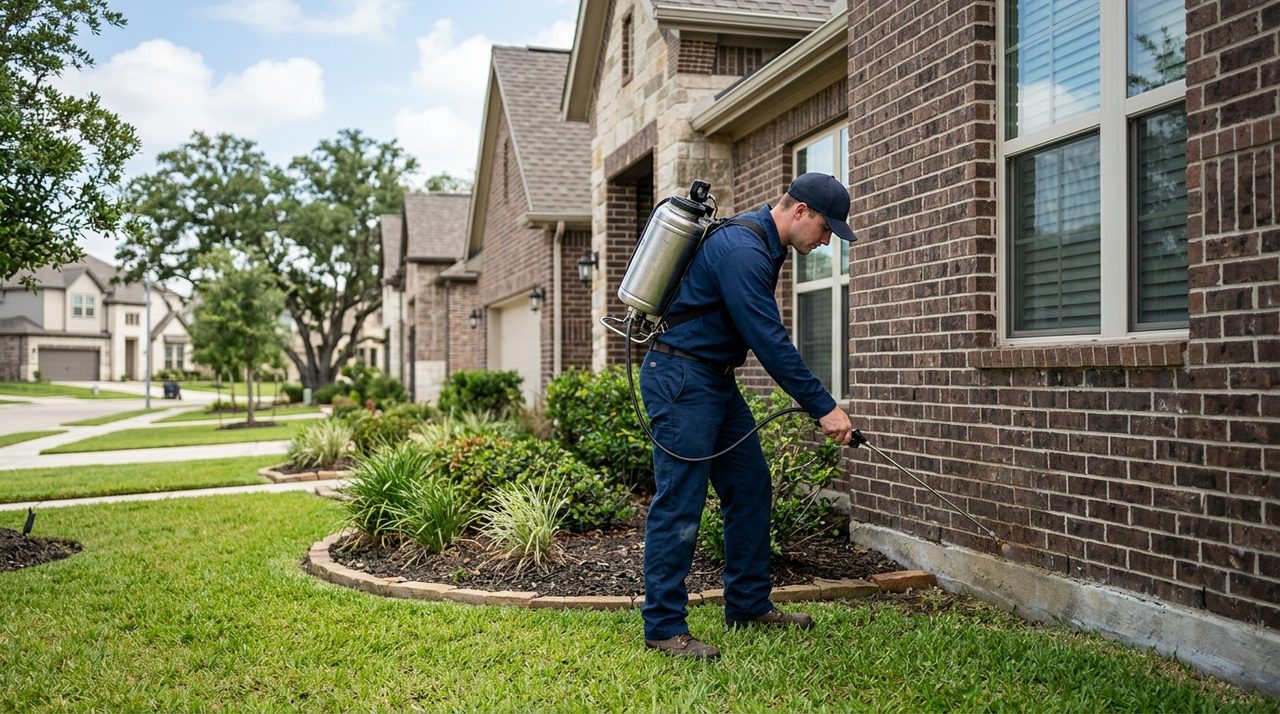
Spring Branch's 1950s–1960s brick ranch homes on slab-on-grade foundations — many still carrying original cast-iron drain lines and galvanized plumbing — create a pest environment that newer Houston neighborhoods simply don't face: slab expansion joints, aging sewer infrastructure, and decades of clay-soil movement all open recurring entry points for termites, cockroaches, and rodents year after year. The neighborhood's active teardown-and-rebuild cycle adds a second layer of pressure, as demolition and grading on adjacent lots displace established pest populations directly onto neighboring properties. Understanding which threats are structural facts of life here — not random bad luck — is what separates effective pest control in Spring Branch from a treatment that fails within a season.
Ranked by verified Google rating × review volume × verification tier. How we rank →
Some highly-rated pros serve Spring Branch from nearby and may not keep a Spring Branch street address. Those are listed under "Also serving Spring Branch" with their real city and distance, so you always know where each business is based.
1634 W Sam Houston Pkwy N, Houston, TX 77043
10801 Hammerly Blvd Ste 220, Houston, TX 77043
1814 W Sam Houston Pkwy N, Houston, TX 77043
2219 Blalock Rd, Houston, TX 77080
9320 Montridge Dr, Houston, TX 77080
10801 Hammerly Blvd, Houston, TX 77043
Highly-rated pros based nearby who cover Spring Branch. Distance shown from the Spring Branch area.
Serving Spring Branch Based in Lazybrook / Timbergrove · 0.3 mi away
Serving Spring Branch Based in Lazybrook / Timbergrove · 0.3 mi away
Serving Spring Branch Based in Lazybrook / Timbergrove · 1.4 mi away
Serving Spring Branch Based in Lazybrook / Timbergrove · 1.7 mi away
Why it matters to you
Spring Branch's original 1950s–1960s slabs predate modern termiticide pre-treatment standards — meaning there is no chemical barrier between the Houston Black clay soil beneath the slab and the wood framing above it. Coptotermes formosanus (Formosan subterranean termite) and native Reticulitermes species enter directly through expansion joints, post-tension cable sleeves, and the many plumbing penetrations left by original cast-iron drain rough-ins, some of which have been patched and re-patched through multiple generations of re-plumbing work. Houston sits in USDA Zone 5, the highest termite-pressure zone in the continental U.S., so infestation is not a matter of if but when without an active barrier program.
What a good pro does
A licensed Texas Structural Pest Control operator (TDLR termite category endorsement required) should perform a full slab-perimeter inspection, probing brick veneer weep holes and checking where any recent re-plumbing work broke through the slab. Liquid termiticide barrier treatment (Termidor-type) applied around the full linear footage of the foundation is the most reliable long-term defense for these older slabs; bait station systems (Sentricon-type, running $1,200–$2,000 installed plus $300–$500/year monitoring, estimates) are a lower-disruption alternative for finished landscaping. Either way, the TDLR-licensed certified applicator on the job — not just a registered technician — should review any slab penetration repairs done during re-plumbing to confirm re-entry points were properly sealed before treatment.
Why it matters to you
Spring Branch's unrenovated ranch homes — and even many partially updated ones — retain sections of original cast-iron drain plumbing that has corroded, cracked, or separated at hub joints over six-plus decades. Periplaneta americana (the 'waterbug') colonizes Houston's warm sewer infrastructure and migrates into homes through these degraded pipe joints, floor drains, and weep holes in brick veneer — pressure that spikes sharply after heavy rain displaces them from storm sewers. Because Spring Branch lies within the City of Houston's flat, clay-soil drainage basin, even FEMA Zone X blocks can experience standing water in yard voids and under-slab void spaces for 48–72 hours after a significant rain event, extending harborage conditions.
What a good pro does
Interior perimeter spraying alone will not break a persistent American cockroach infestation rooted in the sewer system. A TDLR-licensed operator should inspect and treat floor drains, weep holes, and exterior foundation gaps with appropriate residual products, while also recommending a video inspection of cast-iron drain lines to identify pipe separations that serve as the actual source. No City of Houston pest control permit is required for routine treatment, but any drain-line repairs uncovered in the process require a City of Houston plumbing permit through the Houston Permitting Center. Quarterly perimeter service ($40–$70 per visit, estimated) combined with drain exclusion keeps reinfestation cycles from resetting after each heavy rain.
Sources: Texas Department of Licensing & Regulation, Harris County Flood Control District, FEMA National Flood Hazard Layer (NFHL)
Why it matters to you
Houston's expansive Beaumont/Houston Black clay soil shifts seasonally under Spring Branch slabs — movement that repeatedly opens gaps around plumbing penetrations, garage door sweeps, and utility chases. This is a chronic structural condition on 1950s–1960s slabs, not a one-time problem, and the teardown-and-rebuild activity common throughout Spring Branch displaces established Rattus norvegicus (Norway rat) populations from demolished lots directly onto neighboring properties within days of a scrape. Homes that went through pipe re-plumbing after Winter Storm Uri frequently have utility chases that were re-cut but not tightly resealed — creating new rodent highways in homes that otherwise appear modern and tight.
What a good pro does
Effective rodent control in Spring Branch requires exclusion first, then bait or trap placement — not the reverse. A TDLR-licensed operator should walk the full exterior, probing mortar joints in brick veneer, checking garage door bottom seals, and inspecting every location where a plumber accessed the slab for post-Uri or re-plumbing repairs. Steel wool, copper mesh, and caulk-over-hardware-cloth closures at penetrations are the durable answer for slab-movement gaps that will re-open seasonally. Professional rodent exclusion plus interior treatment typically runs $400–$900 (estimated) in the Houston metro; homeowners should ask the contractor to note active construction addresses within two blocks, as nearby demolition is the single most reliable predictor of a new infestation wave in Spring Branch.
Why it matters to you
Solenopsis invicta (red imported fire ant) is endemic across all of Harris County, and TAMU Extension classifies the entire Houston metro as high-density RIFA territory. In Spring Branch, the combination of clay-heavy soil that drains slowly, irrigated front-yard turf common in the ranch-home era, and the near-constant presence of graded construction lots (teardown-and-rebuild sites) means fire ant mounds re-establish along foundation edges, near irrigation heads, and around exterior HVAC electrical disconnect boxes with predictable regularity. Stinging risk is real for the neighborhood's significant renter population (52.3% owner-occupied per ACS 2023) where yard maintenance responsibility may be split between landlord and tenant.
What a good pro does
A TDLR-licensed pest control operator should apply a two-step program: broadcast bait treatment across the full turf area to reduce colony density, followed by individual mound treatments with a fast-acting contact product for colonies within striking distance of the foundation or HVAC equipment. Perimeter broadcast on a seasonal schedule — at minimum spring and fall — is necessary because RIFA queens from adjacent graded lots will re-colonize treated turf within weeks without a maintained barrier. Homeowners in Spring Branch's HOA-governed subdivisions (Spring Branch Estates, Spring Branch Estates II, and others) should check recorded deed restrictions via Harris County Clerk records before placing visible exterior bait stations, as architectural rules vary by plat.
Sources: Texas Department of Licensing & Regulation, Local HOA / deed restrictions (see area profile)
Hiring pest control in Spring Branch? Spring Branch's housing stock is dominated by 1950s–1960s single-family brick ranch homes on slab foundations, creating consistent demand for foundation repair, re-plumbing, and electrical upgrades. Ongoing teardown-and-rebuild activity means contractors regularly encounter both vintage systems and modern infill construction side by side. Deed restrictions and HOA rules vary subdivision by subdivision, so contractors should verify requirements on a per-project basis.
Building era
Primarily 1950s–1960s, with significant infill and townhome construction from the 2000s onward.
Typical style
One-story brick ranch houses (original stock); two-story contemporary/transitional homes and townhomes (infill).
Foundations
Predominantly concrete slab-on-grade for original 1950s–1960s homes; some pier-and-beam in earlier or custom structures. Confirm per-property via inspection or appraisal records.
Common systems
Original homes often have galvanized steel or cast-iron drain plumbing, older electrical panels (60–100 amp), and aging central HVAC units. Many properties have been partially updated but may still have legacy piping and wiring. Newer infill homes feature modern PEX plumbing, 200-amp panels, and high-efficiency HVAC systems.
What that means for repairs
Teardown-and-rebuild activity is very common as lot values support new construction. Remaining original homes frequently undergo whole-house renovations including re-plumbing (replacing galvanized lines), electrical panel upgrades, HVAC replacement, and kitchen/bath remodels. Foundation leveling is a recurring need on slab homes due to expansive clay soils.
Permit jurisdiction
City of Houston — Houston Permitting Center (Spring Branch is within Houston city limits).
HOA & deed restrictions
No single area-wide mandatory HOA. Voluntary civic associations (e.g., Spring Branch Civic Association, Spring Branch Oaks Civic Association) cover much of the older residential area. Some platted subdivisions have mandatory HOAs with recorded deed restrictions and mandatory assessments (e.g., Spring Branch Estates, Spring Branch Estates II). At least six mandatory HOAs are registered in the broader Spring Branch area. Deed restrictions are common at the subdivision level but vary by plat—check Harris County Clerk records for each property.
Historic districts
No City of Houston historic district designation confirmed.
Contractor note
Because deed restrictions and HOA requirements vary by subdivision, contractors should confirm any architectural review, fence/accessory structure, and material restrictions before beginning work. The City of Houston permitting process applies to all structural, electrical, plumbing, and mechanical work.
FEMA flood zone
FEMA Zone X (low flood risk) per the official NFHL API. However, Spring Branch is bisected by several tributaries of White Oak Bayou and Spring Branch Creek, and localized street flooding can still occur during heavy rain events. Property-level flood risk should be verified, especially for lots near drainage channels.
Hurricane Harvey impact
Research did not return specific Harvey damage documentation for this civic-association-defined area of Spring Branch. Broader media and City of Houston reporting indicate that portions of the Spring Branch area experienced significant flooding during Harvey, particularly near bayou tributaries and low-lying streets. Homeowners and contractors should check individual property flood claims history through FEMA and the Harris County Flood Control District for site-specific impact data.
Heat & humidity load
Extended Houston summers with sustained 95°F+ temperatures and high humidity stress aging HVAC systems and accelerate attic insulation degradation in 1950s–1960s ranch homes. Slab-on-grade foundations on expansive clay soils are vulnerable to differential settlement during summer drought cycles. Exterior paint and caulking on older brick veneer homes deteriorate quickly in UV-intense conditions.
Working with contractors here
The most common work in Spring Branch involves updating the mechanical and plumbing systems in 1950s–1960s ranch homes—re-plumbing galvanized supply lines, replacing cast-iron drains, upgrading electrical panels, and installing modern HVAC systems. Foundation repair is a perennial need due to expansive clay soils and slab-on-grade construction. Teardown-and-rebuild projects are frequent, requiring contractors familiar with City of Houston new-construction permitting and lot-specific deed restriction compliance. For renovation jobs on older homes, contractors should budget for potential asbestos abatement (siding, flooring, duct insulation) and lead paint remediation. Scoping should account for the wide variation between unrenovated originals and partially updated homes on the same block.
Local Tip
Always ask for a written estimate before work begins. Texas contractors are required to provide one on jobs over $1,000.
Spring Branch's housing stock is dominated by 1950s–1960s single-family brick ranch homes on slab foundations, creating consistent demand for foundation repair, re-plumbing, and electrical upgrades. Ongoing teardown-and-rebuild activity means contractors regularly encounter both vintage systems and modern infill construction side by side. Deed restrictions and HOA rules vary subdivision by subdivision, so contractors should verify requirements on a per-project basis.
Source: U.S. Census Bureau, ACS 5-Year 2023
Most of Spring Branch maps to FEMA Zone X (low mapped flood risk), but Houston's flash-flood reality means even low-risk blocks benefit from smart drainage and storm-hardened installs.
Source: FEMA National Flood Hazard Layer (NFHL). Flood zones vary by parcel — verify your individual FIRM panel.
Houston-specific estimators to plan your project before you call a pro. All results are planning estimates — a licensed local pro confirms the details on site.
| Pest | Cadence | Active window |
|---|---|---|
Mosquito control A standard 4-week barrier treatment holds a typical suburban lot through Houston's core mosquito season. | Every 28 days | April – October |
Termite (subterranean) A once-a-year spring inspection is the baseline for a drier, sunnier Houston lot — catch mud tubes and swarmer wings before damage compounds. | Annual inspection | Spring |
General pest guard (roaches, ants, spiders) Houston's year-round warmth means general pests never fully die off — a quarterly perimeter treatment is the standard maintenance rhythm. | Quarterly | Mar · Jun · Sep · Dec |
This is a planning estimate only — actual requirements depend on an on-site assessment by a licensed Houston pro. Texas requires an SPCB-licensed applicator for chemical treatment — ask for the technician's license number.
Sources: Harris County Flood Control DistrictFEMA National Flood Hazard Layer (NFHL)
Sources: Local HOA / deed restrictions (see area profile)