Closed
8711 Hufsmith Kuykendahl Rd, Tomball, TX 77375
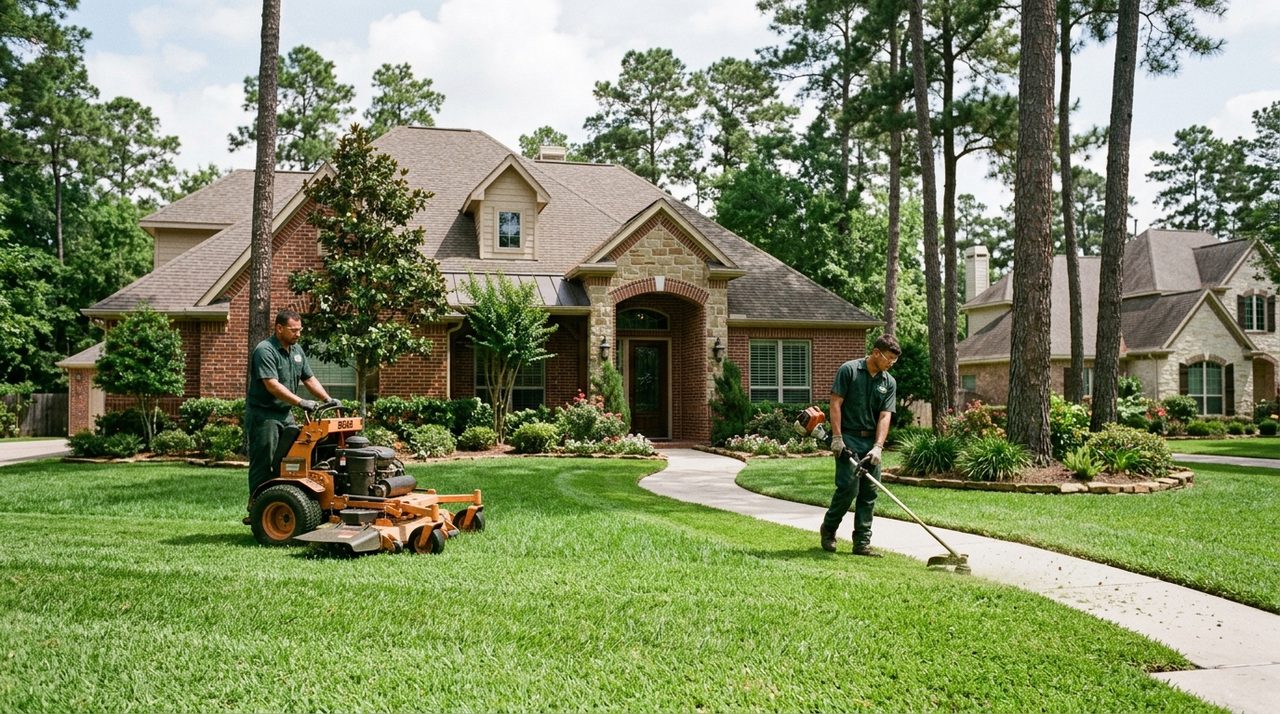
Tomball's landscaping picture is shaped by two distinct realities: late-1990s–2010s master-planned subdivisions governed by mandatory HOAs with architectural review committees, and older ranch-style lots near Old Town Tomball where no HOA oversight applies but expansive northwest Harris County clay soil still drives drainage and foundation headaches. Even though most of Tomball maps to FEMA Zone X, the area's heavy Beaumont-series clay absorbs rainfall slowly enough that standing water after a Gulf rain event is a genuine landscape management challenge, not just a low-lying-area problem. This page explains the specific soil, HOA, root-proximity, and irrigation licensing issues that Tomball homeowners encounter when hiring a landscaper.
Ranked by verified Google rating × review volume × verification tier. How we rank →
Some highly-rated pros serve Tomball from nearby and may not keep a Tomball street address. Those are listed under "Also serving Tomball" with their real city and distance, so you always know where each business is based.
8711 Hufsmith Kuykendahl Rd, Tomball, TX 77375
25119 Hufsmith Cemetery Rd, Tomball, TX 77375
23920 FM2978, Tomball, TX 77375
11627 Standing Pine Ln, Tomball, TX 77375
28414 Calvert Rd, Tomball, TX 77377
14909 Treichel Rd, Tomball, TX 77377
Highly-rated pros based nearby who cover Tomball. Distance shown from the Tomball area.
Serving Tomball Based in The Woodlands · 3.8 mi away
Serving Tomball Based in Cypress · 3.9 mi away
Serving Tomball Based in The Woodlands · 4.3 mi away
Serving Tomball Based in The Woodlands · 4.4 mi away
Why it matters to you
Tomball's master-planned subdivisions — including communities like Villages of NorthPointe and Stone Lake — carry mandatory HOA/POA membership that attaches to property ownership. Architectural review committees (ARCs) commonly specify approved turf species, mulch types, tree placement setbacks, and retaining wall heights. A landscaper who installs sod, a dry creek bed, or a landscape wall without ARC sign-off can trigger a removal order at the homeowner's expense.
What a good pro does
Before any scope is quoted, a qualified landscaper should obtain a copy of your community's CC&Rs and ARC submission requirements — available through the Harris County deed records or the TREC HOA Management Certificate database. Submitted design drawings should call out plant species by botanical name, hardscape dimensions, and materials so the ARC has everything needed for a clean approval. Note that older lots near Old Town Tomball's city core may have no active HOA, so confirming status upfront changes the workflow entirely.
Sources: Local HOA / deed restrictions (see area profile), Municipal permit office (see area profile)
Why it matters to you
Most Tomball parcels sit in FEMA Zone X, which means a low mapped flood risk — but that designation does not change the behavior of the northwest Harris County clay soil underneath. This expansive Beaumont-series clay absorbs water slowly, ponds after routine Gulf moisture events, and shrinks and cracks during summer drought cycles, making poorly graded yards chronically wet in spring and bone-dry in August. Late-1990s and 2000s production-builder homes in Tomball's master-planned subdivisions were often graded to minimum code slope, leaving little margin before beds and turf hold standing water.
What a good pro does
A landscaper addressing drainage in Tomball should assess the full lot grade — not just the immediate problem spot — and determine whether a French drain with a proper outfall or a dry creek bed routed to a street or easement is the right fix. Estimated costs for residential drainage corrections run $2,500–$7,500 depending on linear footage and outfall options. Grading work that materially alters drainage patterns on properties within City of Tomball limits may require a permit through the City of Tomball Building Department; unincorporated Harris County properties fall under Harris County Engineering.
Sources: Harris County Flood Control District, Municipal permit office (see area profile), FEMA National Flood Hazard Layer (NFHL)
Why it matters to you
Every home in Tomball's master-planned subdivisions sits on a slab-on-grade foundation — and the expansive clay soil those slabs rest on loses and gains moisture unevenly when large-rooted trees are planted too close. Live oaks, Chinese tallows, and oversized crepe myrtles within 10–15 feet of a foundation dry the clay unevenly and accelerate differential settlement, which is already a documented concern in northwest Harris County's soil profile. In late-1990s and 2000s-era production homes now entering their first major service cycles, this is exactly when foundation movement shows up as sticking doors and hairline cracks.
What a good pro does
A landscaper working in Tomball should use published setback guidelines — generally 10 feet minimum for small trees, 15–20 feet for large-canopy species — and offer root barrier installation when clients want a tree placed closer to the structure. For subdivisions with HOA ARC requirements, the planting plan submitted for approval should document setback distances explicitly so there is a paper trail. The landscaper does not need a state license for tree planting itself, but should recommend a foundation inspection if existing trees are already encroaching.
Sources: Local HOA / deed restrictions (see area profile), International Residential Code (as adopted by City of Houston)
Why it matters to you
Tomball homeowners frequently assume their general landscaper can install or significantly modify a sprinkler system as part of a larger project — but Texas requires a TCEQ-licensed Irrigator to design and install irrigation systems, and backflow prevention devices must meet TCEQ Chapter 344 requirements and be tested annually by a separately licensed backflow tester. On top of the state licensing requirement, properties within the City of Tomball limits require a permit for new irrigation installation through the City of Tomball Building Department, while unincorporated Harris County properties follow a different process through Harris County Engineering. The boundary between city and unincorporated county runs through many Tomball subdivisions, and assuming one process applies to the whole area is a common mistake.
What a good pro does
Before committing to an irrigation proposal, confirm which jurisdiction your parcel falls in — your tax statement and the Harris County Appraisal District map are the fastest tools. Require that any irrigation contractor pulling a permit hold a current TCEQ Irrigator license (verifiable on the TCEQ license search portal) and that a backflow preventer is included in the scope and scheduled for annual testing. Smart controller retrofits that help manage irrigation under Stage 2 water restrictions — enforced by the MUDs that serve many Tomball subdivisions — are a legitimate upgrade worth pricing into a new system, not an optional add-on.
Sources: Texas Commission on Environmental Quality, Municipal permit office (see area profile)
Hiring landscapers in Tomball? Tomball spans a wide range of housing stock, from older 1960s–1980s homes near the historic city core to newer master-planned subdivisions built from the late 1990s onward. Most HOA-governed neighborhoods feature production-builder brick veneer homes on slab-on-grade foundations, meaning foundation monitoring, HVAC maintenance, and roof upkeep are the primary service needs. Contractors should verify whether a property falls within the City of Tomball, an unincorporated Harris County area, or a specific HOA before beginning work.
Building era
Mixed: 1960s–1980s near Old Town Tomball; late 1990s–2010s in master-planned subdivisions.
Typical style
Production-builder Texas Traditional with brick veneer, hip/gable roofs, and attached garages; some older ranch-style homes near the city core.
Foundations
Predominantly slab-on-grade; pier-and-beam limited to pre-1960s or custom/rural construction.
Common systems
Newer subdivisions: central HVAC (often 15–25 years old in late-1990s builds), copper or PEX plumbing, 200-amp electrical panels. Older homes near Old Town: original HVAC systems likely replaced, possible galvanized or cast iron plumbing, older electrical panels that may need upgrading.
What that means for repairs
Older homes near Old Town Tomball see kitchen and bath remodels, re-piping from galvanized to PEX, and electrical panel upgrades. Newer master-planned homes are entering their first major replacement cycles for HVAC systems, water heaters, and roofing.
Permit jurisdiction
Mixed jurisdiction: properties within the City of Tomball require permits through the City of Tomball Building Department; unincorporated Harris County properties require permits through Harris County Engineering. Verify municipal boundaries before pulling permits.
HOA & deed restrictions
Mandatory HOAs/POAs are the norm in modern Tomball-area master-planned subdivisions (e.g., Villages of NorthPointe Community Association, Stone Lake Homeowners Association). Membership attaches to property ownership. Older pockets near Tomball city core may have no organized HOA or voluntary civic clubs. Confirm specific HOA status via Harris County deed records or TREC HOA Management Certificate database.
Historic districts
No City of Houston historic district designation confirmed. Old Town Tomball has some heritage character but no HAHC jurisdiction applies.
Contractor note
Many Tomball-area HOAs require architectural review committee (ARC) approval before exterior modifications. Contractors should confirm HOA approval requirements and verify whether the property is in the City of Tomball or unincorporated Harris County, as permitting processes differ significantly.
FEMA flood zone
FEMA Zone X (low flood risk) per official NFHL data. Some areas near Cypress Creek and local drainage channels may carry higher risk; always verify specific addresses against the Harris County Flood Control District floodplain viewer.
Hurricane Harvey impact
Some parts of the Tomball/North Harris County area experienced Harvey flooding, particularly near creeks and Cypress Creek, but flooding was very localized. Many newer master-planned subdivisions were designed with detention facilities and experienced less structural flooding than older bayou-adjacent areas. Specific street-level flood history should be verified through Harris County Flood Control District records, seller disclosures, and FEMA claim data.
Heat & humidity load
Sustained summer heat puts heavy demand on HVAC systems, especially in late-1990s to early-2000s homes where original units may be nearing end of life. Slab foundations on Houston's expansive clay soils benefit from consistent watering during drought periods to prevent differential settlement. Attic temperatures in single-story brick veneer homes can exceed 150°F, accelerating roofing material degradation.
Working with contractors here
HVAC replacement and maintenance is the most common service call in Tomball's master-planned subdivisions, as many late-1990s and 2000s-era systems are reaching or past their expected lifespan. Foundation repair and monitoring is also significant due to the expansive clay soils common across northwest Harris County. Roofing work is frequent, driven by both age-related wear and periodic hail events. In older Old Town Tomball homes, re-piping from galvanized to PEX and electrical panel upgrades are common jobs. Contractors should always check HOA ARC requirements for exterior work and confirm the correct permit jurisdiction before starting any project.
Local Tip
Always ask for a written estimate before work begins. Texas contractors are required to provide one on jobs over $1,000.
Tomball spans a wide range of housing stock, from older 1960s–1980s homes near the historic city core to newer master-planned subdivisions built from the late 1990s onward. Most HOA-governed neighborhoods feature production-builder brick veneer homes on slab-on-grade foundations, meaning foundation monitoring, HVAC maintenance, and roof upkeep are the primary service needs. Contractors should verify whether a property falls within the City of Tomball, an unincorporated Harris County area, or a specific HOA before beginning work.
Source: U.S. Census Bureau, ACS 5-Year 2023
Most of Tomball maps to FEMA Zone X (low mapped flood risk), but Houston's flash-flood reality means even low-risk blocks benefit from smart drainage and storm-hardened installs.
Source: FEMA National Flood Hazard Layer (NFHL). Flood zones vary by parcel — verify your individual FIRM panel.
Sources: Municipal permit office (see area profile)
Sources: Local HOA / deed restrictions (see area profile)
Sources: Municipal permit office (see area profile)Harris County Flood Control District
Sources: FEMA National Flood Hazard Layer (NFHL)Harris County Flood Control District
Sources: Texas Commission on Environmental QualityMunicipal permit office (see area profile)