10510 Chestnut Path Way, Tomball, TX 77375
Best Handyman Services in Tomball, TX
Tomball's housing stock runs from 1960s ranch homes near Old Town to sprawling late-1990s and 2000s-era master-planned subdivisions on northwest Harris County's expansive clay soil — a combination that keeps handymen busy with recurring slab-movement repairs, HOA exterior compliance issues, and systems entering their first major replacement cycles. Whether your property falls under the City of Tomball Building Department or Harris County Engineering for permits matters enormously before any work begins. This page breaks down the four challenges Tomball homeowners most commonly face and what qualified handyman help actually looks like here.
Verified against Google Business data
Updated 2026
See the 3 Handyman Services Serving Tomball 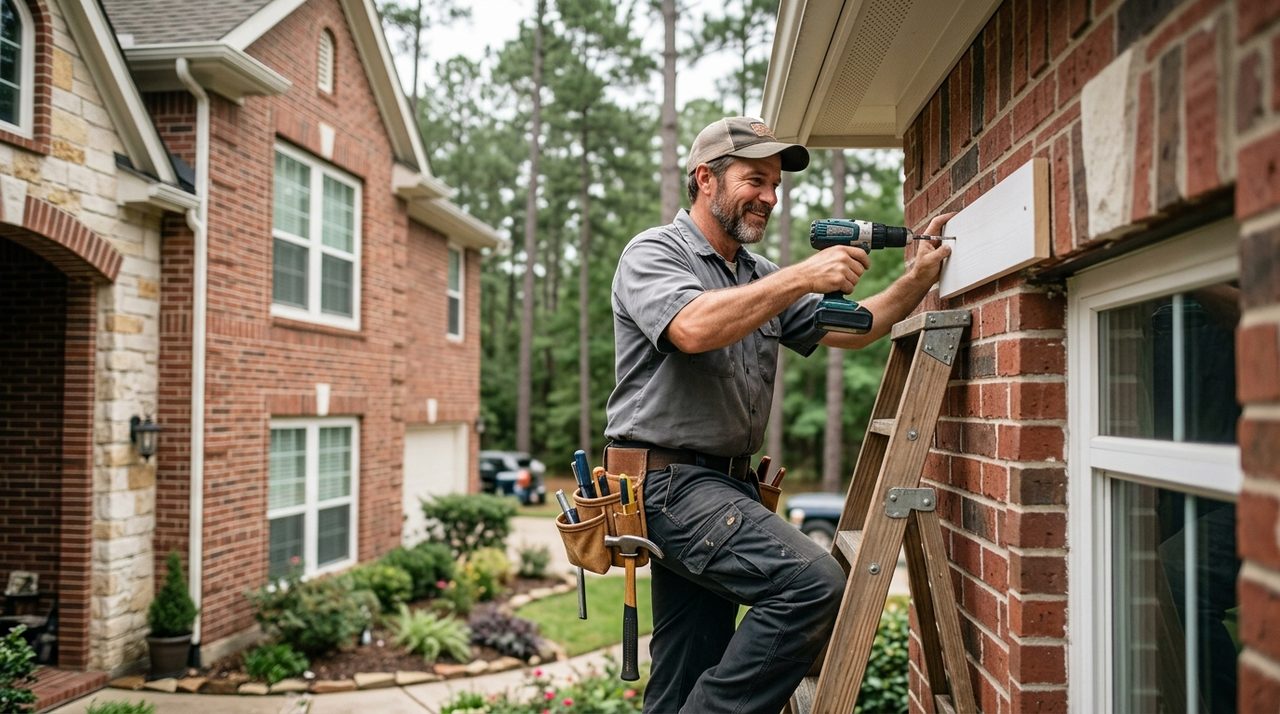
- Median home built
- 1990
- Median home value
- $306,400
- FEMA flood zone
- X (low)
- Typical handyman cost (est.)
- $350–$600 half-day; $75–$150/hr single tasks
- Most common local issue
- Seasonal drywall cracks and sticking doors from slab movement on NW Harris County clay
Ranked by verified Google rating × review volume × verification tier. How we rank →
Some highly-rated pros serve Tomball from nearby and may not keep a Tomball street address. Those are listed under "Also serving Tomball" with their real city and distance, so you always know where each business is based.
Min rating:
3 resultsBased in Tomball
Closed
10123 Checkerberry Park Ln, Tomball, TX 77375
Also serving Tomball
Highly-rated pros based nearby who cover Tomball. Distance shown from the Tomball area.
Closed
Serving Tomball Based in Cypress · 6.8 mi away
Handyman Services in Tomball: What You Should Know
Slab-Movement Cracks That Return Every Season in Late-1990s Subdivisions
Why it matters to you
Tomball's master-planned subdivisions — many built between 1998 and 2010 on northwest Harris County's Beaumont/Houston Black clay — sit on soil that swells noticeably during wet springs and shrinks hard during summer droughts. Production-builder slab-on-grade foundations shift with these cycles, producing drywall cracks at door corners, separating baseboard trim, and interior doors that stick from October through February then swing freely again by June. Because the soil movement is seasonal and repetitive, a patch made without addressing the underlying cycle simply re-cracks within 12–18 months.
What a good pro does
A skilled handyman scopes the crack pattern before touching any drywall — diagonal cracks running from door corners almost always signal slab movement rather than settling, and cosmetic-only patches will fail again. Quality repairs use flexible elastomeric compounds, and texture-matching Houston's standard orange-peel finish (estimated $150–$400 per repair location) takes experience to blend invisibly. Addressing soil moisture consistency around the foundation perimeter — keeping sprinkler schedules and downspout discharge uniform — significantly extends how long each repair holds.
Sources: International Residential Code (as adopted by City of Houston)
HOA Architectural Review Turns Fence-Board Swaps Into a Multi-Step Process
Why it matters to you
Most post-1990 Tomball subdivisions — including communities governed by associations like the Villages of NorthPointe Community Association and Stone Lake Homeowners Association — require Architectural Review Committee (ARC) approval before exterior changes, including fence repairs that substitute a different wood species, board profile, or stain shade than what is on record. A handyman who replaces storm-rotted cedar boards with pine, or uses a slightly cooler stain tone, can generate a violation notice that costs the homeowner more to resolve than the original repair. At an estimated $20–$35 per board plus labor, a full fence run is not a trivial job to redo under violation pressure.
What a good pro does
Before ordering materials, a knowledgeable handyman asks to see your HOA's recorded fence standards or contacts the ARC directly to confirm approved species, board dimensions, and finish. Harris County deed records and the TREC HOA Management Certificate database are reliable starting points for identifying your specific association if documentation is not on hand. Getting written ARC sign-off — even via email — before the first board comes off protects both homeowner and contractor from after-the-fact disputes.
Sources: Local HOA / deed restrictions (see area profile), Municipal permit office (see area profile)
Older Old Town Tomball Homes and Lingering Uri Sequelae in Aging Systems
Why it matters to you
The 1960s–1980s ranch-style homes clustered near Old Town Tomball took February 2021's freeze hard: galvanized or CPVC supply lines cracked at interior walls, hose bib stems split, and water-heater pan drains failed silently behind drywall. Years later, handymen still find partially patched bathroom tile, drywall that was mud-coated but never properly textured, corroded exterior hose bibs still dripping, and stained subfloor edges that were never dried correctly after pipe-burst flooding. These deferred cosmetic repairs are invisible at first glance but accelerate wood rot in a climate where dew points regularly top 75°F through summer.
What a good pro does
A thorough handyman doing any bathroom or utility-area work in a pre-1990 Old Town Tomball home should probe drywall around supply lines and under sink cabinets for soft spots before quoting purely cosmetic scope — what looks like a texture patch often reveals a moisture problem underneath that requires drying and mold-safe remediation protocols before finishing work begins. Any plumbing corrections to supply lines require a TSBPE-licensed plumber; the handyman's role is identifying the sequelae and coordinating the correct trade before patching over a hidden failure.
Sources: Texas State Board of Plumbing Examiners, IICRC (water/mold restoration standards)
HVAC-Adjacent Tasks in Aging Late-1990s Systems Bumping Against TDLR Boundaries
Why it matters to you
Tomball's late-1990s and early-2000s master-planned homes are now 20–25 years old, meaning original HVAC systems are at or past expected service life. Homeowners frequently put HVAC-adjacent items on handyman punch lists — clearing a clogged condensate drain line, resealing a plenum gap in the attic, replacing a programmable thermostat, or adding attic insulation around the air handler — because full HVAC contractors have long lead times and these feel like small jobs. Houston's roughly 3,000 cooling hours per year mean these systems run nearly continuously, so small failures compound quickly.
What a good pro does
The handyman scope here is real but bounded: clearing a condensate pan and drain line, replacing a thermostat that requires only 24-volt low-voltage wiring, or stapling batt insulation away from the plenum are legitimate handyman tasks. The moment work touches refrigerant lines, electrical connections at the air handler, or the condensate pump circuit, Texas TDLR-licensed HVAC contractor involvement is required — and within the City of Tomball or unincorporated Harris County, permit thresholds apply to system replacements. Confirm jurisdiction before any mechanical work begins, as City of Tomball and Harris County Engineering have separate processes.
Sources: Texas Department of Licensing & Regulation, Municipal permit office (see area profile)
Handyman Services in Tomball: What You Should Know
Hiring handyman services in Tomball? Tomball spans a wide range of housing stock, from older 1960s–1980s homes near the historic city core to newer master-planned subdivisions built from the late 1990s onward. Most HOA-governed neighborhoods feature production-builder brick veneer homes on slab-on-grade foundations, meaning foundation monitoring, HVAC maintenance, and roof upkeep are the primary service needs. Contractors should verify whether a property falls within the City of Tomball, an unincorporated Harris County area, or a specific HOA before beginning work.
- Housing era
- Mixed
- Foundation
- Predominantly slab-on-grade
- Flood zone
- FEMA Zone X (low flood risk) per official NFHL data
- Permits
- Mixed jurisdiction
Housing stock & systems
Building era
Mixed: 1960s–1980s near Old Town Tomball; late 1990s–2010s in master-planned subdivisions.
Typical style
Production-builder Texas Traditional with brick veneer, hip/gable roofs, and attached garages; some older ranch-style homes near the city core.
Foundations
Predominantly slab-on-grade; pier-and-beam limited to pre-1960s or custom/rural construction.
Common systems
Newer subdivisions: central HVAC (often 15–25 years old in late-1990s builds), copper or PEX plumbing, 200-amp electrical panels. Older homes near Old Town: original HVAC systems likely replaced, possible galvanized or cast iron plumbing, older electrical panels that may need upgrading.
What that means for repairs
Older homes near Old Town Tomball see kitchen and bath remodels, re-piping from galvanized to PEX, and electrical panel upgrades. Newer master-planned homes are entering their first major replacement cycles for HVAC systems, water heaters, and roofing.
Permits & restrictions
Permit jurisdiction
Mixed jurisdiction: properties within the City of Tomball require permits through the City of Tomball Building Department; unincorporated Harris County properties require permits through Harris County Engineering. Verify municipal boundaries before pulling permits.
HOA & deed restrictions
Mandatory HOAs/POAs are the norm in modern Tomball-area master-planned subdivisions (e.g., Villages of NorthPointe Community Association, Stone Lake Homeowners Association). Membership attaches to property ownership. Older pockets near Tomball city core may have no organized HOA or voluntary civic clubs. Confirm specific HOA status via Harris County deed records or TREC HOA Management Certificate database.
Historic districts
No City of Houston historic district designation confirmed. Old Town Tomball has some heritage character but no HAHC jurisdiction applies.
Contractor note
Many Tomball-area HOAs require architectural review committee (ARC) approval before exterior modifications. Contractors should confirm HOA approval requirements and verify whether the property is in the City of Tomball or unincorporated Harris County, as permitting processes differ significantly.
Flood & weather
FEMA flood zone
FEMA Zone X (low flood risk) per official NFHL data. Some areas near Cypress Creek and local drainage channels may carry higher risk; always verify specific addresses against the Harris County Flood Control District floodplain viewer.
Hurricane Harvey impact
Some parts of the Tomball/North Harris County area experienced Harvey flooding, particularly near creeks and Cypress Creek, but flooding was very localized. Many newer master-planned subdivisions were designed with detention facilities and experienced less structural flooding than older bayou-adjacent areas. Specific street-level flood history should be verified through Harris County Flood Control District records, seller disclosures, and FEMA claim data.
Heat & humidity load
Sustained summer heat puts heavy demand on HVAC systems, especially in late-1990s to early-2000s homes where original units may be nearing end of life. Slab foundations on Houston's expansive clay soils benefit from consistent watering during drought periods to prevent differential settlement. Attic temperatures in single-story brick veneer homes can exceed 150°F, accelerating roofing material degradation.
Working with contractors here
HVAC replacement and maintenance is the most common service call in Tomball's master-planned subdivisions, as many late-1990s and 2000s-era systems are reaching or past their expected lifespan. Foundation repair and monitoring is also significant due to the expansive clay soils common across northwest Harris County. Roofing work is frequent, driven by both age-related wear and periodic hail events. In older Old Town Tomball homes, re-piping from galvanized to PEX and electrical panel upgrades are common jobs. Contractors should always check HOA ARC requirements for exterior work and confirm the correct permit jurisdiction before starting any project.
Local Tip
Always ask for a written estimate before work begins. Texas contractors are required to provide one on jobs over $1,000.
About Tomball
Tomball spans a wide range of housing stock, from older 1960s–1980s homes near the historic city core to newer master-planned subdivisions built from the late 1990s onward. Most HOA-governed neighborhoods feature production-builder brick veneer homes on slab-on-grade foundations, meaning foundation monitoring, HVAC maintenance, and roof upkeep are the primary service needs. Contractors should verify whether a property falls within the City of Tomball, an unincorporated Harris County area, or a specific HOA before beginning work.
- Median year built
- 1990
- Median home value
- $306,400
- Owner-occupied
- 48.5%
- Population
- 13,032
- Housing units
- 5,495
- Median income
- $71,426
Source: U.S. Census Bureau, ACS 5-Year 2023
Flood & storm risk
FEMA Zone XLow flood riskMost of Tomball maps to FEMA Zone X (low mapped flood risk), but Houston's flash-flood reality means even low-risk blocks benefit from smart drainage and storm-hardened installs.
Source: FEMA National Flood Hazard Layer (NFHL). Flood zones vary by parcel — verify your individual FIRM panel.
Frequently Asked Questions
Does a handyman need to pull a permit for replacing a water heater in my Tomball subdivision home?
Yes — water heater replacement is a permitted trade job in both the City of Tomball and unincorporated Harris County, and the work requires a licensed plumber under the Texas State Board of Plumbing Examiners, not a general handyman. Before any work begins, confirm which jurisdiction your property sits in: homes inside city limits go through the City of Tomball Building Department, while the large share of Tomball-area master-planned subdivisions that fall in unincorporated Harris County route permits through Harris County Engineering. A handyman who swaps a water heater without the correct permit can create title and insurance complications when you sell.
Sources: Texas State Board of Plumbing ExaminersMunicipal permit office (see area profile)
My Villages of NorthPointe home needs new exterior paint — do I need HOA approval before the handyman starts?
Almost certainly yes. Master-planned communities like Villages of NorthPointe operate under mandatory HOA deed restrictions that require Architectural Review Committee approval before any exterior color change, even if you are repainting the same color family. Ask your handyman to pause scheduling until you have written ARC approval in hand, because unapproved work can trigger a violation notice and force a costly repaint. Look up your specific HOA's approved color palette in your community's deed restrictions, which are on file with Harris County's deed records.
Sources: Local HOA / deed restrictions (see area profile)
How does the FEMA Zone X flood designation affect what a handyman should check or fix around my Tomball home after heavy rain?
Most of Tomball maps to FEMA Zone X, meaning low mapped flood risk, but northwest Harris County's clay soil sheds water slowly and local flash-flooding still happens on streets that never appear on FEMA maps. After any significant rain event, a handyman should inspect downspout extensions (minimum 4-foot discharge away from the slab), garage door bottom seals, and any low threshold points at side-entry doors — all areas where standing water can wick into a slab-on-grade home even in a Zone X neighborhood. These are cosmetic-maintenance tasks that typically don't require a permit, but addressing them proactively is especially worthwhile in late-1990s and 2000s-era production homes whose original caulking and weatherstripping is now 20-plus years old.
What is a realistic timeline and cost estimate to get a handyman out for a punch-list of small interior repairs in a busy season in Tomball?
Expect 1–2 weeks lead time during the fall and spring busy seasons when slab-movement repairs and post-storm work surge across northwest Harris County; summer and mid-winter typically book faster. A half-day package from a reputable Tomball-area handyman runs an estimated $350–$600, which covers 3–5 smaller tasks such as drywall crack patching, door re-hanging, and weatherstrip replacement — material costs are extra and have run 15–25% above pre-2020 levels due to sustained storm-demand surges in the Houston metro. Get a written scope and line-item estimate before the visit so both parties agree on what fits inside a half day.
My Old Town Tomball house was built in 1968 — should I be worried about lead paint when a handyman sands or scrapes painted trim?
Yes, any home built before 1978 can contain lead-based paint, and sanding, scraping, or otherwise disturbing painted surfaces triggers EPA Renovation, Repair and Painting rule requirements. Work in these homes must be performed by or under the supervision of an EPA Lead-Safe Certified firm, so ask any handyman you hire to show their firm's current EPA RRP certification before they touch painted woodwork, window sashes, or exterior trim. Old Town Tomball's 1960s bungalows and ranch homes are the most likely candidates in the Tomball area; the newer master-planned subdivisions built after 1980 are not affected.
Sources: EPA Lead Renovation, Repair and Painting (RRP) Rule
Can a Tomball handyman legally do the thermostat wiring swap and condensate line flush on my aging late-1990s AC system, or does that cross into TDLR-licensed territory?
A simple thermostat swap — disconnecting and reconnecting low-voltage wires on a like-for-like replacement — generally falls in a gray zone that many handymen handle, but any work that involves opening the air handler cabinet, cutting or splicing refrigerant lines, or modifying the condensate drain system requires a TDLR-licensed HVAC contractor. Condensate line flushing with compressed air through an access port is often treated as maintenance, but confirm with the handyman that they are not touching electrical connections inside the unit or altering drain routing, which would cross the TDLR line. Because Tomball's late-1990s and early-2000s systems are hitting their first major service cycles, this is a common scope-creep conversation worth having upfront.