3129 E NASA Pkwy Suite 107, Seabrook, TX 77586
Best Foundation Repair in Seabrook, TX
Seabrook sits on Galveston Bay in FEMA Zone AE, where a mixed housing stock — from 1960s waterfront cottages on pier-and-beam foundations to 2000s slab-on-grade subdivisions inland — means foundation repair here rarely follows a single playbook. Harvey (2017) and Beryl (2024) subjected the area to prolonged saturation that weakened soil bearing capacity under both foundation types, and the City of Seabrook's own Building/Permits Department — not Houston Permitting Center — governs all repair permits, adding a jurisdictional layer that out-of-area contractors frequently miss. This page explains the specific failure patterns, repair approaches, and approval requirements that Seabrook homeowners actually face.
Verified against Google Business data
Updated 2026
See the 10 Foundation Repair Serving Seabrook 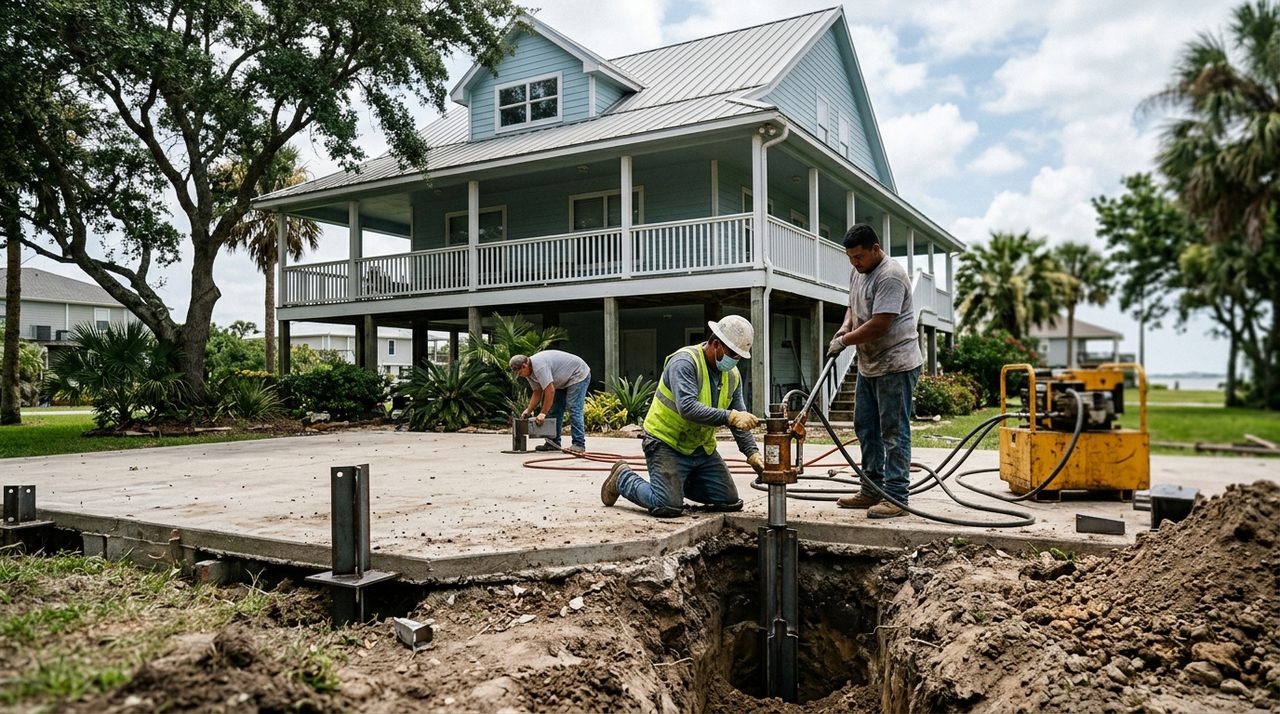
- Median home built
- 1991
- Median home value
- $332,000
- FEMA flood zone
- AE (high)
- Typical cost (est.)
- $3,500–$25,000 depending on pier type and count
- Most common local issue
- Post-flood saturation settlement on slab-on-grade homes; pier deterioration on older waterfront pier-and-beam structures
Ranked by verified Google rating × review volume × verification tier. How we rank →
Some highly-rated pros serve Seabrook from nearby and may not keep a Seabrook street address. Those are listed under "Also serving Seabrook" with their real city and distance, so you always know where each business is based.
Min rating:
10 resultsBased in Seabrook
Closed
613 Kirby Rd #152, Seabrook, TX 77586
Open Now
4604 NASA Road 1, Seabrook, TX 77586
Closed
1408 Bayport Blvd #220, Seabrook, TX 77586
Also serving Seabrook
Highly-rated pros based nearby who cover Seabrook. Distance shown from the Seabrook area.
Open Now
Serving Seabrook Based in Kemah · 2.4 mi away
Open Now
Serving Seabrook Based in Kemah · 2.4 mi away
Closed
Serving Seabrook Based in Kemah · 2.6 mi away
Closed
Serving Seabrook Based in League City · 3.9 mi away
Open Now
Serving Seabrook Based in League City · 4.1 mi away
Closed
Serving Seabrook Based in League City · 5 mi away
Foundation Repair in Seabrook: What You Should Know
Prolonged Flood Saturation Undermining Both Slab and Pier-and-Beam Foundations
Why it matters to you
Seabrook's FEMA Zone AE designation reflects a real and recurring hazard — Harvey (2017) and Beryl (2024) left many blocks near Galveston Bay and the inland canal network under standing water for days. For the 2000s slab-on-grade subdivisions, prolonged saturation reconsolidates the clay beneath the slab, triggering settlement that can appear weeks after the water recedes. For the older pier-and-beam waterfront homes built in the 1960s and 1970s, repeated storm-surge events accelerate decay of timber framing and corrosion of any metal connectors, leaving piers rocking in softened soil. The delayed timeline catches homeowners off guard when doors stick or floors go wavy months after a storm.
What a good pro does
A qualified contractor should document pre-repair conditions with a floor-level survey using a rotating laser or digital level before attributing movement to a single cause. On slab homes, steel push piers ($1,200–$1,800 per pier, est.) driven to competent load-bearing soil below the saturated zone are the appropriate response — pressed concrete pilings do not reach adequate depth in Seabrook's storm-affected soils. On pier-and-beam structures, a structural inspection of each timber pier, cap, and girder is essential before any lifting attempt. All underpinning work requires a permit from the City of Seabrook Building/Permits Department; contractors who try to pull through Harris County or the Houston Permitting Center are working in the wrong jurisdiction.
Sources: FEMA National Flood Hazard Layer (NFHL), Municipal permit office (see area profile), Harris County Flood Control District
Older Pier-and-Beam Waterfront Homes: Deteriorated Piers and Missing Elevation Certificates
Why it matters to you
Seabrook's 1960s and 1970s waterfront and canal-front homes were built on pier-and-beam or pier-and-pile systems specifically because the floodplain and storm-surge requirements of the era demanded them. Decades of salt-air exposure — a daily reality on Galveston Bay — corrode metal hardware and degrade untreated wood piers far faster than would occur even a few miles inland. Homeowners who bought these properties in the 2000s or afterward may have no documentation of prior pier repairs or elevation work, which becomes a serious problem when FEMA Zone AE requires a current elevation certificate at resale and when any structural repair that changes finished floor elevation can invalidate an existing certificate.
What a good pro does
Before signing any repair contract on a pre-1980 Seabrook waterfront home, obtain a current elevation certificate from a licensed surveyor — the City of Seabrook's floodplain management requirements make this a practical necessity, not just a resale formality. A reputable contractor will assess each pier individually, replace deteriorated timber with pressure-treated material rated for ground contact in coastal conditions, and re-anchor girders with galvanized or stainless hardware appropriate for the salt-air environment. Any work that alters the structure's elevation should be documented so the elevation certificate can be updated. Permit the work through the City of Seabrook; HOA or POA architectural review (Seabrook Island HOA, Lake Cove Community Association, Seascape POA, and others) may also be required for exterior access trenching or visible structural modification.
Sources: FEMA National Flood Hazard Layer (NFHL), Municipal permit office (see area profile), Local HOA / deed restrictions (see area profile)
Under-Slab Plumbing Leaks Compounding Foundation Movement in Post-Uri Slab Homes
Why it matters to you
Seabrook's 1980s and 1990s slab-on-grade subdivisions — which make up a significant portion of the city's housing stock given the 1991 census median build year — contain cast-iron under-slab drain lines that were prime candidates for freeze fractures during Winter Storm Uri in February 2021. Many homeowners had visible interior pipe damage repaired but left cracked under-slab lines unaddressed. Those slow, ongoing leaks saturate the clay directly beneath the slab, creating localized heave and then settlement as the soil structure breaks down — a process that mimics and masks drought-related movement and makes accurate diagnosis difficult. In Seabrook's already high-humidity coastal environment, under-slab moisture accumulation is a compounding threat.
What a good pro does
Before any foundation repair proposal is accepted, insist on a hydrostatic plumbing test ($250–$400, est.) performed by a Texas State Board of Plumbing Examiners-licensed plumber. This test pressurizes the under-slab drain system to identify leaks that a standard visual inspection cannot find. If leaks are confirmed, they must be repaired — either by pipe lining or targeted slab penetration and replacement — before pier installation, because underpinning an actively eroding subgrade is an incomplete fix. The City of Seabrook's permit office requires separate permits for plumbing and foundation structural work; a contractor who bundles both scopes under a single permit should be questioned closely.
Sources: Texas State Board of Plumbing Examiners, Municipal permit office (see area profile), International Residential Code (as adopted by City of Houston)
Subdivision HOA Review and City of Seabrook Permits: A Two-Step Approval Process Contractors Often Skip
Why it matters to you
Seabrook is an incorporated city with approximately 16 registered HOA and condo communities, meaning that a homeowner in Lake Cove, Seascape, or Searidge faces two separate approval processes for most exterior foundation work: a building permit from the City of Seabrook Building/Permits Department and architectural committee review from the relevant HOA or POA. Contractors who primarily work the Baytown or Clear Lake corridors may be accustomed to Harris County unincorporated rules or the Houston Permitting Center and may be unfamiliar with Seabrook's municipal permit office — a gap that leaves homeowners holding unpermitted work that will surface on a resale inspection. Texas requires sellers to disclose known foundation movement and repairs on the TREC disclosure form, making undocumented or unpermitted work a direct financial liability.
What a good pro does
Verify permit status directly with the City of Seabrook Building/Permits Department before work begins — do not rely on the contractor's assurance alone. Simultaneously, contact your subdivision's HOA or POA management (Goodwin & Company manages Lake Cove Community Association, for example) to confirm whether perimeter trenching, concrete work, or equipment staging on landscaped areas requires architectural review approval and how long that process takes. Build HOA review timelines into your project schedule; approvals in some subdivisions take two to four weeks. A contractor who resists pulling a municipal permit in Seabrook or skips the HOA step should be disqualified — the downstream disclosure and resale consequences fall entirely on the homeowner.
Sources: Municipal permit office (see area profile), Local HOA / deed restrictions (see area profile), Texas Department of Licensing & Regulation
Foundation Repair in Seabrook: What You Should Know
Hiring foundation repair in Seabrook? Seabrook is an incorporated city on Galveston Bay with housing ranging from 1960s waterfront homes to 2000s subdivision development, creating a wide spectrum of home service needs. The coastal location and FEMA AE flood zone designation mean that flood mitigation, elevation considerations, and storm-hardening are central to nearly every major home project. Homeowners should expect subdivision-level HOA requirements that vary block by block and plan for salt-air corrosion on exterior systems.
- Housing era
- 1970s–2000s, with some 1960s waterfront homes and ongoing infill
- Foundation
- Mixed — predominantly slab-on-grade in newer subdivisions
- Flood zone
- FEMA Zone AE (high flood risk) — source
- Permits
- City of Seabrook Building/Permits Department (incorporated city — not Houston Permitting Center or Harris…
Housing stock & systems
Building era
1970s–2000s, with some 1960s waterfront homes and ongoing infill.
Typical style
Production suburban traditional (one- and two-story brick or brick-and-siding) with coastal/contemporary elevated homes along waterfront and canal-front areas.
Foundations
Mixed — predominantly slab-on-grade in newer subdivisions; pier-and-beam or pier-and-pile construction common in older waterfront and canal-front homes due to floodplain and storm-surge requirements.
Common systems
Central HVAC systems typical of 1980s–2000s construction (aging units in older homes); copper and CPVC plumbing in newer builds, galvanized possible in 1960s–1970s stock; standard 200-amp electrical panels in newer homes, potential 100-amp in older homes.
What that means for repairs
Flood damage repair and mitigation retrofits are common drivers of renovation activity. Waterfront homes frequently undergo elevation projects, foundation reinforcement, and storm-resistant window/door upgrades. Older homes often need full plumbing repipes and HVAC replacements due to age and salt-air corrosion.
Permits & restrictions
Permit jurisdiction
City of Seabrook Building/Permits Department (incorporated city — not Houston Permitting Center or Harris County).
HOA & deed restrictions
Subdivision-by-subdivision. Many subdivisions have mandatory HOAs/POAs including Seabrook Island HOA, Lake Cove Community Association (managed by Goodwin & Company), Seascape POA, and Searidge. Approximately 16 HOA/condo communities are registered in Seabrook. Some older or fringe areas may have no active HOA but may still have recorded deed restrictions.
Historic districts
No City of Houston historic district designation confirmed. Seabrook is an independent incorporated city and not subject to HAHC oversight.
Contractor note
Contractors must pull permits through the City of Seabrook and should verify subdivision-specific HOA architectural review requirements before starting exterior work. Coastal building codes and floodplain management regulations apply and may require elevation certificates.
Flood & weather
FEMA flood zone
FEMA Zone AE (high flood risk) — source: fema_nfhl. Seabrook sits directly on Galveston Bay and is subject to both riverine flooding and coastal storm surge, contributing to its very high hazard risk rating.
Hurricane Harvey impact
The Clear Lake/Bay area of southeast Harris County experienced significant flooding during Hurricane Harvey. Seabrook-specific community hazard data rates overall risk as 'Very High.' However, no publicly available subdivision-level or street-level Harvey flood-extent map for Seabrook was identified. Exact street-by-street impact should be verified through Harris County Flood Control District records and individual property seller's disclosures.
Heat & humidity load
Extreme humidity and salt-air proximity accelerate corrosion on HVAC condensers, metal roofing components, and exterior hardware. HVAC systems run at near-continuous capacity May through September, shortening equipment lifespan. Mold and moisture intrusion in slab-on-grade and pier-and-beam homes require proactive dehumidification and ventilation strategies.
Working with contractors here
Contractors working in Seabrook most commonly handle flood damage restoration, foundation repairs (especially on older pier-and-beam waterfront homes), and HVAC replacements accelerated by salt-air corrosion and heavy summer usage. Roofing and exterior siding projects require wind-rated materials compliant with coastal building codes, and many jobs trigger City of Seabrook floodplain management requirements including elevation certificates. The wide range of housing ages — from 1960s waterfront cottages to 2000s subdivision homes — means scoping should always begin with a thorough assessment of existing systems, as plumbing and electrical standards vary significantly across eras. HOA architectural review adds a layer of approval in many subdivisions, so contractors should confirm HOA requirements before beginning visible exterior modifications.
Local Tip
Always ask for a written estimate before work begins. Texas contractors are required to provide one on jobs over $1,000.
About Seabrook
Seabrook is an incorporated city on Galveston Bay with housing ranging from 1960s waterfront homes to 2000s subdivision development, creating a wide spectrum of home service needs. The coastal location and FEMA AE flood zone designation mean that flood mitigation, elevation considerations, and storm-hardening are central to nearly every major home project. Homeowners should expect subdivision-level HOA requirements that vary block by block and plan for salt-air corrosion on exterior systems.
- Median year built
- 1991
- Median home value
- $332,000
- Owner-occupied
- 64.1%
- Population
- 13,617
- Housing units
- 6,138
- Median income
- $109,489
Source: U.S. Census Bureau, ACS 5-Year 2023
Flood & storm risk
FEMA Zone AEHigh flood riskMuch of Seabrook maps to FEMA Zone AE (high flood risk), so flood-resilient detailing -- elevated equipment, water-tolerant materials, and drainage-first thinking -- is essential here, not optional; risk climbs sharply on blocks nearest Galveston Bay, where it varies parcel to parcel.
Source: FEMA National Flood Hazard Layer (NFHL). Flood zones vary by parcel — verify your individual FIRM panel.
Houston Storm Readiness in Seabrook
Hurricane & flooding
Drainage grading away from your foundation is your first line of defense when Seabrook, TX sits squarely in FEMA Zone AE inside the 100-year floodplain and proximity to Galveston Bay territory — confirm that soil slopes at least six inches over the first ten feet before storm season. After any hurricane-level saturation event, watch for sticking doors and diagonal cracks at window corners, which are early indicators that clay soil consolidation has shifted your foundation unevenly. As a Harris County community, Seabrook may follow county rather than City of Houston storm rebuild rules.
Severe storms & hail
Hail impact does not directly damage a concrete slab, but the intense, short-duration rainfall that accompanies large-cell storms in Seabrook, TX saturates expansive clay rapidly and unevenly, particularly if your landscape grade has shifted since your last inspection. A TDLR-licensed foundation specialist can evaluate whether existing interior piers are still making full contact after a significant storm cluster moves through the area. Because Seabrook drains toward Galveston Bay, block-level runoff can differ sharply from the mapped zone.
Ice storms & freezes
Ice accumulation on a roof during an event like Uri adds significant live load to your structure, and that compressive force transfers to your foundation piers and slab corners — in Seabrook, TX where subgrade soils are near saturation, the bearing capacity margin is already reduced. After any ice-loading event, check for new diagonal cracks at door corners and schedule an elevation survey if more than one new crack appears. Confirm the current FEMA panel for your Seabrook parcel — the area maps to Zone AE, but adjacent lots can differ.
Sources: FEMA National Flood Hazard Layer (NFHL), Ready.gov -- Hurricanes, CenterPoint Energy -- Storm Center, City of Houston -- Emergency Preparedness, Ready.gov -- Winter Weather, Harris County Flood Control District
Free Seabrook Tools & Calculators
Houston-specific estimators to plan your project before you call a pro. All results are planning estimates — a licensed local pro confirms the details on site.
Houston Soil & Tree Proximity Risk Calculator
Open full tool & FAQ →Grouped by mature root aggression & water demand.
Trunk center to the nearest exterior wall.
Moderate risk
The root zone likely reaches your foundation's soil during Houston's dry summers, when clay shrinks most. Watch for sticking doors and diagonal cracks, keep soil moisture even with a soaker hose during drought, and have a foundation pro evaluate if you see any movement.
Find a Houston foundation pro →This is a planning estimate only — actual requirements depend on an on-site assessment by a licensed Houston pro. Guidance is based on general species root behavior in expansive clay, not a soil test.
Houston Freeze Prep & Pipe Insulation Checklist
Open full tool & FAQ →Your freeze checklist — 4 tasks
- 1
Disconnect & drain every outdoor hose bib
Remove hoses, drain the spigots, and cover each with an insulated faucet sock. Un-drained hose bibs are the #1 burst point in a Houston freeze.
- 2
Insulate exposed pipes in the attic & garage
Wrap any pipe in an unconditioned space (attic runs, garage walls) with foam sleeves. Houston homes rarely insulate these because they only matter a few nights a year — which is exactly why they burst.
- 3
Open cabinet doors & keep a pencil-width drip
On hard-freeze nights, open kitchen/bath cabinets so warm air reaches the pipes and let faucets on exterior walls drip to relieve pressure.
- 4
Protect the attic/garage water heater & its lines
An attic or garage tank sits in unconditioned space. Insulate the cold-inlet and hot-outlet lines and confirm the emergency drain pan is clear so a leak doesn't reach the ceiling.
This is a planning estimate only — actual requirements depend on an on-site assessment by a licensed Houston pro. If a pipe has already burst, shut off your main water supply and call a licensed Houston plumber immediately — freeze bursts flood fast.
Frequently Asked Questions
Do I need a permit from the City of Seabrook to repair or replace piers under my waterfront home?
Yes — because Seabrook is an incorporated city, all structural foundation work including pier replacement, underpinning, or slab lifting requires a permit from the City of Seabrook Building/Permits Department, not from the Houston Permitting Center or Harris County. Out-of-area contractors who routinely pull permits through the City of Houston often miss this distinction and may leave you with unpermitted work that surfaces as a defect on resale inspection. Confirm that your contractor has actually submitted to and received approval from Seabrook's own permit office before any work begins.
Sources: Municipal permit office (see area profile)
My 1970s canal-front home in Seabrook is in FEMA Zone AE — will foundation repair affect my elevation certificate or my flood insurance?
It can. If repair work physically changes your finished floor elevation — even slightly, as sometimes happens when a settled pier-and-beam structure is releveled — your existing elevation certificate may no longer accurately reflect the structure, which matters for National Flood Insurance Program rating and for any future resale in Zone AE. Before signing a repair contract, ask your contractor in writing whether the proposed work will alter finished floor elevation, and if so, budget for a post-repair survey by a licensed surveyor to update the certificate. FEMA flood map data and NFIP rating rules tie directly to that documented elevation.
How does Seabrook's salt-air environment affect the steel piers or helical piers used in foundation repair?
Galveston Bay's coastal atmosphere accelerates corrosion on bare metal, which is a legitimate concern for steel push piers and helical piers installed near the waterfront. Reputable contractors working on bay-adjacent properties in Seabrook should specify galvanized or epoxy-coated pier shafts and use corrosion-resistant hardware at the bracket connection — ask for the manufacturer's corrosion-protection spec sheet before approving a proposal. This is especially important for 1960s–1970s waterfront lots where saltwater intrusion into soils is a real factor, not just surface air exposure.
My Seabrook subdivision has an HOA — do I need their approval before the foundation contractor can start work?
In most Seabrook subdivisions with active HOAs or POAs — including Lake Cove, Seabrook Island HOA, Seascape POA, and Searidge — exterior work that involves visible trenching around the foundation perimeter or equipment staging in the yard typically requires advance architectural review approval, separate from the City of Seabrook building permit. These are parallel processes and neither waives the other, so plan for both before scheduling your start date. Getting HOA approval in writing protects you if a neighbor or the association later disputes the work.
Sources: Local HOA / deed restrictions (see area profile)Municipal permit office (see area profile)
How long does foundation repair typically take in Seabrook, and is there a better or worse time of year to schedule it?
Most pier underpinning or pier-and-beam releveling jobs in the Seabrook area run two to five days on-site once permits are in hand, though the City of Seabrook permit review and inspection scheduling can add one to three weeks to the total timeline — these are estimates and vary by contractor backlog and permit office load. Late fall through early winter (November–January) is generally the most predictable window: soils have stabilized after the wet season, contractor schedules are less compressed than post-storm surge periods, and you avoid the risk of a tropical event interrupting an open trench. Scheduling immediately after a major flood event like Beryl is tempting but risky, as soil bearing capacity may still be in flux from prolonged saturation.
Texas doesn't license foundation repair contractors separately — how do I evaluate a Seabrook contractor's qualifications without a state license to check?
Because TDLR does not issue a standalone residential foundation repair license in Texas, your vetting has to focus on verifiable proxies: confirmed general liability and workers' compensation insurance certificates (ask for them directly, not just a contractor's assurance), a track record of pulling permits through the City of Seabrook specifically, and written proposals that specify pier type, pier depth, and the load-bearing soil layer being targeted. If the repair involves any under-slab drain line work — common in post-Uri homes — that scope must be performed or directly overseen by a plumber licensed through TSBPE. Comparing at least three written proposals with those technical details is the most reliable way to distinguish experienced local contractors from out-of-area crews unfamiliar with Seabrook's coastal and jurisdictional conditions.
Sources: Texas Department of Licensing & RegulationTexas State Board of Plumbing Examiners