4636 E NASA Pkwy, Seabrook, TX 77586
Best Roofers in Seabrook, TX
Seabrook sits on the edge of Galveston Bay in FEMA Zone AE, meaning roofs here take a beating from Gulf-driven wind and salt air that inland Harris County neighborhoods simply don't face — and every full re-roof triggers a permit through the City of Seabrook's own Building Department, not Houston's Permitting Center. With housing ranging from 1960s waterfront cottages on pier-and-pile foundations to 2000s slab-on-grade subdivisions, the roofing challenges and correct material choices differ dramatically block by block. This page focuses on the four roof-specific problems that actually matter in Seabrook: coastal wind uplift, salt-accelerated shingle and metal degradation, TWIA insurance compliance, and subdivision HOA approval delays that can stall storm repairs.
Verified against Google Business data
Updated 2026
See the 10 Roofers Serving Seabrook 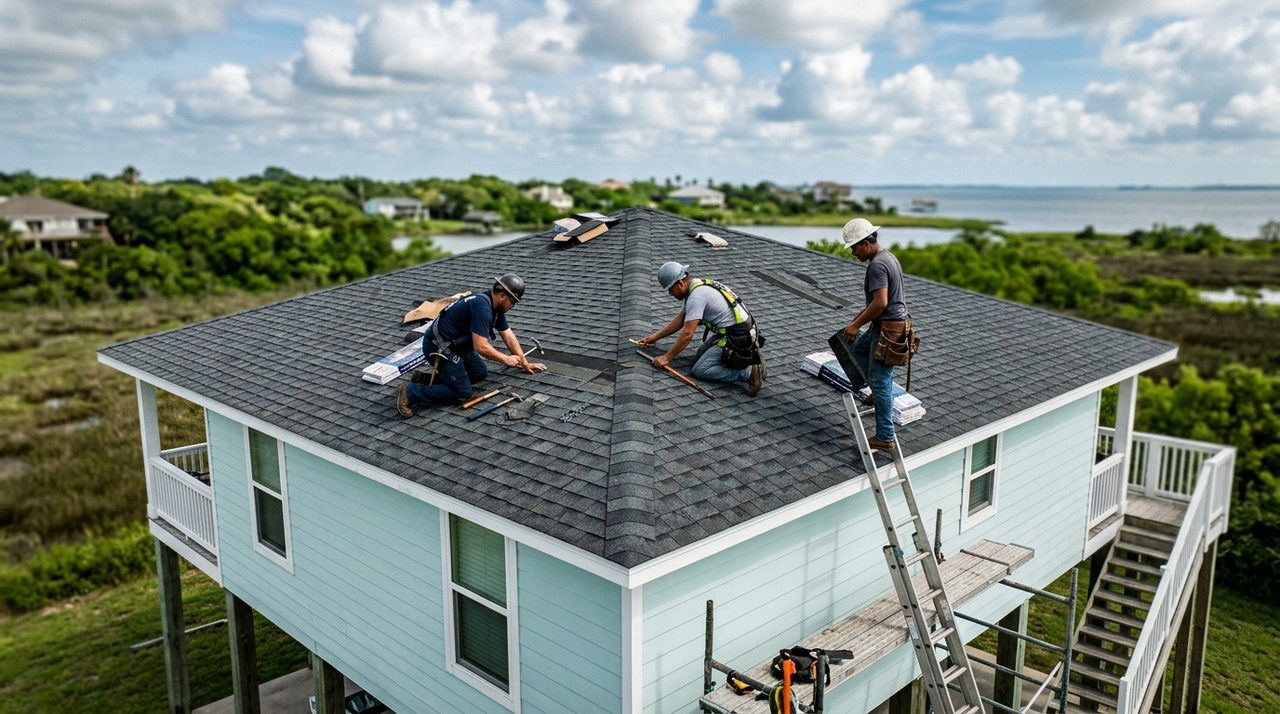
- Median home built
- 1991
- Median home value
- $332,000
- FEMA flood zone
- AE (high)
- Typical re-roof cost (est.)
- $10,500–$18,000
- Most common local issue
- Hurricane wind uplift on pre-2006 shingle roofs near Galveston Bay
Ranked by verified Google rating × review volume × verification tier. How we rank →
Some highly-rated pros serve Seabrook from nearby and may not keep a Seabrook street address. Those are listed under "Also serving Seabrook" with their real city and distance, so you always know where each business is based.
Min rating:
10 resultsBased in Seabrook
4735 Willow St, Seabrook, TX 77586
Also serving Seabrook
Highly-rated pros based nearby who cover Seabrook. Distance shown from the Seabrook area.
Serving Seabrook Based in Kemah · 1.2 mi away
Serving Seabrook Based in Kemah · 1.9 mi away
Open Now
Serving Seabrook Based in League City · 2.8 mi away
Open Now
Serving Seabrook Based in League City · 3.8 mi away
Closed
Serving Seabrook Based in La Porte · 3.8 mi away
Closed
Serving Seabrook Based in League City · 4.2 mi away
Closed
Serving Seabrook Based in League City · 4.3 mi away
Open Now
Serving Seabrook Based in League City · 4.3 mi away
Roofers in Seabrook: What You Should Know
Coastal Wind Uplift on Bay-Adjacent Homes Built Before 2006
Why it matters to you
Seabrook's position on Galveston Bay puts it squarely in TWIA's catastrophe zone, where sustained Gulf winds and storm surge from events like Harvey (2017) and Beryl (2024) generate uplift forces far beyond what standard nail patterns on pre-2006 roofs can resist. Older waterfront and canal-front homes — many built in the 1960s through 1980s on pier-and-pile construction — have low-slope or moderately pitched roofs that are especially vulnerable to ridge-cap loss and shingle-tab lifting when straight-line winds exceed 80 mph. The May 2024 derecho hit SE Harris County hard, and Seabrook homeowners closest to the bay reported the most concentrated shingle damage.
What a good pro does
A qualified roofer working in Seabrook should specify six-nail fastening patterns (versus the standard four) and use a minimum Class H wind-rated underlayment compliant with the IRC's coastal provisions. Any full re-roof requires a permit pulled through the City of Seabrook Building Department — not Harris County or the Houston Permitting Center — and the inspector will verify nail pattern and deck attachment. Choosing TWIA-eligible products and keeping the Declarations of Conformance on file is essential, because TWIA can deny claims on roofs installed with non-compliant materials.
Sources: Texas Windstorm Insurance Association (TWIA), International Residential Code (as adopted by City of Houston), Municipal permit office (see area profile)
Salt-Air Corrosion Accelerating Shingle and Flashing Failure
Why it matters to you
Galveston Bay's salt-laden air corrodes galvanized step flashing, drip edges, and fasteners at rates that inland Houston neighborhoods like Katy or The Woodlands don't experience — an issue that hits 1970s and 1980s Seabrook waterfront homes especially hard, where original galvanized flashings may already be 40+ years old. Salt spray also accelerates the oxidation of the asphalt binder in standard 3-tab and early architectural shingles, shrinking the effective service life from the theoretical 25–30 years to as few as 12–15 years on south- and west-facing bay-side planes. Homeowners in subdivisions like Seascape or Lake Cove who deferred post-Beryl inspections may find that what looked like minor granule loss is actually advanced binder oxidation compounded by salt damage.
What a good pro does
A roofer experienced in Seabrook's coastal environment should replace all galvanized flashings with stainless steel or copper equivalents and specify a synthetic underlayment rated for coastal humidity rather than standard felt. For homes within a few blocks of the bay, metal roofing — particularly Kynar-coated standing seam — offers superior salt resistance, though homeowners must confirm color and profile approval with their subdivision HOA's ARC before ordering materials. The City of Seabrook permit process will require a scope-of-work submission; factor in 5–10 business days for permit issuance before work begins.
Sources: International Residential Code (as adopted by City of Houston), Local HOA / deed restrictions (see area profile), Municipal permit office (see area profile)
HOA Architectural Review Delays During Time-Sensitive Storm Repairs
Why it matters to you
Approximately 16 HOA and POA communities are registered in Seabrook — including Seabrook Island HOA, Lake Cove Community Association (managed by Goodwin & Company), Seascape POA, and Searidge — and most require ARC approval before any visible exterior material change, including shingle color, profile upgrades, or a switch to metal roofing. After a major storm event, ARC review cycles of 10–30 days can leave a storm-damaged roof tarped and exposed to Seabrook's high-humidity bay environment far longer than the structure can safely tolerate, potentially turning a $3,000 partial repair into a full deck-replacement job. Non-compliance — installing a different shingle color or material without approval — can result in HOA fines and a mandatory re-roof at the homeowner's expense.
What a good pro does
Before signing a contract with any roofer, Seabrook homeowners should pull their recorded deed restrictions and confirm their HOA's emergency repair provision — many HOA governing documents allow temporary emergency repairs (tarping, limited shingle replacement in-kind) without prior ARC approval, but require a formal submission before permanent material changes. A roofer familiar with Seabrook's subdivisions will know to submit ARC paperwork simultaneously with the City of Seabrook permit application to run the two timelines in parallel. Document every HOA communication in writing to protect yourself if a dispute arises over material selection.
Sources: Local HOA / deed restrictions (see area profile), Municipal permit office (see area profile)
Flat and Low-Slope Sections on 1960s–1980s Waterfront Homes Prone to Ponding
Why it matters to you
Several of Seabrook's older waterfront and canal-front cottages — many built in the 1960s and 1970s on pier-and-beam or pier-and-pile foundations — feature flat or very low-slope (under 2:12 pitch) roof sections originally covered with built-up or early modified bitumen membranes that are now well beyond their service life. Houston's extreme rainfall intensity, demonstrated most catastrophically when Harvey deposited historic rainfall across SE Harris County in 2017, overwhelms the interior drains and scuppers on these aging systems, causing prolonged ponding that accelerates membrane delamination and introduces rot into wood decking — a serious concern on older structures where the decking itself may already be weakened. Given Seabrook's FEMA AE designation, water intrusion on these homes can compound flood-damage claims with wind and rain damage, complicating the insurance recovery process.
What a good pro does
For flat and low-slope sections, a qualified roofer should evaluate existing drain sizing against current IRC minimum flow requirements and specify a self-adhered TPO or modified bitumen cap sheet rated for Houston's UV and heat load, with seams torched or heat-welded — not cold-applied — to handle the bay environment's thermal cycling. Any work on the structural decking of an elevated pier-and-pile home in Seabrook's flood zone may trigger floodplain management review by the City of Seabrook, so confirm permit scope upfront; some repair scopes will require an updated elevation certificate before the city will issue a CO. Cost estimates for TPO or modified bitumen replacement on a flat section run approximately $4.50–$7.50 per square foot installed, though post-storm demand has pushed prices 15–25% above baseline in the months following major events.
Sources: FEMA National Flood Hazard Layer (NFHL), International Residential Code (as adopted by City of Houston), Municipal permit office (see area profile)
Roofers in Seabrook: What You Should Know
Hiring roofers in Seabrook? Seabrook is an incorporated city on Galveston Bay with housing ranging from 1960s waterfront homes to 2000s subdivision development, creating a wide spectrum of home service needs. The coastal location and FEMA AE flood zone designation mean that flood mitigation, elevation considerations, and storm-hardening are central to nearly every major home project. Homeowners should expect subdivision-level HOA requirements that vary block by block and plan for salt-air corrosion on exterior systems.
- Housing era
- 1970s–2000s, with some 1960s waterfront homes and ongoing infill
- Foundation
- Mixed — predominantly slab-on-grade in newer subdivisions
- Flood zone
- FEMA Zone AE (high flood risk) — source
- Permits
- City of Seabrook Building/Permits Department (incorporated city — not Houston Permitting Center or Harris…
Housing stock & systems
Building era
1970s–2000s, with some 1960s waterfront homes and ongoing infill.
Typical style
Production suburban traditional (one- and two-story brick or brick-and-siding) with coastal/contemporary elevated homes along waterfront and canal-front areas.
Foundations
Mixed — predominantly slab-on-grade in newer subdivisions; pier-and-beam or pier-and-pile construction common in older waterfront and canal-front homes due to floodplain and storm-surge requirements.
Common systems
Central HVAC systems typical of 1980s–2000s construction (aging units in older homes); copper and CPVC plumbing in newer builds, galvanized possible in 1960s–1970s stock; standard 200-amp electrical panels in newer homes, potential 100-amp in older homes.
What that means for repairs
Flood damage repair and mitigation retrofits are common drivers of renovation activity. Waterfront homes frequently undergo elevation projects, foundation reinforcement, and storm-resistant window/door upgrades. Older homes often need full plumbing repipes and HVAC replacements due to age and salt-air corrosion.
Permits & restrictions
Permit jurisdiction
City of Seabrook Building/Permits Department (incorporated city — not Houston Permitting Center or Harris County).
HOA & deed restrictions
Subdivision-by-subdivision. Many subdivisions have mandatory HOAs/POAs including Seabrook Island HOA, Lake Cove Community Association (managed by Goodwin & Company), Seascape POA, and Searidge. Approximately 16 HOA/condo communities are registered in Seabrook. Some older or fringe areas may have no active HOA but may still have recorded deed restrictions.
Historic districts
No City of Houston historic district designation confirmed. Seabrook is an independent incorporated city and not subject to HAHC oversight.
Contractor note
Contractors must pull permits through the City of Seabrook and should verify subdivision-specific HOA architectural review requirements before starting exterior work. Coastal building codes and floodplain management regulations apply and may require elevation certificates.
Flood & weather
FEMA flood zone
FEMA Zone AE (high flood risk) — source: fema_nfhl. Seabrook sits directly on Galveston Bay and is subject to both riverine flooding and coastal storm surge, contributing to its very high hazard risk rating.
Hurricane Harvey impact
The Clear Lake/Bay area of southeast Harris County experienced significant flooding during Hurricane Harvey. Seabrook-specific community hazard data rates overall risk as 'Very High.' However, no publicly available subdivision-level or street-level Harvey flood-extent map for Seabrook was identified. Exact street-by-street impact should be verified through Harris County Flood Control District records and individual property seller's disclosures.
Heat & humidity load
Extreme humidity and salt-air proximity accelerate corrosion on HVAC condensers, metal roofing components, and exterior hardware. HVAC systems run at near-continuous capacity May through September, shortening equipment lifespan. Mold and moisture intrusion in slab-on-grade and pier-and-beam homes require proactive dehumidification and ventilation strategies.
Working with contractors here
Contractors working in Seabrook most commonly handle flood damage restoration, foundation repairs (especially on older pier-and-beam waterfront homes), and HVAC replacements accelerated by salt-air corrosion and heavy summer usage. Roofing and exterior siding projects require wind-rated materials compliant with coastal building codes, and many jobs trigger City of Seabrook floodplain management requirements including elevation certificates. The wide range of housing ages — from 1960s waterfront cottages to 2000s subdivision homes — means scoping should always begin with a thorough assessment of existing systems, as plumbing and electrical standards vary significantly across eras. HOA architectural review adds a layer of approval in many subdivisions, so contractors should confirm HOA requirements before beginning visible exterior modifications.
Local Tip
Always ask for a written estimate before work begins. Texas contractors are required to provide one on jobs over $1,000.
About Seabrook
Seabrook is an incorporated city on Galveston Bay with housing ranging from 1960s waterfront homes to 2000s subdivision development, creating a wide spectrum of home service needs. The coastal location and FEMA AE flood zone designation mean that flood mitigation, elevation considerations, and storm-hardening are central to nearly every major home project. Homeowners should expect subdivision-level HOA requirements that vary block by block and plan for salt-air corrosion on exterior systems.
- Median year built
- 1991
- Median home value
- $332,000
- Owner-occupied
- 64.1%
- Population
- 13,617
- Housing units
- 6,138
- Median income
- $109,489
Source: U.S. Census Bureau, ACS 5-Year 2023
Flood & storm risk
FEMA Zone AEHigh flood riskMuch of Seabrook maps to FEMA Zone AE (high flood risk), so flood-resilient detailing -- elevated equipment, water-tolerant materials, and drainage-first thinking -- is essential here, not optional; risk climbs sharply on blocks nearest Galveston Bay, where it varies parcel to parcel.
Source: FEMA National Flood Hazard Layer (NFHL). Flood zones vary by parcel — verify your individual FIRM panel.
Houston Storm Readiness in Seabrook
Hurricane & flooding
Schedule a pre-season wind-uplift inspection in Seabrook, TX because FEMA Zone AE inside the 100-year floodplain and proximity to Galveston Bay means post-storm access for emergency tarping can be delayed by days when roads are inundated. A roofer should mechanically re-nail any lifted starter strips and perimeter field sheets now, while the roof is still reachable. As a Harris County community, Seabrook may follow county rather than City of Houston storm rebuild rules.
Severe storms & hail
Impact-resistant Class 4 shingles are the most cost-effective upgrade a roofer can install in Seabrook, TX given FEMA Zone AE inside the 100-year floodplain and proximity to Galveston Bay extends recovery timelines after every severe storm. Schedule that upgrade during a dry window and ask your roofer to specify UL 2218-tested product, which also qualifies for a Texas Department of Insurance premium discount. Because Seabrook drains toward Galveston Bay, block-level runoff can differ sharply from the mapped zone.
Ice storms & freezes
Before a forecast freeze in Seabrook, TX, ask a roofer to check that all attic ventilation pathways are clear and unobstructed, because blocked soffit vents allow warm moist attic air to accumulate and melt ice from below, creating ice dams that drive water under shingles and through FEMA Zone AE inside the 100-year floodplain and proximity to Galveston Bay-compromised decking. A roofer can also temporarily insulate any known cold-bridge points at the eave with batt material to reduce ice-dam formation. Confirm the current FEMA panel for your Seabrook parcel — the area maps to Zone AE, but adjacent lots can differ.
Sources: FEMA National Flood Hazard Layer (NFHL), Ready.gov -- Hurricanes, CenterPoint Energy -- Storm Center, City of Houston -- Emergency Preparedness, Ready.gov -- Winter Weather, Harris County Flood Control District
Free Seabrook Tools & Calculators
Houston-specific estimators to plan your project before you call a pro. All results are planning estimates — a licensed local pro confirms the details on site.
Hurricane Roof Wind-Load & TDI/WPI-8 Estimator
Open full tool & FAQ →115–120 mph
Estimated design wind speed for your zone
Outside the TDI catastrophe area, so a WPI-8 is generally not mandated — but Houston still sees hurricane-force gusts (Beryl, 2024). Insist on properly rated shingles installed to the manufacturer's high-wind nailing pattern (6 nails) and starter strips, or a wind claim can be denied for improper installation.
Find a Houston roofer →This is a planning estimate only — actual requirements depend on an on-site assessment by a licensed Houston pro. Wind-speed zones are approximate; your exact TDI/WPI-8 obligation depends on your address's designation. Verify with the Texas Department of Insurance before contracting.
Houston Freeze Prep & Pipe Insulation Checklist
Open full tool & FAQ →Your freeze checklist — 4 tasks
- 1
Disconnect & drain every outdoor hose bib
Remove hoses, drain the spigots, and cover each with an insulated faucet sock. Un-drained hose bibs are the #1 burst point in a Houston freeze.
- 2
Insulate exposed pipes in the attic & garage
Wrap any pipe in an unconditioned space (attic runs, garage walls) with foam sleeves. Houston homes rarely insulate these because they only matter a few nights a year — which is exactly why they burst.
- 3
Open cabinet doors & keep a pencil-width drip
On hard-freeze nights, open kitchen/bath cabinets so warm air reaches the pipes and let faucets on exterior walls drip to relieve pressure.
- 4
Protect the attic/garage water heater & its lines
An attic or garage tank sits in unconditioned space. Insulate the cold-inlet and hot-outlet lines and confirm the emergency drain pan is clear so a leak doesn't reach the ceiling.
This is a planning estimate only — actual requirements depend on an on-site assessment by a licensed Houston pro. If a pipe has already burst, shut off your main water supply and call a licensed Houston plumber immediately — freeze bursts flood fast.
Frequently Asked Questions
Do I need a permit from the City of Seabrook to replace my roof, and who do I call?
Yes — full re-roofs and structural repairs in Seabrook require a permit through the City of Seabrook Building/Permits Department, not the City of Houston Permitting Center or Harris County. Your contractor must be registered with Seabrook's permit office before pulling any permit, and coastal floodplain management rules may trigger additional review if your home is in a FEMA AE zone (which much of Seabrook is). Call the City of Seabrook directly to confirm current fee schedules and inspection turnaround times before signing any contract.
Sources: Municipal permit office (see area profile)FEMA National Flood Hazard Layer (NFHL)
Will my TWIA wind pool policy actually cover a new roof in Seabrook, or are there product requirements I have to meet?
TWIA — which covers most Seabrook homes because private carriers routinely exclude Gulf-coast wind — requires that installed roofing products meet specific wind-resistance ratings to remain eligible for claims, and shingles that don't carry a qualifying rating can jeopardize coverage after a storm. Before your contractor orders materials, ask them to confirm the shingle's TWIA-compliant product designation in writing. Homes near the bay and canal fronts, where Seabrook's storm-surge exposure is highest, should prioritize products rated for the area's design wind speed rather than choosing on price alone.
My Seabrook waterfront home was built in the late 1960s and has an older pier-and-pile foundation — are there any roofing complications I should know about before starting a re-roof?
Older pier-and-pile waterfront homes in Seabrook often have unconventional roof framing, steep or multi-directional pitches designed to shed surge, and original flashing details that were never updated to modern coastal standards — all of which can add labor and material costs that don't show up in a square-footage estimate. Deck sheathing on homes from this era is frequently let-in board rather than plywood or OSB, which requires either full overlay or tear-off and replacement before new shingles can be nailed properly. Budget for a thorough deck inspection as part of scoping, and expect estimates to carry more variability than they would on a standard 2000s slab-home in a Seabrook subdivision.
Sources: International Residential Code (as adopted by City of Houston)
My Seabrook subdivision has an HOA — how long should I realistically plan for ARC approval before a roofer can start work after storm damage?
Seabrook has approximately 16 registered HOA and POA communities, including Lake Cove (managed by Goodwin & Company), Seascape POA, and Searidge, and ARC review timelines in these communities typically run 10–30 days for material or color changes — even when the damage is urgent. Most HOA governing documents include an emergency provision that can shorten that window, so ask your property manager in writing about the emergency repair process immediately after a storm rather than waiting for the standard cycle. Keep documentation of storm damage timestamped, because both your HOA and your TWIA insurer will want it.
Sources: Local HOA / deed restrictions (see area profile)Texas Windstorm Insurance Association (TWIA)
After the May 2024 derecho and its 100+ mph winds, roofing crews were hard to book in SE Houston for months — when is the best time of year to get a Seabrook roofer on a non-emergency re-roof?
Post-storm demand surges — like those following the May 2024 derecho or Hurricane Harvey — routinely push roofing prices 15–25% above baseline and stretch scheduling by weeks or months across the SE Houston and Galveston Bay corridor. For non-emergency re-roofs, late fall (October–November) and late winter (February–March) are historically the lowest-demand windows in this market, before Gulf storm season ramps back up. Booking during those windows also means crews are less rushed, inspection scheduling through the City of Seabrook tends to be faster, and material lead times are shorter.
What questions should I ask a Seabrook roofer specifically about salt-air and FEMA AE zone experience before hiring them?
Ask whether they have direct experience with coastal flashing details — specifically stainless-steel or hot-dipped galvanized fasteners rather than standard electro-galvanized nails, which corrode rapidly in Seabrook's salt-air environment near Galveston Bay. Confirm that they understand the City of Seabrook's floodplain management review process and whether your specific project will trigger an elevation certificate requirement. Also ask for references from waterfront or canal-front Seabrook jobs specifically, because a contractor experienced only in inland Harris County subdivisions may not be familiar with the coastal product specs and permit nuances that apply here.
Sources: Municipal permit office (see area profile)FEMA National Flood Hazard Layer (NFHL)