Closed
Serving River Oaks Based in Upper Kirby · 0.9 mi away
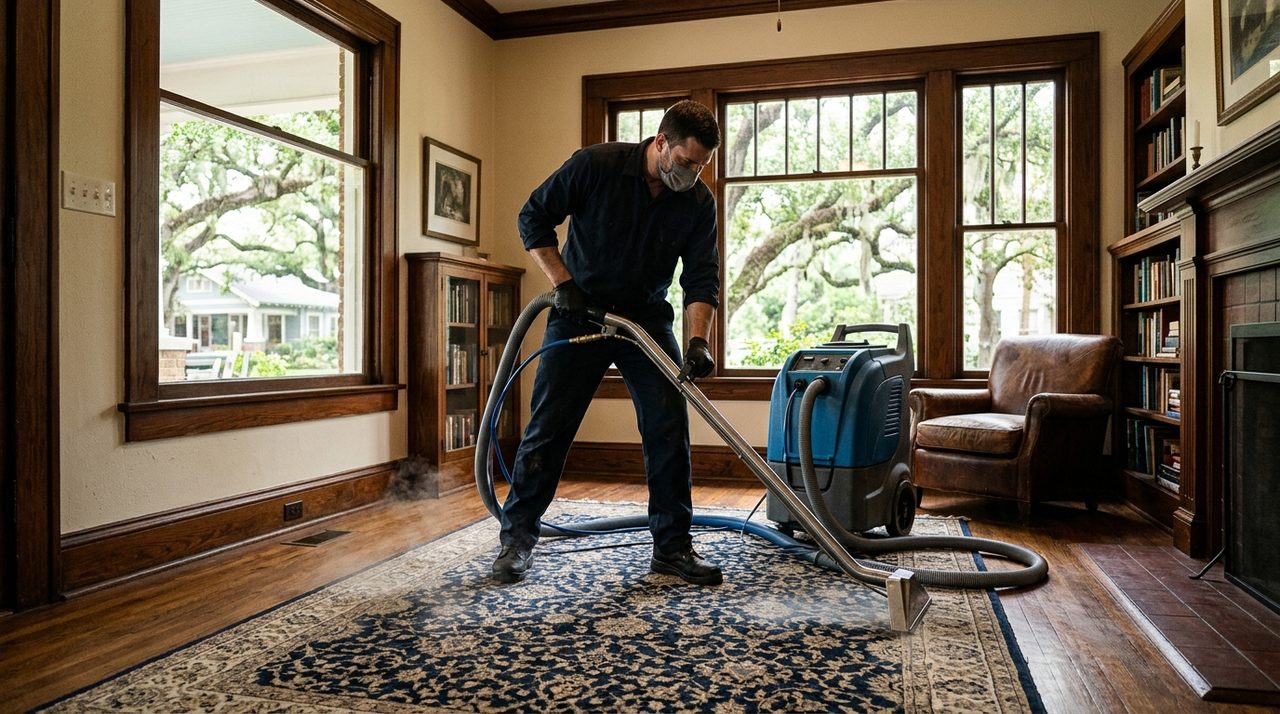
River Oaks estates — many built in the 1920s and 1930s on pier-and-beam foundations with original wood subfloors — create a carpet-cleaning environment unlike anything else in Houston: humidity infiltrates from below as well as above, post-renovation dust from frequent whole-house gut jobs settles deep into fiber, and the River Oaks Property Owners, Inc. (ROPO) deed restrictions that govern most platted sections raise the stakes on documenting professional work. Understanding these dynamics before you schedule a cleaning can save you from musty odors that return within a week or carpets that look worse after cleaning than before.
Ranked by verified Google rating × review volume × verification tier. How we rank →
Some highly-rated pros serve River Oaks from nearby and may not keep a River Oaks street address. Those are listed under "Also serving River Oaks" with their real city and distance, so you always know where each business is based.
Highly-rated pros based nearby who cover River Oaks. Distance shown from the River Oaks area.
Serving River Oaks Based in Upper Kirby · 0.9 mi away
Serving River Oaks Based in Upper Kirby · 1 mi away
Serving River Oaks Based in Upper Kirby · 1.2 mi away
Serving River Oaks Based in Upper Kirby · 1.3 mi away
Serving River Oaks Based in Galleria · 1.3 mi away
Serving River Oaks Based in Upper Kirby · 1.3 mi away
Serving River Oaks Based in Lazybrook / Timbergrove · 1.3 mi away
Serving River Oaks Based in Midtown · 1.7 mi away
Serving River Oaks Based in Galleria · 1.9 mi away
Serving River Oaks Based in Lazybrook / Timbergrove · 2 mi away
Why it matters to you
Unlike the slab-on-grade construction found across most of Houston, the surviving 1920s–1940s estate homes in River Oaks sit on pier-and-beam foundations where the crawl space beneath the wood subfloor is directly exposed to Houston's summer humidity averaging 75–90% RH. That moisture travels upward through the subfloor, saturating carpet pad from below — completely independent of whatever hot water a cleaning machine pushes down from above. Homeowners often notice a musty odor returning within 24–48 hours of an otherwise competent cleaning, and mistakenly blame the technician, when the real source is the subfloor acting as a humidity pump.
What a good pro does
A qualified technician in a pier-and-beam River Oaks home should probe pad moisture with a calibrated pin or thermo-hygrometer meter before and after extraction, not just eyeball dryness. Post-extraction, fans and dehumidifiers should run a minimum of 12–24 additional hours; on large estate homes with limited HVAC coverage in older wings, technicians sometimes stage multiple drying units room by room. Texas does not require an occupational license for carpet cleaning alone, so the industry benchmark to look for is IICRC Carpet Cleaning Technician (CCT) or Water Damage Restoration Technician (WRT) certification, which reflects formal drying-science training.
Why it matters to you
River Oaks sees a disproportionate share of whole-house gut renovations and teardown-rebuild projects, given that land values here regularly exceed the structure value on original 1920s lots. Even in rooms that appear sealed off during construction, fine drywall dust, concrete grinder particulate, and demolition debris migrate through HVAC returns and gaps in temporary barriers, settling below carpet fiber tips into the backing and pad. This grit acts as an abrasive that standard hot-water extraction struggles to lift fully, and pre-1980 structures in River Oaks may also contain asbestos-containing materials disturbed during renovation — a contamination risk if particles have migrated onto carpet surfaces.
What a good pro does
Before wet extraction begins, a thorough dry-vacuum pass with a commercial-grade upright or rotary brush is essential to extract loose grit; skipping this step grinds particles deeper during the hot-water pass. If the home has undergone recent renovation, ask the technician explicitly about their pre-vacuum protocol. For pre-1980 homes where asbestos abatement was performed nearby, request confirmation that air clearance testing was completed before carpet cleaning begins — the relevant oversight framework for asbestos disturbance in Texas falls under TCEQ.
Sources: Texas Commission on Environmental Quality, EPA Lead Renovation, Repair and Painting (RRP) Rule
Why it matters to you
With 41.2% owner-occupancy (ACS 2023), River Oaks has a substantial long-term resident base that may have the same carpet for a decade or more — especially in the secondary bedrooms and formal areas of large estates that see less daily traffic. Houston municipal water is moderately hard at 130–180 mg/L as CaCO₃, and when hot-water extraction machines use this water without softening or acidic rinsing, the alkaline mineral residue left behind reactivates dried urine salt crystals. In a large River Oaks home where carpeted areas can easily reach 2,000+ square feet, a single missed enzyme pretreatment step on a pet-affected room will produce ammonia odor that wafts through the entire house within days.
What a good pro does
Proper treatment requires a two-step approach: an enzyme pretreatment applied at least 10–15 minutes before extraction to break down urine crystals at the molecular level, followed by a mildly acidic rinse in the extraction machine to neutralize alkaline water residue. Sub-surface pad flushing — where the technician floods the pad through the carpet and extracts from below using a specialized tool — is warranted for any heavily affected room and is typically quoted at $50–$120 per room above the base cleaning rate. Get that add-on itemized in writing before work begins.
Why it matters to you
River Oaks Property Owners, Inc. (ROPO) governs the core platted sections of the neighborhood through recorded deed restrictions that set a high bar for property presentation and upkeep. While ROPO deed restrictions do not specifically mandate professional carpet cleaning certificates the way some apartment lease agreements do, the neighborhood's high rate of high-value estate rentals and estate-sale turnovers means that buyers, sellers, and high-end landlords routinely require documented, certifiable cleaning for real estate transactions. An undocumented or low-quality cleaning job in a River Oaks home can become a negotiating point in a transaction involving hundreds of thousands of dollars.
What a good pro does
For any cleaning tied to a sale, lease renewal, or estate transfer in River Oaks, request written documentation of the work performed — specifically the technician's IICRC certification number, the products used (including any antimicrobial or enzyme treatments), and moisture readings taken before and after. Texas has no state occupational license for carpet cleaning, so IICRC certification is the only independent credentialing standard in the industry. No City of Houston trade permit is required for carpet cleaning alone, but keeping a professional paper trail protects you in any real estate or insurance context.
Sources: IICRC (water/mold restoration standards), Local HOA / deed restrictions (see area profile)
Hiring carpet cleaning in River Oaks? River Oaks is Houston's premier residential neighborhood, featuring 1920s–1930s estate homes alongside modern luxury rebuilds on large lots. Homeowners face a unique combination of mandatory HOA oversight from River Oaks Property Owners, Inc. (ROPO), strict deed restrictions, and the maintenance demands of aging pier-and-beam foundations, mature tree root systems, and historic-era plumbing and electrical. Contractors working here must navigate both high client expectations and the regulatory requirements of the City of Houston permitting process.
Building era
1920s–1930s (original build-out), with significant post-1980 and 2000s-present luxury infill and teardown rebuilds.
Typical style
English Tudor, Spanish Colonial Revival, Georgian, Colonial, and contemporary custom luxury homes.
Foundations
Mixed — older homes predominantly pier-and-beam; newer construction and rebuilds typically slab-on-grade with post-tension or drilled piers.
Common systems
Original homes may retain cast-iron drain lines, galvanized supply piping, and older panel boxes requiring upgrades. Newer builds feature modern PEX/copper plumbing, 200+ amp electrical panels, and high-efficiency zoned HVAC systems. Mature-era homes often have outdated ductwork and window-unit retrofits.
What that means for repairs
Teardown-and-rebuild activity is extremely common on original lots, as land values far exceed structure values for many older homes. Whole-house gut renovations of surviving 1920s–1940s estates are also frequent, typically involving foundation leveling, full re-plumbing, electrical panel upgrades, and HVAC modernization while preserving architectural character.
Permit jurisdiction
Houston Permitting Center (City of Houston).
HOA & deed restrictions
Core River Oaks platted sections (e.g., River Oaks Sec 01) are governed by River Oaks Property Owners, Inc. (ROPO) — a mandatory HOA/POA with recorded deed restrictions. Adjacent pockets such as Huldy Street Terrace / Shepherd Crest near the River Oaks Shopping Area have no HOA. Condominiums like River Oaks Gardens are governed by their own condo associations (e.g., River Oaks Gardens Council of Co-Owners). Related civic organizations in the broader super neighborhood include Avalon Property Owners Association and West Lane Place Civic Association.
Historic districts
No City of Houston historic district designation confirmed. River Oaks is deed-restricted through its original master-planned community covenants, but this is a private restriction, not a Houston Archaeological and Historical Commission (HAHC) overlay.
Contractor note
ROPO and section POAs actively monitor and may require pre-approval for exterior modifications, fencing, and new construction visible from the street. Contractors should verify both City of Houston permit requirements and HOA/deed restriction compliance before beginning any exterior or structural work.
FEMA flood zone
FEMA Zone X (low flood risk) per official NFHL data. However, the neighborhood's western edge borders Buffalo Bayou, and localized street flooding can occur during extreme rainfall events despite the low-risk designation.
Hurricane Harvey impact
Not confirmed with specific damage data from research — River Oaks experienced some flooding during Hurricane Harvey (2017), particularly in areas closest to Buffalo Bayou. The neighborhood's elevation and drainage infrastructure offered relative protection to many homes, but properties along the bayou corridor and lower-lying lots did sustain water damage. Check Harris County Flood Control District records for property-specific Harvey inundation data.
Heat & humidity load
Houston's extreme summer heat and humidity place heavy demands on HVAC systems in River Oaks' large-footprint homes, especially older estates with poor insulation and aging ductwork. Mature tree canopy provides shade but contributes to foundation movement through root-driven soil moisture changes. Pier-and-beam crawl spaces in original homes require ventilation monitoring to prevent moisture-related wood damage.
Working with contractors here
The most common contractor work in River Oaks includes foundation repair and leveling on 1920s–1940s pier-and-beam structures, whole-house re-plumbing to replace cast-iron and galvanized lines, electrical panel upgrades from 100-amp to 200+ amp service, and full HVAC system replacements with zoned systems for 5,000–16,000+ square foot homes. Teardown-and-rebuild projects are a significant portion of new construction activity, requiring demolition, site engineering, and ground-up custom builds. Contractors should expect extended project timelines due to ROPO architectural review, City of Houston permitting for demolitions and new construction, and the high-end finish expectations of River Oaks homeowners. Job scoping must account for mature tree preservation ordinances, potential asbestos and lead paint in pre-1980 structures, and limited staging space on densely landscaped lots.
Local Tip
Always ask for a written estimate before work begins. Texas contractors are required to provide one on jobs over $1,000.
River Oaks is Houston's premier residential neighborhood, featuring 1920s–1930s estate homes alongside modern luxury rebuilds on large lots. Homeowners face a unique combination of mandatory HOA oversight from River Oaks Property Owners, Inc. (ROPO), strict deed restrictions, and the maintenance demands of aging pier-and-beam foundations, mature tree root systems, and historic-era plumbing and electrical. Contractors working here must navigate both high client expectations and the regulatory requirements of the City of Houston permitting process.
Source: U.S. Census Bureau, ACS 5-Year 2023
Most of River Oaks maps to FEMA Zone X (low mapped flood risk), but Houston's flash-flood reality means even low-risk blocks benefit from smart drainage and storm-hardened installs; risk climbs sharply on blocks nearest Buffalo Bayou, where it varies parcel to parcel.
Source: FEMA National Flood Hazard Layer (NFHL). Flood zones vary by parcel — verify your individual FIRM panel.
Sources: IICRC (water/mold restoration standards)Harris County Flood Control DistrictFEMA National Flood Hazard Layer (NFHL)
Sources: Local HOA / deed restrictions (see area profile)IICRC (water/mold restoration standards)