4636 E NASA Pkwy, Seabrook, TX 77586
Best Water & Flood Restoration in Seabrook, TX
Seabrook sits directly on Galveston Bay in FEMA Zone AE, a designation that makes Category 3 flood events the default expectation rather than the rare exception — and with housing ranging from 1960s pier-and-beam waterfront cottages to 2000s slab-on-grade subdivision homes, no two restoration scopes look the same here. The May 2024 derecho and Hurricane Beryl in the same year stacked wind-driven rain damage on top of already saturated parcels, leaving many homeowners managing compound losses. All permits for restoration work run through the City of Seabrook Building and Permits Department, not Houston Permitting Center, and coastal floodplain management rules — including elevation certificate requirements — add steps that strictly inland jobs never see.
Verified against Google Business data
Updated 2026
See the 10 Water & Flood Restoration Serving Seabrook 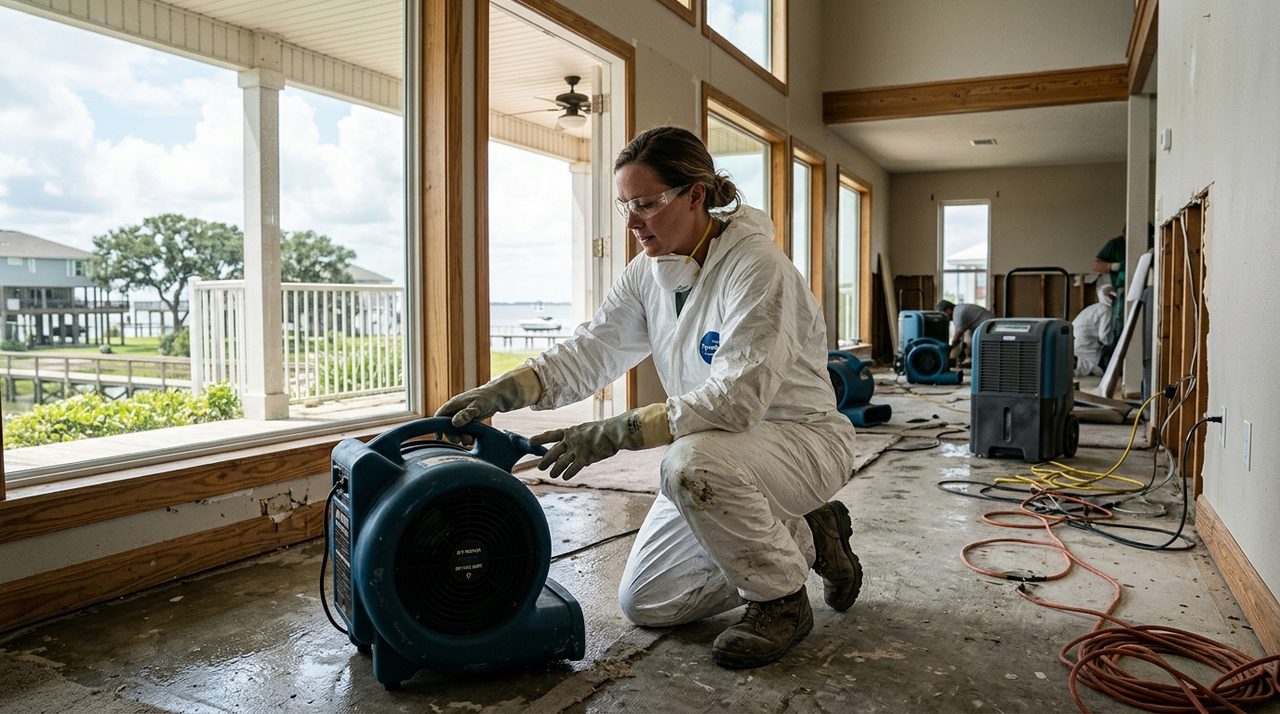
- Median home built
- 1991
- Median home value
- $332,000
- FEMA flood zone
- AE (high)
- Typical mitigation cost (est.)
- $15,000–$40,000 for Category 3 bayou/bay flood loss with full demo
- Most common local issue
- Bay-driven Category 3 flooding with salt-water contamination in mixed pier-and-beam and slab-on-grade homes
Ranked by verified Google rating × review volume × verification tier. How we rank →
Some highly-rated pros serve Seabrook from nearby and may not keep a Seabrook street address. Those are listed under "Also serving Seabrook" with their real city and distance, so you always know where each business is based.
Min rating:
10 resultsBased in Seabrook
4735 Willow St, Seabrook, TX 77586
Also serving Seabrook
Highly-rated pros based nearby who cover Seabrook. Distance shown from the Seabrook area.
Serving Seabrook Based in Kemah · 1.9 mi away
Open Now
Serving Seabrook Based in Kemah · 1.9 mi away
Open Now
Serving Seabrook Based in Kemah · 2.6 mi away
Serving Seabrook Based in Kemah · 2.9 mi away
Closed
Serving Seabrook Based in League City · 3.9 mi away
Open Now
Serving Seabrook Based in Clear Lake · 4.1 mi away
Open Now
Serving Seabrook Based in Clear Lake · 4.3 mi away
Closed
Serving Seabrook Based in League City · 4.4 mi away
Water & Flood Restoration in Seabrook: What You Should Know
Galveston Bay Storm Surge Makes Category 3 Classification the Starting Point, Not the Debate
Why it matters to you
When Galveston Bay overtops or storm surge pushes inland through Seabrook's canal-front and bayfront parcels — as it did during Harvey in 2017 and again during Beryl in 2024 — the floodwater arriving at your slab or pier foundation is carrying bay sediment, marine bacteria, and sewage-system backflow. FEMA Zone AE designation means much of Seabrook qualifies for Repetitive Loss tracking, and insurers have been known to attempt a Category 2 reclassification to shrink the demo scope. That argument fails here because Galveston Bay tidal intrusion is well-documented as Category 3 black water under IICRC S500 standards.
What a good pro does
A qualified restoration contractor will collect water source documentation and, where needed, surface swabs or ATP testing immediately upon arrival to establish the Category 3 classification in writing before any demo begins — because that classification drives the required demolition line (minimum 12 inches above the flood line on all porous materials). The firm performing any mold remediation triggered by delayed drying must hold a TDLR-issued Mold Remediation Contractor (MRC) license, and all structural demolition permits are pulled through the City of Seabrook Building and Permits Department, not Harris County or Houston Permitting Center.
Sources: IICRC (water/mold restoration standards), Texas Department of Licensing & Regulation, FEMA National Flood Hazard Layer (NFHL)
Pier-and-Beam Waterfront Homes Hide Moisture in Places Slabs Never Do
Why it matters to you
Seabrook's older waterfront and canal-front homes — many built in the 1960s and 1970s on pier-and-beam or pier-and-pile foundations to meet early floodplain requirements — have a crawl space or open underfloor zone that traps floodwater and humidity long after surface water recedes. Unlike the slab-on-grade homes in Seabrook's newer subdivisions, these structures allow water to pool under subfloor sheathing, wick into floor joists, and breed mold in areas that are invisible without crawl space access and moisture meters. Salt-laden bay air compounds the problem by corroding the metal connectors and fasteners that hold the framing together, meaning a thorough restoration scope must assess structural members, not just finish materials.
What a good pro does
Contractors should deploy crawl space drying equipment — desiccant dehumidifiers rated for the cubic footage below the floor, not just interior air movers — and take moisture readings at multiple joist depths over several days. If readings do not trend downward within 48 hours per IICRC S500 drying timelines, subfloor sheathing replacement is typically required rather than in-place drying. The City of Seabrook's floodplain management rules may also require an updated elevation certificate before reconstruction of finished floors can be permitted.
Sources: IICRC (water/mold restoration standards), Municipal permit office (see area profile), FEMA National Flood Hazard Layer (NFHL)
Salt-Air-Corroded HVAC Ductwork Accelerates Mold Growth After Any Inundation
Why it matters to you
Seabrook's coastal environment shortens the functional life of flex duct insulation significantly compared to inland Houston — salt-laden humidity degrades the foil facing and adhesive tape that seal duct connections, leaving micro-gaps that draw in moisture-laden air even between flood events. When a flooding event soaks the ductwork directly, those already-degraded seams allow Aspergillus and Cladosporium to colonize the insulation batting within 48 to 72 hours, well inside Houston's already aggressive mold growth window driven by the area's average 74% relative humidity and summer temperatures above 90°F. Many Seabrook homes built in the 1980s and 1990s still have their original flex duct runs, which are past their design life even without flood exposure.
What a good pro does
After any flooding event that reached duct level, contractors should pull a duct section for visual and swab inspection before restarting the air handler — running a contaminated system redistributes spores throughout the home and converts a localized mold problem into a whole-house one. Replacement of flood-affected flex duct is typically the correct scope, not cleaning; mold assessment must be performed by a TDLR-licensed Mold Assessment Consultant (MAC), and remediation by a TDLR-licensed Mold Remediation Contractor (MRC). HVAC trade permits for duct replacement are issued by the City of Seabrook.
Sources: IICRC (water/mold restoration standards), Texas Department of Licensing & Regulation, Municipal permit office (see area profile)
HOA Architectural Review Can Stall Emergency Demo When Hours Count
Why it matters to you
Approximately 16 HOA and POA communities operate within Seabrook's subdivisions — including Seabrook Island HOA, Lake Cove Community Association (managed by Goodwin & Company), Seascape POA, and Searidge — and many have architectural review requirements that technically cover exterior work, including dumpster placement, removal of exterior cladding, and material choices for re-cladding after flood demo. IICRC S500 calls for drying initiation within 24 to 48 hours of flood entry; a Category 2 loss that sits un-demoed for three or four days waiting on an HOA approval committee can cross into Category 3 territory, dramatically expanding both the required scope and your cost.
What a good pro does
Before any visible exterior work begins — including setting a debris dumpster on the driveway — confirm your subdivision's specific HOA rules and whether an emergency variance or expedited review process exists; many HOAs have provisions for declared disaster situations that bypass the standard review cycle. Document the timeline of your drying initiation efforts in writing, including any delays attributable to HOA or permit processing, because that documentation supports your insurance claim scope if the damage classification escalates. All demolition permits still run through the City of Seabrook regardless of HOA approval status.
Sources: Local HOA / deed restrictions (see area profile), IICRC (water/mold restoration standards), Municipal permit office (see area profile)
Water & Flood Restoration in Seabrook: What You Should Know
Hiring water & flood restoration in Seabrook? Seabrook is an incorporated city on Galveston Bay with housing ranging from 1960s waterfront homes to 2000s subdivision development, creating a wide spectrum of home service needs. The coastal location and FEMA AE flood zone designation mean that flood mitigation, elevation considerations, and storm-hardening are central to nearly every major home project. Homeowners should expect subdivision-level HOA requirements that vary block by block and plan for salt-air corrosion on exterior systems.
- Housing era
- 1970s–2000s, with some 1960s waterfront homes and ongoing infill
- Foundation
- Mixed — predominantly slab-on-grade in newer subdivisions
- Flood zone
- FEMA Zone AE (high flood risk) — source
- Permits
- City of Seabrook Building/Permits Department (incorporated city — not Houston Permitting Center or Harris…
Housing stock & systems
Building era
1970s–2000s, with some 1960s waterfront homes and ongoing infill.
Typical style
Production suburban traditional (one- and two-story brick or brick-and-siding) with coastal/contemporary elevated homes along waterfront and canal-front areas.
Foundations
Mixed — predominantly slab-on-grade in newer subdivisions; pier-and-beam or pier-and-pile construction common in older waterfront and canal-front homes due to floodplain and storm-surge requirements.
Common systems
Central HVAC systems typical of 1980s–2000s construction (aging units in older homes); copper and CPVC plumbing in newer builds, galvanized possible in 1960s–1970s stock; standard 200-amp electrical panels in newer homes, potential 100-amp in older homes.
What that means for repairs
Flood damage repair and mitigation retrofits are common drivers of renovation activity. Waterfront homes frequently undergo elevation projects, foundation reinforcement, and storm-resistant window/door upgrades. Older homes often need full plumbing repipes and HVAC replacements due to age and salt-air corrosion.
Permits & restrictions
Permit jurisdiction
City of Seabrook Building/Permits Department (incorporated city — not Houston Permitting Center or Harris County).
HOA & deed restrictions
Subdivision-by-subdivision. Many subdivisions have mandatory HOAs/POAs including Seabrook Island HOA, Lake Cove Community Association (managed by Goodwin & Company), Seascape POA, and Searidge. Approximately 16 HOA/condo communities are registered in Seabrook. Some older or fringe areas may have no active HOA but may still have recorded deed restrictions.
Historic districts
No City of Houston historic district designation confirmed. Seabrook is an independent incorporated city and not subject to HAHC oversight.
Contractor note
Contractors must pull permits through the City of Seabrook and should verify subdivision-specific HOA architectural review requirements before starting exterior work. Coastal building codes and floodplain management regulations apply and may require elevation certificates.
Flood & weather
FEMA flood zone
FEMA Zone AE (high flood risk) — source: fema_nfhl. Seabrook sits directly on Galveston Bay and is subject to both riverine flooding and coastal storm surge, contributing to its very high hazard risk rating.
Hurricane Harvey impact
The Clear Lake/Bay area of southeast Harris County experienced significant flooding during Hurricane Harvey. Seabrook-specific community hazard data rates overall risk as 'Very High.' However, no publicly available subdivision-level or street-level Harvey flood-extent map for Seabrook was identified. Exact street-by-street impact should be verified through Harris County Flood Control District records and individual property seller's disclosures.
Heat & humidity load
Extreme humidity and salt-air proximity accelerate corrosion on HVAC condensers, metal roofing components, and exterior hardware. HVAC systems run at near-continuous capacity May through September, shortening equipment lifespan. Mold and moisture intrusion in slab-on-grade and pier-and-beam homes require proactive dehumidification and ventilation strategies.
Working with contractors here
Contractors working in Seabrook most commonly handle flood damage restoration, foundation repairs (especially on older pier-and-beam waterfront homes), and HVAC replacements accelerated by salt-air corrosion and heavy summer usage. Roofing and exterior siding projects require wind-rated materials compliant with coastal building codes, and many jobs trigger City of Seabrook floodplain management requirements including elevation certificates. The wide range of housing ages — from 1960s waterfront cottages to 2000s subdivision homes — means scoping should always begin with a thorough assessment of existing systems, as plumbing and electrical standards vary significantly across eras. HOA architectural review adds a layer of approval in many subdivisions, so contractors should confirm HOA requirements before beginning visible exterior modifications.
Local Tip
Always ask for a written estimate before work begins. Texas contractors are required to provide one on jobs over $1,000.
About Seabrook
Seabrook is an incorporated city on Galveston Bay with housing ranging from 1960s waterfront homes to 2000s subdivision development, creating a wide spectrum of home service needs. The coastal location and FEMA AE flood zone designation mean that flood mitigation, elevation considerations, and storm-hardening are central to nearly every major home project. Homeowners should expect subdivision-level HOA requirements that vary block by block and plan for salt-air corrosion on exterior systems.
- Median year built
- 1991
- Median home value
- $332,000
- Owner-occupied
- 64.1%
- Population
- 13,617
- Housing units
- 6,138
- Median income
- $109,489
Source: U.S. Census Bureau, ACS 5-Year 2023
Flood & storm risk
FEMA Zone AEHigh flood riskMuch of Seabrook maps to FEMA Zone AE (high flood risk), so flood-resilient detailing -- elevated equipment, water-tolerant materials, and drainage-first thinking -- is essential here, not optional; risk climbs sharply on blocks nearest Galveston Bay, where it varies parcel to parcel.
Source: FEMA National Flood Hazard Layer (NFHL). Flood zones vary by parcel — verify your individual FIRM panel.
Houston Storm Readiness in Seabrook
Hurricane & flooding
Contact a licensed water-restoration company now to verify that any previous flood remediation in Seabrook, TX was performed to IICRC S500 standards and left no hidden saturation in wall cavities. Beryl 2024 demonstrated that AE-zone homes with unresolved prior water intrusion suffered dramatically faster structural degradation when re-flooded. As a Harris County community, Seabrook may follow county rather than City of Houston storm rebuild rules.
Severe storms & hail
Straight-line winds from Houston's frequent squall lines can drive water under exterior door thresholds and through weep holes into block or brick veneer in Seabrook, TX, saturating insulation in areas that standard air movement cannot dry. A licensed restoration firm with a calibrated moisture meter and low-grain refrigerant dehumidifiers can document and resolve these intrusions before your next storm season adds to existing hidden moisture. Because Seabrook drains toward Galveston Bay, block-level runoff can differ sharply from the mapped zone.
Ice storms & freezes
When hard freezes cause attic supply lines to burst in Seabrook, TX, water runs through insulation and into ceiling assemblies before the homeowner often detects it, and in a high-flood-risk zone the combination of structural moisture and seasonal groundwater makes thorough structural drying especially critical. A licensed restoration firm can deploy multiple dehumidifiers and document drying to IICRC S500 standards for insurance compliance. Confirm the current FEMA panel for your Seabrook parcel — the area maps to Zone AE, but adjacent lots can differ.
Sources: FEMA National Flood Hazard Layer (NFHL), Ready.gov -- Hurricanes, CenterPoint Energy -- Storm Center, City of Houston -- Emergency Preparedness, Ready.gov -- Winter Weather, Harris County Flood Control District
Free Seabrook Tools & Calculators
Houston-specific estimators to plan your project before you call a pro. All results are planning estimates — a licensed local pro confirms the details on site.
Houston Freeze Prep & Pipe Insulation Checklist
Open full tool & FAQ →Your freeze checklist — 4 tasks
- 1
Disconnect & drain every outdoor hose bib
Remove hoses, drain the spigots, and cover each with an insulated faucet sock. Un-drained hose bibs are the #1 burst point in a Houston freeze.
- 2
Insulate exposed pipes in the attic & garage
Wrap any pipe in an unconditioned space (attic runs, garage walls) with foam sleeves. Houston homes rarely insulate these because they only matter a few nights a year — which is exactly why they burst.
- 3
Open cabinet doors & keep a pencil-width drip
On hard-freeze nights, open kitchen/bath cabinets so warm air reaches the pipes and let faucets on exterior walls drip to relieve pressure.
- 4
Protect the attic/garage water heater & its lines
An attic or garage tank sits in unconditioned space. Insulate the cold-inlet and hot-outlet lines and confirm the emergency drain pan is clear so a leak doesn't reach the ceiling.
This is a planning estimate only — actual requirements depend on an on-site assessment by a licensed Houston pro. If a pipe has already burst, shut off your main water supply and call a licensed Houston plumber immediately — freeze bursts flood fast.
Frequently Asked Questions
Do I need a permit from the City of Seabrook to demo flood-damaged drywall and flooring, or can I start right away?
The City of Seabrook Building and Permits Department issues its own demolition and trade permits — you cannot use the Houston Permitting Center or file through Harris County for work inside Seabrook's city limits. For flood losses, most contractors will apply for an emergency demolition permit to allow immediate protective demo while the full permit processes, but you should confirm that option directly with the City of Seabrook permit office before tearing out any materials. Any electrical or plumbing work exposed during demo requires separate licensed-trade permits pulled by a TDLR-licensed electrician or TSBPE-licensed plumber respectively.
Sources: Municipal permit office (see area profile)Texas Department of Licensing & Regulation
My Seabrook home was built in the mid-1970s near the bay — does the age of the house change what a restoration contractor has to test for before demo?
Yes, significantly. Homes built before 1978 may contain lead-based paint in drywall compound, window trim, and exterior siding, and federal EPA Renovation, Repair and Painting (RRP) rules require lead-safe work practices or full testing before demo disturbs those surfaces. Additionally, 1970s-era Seabrook waterfront homes often have galvanized supply plumbing that a pipe burst or flood can further corrode beyond serviceability, so a restoration contractor should assess the plumbing condition as part of the initial scope — not after walls are already closed back up.
Sources: EPA Lead Renovation, Repair and Painting (RRP) RuleTexas State Board of Plumbing Examiners
How long does structural drying actually take for a Seabrook slab-on-grade subdivision home after a bay flood, and when can reconstruction start?
For a typical 1,500–2,500 sq ft slab-on-grade home in Seabrook that took Category 3 bay floodwater, IICRC S500 drying protocols typically require 3–5 days of active dehumidification and air movement before the structure reaches accepted dryness standards — but in Seabrook's high ambient humidity (averaging around 74% relative humidity year-round), that timeline can stretch to 7–10 days, especially where Houston Black clay or coastal sandy-clay soils hold moisture against the slab perimeter. Reconstruction cannot begin until the contractor documents moisture readings at or below target levels, and your insurer will want that drying log before releasing reconstruction funds. Budget the drying phase as its own milestone rather than assuming demo and drying will run concurrently.
My subdivision in Seabrook has an HOA — what's the fastest legal way to get emergency exterior demo approved so drying can start before mold sets in?
Several Seabrook subdivisions, including those managed through associations like the Lake Cove Community Association and Seascape POA, have architectural review processes that technically cover exterior material removal and dumpster placement. The practical approach is to call the HOA manager the same day as the loss, explain the emergency timeline, and request written email authorization for emergency protective demo — most HOA managers will grant expedited approval for documented flood emergencies to avoid liability. Keep that written authorization with your permit file, because IICRC S500 standards call for drying initiation within 24–48 hours of water entry, and any documented delay caused by waiting on approvals can affect your insurance claim scope.
Sources: Local HOA / deed restrictions (see area profile)IICRC (water/mold restoration standards)
Does Seabrook's FEMA Zone AE designation affect what an elevation certificate says about my restoration options, and does my contractor need to know that before scoping?
Yes — because Seabrook is substantially mapped in FEMA Zone AE, any restoration project that exceeds 50% of the structure's pre-damage market value triggers Substantial Improvement rules under the National Flood Insurance Program, which can require elevating the finished floor to or above the Base Flood Elevation before reconstruction is permitted. The City of Seabrook's floodplain administrator reviews this threshold as part of the permit process, so your restoration contractor needs a current elevation certificate for your parcel before finalizing the scope — if one doesn't exist or is outdated, a licensed surveyor will need to produce one. Skipping this step can result in a stop-work order mid-project or a requirement to elevate the entire structure at your expense.
Sources: FEMA National Flood Hazard Layer (NFHL)Municipal permit office (see area profile)
Are mold remediation costs typically covered under standard homeowner's insurance in Seabrook, and what documentation helps the claim?
Standard Texas homeowner's policies generally cover mold remediation only when it results directly from a covered peril — such as a sudden pipe burst — but bay flooding is typically covered only through a separate NFIP or private flood policy, which has its own mold-coverage limits. To defend a mold scope to an adjuster, your contractor should document moisture meter readings, thermal imaging scans showing cavity saturation, and an air or surface sample chain of custody from a TDLR-licensed Mold Assessment Consultant before remediation begins — insurers will challenge scopes that lack that pre-remediation baseline. Estimated mold remediation costs in the Houston metro run roughly $2,500–$10,000 depending on affected area and whether HVAC duct replacement is required, and those figures are separate from the structural drying and demo phases.
Sources: Texas Department of Licensing & RegulationFEMA National Flood Hazard Layer (NFHL)