Closed
Serving Westchase Based in Spring Branch · 3.6 mi away
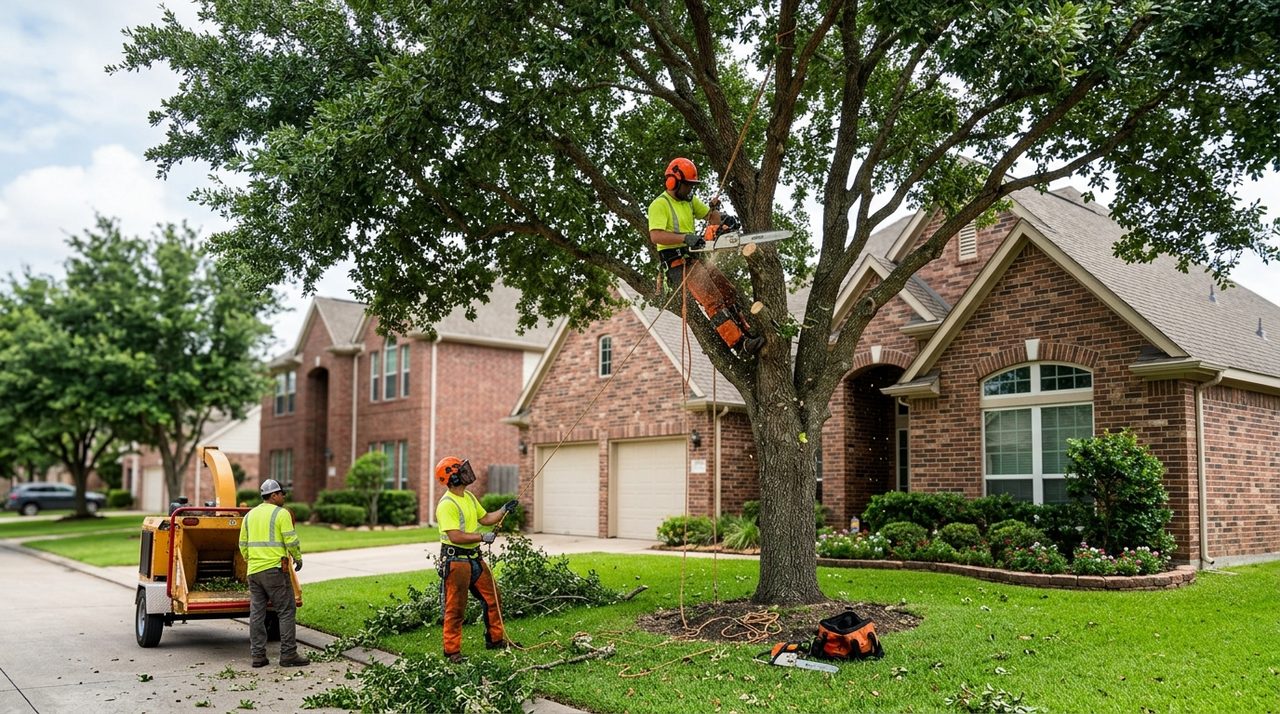
Westchase's 1970s–1990s suburban housing stock sits on slab-on-grade foundations over Houston's expansive Beaumont Black clay, putting mature water oaks and Chinese tallow volunteers in direct tension with driveways, sewer laterals, and foundation edges across dozens of separately platted subdivisions. Because the area falls entirely under the City of Houston's permit jurisdiction — which does not require a homeowner permit for routine private-property tree removal — the real regulatory complexity here is subdivision-level deed restrictions that vary block by block, not a single city ordinance. Understanding that patchwork before any tree hits the ground is what separates a smooth removal from an HOA fine and a forced-replanting order.
Ranked by verified Google rating × review volume × verification tier. How we rank →
Some highly-rated pros serve Westchase from nearby and may not keep a Westchase street address. Those are listed under "Also serving Westchase" with their real city and distance, so you always know where each business is based.
Highly-rated pros based nearby who cover Westchase. Distance shown from the Westchase area.
Serving Westchase Based in Spring Branch · 3.6 mi away
Serving Westchase Based in Spring Branch · 3.8 mi away
Serving Westchase Based in Bellaire · 5.2 mi away
Serving Westchase Based in Alief · 5.4 mi away
Serving Westchase Based in Missouri City · 5.4 mi away
Serving Westchase Based in Spring Branch · 5.6 mi away
Serving Westchase Based in Lazybrook / Timbergrove · 5.6 mi away
Serving Westchase Based in Spring Branch · 5.7 mi away
Serving Westchase Based in Tanglewood · 5.8 mi away
Serving Westchase Based in Missouri City · 5.9 mi away
Why it matters to you
Westchase is not one neighborhood with one rulebook — it is a collection of separately platted subdivisions, each potentially carrying its own deed restrictions and HOA architectural review requirements. A homeowner on one street may need written approval before removing any tree over 6 inches DBH, while their neighbor two blocks away operates under no such covenant at all. Removing a protected tree without approval can trigger fines and a mandatory replanting order that costs more than the removal itself.
What a good pro does
Before scheduling any work, pull your subdivision's deed restrictions from Harris County deed records and confirm whether an active HOA architectural review process applies to your specific plat. A reputable tree-removal company working in Westchase should ask for your subdivision name and lot number at the estimate stage — not after the chainsaw starts. The City of Houston itself does not require a permit for routine private-property tree removal, so the only checkpoint that matters here is your subdivision's recorded covenants.
Sources: Local HOA / deed restrictions (see area profile), City of Houston Permitting Center
Why it matters to you
Westchase's median year-built of 1986 means a significant share of homes were constructed when mature live oaks and water oaks were planted close to the structure for shade — trees that are now 30–50 years old with root systems extending well beyond the drip line. On Houston's expansive Beaumont Black clay, surface-feeding roots can exploit seasonal shrink-swell cycles, heaving slab edges and cracking driveways. Homes from this era also commonly used clay sewer laterals that roots penetrate and break, converting a tree problem into an expensive sewer reline.
What a good pro does
A qualified arborist should assess root proximity to the foundation before removal, not just the canopy. For trees within 15–20 feet of a slab edge, ask for a root barrier recommendation or a camera inspection of the sewer lateral as part of the project scope. Stump grinding to at least 12 inches below grade is especially important on clay soils where a shallow grind leaves enough mass to continue cracking hardscape as it decomposes. Post-storm pricing — particularly following the May 2024 derecho and Hurricane Beryl 2024 — can run 40–80% above normal, so budgeting at the high end of any range is prudent if you are scheduling in the weeks after a named event.
Sources: Harris County Flood Control District, City of Houston Permitting Center
Why it matters to you
Westchase's mix of aging single-family homes, garden apartments, and undeveloped commercial pad sites creates exactly the disturbed-soil conditions where Chinese tallow (Triadica sebifera) colonizes aggressively. A state-listed invasive in Texas, tallow grows five or more feet per year, and its root system cracks driveways, invades drainage swales, and can heave slab edges on older homes. Because many Westchase properties back up to drainage easements or shared lot lines, a tallow that looks like a neighbor's problem rapidly becomes yours as it reseeds across the property line.
What a good pro does
Removal alone is not enough — Chinese tallow stumps resprout vigorously if only ground to surface level, and some wood recyclers refuse the material due to its invasive status. Specify full stump grinding to at least 6–8 inches below grade and request a cut-surface herbicide treatment on any remaining cambium at the time of removal. Because tallow spreads by seed, timing removal before the white waxy berry clusters mature in fall reduces further spread to adjacent lots and the nearby drainage infrastructure.
Sources: Texas Commission on Environmental Quality, Harris County Flood Control District
Why it matters to you
Houston's summer cooling load routinely exceeds 3,500 cooling degree days annually, and Westchase's predominantly west-facing suburban lots — many built in the 1970s and 1980s when trees were deliberately planted to shade west and southwest exposures — benefit significantly from mature canopy. Removing a large water oak or live oak that shades an AC condenser or a west-facing brick wall can increase summer electricity costs by 15–25%, a tradeoff that homeowners removing a root-damaged or storm-damaged tree often discover only after the first July electric bill.
What a good pro does
Before committing to full removal of a large shade tree on the west or southwest side of the home, ask an ISA Certified Arborist whether structural pruning, cabling, or a phased crown reduction could address the hazard while preserving meaningful shade. If removal is unavoidable, plan a replacement planting — a fast-establishing native like cedar elm or Texas red oak planted on the west side can begin providing meaningful shade within three to five growing seasons and restore some of the energy benefit. Texas does not require a state license for tree removal, but ISA Certified Arborist certification is the recognized credential worth verifying on any contractor you hire.
Sources: City of Houston Permitting Center
Hiring tree removal in Westchase? Westchase is a large, mixed-use district near Beltway 8 composed of multiple separately platted subdivisions, each with its own potential HOA and deed restrictions. Housing stock ranges from 1970s–1990s single-family homes to newer multifamily and townhome developments, nearly all built on slab-on-grade foundations. Contractors must verify deed restrictions and HOA rules on a per-subdivision basis, as there is no single umbrella association governing the entire area.
Building era
Primarily 1970s through 1990s, with continued multifamily and townhome development into the 2000s and 2010s.
Typical style
Contemporary suburban: traditional-to-transitional single-family homes, brick or stucco façade garden-style apartments, and townhomes.
Foundations
Slab-on-grade (nearly universal for post-1960s suburban Harris County construction).
Common systems
Central A/C with gas furnace, copper or CPVC plumbing transitioning to PEX in renovations, standard residential electrical panels (100–200 amp). Older 1970s–1980s homes may still have original galvanized supply lines or polybutylene piping requiring replacement.
What that means for repairs
Kitchen and bath remodels are common in aging 1970s–1980s homes. Plumbing re-pipes (replacing galvanized or polybutylene), HVAC system replacements on units past their 20-year lifespan, and slab foundation repair driven by Houston's expansive clay soils are frequent project types.
Permit jurisdiction
City of Houston — Houston Permitting Center.
HOA & deed restrictions
No single area-wide mandatory HOA exists. The Westchase District is a Texas Legislature-created management district focused on commercial improvements, not residential lot governance. The Westchase Super Neighborhood Council is a City of Houston advisory body. A Westchase Community Association (501(c)(4), formed 1974) exists, but its authority over individual residential lots is not clearly documented. Individual subdivisions within the Westchase area may have their own mandatory HOAs — must be verified per subdivision via Harris County deed records.
Historic districts
No City of Houston historic district designation confirmed.
Contractor note
Contractors must confirm which subdivision a property belongs to and check for active deed restrictions and HOA architectural review requirements before beginning exterior work, fencing, or additions. The lack of a single governing HOA means rules vary block by block.
FEMA flood zone
FEMA Zone X (low flood risk) per official NFHL data. Drainage is influenced by local bayous and channels within the Harris County Flood Control system; proximity to specific drainage channels should be verified on a per-property basis.
Hurricane Harvey impact
No Westchase-specific street-level Harvey flood impact documentation was found in available sources. The area is east of the Addicks and Barker Reservoir watersheds and experienced varying levels of impact during Harvey. Flood history should be verified through Harris County Flood Control District records and individual property disclosure for any specific address.
Heat & humidity load
Sustained summer heat puts heavy strain on aging HVAC systems in 1970s–1980s homes; capacitor failures, refrigerant leaks, and compressor burnout are common seasonal calls. Slab-on-grade foundations on Houston's expansive clay soils experience movement during summer drought cycles, leading to door/window sticking and drywall cracks that trigger foundation inspection and repair demand.
Working with contractors here
Westchase keeps contractors busy with the bread-and-butter maintenance demands of aging 1970s–1990s suburban homes: HVAC replacements, whole-house plumbing re-pipes, and slab foundation repair. The area's slab-on-grade construction on expansive clay means foundation work is a recurring need, especially after drought-to-rain cycles. Roof replacements on 20–30-year-old composition shingle roofs are common, and many homeowners are upgrading aging electrical panels to support modern loads. Because Westchase comprises many separate subdivisions, contractors must scope each job with attention to the specific subdivision's deed restrictions and any HOA architectural review — exterior modifications, fence styles, and material choices may vary significantly from one block to the next.
Local Tip
Always ask for a written estimate before work begins. Texas contractors are required to provide one on jobs over $1,000.
Westchase is a large, mixed-use district near Beltway 8 composed of multiple separately platted subdivisions, each with its own potential HOA and deed restrictions. Housing stock ranges from 1970s–1990s single-family homes to newer multifamily and townhome developments, nearly all built on slab-on-grade foundations. Contractors must verify deed restrictions and HOA rules on a per-subdivision basis, as there is no single umbrella association governing the entire area.
Source: U.S. Census Bureau, ACS 5-Year 2023
Most of Westchase maps to FEMA Zone X (low mapped flood risk), but Houston's flash-flood reality means even low-risk blocks benefit from smart drainage and storm-hardened installs.
Source: FEMA National Flood Hazard Layer (NFHL). Flood zones vary by parcel — verify your individual FIRM panel.
Beryl 2024 left tens of thousands of trees down across the Houston area, and lower-flood-risk zones like Westchase were not spared from wind-throw damage that crushed vehicles, fences, and rooflines. Scheduling removal of any large tree with a cavity, dead crown, or proximity to your home now means you are not competing for post-storm crews when wait times stretch to weeks. Confirm the current FEMA panel for your Westchase parcel — the area maps to Zone X, but adjacent lots can differ.
Wind and lightning are the dominant tree hazards in Westchase during severe Houston thunderstorms, and the May 2024 derecho proved that low-flood-risk areas are not insulated from widespread tree-on-structure damage when straight-line winds exceed 75 mph. A pre-season inspection by a licensed tree removal contractor focused on dead wood, weak branch attachments, and trees leaning toward structures is the most direct mitigation step available. In-city Westchase work falls under City of Houston floodplain and permitting rules.
Freeze-cracked bark and split branch unions caused by Uri 2021 left thousands of Houston-area trees with compromised structural integrity that persisted well into subsequent years, so Westchase homeowners should request a post-freeze assessment even if no immediate failure occurred. A licensed contractor can identify cold-induced damage that will accelerate decay and create a hazard within one to three growing seasons. In-city Westchase work falls under City of Houston floodplain and permitting rules.
Sources: FEMA National Flood Hazard Layer (NFHL), Ready.gov -- Hurricanes, CenterPoint Energy -- Storm Center, City of Houston -- Emergency Preparedness, Ready.gov -- Winter Weather, Harris County Flood Control District
Houston-specific estimators to plan your project before you call a pro. All results are planning estimates — a licensed local pro confirms the details on site.
Grouped by mature root aggression & water demand.
Trunk center to the nearest exterior wall.
The root zone likely reaches your foundation's soil during Houston's dry summers, when clay shrinks most. Watch for sticking doors and diagonal cracks, keep soil moisture even with a soaker hose during drought, and have a foundation pro evaluate if you see any movement.
Find a Houston foundation pro →This is a planning estimate only — actual requirements depend on an on-site assessment by a licensed Houston pro. Guidance is based on general species root behavior in expansive clay, not a soil test.
Disconnect & drain every outdoor hose bib
Remove hoses, drain the spigots, and cover each with an insulated faucet sock. Un-drained hose bibs are the #1 burst point in a Houston freeze.
Insulate exposed pipes in the attic & garage
Wrap any pipe in an unconditioned space (attic runs, garage walls) with foam sleeves. Houston homes rarely insulate these because they only matter a few nights a year — which is exactly why they burst.
Open cabinet doors & keep a pencil-width drip
On hard-freeze nights, open kitchen/bath cabinets so warm air reaches the pipes and let faucets on exterior walls drip to relieve pressure.
Protect the attic/garage water heater & its lines
An attic or garage tank sits in unconditioned space. Insulate the cold-inlet and hot-outlet lines and confirm the emergency drain pan is clear so a leak doesn't reach the ceiling.
This is a planning estimate only — actual requirements depend on an on-site assessment by a licensed Houston pro. If a pipe has already burst, shut off your main water supply and call a licensed Houston plumber immediately — freeze bursts flood fast.
Sources: City of Houston Permitting CenterLocal HOA / deed restrictions (see area profile)
Sources: Local HOA / deed restrictions (see area profile)
Sources: FEMA National Flood Hazard Layer (NFHL)City of Houston Permitting Center