913 Crenshaw Rd, Pasadena, TX 77504
Best Tree Removal in South Houston, TX
South Houston's aging 1950s–1970s slab-on-grade homes sit on some of the heaviest Beaumont clay in southeast Harris County, where large surface-feeding trees and a FEMA Zone AE flood designation create a specific double-bind: the same mature water oaks and Chinese tallow volunteers that grow fastest in disturbed, flood-soaked soil are also the species most likely to buckle a 50-year-old driveway or infiltrate an original clay sewer lateral. Tree removal here is not a simple weekend project — it runs through the City of South Houston's own permitting office, not Houston's, and the flood-zone context changes how you handle debris and stump grinding. Read this before you call anyone.
Verified against Google Business data
Updated 2026
See the 10 Tree Removal Serving South Houston 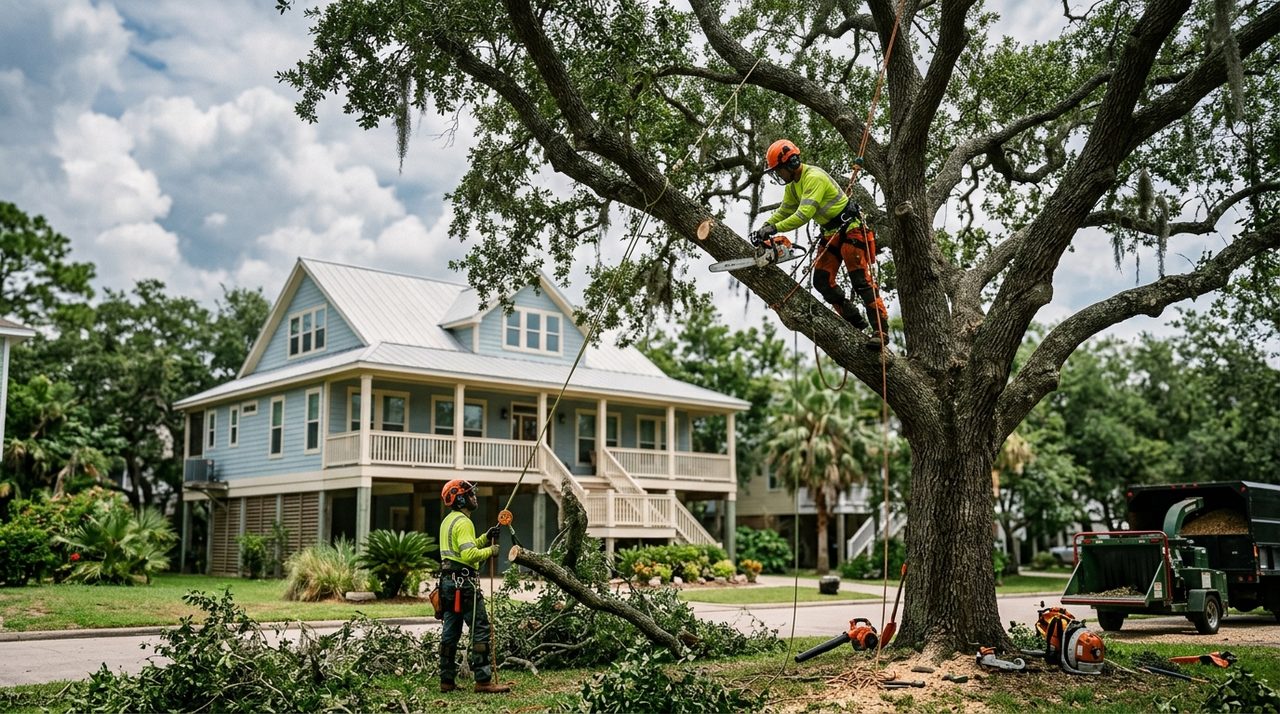
- Median home built
- 1969
- Median home value
- $176,100
- FEMA flood zone
- AE (high)
- Typical removal cost (est.)
- $750–$5,000+
- Most common local issue
- Chinese tallow roots cracking aging slab edges and clay sewer lines in post-war homes
Ranked by verified Google rating × review volume × verification tier. How we rank →
Some highly-rated pros serve South Houston from nearby and may not keep a South Houston street address. Those are listed under "Also serving South Houston" with their real city and distance, so you always know where each business is based.
Min rating:
10 resultsBased in South Houston
Closed
9827 Almeda Genoa Rd, Houston, TX 77075
Closed
2015 Ahrens St, Houston, TX 77017
Also serving South Houston
Highly-rated pros based nearby who cover South Houston. Distance shown from the South Houston area.
Closed
Serving South Houston Based in Pasadena · 3 mi away
Closed
Serving South Houston Based in Deer Park · 3.5 mi away
Closed
Serving South Houston Based in Deer Park · 4.9 mi away
Open Now
Serving South Houston Based in Pearland · 6.2 mi away
Closed
Serving South Houston Based in Deer Park · 6.3 mi away
Closed
Serving South Houston Based in EaDo · 6.7 mi away
Open Now
Serving South Houston Based in Deer Park · 6.8 mi away
Tree Removal in South Houston: What You Should Know
Chinese Tallow Invaders Are Aggressively Resprouting in Flood-Disturbed Soil
Why it matters to you
South Houston's repeated flood events — Harvey 2017 saturated much of the FEMA Zone AE footprint for days, prompting widespread interior gut-and-rebuilds — left behind exactly the kind of disturbed, nutrient-rich soil where Chinese tallow (Triadica sebifera) reseeds at will. These state-listed invasive trees grow 5-plus feet per year along back fences, drainage easements, and vacant adjacent lots, and their aggressive roots are particularly destructive to the original clay sewer laterals still common in South Houston's 1950s–1960s housing stock. A stump left improperly ground will resprout within one growing season.
What a good pro does
A qualified ISA Certified Arborist will confirm the species before cutting — tallow stumps require grinding to at least 8–10 inches below grade, followed by a cut-surface herbicide treatment on the same day to prevent resprouting. Because some municipal recycling facilities refuse Chinese tallow wood as invasive material, verify that your contractor has a confirmed disposal chain before work begins. Costs for a mid-size tallow removal typically run $750–$1,500 (estimate), and stump grinding is quoted separately at roughly $150–$400 (estimate).
Sources: Texas Commission on Environmental Quality, Harris County Flood Control District
Root-to-Slab and Root-to-Sewer Conflict in a 1969-Median Housing Stock
Why it matters to you
With a Census-median year built of 1969, a significant share of South Houston homes were constructed before PVC sewer pipe became standard — meaning original clay sewer laterals are still in the ground beneath many of these ranch-style slabs. Water oaks and live oaks planted in the 1970s and 1980s are now reaching 40–60 feet and developing surface root systems that both exploit the shrink-swell movement of the underlying Beaumont clay and physically intrude into deteriorating clay pipe joints. This combination is why foundation repair and re-plumbing are the two most common contractor scopes in South Houston, and a nearby large-canopy tree is often a contributing factor that goes unaddressed.
What a good pro does
Before removing any tree within 20 feet of the foundation or the main sewer run, a reputable contractor should review the site and discuss whether a pre-removal sewer camera inspection makes sense — particularly if the home has not been re-plumbed with PEX or copper. The tree removal itself does not require a homeowner permit from the City of South Houston for work on private property, but any associated trench work or sewer repair will require a permit through the City of South Houston's own building department, not the City of Houston Permitting Center.
Sources: Municipal permit office (see area profile), FEMA National Flood Hazard Layer (NFHL)
Post-Storm Demand Surges and Fly-by-Night Operators Are a Real Risk Here
Why it matters to you
South Houston sits in southeast Harris County, in the direct path of Gulf-origin weather systems. Hurricane Beryl in July 2024 and the May 2024 derecho both pushed damaging winds through the southeast metro, and in the days that follow any named event the region-wide demand surge means legitimate local arborists are backlogged for weeks. That vacuum is reliably filled by out-of-state operators who arrive without local knowledge, sometimes without adequate liability insurance, and — critically for South Houston homeowners — without awareness that permits and inspections for structural work run through the City of South Houston's own building department rather than any county-wide or City of Houston process.
What a good pro does
Verify that any contractor carries current general liability and workers' compensation insurance before work begins — ask for a certificate naming you as the certificate holder and call the insurer to confirm it is active. ISA Certified Arborist credentials are the recognized voluntary standard for this trade in Texas, where TDLR does not issue a state arborist license. For storm-damaged trees, budget at the high end of any range: post-event pricing routinely runs 40–80 percent above normal rates (estimate), so a mid-size water oak removal that would be $900 in calm conditions may run $1,400–$1,600 the week after a hurricane.
Sources: Municipal permit office (see area profile), FEMA National Flood Hazard Layer (NFHL)
FEMA Zone AE Status Shapes Debris Disposal and What Insurance May Cover
Why it matters to you
Most of South Houston maps to FEMA Zone AE, the high-risk flood zone requiring mandatory flood insurance for federally backed mortgages. When a federally declared disaster is in effect — as it was after Harvey — specific curbside debris pickup windows open in Harris County, but these windows are time-limited and the rules differ from standard bulk trash pickup. Homeowners in Zone AE who wait too long, or who pile debris in the wrong location, can miss the reimbursable window and face private-pay disposal costs on top of the removal bill. Your standard homeowners policy typically excludes flood damage, so storm-downed tree removal on a Zone AE property often falls entirely to private pay unless the tree also damaged a covered structure.
What a good pro does
After any named storm event, document all tree and storm damage with dated photographs before any work begins — this record matters for both FEMA Individual Assistance claims and any homeowners insurance claim for structure damage. Monitor Harris County Flood Control District and the City of South Houston's municipal announcements for the specific debris-curbside pickup schedule and placement rules for your block, as these differ from Houston's schedule. Confirm with your tree-removal contractor exactly how green waste and wood debris will be disposed of and whether their haul-away fee is included in their post-storm quote.
Sources: FEMA National Flood Hazard Layer (NFHL), Harris County Flood Control District, Municipal permit office (see area profile)
Tree Removal in South Houston: What You Should Know
Hiring tree removal in South Houston? South Houston is a small incorporated city surrounded by southeast Harris County, with a housing stock dominated by 1950s–1970s slab-on-grade homes that face persistent flood risk and foundation movement on expansive clay soils. Homeowners here must prioritize drainage improvements, flood damage mitigation, and aging system upgrades. The patchwork of deed-restricted subdivisions and non-HOA blocks means contractor permitting runs through the City of South Houston rather than Houston's permitting center.
- Housing era
- Primarily 1950s–1970s with some pre-war stock and later infill
- Foundation
- Predominantly slab-on-grade
- Flood zone
- FEMA Zone AE (high flood risk) per official NFHL data
- Permits
- City of South Houston Permitting (separate incorporated city — not Houston Permitting Center)
Housing stock & systems
Building era
Primarily 1950s–1970s with some pre-war stock and later infill.
Typical style
Ranch-style and traditional suburban detached single-family homes; some smaller post-war cottages and bungalows in older plats.
Foundations
Predominantly slab-on-grade; limited pier-and-beam in pre-1950 structures.
Common systems
Original galvanized or early copper plumbing in older homes; aging central AC systems often undersized by modern standards; 100-amp electrical panels common in 1950s–1960s builds, many needing upgrade to 200-amp service.
What that means for repairs
Foundation repair and re-leveling are frequent due to expansive clay soils. Post-Harvey flood remediation drove significant interior gut-and-rebuild activity. Electrical panel upgrades and re-plumbing with PEX or copper are common as original systems age out.
Permits & restrictions
Permit jurisdiction
City of South Houston Permitting (separate incorporated city — not Houston Permitting Center). Unincorporated parcels in surrounding SE Harris County fall under Harris County Engineering.
HOA & deed restrictions
No city-wide mandatory HOA identified. The area is a patchwork of deed-restricted subdivisions and non-HOA blocks with some voluntary civic clubs. Specific HOA status must be confirmed through Harris County Clerk deed restriction records or the Texas HOA registry at hoa.texas.gov.
Historic districts
No City of Houston historic district designation confirmed. South Houston is a separate incorporated municipality with no known local historic district overlay.
Contractor note
Contractors must obtain permits through the City of South Houston's own building department, not the City of Houston. Confirm municipal jurisdiction at the parcel level, as adjacent properties may fall under Harris County or Pasadena ETJ depending on exact location.
Flood & weather
FEMA flood zone
FEMA Zone AE (high flood risk) per official NFHL data. The area sits in low-lying southeast Harris County near major drainage channels and bayous, contributing to elevated flood exposure during heavy rain events.
Hurricane Harvey impact
Southeast Harris County, including the South Houston and Pasadena corridor, experienced significant street and structure flooding during Hurricane Harvey (2017). Harris County Flood Control District sources confirm widespread inundation in the area, though a detailed street-by-street damage summary specific to the City of South Houston was not located in public records. Given the AE flood zone designation and regional flood patterns, substantial residential flood damage is strongly indicated.
Heat & humidity load
High heat and humidity stress aging HVAC systems in 1950s–1970s homes, many of which have inadequate insulation and single-pane windows. Standing water from summer thunderstorms exacerbates foundation movement on clay soils and creates conditions for mold growth in flood-damaged or poorly ventilated structures.
Working with contractors here
The most common contractor work in South Houston involves foundation repair, flood damage restoration, and drainage improvement — all driven by the AE flood zone designation and expansive clay soils beneath aging slab foundations. HVAC replacement is frequent as original systems in 1950s–1970s homes reach end of life, and many homeowners simultaneously upgrade insulation and ductwork. Electrical panel upgrades from 100-amp to 200-amp service are a routine scope item on renovation projects. Contractors should budget for potential mold remediation discovery during interior remodels, especially in homes that took Harvey flooding. Because South Houston is its own municipality, job scoping should confirm permit jurisdiction before bidding — the city's building department has its own inspection requirements separate from Houston or Harris County.
Local Tip
Always ask for a written estimate before work begins. Texas contractors are required to provide one on jobs over $1,000.
About South Houston
South Houston is a small incorporated city surrounded by southeast Harris County, with a housing stock dominated by 1950s–1970s slab-on-grade homes that face persistent flood risk and foundation movement on expansive clay soils. Homeowners here must prioritize drainage improvements, flood damage mitigation, and aging system upgrades. The patchwork of deed-restricted subdivisions and non-HOA blocks means contractor permitting runs through the City of South Houston rather than Houston's permitting center.
- Median year built
- 1969
- Median home value
- $176,100
- Owner-occupied
- 54.1%
- Population
- 16,017
- Housing units
- 5,529
- Median income
- $52,611
Source: U.S. Census Bureau, ACS 5-Year 2023
Flood & storm risk
FEMA Zone AEHigh flood riskMuch of South Houston maps to FEMA Zone AE (high flood risk), so flood-resilient detailing -- elevated equipment, water-tolerant materials, and drainage-first thinking -- is essential here, not optional.
Source: FEMA National Flood Hazard Layer (NFHL). Flood zones vary by parcel — verify your individual FIRM panel.
Houston Storm Readiness in South Houston
Hurricane & flooding
After a hurricane passes through South Houston, TX, do not approach downed trees in FEMA Zone AE inside the 100-year floodplain conditions until CenterPoint confirms power to nearby lines is cut, since energized conductors are frequently pinned beneath root balls. A licensed tree removal crew trained in post-storm work can safely section and remove trees while coordinating with utility clearance requirements. Much of the housing stock predates modern wind codes (median build year 1969), so retrofits matter more here. As a Harris County community, South Houston may follow county rather than City of Houston storm rebuild rules.
Severe storms & hail
The May 2024 derecho drove straight-line winds above 80 mph through the Houston metro, snapping mature trees at mid-trunk and depositing them into homes across South Houston, TX, so pre-season removal of compromised trees is essential when FEMA Zone AE inside the 100-year floodplain already stresses root systems seasonally. A licensed tree removal contractor can identify trees with decay columns or root rot before the next severe storm window opens. Confirm the current FEMA panel for your South Houston parcel — the area maps to Zone AE, but adjacent lots can differ.
Ice storms & freezes
The hidden aftermath of Uri 2021 was the wave of structurally compromised trees left standing across South Houston, TX that became hazards in the following storm seasons, so a post-freeze inspection by a licensed arborist is as important as the immediate debris cleanup. Contractors can identify freeze-cracked bark, split scaffold branches, and root damage that will lead to failure during the next severe weather event. With a median build year of 1969, the older building stock here is more exposed to hard-freeze damage than newer construction. Confirm the current FEMA panel for your South Houston parcel — the area maps to Zone AE, but adjacent lots can differ.
Sources: FEMA National Flood Hazard Layer (NFHL), Ready.gov -- Hurricanes, CenterPoint Energy -- Storm Center, City of Houston -- Emergency Preparedness, Ready.gov -- Winter Weather, Harris County Flood Control District
Free South Houston Tools & Calculators
Houston-specific estimators to plan your project before you call a pro. All results are planning estimates — a licensed local pro confirms the details on site.
Houston Soil & Tree Proximity Risk Calculator
Open full tool & FAQ →Grouped by mature root aggression & water demand.
Trunk center to the nearest exterior wall.
Moderate risk
The root zone likely reaches your foundation's soil during Houston's dry summers, when clay shrinks most. Watch for sticking doors and diagonal cracks, keep soil moisture even with a soaker hose during drought, and have a foundation pro evaluate if you see any movement.
Find a Houston foundation pro →This is a planning estimate only — actual requirements depend on an on-site assessment by a licensed Houston pro. Guidance is based on general species root behavior in expansive clay, not a soil test.
Houston Freeze Prep & Pipe Insulation Checklist
Open full tool & FAQ →Your freeze checklist — 4 tasks
- 1
Disconnect & drain every outdoor hose bib
Remove hoses, drain the spigots, and cover each with an insulated faucet sock. Un-drained hose bibs are the #1 burst point in a Houston freeze.
- 2
Insulate exposed pipes in the attic & garage
Wrap any pipe in an unconditioned space (attic runs, garage walls) with foam sleeves. Houston homes rarely insulate these because they only matter a few nights a year — which is exactly why they burst.
- 3
Open cabinet doors & keep a pencil-width drip
On hard-freeze nights, open kitchen/bath cabinets so warm air reaches the pipes and let faucets on exterior walls drip to relieve pressure.
- 4
Protect the attic/garage water heater & its lines
An attic or garage tank sits in unconditioned space. Insulate the cold-inlet and hot-outlet lines and confirm the emergency drain pan is clear so a leak doesn't reach the ceiling.
This is a planning estimate only — actual requirements depend on an on-site assessment by a licensed Houston pro. If a pipe has already burst, shut off your main water supply and call a licensed Houston plumber immediately — freeze bursts flood fast.
Frequently Asked Questions
Do I need a permit from the City of South Houston to remove a tree in my yard?
South Houston is its own incorporated municipality, so permits run through the City of South Houston's building department — not the City of Houston Permitting Center. For routine tree removal on private residential property, the City of South Houston does not impose a tree-preservation permit the way some suburbs like Bellaire or West University Place do, but you should confirm with the city directly before work starts because requirements can change and adjacent parcels may fall under Harris County Engineering's jurisdiction instead. If any portion of the work involves clearing near a public right-of-way or storm drain, additional city approval may apply.
Sources: Municipal permit office (see area profile)
My South Houston home was built in the early 1960s — are the clay sewer lines under my slab at real risk from tree roots, and how do I know before I remove a tree?
Homes built in South Houston before roughly 1980 frequently have original clay-tile or cast-iron sewer laterals that are already cracked from decades of the heavy Beaumont clay soil expanding and contracting under the slab, and water oak or Chinese tallow roots readily exploit those cracks. Before scheduling removal of any large tree within 20–25 feet of your home's sewer cleanout, it is worth having a licensed plumber run a sewer camera scope — a scope typically costs $150–$300 (estimate) — so you know whether roots have already infiltrated the line and whether you may need lateral repair concurrent with removal. Removing the tree without addressing an already-root-invaded lateral just leaves the damage in place.
Our neighborhood in South Houston is in FEMA Zone AE — after a storm drops a tree, can any of the removal cost get covered by our flood insurance policy?
Standard NFIP flood policies through FEMA cover direct flood damage to the structure and contents, not tree removal or debris cleanup, even in a Zone AE property that floods regularly. If a tree falls and damages a covered structure during a named storm, your homeowner's insurance (not flood insurance) is the policy to file under for removal costs tied to that structural damage — though coverage limits and deductibles vary widely. After a FEMA-declared disaster, Harris County and the City of South Houston may coordinate curbside debris pickup for storm-felled material placed in the right-of-way within a strict time window, but that program does not reimburse removal labor for trees still standing on your lot.
How much longer does tree removal typically take to schedule in South Houston after a major storm, and is there a smarter time of year to plan non-emergency work?
After named events like the May 2024 derecho or Hurricane Beryl 2024, reputable South Houston tree crews are typically backlogged three to six weeks, and out-of-state operators with no local track record fill the gap — so if your removal is non-emergency, waiting four to eight weeks post-storm to schedule lets the surge pricing (which can run 40–80% above normal rates, estimated) settle and lets you vet the contractor properly. For planned removals with no urgency, late fall through February is generally the best window in southeast Harris County: trees are dormant or slower-growing, the ground is firmer, and crews have more availability before spring storm season ramps up demand again.
Some blocks in South Houston have deed restrictions but no formal HOA — do I still need approval before removing a tree?
Yes, deed restrictions can impose tree-removal limitations even without an active HOA enforcing them, because the restrictions run with the land and any neighbor with standing can pursue enforcement through Harris County district court. You can look up whether your specific plat has recorded deed restrictions through the Harris County Clerk's deed restriction records or the Texas HOA registry at hoa.texas.gov, which will show what covenants apply and whether a civic club holds any enforcement authority. If deed restrictions require approval for removing trees above a certain trunk diameter, get that written clearance before the crew arrives — retroactive fines and replanting requirements are real.
Sources: Local HOA / deed restrictions (see area profile)
What should I specifically ask a South Houston tree company before hiring them — beyond just checking for insurance?
Ask whether they carry both general liability and workers' compensation insurance and request certificates naming you as the additional insured — this matters especially in South Houston where a crew working around aging overhead utility lines serviced by CenterPoint Energy creates real exposure. Ask specifically how they handle stump grinding on properties with clay sewer laterals running near the stump, because aggressive grinding can sever a shallow clay line on a 1960s-era home. Finally, confirm they will haul all debris off-site or get a clear written agreement on what gets chipped and left, because some municipalities in southeast Harris County restrict curbside dumping of tree debris outside of declared-disaster pickup windows.