Closed
15255 Gulf Fwy Suite 142A, Houston, TX 77034
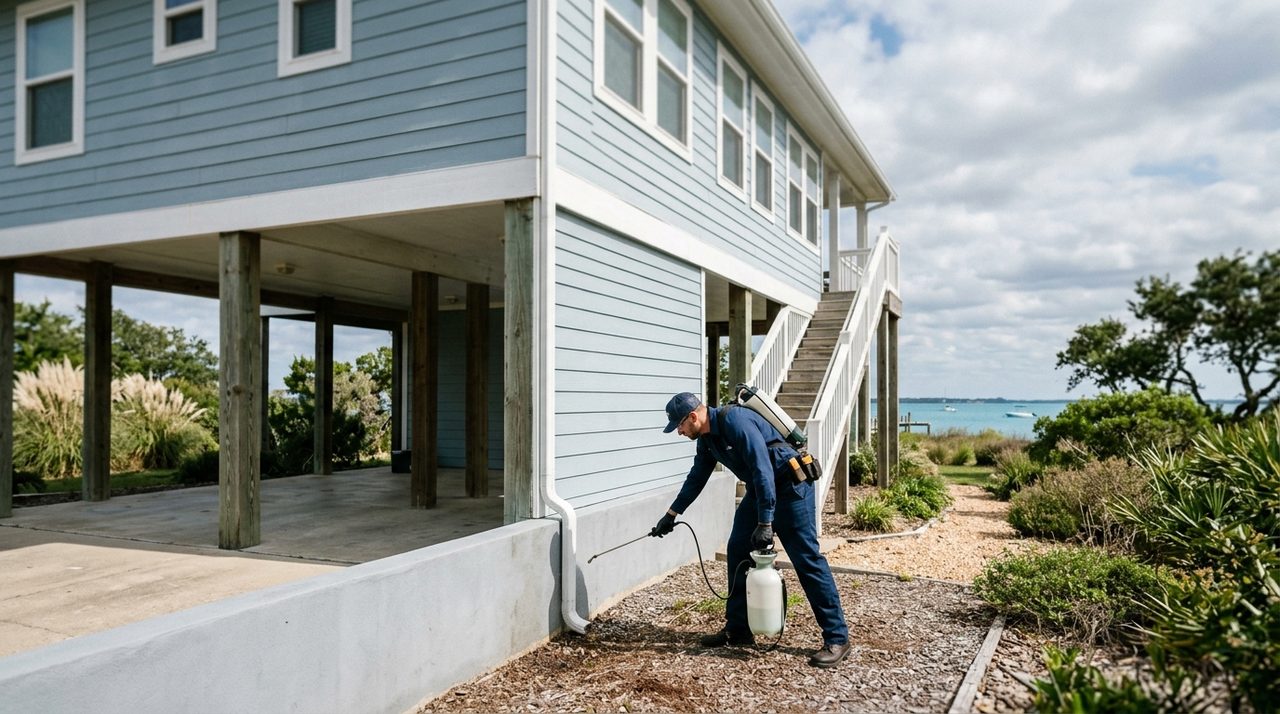
South Houston's postwar slab-on-grade homes — most built between 1950 and 1975 with original galvanized plumbing and no modern termiticide pre-treatment — sit squarely in FEMA Zone AE, making them simultaneously vulnerable to Houston's extreme subterranean termite pressure and to the mosquito surges that follow the repeated flood events this community absorbs. If your home took water during Harvey or Beryl, understanding how flooding reshapes pest pressure in aging slabs and cast-iron sewer lines is the most practical thing you can do before signing a service contract.
Ranked by verified Google rating × review volume × verification tier. How we rank →
Some highly-rated pros serve South Houston from nearby and may not keep a South Houston street address. Those are listed under "Also serving South Houston" with their real city and distance, so you always know where each business is based.
15255 Gulf Fwy Suite 142A, Houston, TX 77034
12009 Almeda Genoa Rd, Houston, TX 77034
15255 Gulf Fwy #146A, Houston, TX 77034
12221 Fuqua St Suite C, Houston, TX 77034
7999 Hansen Rd #413, Houston, TX 77061
700 College Ave, South Houston, TX 77587
9988 Windmill Lakes Blvd, Houston, TX 77075
Highly-rated pros based nearby who cover South Houston. Distance shown from the South Houston area.
Serving South Houston Based in Pasadena · 2.3 mi away
Serving South Houston Based in Deer Park · 3.5 mi away
Serving South Houston Based in Pasadena · 3.7 mi away
Why it matters to you
South Houston's housing stock — predominantly slabs poured in the 1950s through 1970s — predates the era when liquid termiticide pre-treatment under concrete was standard practice. Every expansion joint, plumbing sleeve, and post-tension cable conduit in these older foundations is a direct soil-to-wood highway for Formosan and Reticulitermes termites, which are most aggressive after the kind of prolonged soil saturation that AE-zone flooding delivers. Homes that absorbed Harvey or Beryl floodwater and underwent gut-and-rebuild remediation often had wall cavities exposed and resealed without a licensed termite inspection, leaving infestations hidden behind new drywall.
What a good pro does
A TDLR-licensed Structural Pest Control operator holding the termite category endorsement should perform a full slab perimeter inspection — probing weep holes, expansion joints, and any post-Harvey utility penetrations — before recommending liquid barrier (Termidor-type, typically $800–$1,800 for a South Houston ranch home, est.) or bait station installation ($1,200–$2,000 plus $300–$500 annual monitoring, est.). No municipal pest control permit is required through the City of South Houston's building department for standard termite treatment, but a fumigation job requires fire marshal notification regardless of jurisdiction.
Sources: Texas Department of Licensing & Regulation, FEMA National Flood Hazard Layer (NFHL)
Why it matters to you
South Houston's expansive clay soils retain standing water for 72 hours or more after even moderate rainfall — a window that is more than sufficient for Aedes aegypti to complete multiple breeding cycles in low-lying backyards, clogged downspout extensions, and slab-void pockets that never fully drained after Harvey or the July 2024 Beryl flooding. Harris County Mosquito Control District aerial applications cover public rights-of-way in southeast Harris County, but they cannot treat private yards, meaning AE-zone homeowners here absorb the bulk of post-storm vector pressure without any automatic relief.
What a good pro does
Professional mosquito management in South Houston should start with a source-reduction walkthrough — identifying clay depressions, clogged gutters, and any slab voids holding water — followed by larvicide treatment of standing water that cannot be eliminated and a barrier spray of perimeter vegetation (typically $75–$150 per application, est., on a monthly schedule during season). The pest control operator must hold a TDLR Structural Pest Control license with the general household pest category; larvicide product selection should be confirmed to comply with TCEQ surface-water discharge rules given proximity to southeast Harris County drainage infrastructure.
Sources: Harris County Flood Control District, Texas Commission on Environmental Quality, Texas Department of Licensing & Regulation
Why it matters to you
Homes in South Houston's 1950s and 1960s plats were almost universally plumbed with cast-iron drain lines that are now 60–70 years old and commonly cracked, root-infiltrated, or separated at joints beneath the slab. Periplaneta americana — the large 'waterbug' cockroach — lives in South Houston's warm sewer infrastructure year-round and surges into homes through floor drains, slab penetrations, and weep holes every time heavy rain displaces them from storm sewers, which in an AE flood zone happens frequently. Interior spraying alone fails because the harborage is underground and continuous; without drain treatment and exterior exclusion, populations reset within weeks.
What a good pro does
A licensed TDLR operator should treat accessible floor drains and plumbing voids with appropriately labeled residual products, seal weep holes with copper mesh (not foam, which degrades), and apply an exterior perimeter treatment around the slab edge. Homeowners who have not yet re-plumbed from cast iron to PEX or copper — a common South Houston renovation scope item — should disclose that to the technician, as cracked lines under the slab may require a licensed plumber's camera inspection before exclusion work can be fully effective. A one-time perimeter-plus-interior treatment typically runs $150–$300 for a standard South Houston single-family home (est.).
Sources: Texas Department of Licensing & Regulation, FEMA National Flood Hazard Layer (NFHL)
Why it matters to you
Houston's expansive Beaumont clay underneath South Houston moves seasonally, and the gap-and-reseal cycle around plumbing penetrations, garage door thresholds, and brick veneer weep holes is continuous in homes sitting on slabs that have already been re-leveled — as many South Houston foundations have. Post-Harvey remediation activity throughout 2017–2019 left a significant number of utility chases improperly resealed by restoration crews focused on drywall and flooring, and with active construction and infrastructure work ongoing in surrounding southeast Harris County, displaced rodent populations are pushed into established residential blocks.
What a good pro does
Effective rodent control in South Houston requires a physical inspection of all slab penetrations, garage door sweeps, and brick weep holes — not just bait placement — followed by mechanical exclusion with galvanized hardware cloth or copper mesh at every identified entry point before any interior trapping begins. Combined exclusion and interior treatment typically runs $400–$900 (est.) and should be performed by a TDLR-licensed operator with the rodent category endorsement. Homeowners should confirm that any utility penetrations opened during post-Harvey or post-Uri plumbing repairs were properly sealed, and schedule a re-inspection after the next significant rain event, when clay movement is greatest.
Sources: Texas Department of Licensing & Regulation, FEMA National Flood Hazard Layer (NFHL), Harris County Flood Control District
Hiring pest control in South Houston? South Houston is a small incorporated city surrounded by southeast Harris County, with a housing stock dominated by 1950s–1970s slab-on-grade homes that face persistent flood risk and foundation movement on expansive clay soils. Homeowners here must prioritize drainage improvements, flood damage mitigation, and aging system upgrades. The patchwork of deed-restricted subdivisions and non-HOA blocks means contractor permitting runs through the City of South Houston rather than Houston's permitting center.
Building era
Primarily 1950s–1970s with some pre-war stock and later infill.
Typical style
Ranch-style and traditional suburban detached single-family homes; some smaller post-war cottages and bungalows in older plats.
Foundations
Predominantly slab-on-grade; limited pier-and-beam in pre-1950 structures.
Common systems
Original galvanized or early copper plumbing in older homes; aging central AC systems often undersized by modern standards; 100-amp electrical panels common in 1950s–1960s builds, many needing upgrade to 200-amp service.
What that means for repairs
Foundation repair and re-leveling are frequent due to expansive clay soils. Post-Harvey flood remediation drove significant interior gut-and-rebuild activity. Electrical panel upgrades and re-plumbing with PEX or copper are common as original systems age out.
Permit jurisdiction
City of South Houston Permitting (separate incorporated city — not Houston Permitting Center). Unincorporated parcels in surrounding SE Harris County fall under Harris County Engineering.
HOA & deed restrictions
No city-wide mandatory HOA identified. The area is a patchwork of deed-restricted subdivisions and non-HOA blocks with some voluntary civic clubs. Specific HOA status must be confirmed through Harris County Clerk deed restriction records or the Texas HOA registry at hoa.texas.gov.
Historic districts
No City of Houston historic district designation confirmed. South Houston is a separate incorporated municipality with no known local historic district overlay.
Contractor note
Contractors must obtain permits through the City of South Houston's own building department, not the City of Houston. Confirm municipal jurisdiction at the parcel level, as adjacent properties may fall under Harris County or Pasadena ETJ depending on exact location.
FEMA flood zone
FEMA Zone AE (high flood risk) per official NFHL data. The area sits in low-lying southeast Harris County near major drainage channels and bayous, contributing to elevated flood exposure during heavy rain events.
Hurricane Harvey impact
Southeast Harris County, including the South Houston and Pasadena corridor, experienced significant street and structure flooding during Hurricane Harvey (2017). Harris County Flood Control District sources confirm widespread inundation in the area, though a detailed street-by-street damage summary specific to the City of South Houston was not located in public records. Given the AE flood zone designation and regional flood patterns, substantial residential flood damage is strongly indicated.
Heat & humidity load
High heat and humidity stress aging HVAC systems in 1950s–1970s homes, many of which have inadequate insulation and single-pane windows. Standing water from summer thunderstorms exacerbates foundation movement on clay soils and creates conditions for mold growth in flood-damaged or poorly ventilated structures.
Working with contractors here
The most common contractor work in South Houston involves foundation repair, flood damage restoration, and drainage improvement — all driven by the AE flood zone designation and expansive clay soils beneath aging slab foundations. HVAC replacement is frequent as original systems in 1950s–1970s homes reach end of life, and many homeowners simultaneously upgrade insulation and ductwork. Electrical panel upgrades from 100-amp to 200-amp service are a routine scope item on renovation projects. Contractors should budget for potential mold remediation discovery during interior remodels, especially in homes that took Harvey flooding. Because South Houston is its own municipality, job scoping should confirm permit jurisdiction before bidding — the city's building department has its own inspection requirements separate from Houston or Harris County.
Local Tip
Always ask for a written estimate before work begins. Texas contractors are required to provide one on jobs over $1,000.
South Houston is a small incorporated city surrounded by southeast Harris County, with a housing stock dominated by 1950s–1970s slab-on-grade homes that face persistent flood risk and foundation movement on expansive clay soils. Homeowners here must prioritize drainage improvements, flood damage mitigation, and aging system upgrades. The patchwork of deed-restricted subdivisions and non-HOA blocks means contractor permitting runs through the City of South Houston rather than Houston's permitting center.
Source: U.S. Census Bureau, ACS 5-Year 2023
Much of South Houston maps to FEMA Zone AE (high flood risk), so flood-resilient detailing -- elevated equipment, water-tolerant materials, and drainage-first thinking -- is essential here, not optional.
Source: FEMA National Flood Hazard Layer (NFHL). Flood zones vary by parcel — verify your individual FIRM panel.
Houston-specific estimators to plan your project before you call a pro. All results are planning estimates — a licensed local pro confirms the details on site.
| Pest | Cadence | Active window |
|---|---|---|
Mosquito control A standard 4-week barrier treatment holds a typical suburban lot through Houston's core mosquito season. | Every 28 days | April – October |
Termite (subterranean) A once-a-year spring inspection is the baseline for a drier, sunnier Houston lot — catch mud tubes and swarmer wings before damage compounds. | Annual inspection | Spring |
General pest guard (roaches, ants, spiders) Houston's year-round warmth means general pests never fully die off — a quarterly perimeter treatment is the standard maintenance rhythm. | Quarterly | Mar · Jun · Sep · Dec |
This is a planning estimate only — actual requirements depend on an on-site assessment by a licensed Houston pro. Texas requires an SPCB-licensed applicator for chemical treatment — ask for the technician's license number.
Sources: Harris County Flood Control DistrictFEMA National Flood Hazard Layer (NFHL)
Sources: Local HOA / deed restrictions (see area profile)Texas Commission on Environmental Quality