Closed
75 W 5th St, Kemah, TX 77565
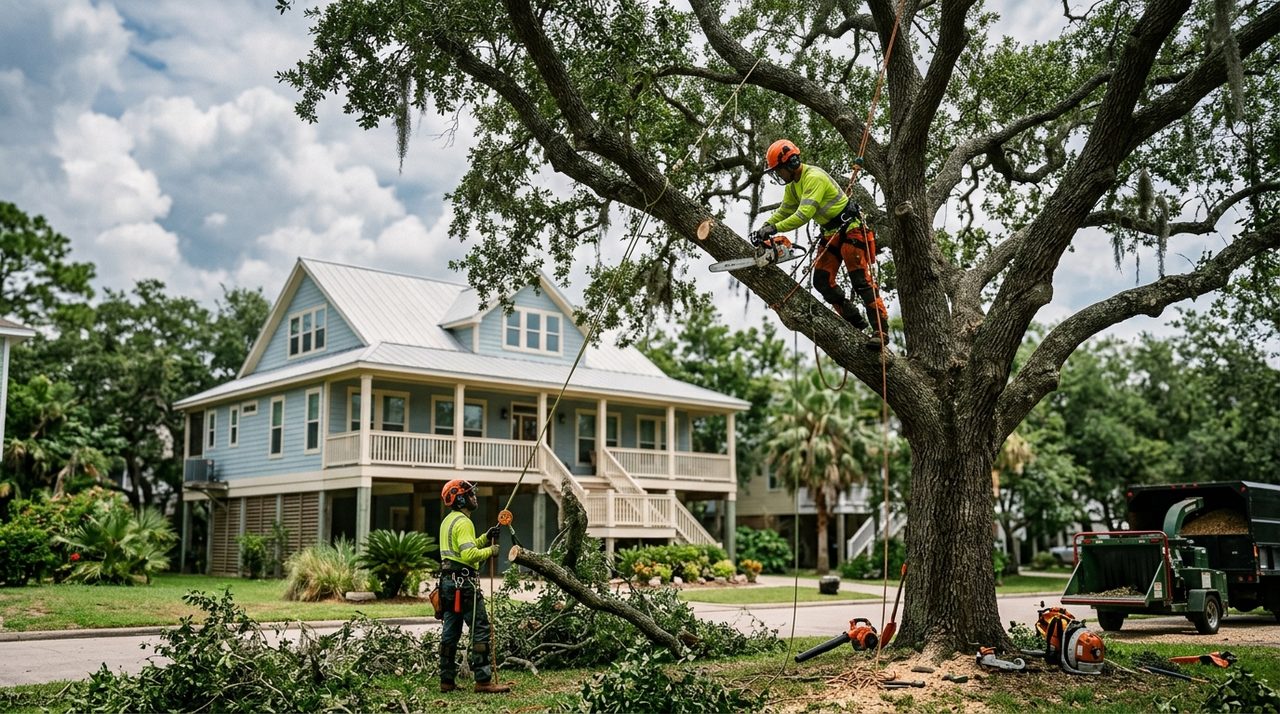
Kemah's bayfront and canal-side lots sit almost entirely in FEMA Zone AE, where storm surge from Galveston Bay, not just rain, is the recurring threat — and every significant tree failure during events like Hurricane Beryl 2024 or the May 2024 derecho becomes a compounded risk to elevated pier foundations, fiber-cement siding, and flood-compliant structural systems that took years and serious money to build. Tree removal here is less about aesthetics and more about protecting coastal construction that cannot afford to absorb a direct hit from a falling trunk. Understanding the City of Kemah's own permit office, FEMA debris rules for AE-zone properties, and the real energy tradeoff of stripping what little shade exists in this sun-blasted bayfront community will help you make a decision you won't regret after the next named storm.
Ranked by verified Google rating × review volume × verification tier. How we rank →
Some highly-rated pros serve Kemah from nearby and may not keep a Kemah street address. Those are listed under "Also serving Kemah" with their real city and distance, so you always know where each business is based.
75 W 5th St, Kemah, TX 77565
1001 Sue Dr, Kemah, TX 77565
Highly-rated pros based nearby who cover Kemah. Distance shown from the Kemah area.
Serving Kemah Based in League City · 2.5 mi away
Serving Kemah Based in League City · 2.9 mi away
Serving Kemah Based in Seabrook · 3.4 mi away
Serving Kemah Based in League City · 4 mi away
Serving Kemah Based in Seabrook · 4.3 mi away
Serving Kemah Based in League City · 5 mi away
Serving Kemah Based in League City · 5.2 mi away
Serving Kemah Based in Dickinson · 5.2 mi away
Why it matters to you
Kemah's dominant bayfront and canal-adjacent homes sit on elevated pile or pier-and-beam foundations designed to let floodwater pass beneath the living area — but that elevated structure is far more vulnerable to lateral impact from a falling tree than a conventional slab home. During Hurricane Beryl 2024 and the May 2024 derecho, trees toppling onto pier-supported porches, stairways, and utility connections on Galveston Bay-facing lots caused damage that triggered FEMA's substantial improvement rule: any repair exceeding 50% of the structure's pre-damage market value requires bringing the entire building into current floodplain compliance, dramatically escalating total project cost.
What a good pro does
A qualified arborist working in Kemah should assess every significant tree for its failure arc relative to your foundation piers, elevated mechanical equipment, and stairway access points — not just the canopy overhead. Request a written risk assessment before removal so you have documentation if a post-storm insurance or FEMA claim follows. Verify the contractor carries adequate liability coverage, since a tree that damages a pier foundation in the AE zone can quickly become a six-figure compliance event.
Sources: FEMA National Flood Hazard Layer (NFHL), Municipal permit office (see area profile)
Why it matters to you
Tree removal in Kemah falls under the City of Kemah's own municipal building department — not the City of Houston, not Galveston County. Routine private-property removal on an undamaged, non-emergency basis generally does not require a city tree permit, but any work performed in conjunction with a structure repair — such as removing a tree that has already struck or is leaning against your elevated home — may become part of a permitted scope of work. After a federally declared disaster, FEMA has strict time-limited windows for curbside debris pickup eligibility in AE-zone communities, and homeowners who haul storm debris away privately before documentation is complete can inadvertently forfeit reimbursement opportunities.
What a good pro does
Contact the City of Kemah building department before authorizing any removal that is connected to structural repair work, and photograph and document all storm damage before any debris is moved to the curb or removed from the property. In a declared-disaster period, ask your contractor to coordinate timing with municipal debris pickup schedules rather than hauling everything privately — it can make a meaningful financial difference for AE-zone homeowners in Galveston County.
Sources: Municipal permit office (see area profile), FEMA National Flood Hazard Layer (NFHL), Harris County Flood Control District
Why it matters to you
Kemah's bayfront lots, drainage easements, and the disturbed soil left behind by repeated storm-flood cycles create ideal conditions for Chinese tallow (Triadica sebifera), a state-listed invasive in Texas that can grow five or more feet per year and volunteers prolifically from seed carried by birds and tidal overwash. On narrow Kemah waterfront lots — many of them 50 feet wide or less — a fast-growing tallow established near a seawall, bulkhead, or utility easement can crack hardscape and compromise the drainage grading that AE-zone floodplain compliance depends on. Homeowners frequently underestimate stump resprouting: a tallow cut at grade without proper grinding and herbicide treatment will send up multiple new stems within one growing season.
What a good pro does
Insist on stump grinding to at least 6–8 inches below grade, followed by a licensed herbicide application to the cut surface — a step that requires a Texas Department of Agriculture applicator license for commercial use. Budget $150–$400 per stump for grinding (estimate), and confirm the crew will not simply leave the stump at grade. Because Kemah's lots are often adjacent to tidal or drainage features, ask the contractor about debris containment to prevent seed-bearing tallow material from washing into the bay or adjacent ditches regulated under TCEQ jurisdiction.
Sources: Texas Commission on Environmental Quality, Municipal permit office (see area profile)
Why it matters to you
Kemah's bayfront setting means most properties have limited mature canopy compared to inner-loop Houston neighborhoods, and the trees that do exist — typically water oaks, live oaks, or ornamental palms — are doing serious work shading west- and southwest-facing walls and outdoor HVAC condensers that are already stressed by salt-air corrosion. Houston logs 3,500-plus cooling degree days annually, and a mature tree shading your condenser or west wall can reduce cooling costs by an estimated 15–25%. On a Kemah lot where salt air already accelerates condenser coil degradation, losing that shade pushes equipment harder and shortens its service life further.
What a good pro does
Before removing any tree that shades your AC condenser or west-facing wall, ask an ISA Certified Arborist whether selective crown reduction, deadwood removal, or cable-bracing could address the structural or storm-risk concern while preserving the cooling benefit. If full removal is necessary, factor the likely increase in summer electric bills into your budget decision, and discuss strategic replanting — salt-tolerant, wind-resistant species appropriate for Galveston Bay exposure — with your arborist at the same time the removal is scoped.
Hiring tree removal in Kemah? Kemah is a small incorporated city on Galveston Bay with a mix of original bay cottages, 1990s–2000s waterfront redevelopment, and newer elevated townhome/marina communities. Homeowners here face persistent challenges from storm surge exposure, salt-air corrosion, and FEMA floodplain compliance requirements. Contractors working in Kemah must be familiar with elevated foundation systems, coastal building codes, and the City of Kemah's own permitting process.
Building era
Mixed: pre-1960s original cottages, 1970s–1980s infill, significant 1990s–2000s waterfront redevelopment, and post-2008 elevated infill.
Typical style
Coastal raised beach-house style (pier-supported with elevated living areas), traditional suburban SFRs (brick veneer or siding), and townhome/condo marina-oriented developments with stucco or fiber-cement siding.
Foundations
Mixed — pier-and-beam/elevated pile foundations dominate along the bayfront and canal-adjacent properties; slab-on-grade more common in interior and newer suburban pockets.
Common systems
Older cottages may have original copper or galvanized plumbing and outdated electrical panels; 1990s–2000s homes typically feature central HVAC, PVC/CPVC plumbing, and 200-amp electrical service. Salt-air exposure accelerates corrosion on HVAC condensers, metal roofing components, and exterior electrical fixtures across all eras.
What that means for repairs
Most common renovation activity includes elevating older homes to meet current FEMA BFE requirements, replacing storm-damaged structures with new elevated construction, upgrading HVAC and exterior materials to salt-air-resistant alternatives, and converting or remodeling ground-level areas beneath raised homes for parking or storage.
Permit jurisdiction
City of Kemah (independent incorporated city with its own municipal government and building department).
HOA & deed restrictions
No city-wide mandatory HOA or master association. HOAs are present in specific newer townhome, condo, and marina developments on a project-by-project basis. Older platted areas (e.g., original Kemah Townsite) generally have no organized HOA. Voluntary civic clubs may exist in some pockets but are not confirmed. Deed restrictions vary by subdivision — check Galveston County Clerk records for specific parcels.
Historic districts
No City of Houston historic district designation confirmed. Kemah is an independent incorporated city; no HAHC jurisdiction applies. No locally designated historic districts confirmed in current city records.
Contractor note
Contractors must pull permits through the City of Kemah, not Houston or Galveston County. Coastal AE zone requirements often mandate elevation certificates, flood-resistant materials below BFE, and compliance with FEMA substantial improvement/damage rules for renovations exceeding 50% of the structure's market value.
FEMA flood zone
FEMA Zone AE (high flood risk) — source: fema_nfhl. Kemah sits directly on Galveston Bay and is exposed to both storm surge and tidal flooding. Much of the city falls within AE and potentially VE (velocity) zones along the immediate shoreline. Proximity to Clear Creek and Galveston Bay amplifies flood risk during tropical weather events.
Hurricane Harvey impact
Kemah experienced flooding during Hurricane Harvey (2017) from a combination of extreme rainfall and storm surge/tidal influence from Galveston Bay. Specific damage data for Kemah was not itemized separately from broader Galveston County FEMA reports, but the bayfront location and low elevation made the area vulnerable to both surge-driven and rain-driven flooding. Many older, non-elevated homes in the area sustained water damage. Post-Harvey, elevated construction and stricter floodplain compliance have become more prevalent.
Heat & humidity load
Extreme humidity and sustained heat along Galveston Bay push HVAC systems hard from May through October. Salt-laden coastal air accelerates corrosion on condenser coils, ductwork fasteners, and exterior metal components. Pier-and-beam homes benefit from under-house ventilation but require regular inspection for moisture damage, mold, and pest intrusion during the humid season.
Working with contractors here
Contractors in Kemah most frequently handle foundation elevation projects, HVAC replacement with salt-air-resistant units, and exterior envelope repairs caused by coastal weather exposure. Roof replacements are common after storm events, with wind-rated materials and proper tie-downs critical given the bayfront exposure. Plumbing work in older cottages often involves full re-pipes from galvanized to modern materials. Job scoping must account for FEMA elevation requirements — any substantial improvement to a structure in the AE zone requires bringing the entire building into current floodplain compliance, which can dramatically expand project scope and cost. Access can be tight on narrow waterfront lots, and contractors should verify whether the specific property falls under a project-level HOA with architectural review requirements before beginning exterior work.
Local Tip
Always ask for a written estimate before work begins. Texas contractors are required to provide one on jobs over $1,000.
Kemah is a small incorporated city on Galveston Bay with a mix of original bay cottages, 1990s–2000s waterfront redevelopment, and newer elevated townhome/marina communities. Homeowners here face persistent challenges from storm surge exposure, salt-air corrosion, and FEMA floodplain compliance requirements. Contractors working in Kemah must be familiar with elevated foundation systems, coastal building codes, and the City of Kemah's own permitting process.
Source: U.S. Census Bureau, ACS 5-Year 2023
Much of Kemah maps to FEMA Zone AE (high flood risk), so flood-resilient detailing -- elevated equipment, water-tolerant materials, and drainage-first thinking -- is essential here, not optional; risk climbs sharply on blocks nearest Galveston Bay, where it varies parcel to parcel.
Source: FEMA National Flood Hazard Layer (NFHL). Flood zones vary by parcel — verify your individual FIRM panel.
Wind uplift along Kemah, TX coastal exposures during a Gulf hurricane can exceed the structural limits of even healthy hardwoods, making professional crown reduction or full removal the only reliable way to protect structures. Schedule removal of any tree within one-and-a-half tree-lengths of your home or seawall well ahead of the June–November season, before insurers restrict coverage changes and contractors are fully booked. Confirm the current FEMA panel for your Kemah parcel — the area maps to Zone AE, but adjacent lots can differ.
Lightning strike risk is elevated for tall isolated trees on open coastal Kemah, TX properties, and a lightning-struck tree frequently becomes a hazard tree requiring professional removal within one to two seasons. Have a licensed contractor assess any tree that has been struck, since internal decay following a strike is rarely visible from the ground and the tree can fail without warning in subsequent storms. As a Galveston County community, Kemah may follow county rather than City of Houston storm rebuild rules.
Coastal Kemah, TX properties face a compounding risk during ice storms because salt-spray-weakened wood fails under ice loading at lower thresholds than healthy inland timber, and high tides or surge during a winter storm can simultaneously undermine root zones. After Uri 2021, licensed tree removal contractors working coastal sites reported widespread structural failure in trees that showed no visible pre-storm distress. Because Kemah drains toward Galveston Bay, block-level runoff can differ sharply from the mapped zone.
Sources: FEMA National Flood Hazard Layer (NFHL), Ready.gov -- Hurricanes, CenterPoint Energy -- Storm Center, City of Houston -- Emergency Preparedness, Ready.gov -- Winter Weather, Harris County Flood Control District
Houston-specific estimators to plan your project before you call a pro. All results are planning estimates — a licensed local pro confirms the details on site.
Grouped by mature root aggression & water demand.
Trunk center to the nearest exterior wall.
The root zone likely reaches your foundation's soil during Houston's dry summers, when clay shrinks most. Watch for sticking doors and diagonal cracks, keep soil moisture even with a soaker hose during drought, and have a foundation pro evaluate if you see any movement.
Find a Houston foundation pro →This is a planning estimate only — actual requirements depend on an on-site assessment by a licensed Houston pro. Guidance is based on general species root behavior in expansive clay, not a soil test.
Disconnect & drain every outdoor hose bib
Remove hoses, drain the spigots, and cover each with an insulated faucet sock. Un-drained hose bibs are the #1 burst point in a Houston freeze.
Insulate exposed pipes in the attic & garage
Wrap any pipe in an unconditioned space (attic runs, garage walls) with foam sleeves. Houston homes rarely insulate these because they only matter a few nights a year — which is exactly why they burst.
Open cabinet doors & keep a pencil-width drip
On hard-freeze nights, open kitchen/bath cabinets so warm air reaches the pipes and let faucets on exterior walls drip to relieve pressure.
Protect the attic/garage water heater & its lines
An attic or garage tank sits in unconditioned space. Insulate the cold-inlet and hot-outlet lines and confirm the emergency drain pan is clear so a leak doesn't reach the ceiling.
This is a planning estimate only — actual requirements depend on an on-site assessment by a licensed Houston pro. If a pipe has already burst, shut off your main water supply and call a licensed Houston plumber immediately — freeze bursts flood fast.
Sources: Municipal permit office (see area profile)
Sources: FEMA National Flood Hazard Layer (NFHL)Municipal permit office (see area profile)
Sources: Local HOA / deed restrictions (see area profile)