Closed
Serving West University Based in Upper Kirby · 1 mi away
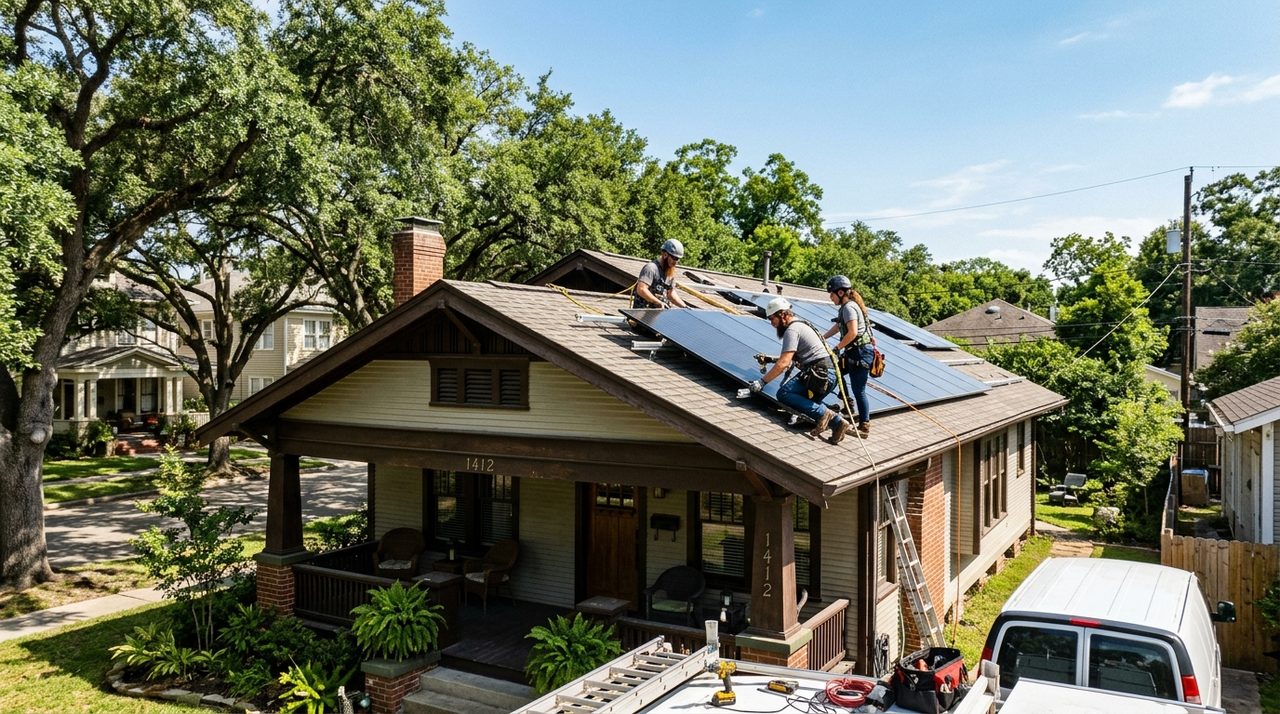
West University Place sits on some of the most valuable residential real estate in the Inner Loop—median home value topping $1.35 million—yet its split personality between 1930s–1950s bungalows with outdated electrical panels and late-1990s teardown-rebuilds with modern 200A service creates two very different solar installation profiles on the same block. Every permit here runs through the City of West University Place's own permit office (not Houston's Permitting Center, not Harris County), and CenterPoint Energy handles interconnection for the utility side, making installer familiarity with West U's independent process essential before a single panel goes up.
Ranked by verified Google rating × review volume × verification tier. How we rank →
Some highly-rated pros serve West University from nearby and may not keep a West University street address. Those are listed under "Also serving West University" with their real city and distance, so you always know where each business is based.
Highly-rated pros based nearby who cover West University. Distance shown from the West University area.
Serving West University Based in Upper Kirby · 1 mi away
Serving West University Based in Bellaire · 2.2 mi away
Serving West University Based in Medical Center · 2.6 mi away
Serving West University Based in Medical Center · 2.8 mi away
Serving West University Based in Tanglewood · 3.5 mi away
Serving West University Based in Bellaire · 3.9 mi away
Serving West University Based in Lazybrook / Timbergrove · 3.9 mi away
Serving West University Based in Bellaire · 3.9 mi away
Serving West University Based in Midtown · 4.4 mi away
Why it matters to you
West University's remaining original cottages from the 1930s–1950s frequently carry 60–100A panels wired with aluminum branch circuits or even older fuse-box configurations that cannot safely support a solar inverter interconnection or battery backup unit. If your home predates the 1980s teardown wave, assume the electrical service needs evaluation before any installer can legally energize a system—skipping this step means failing West U's own city inspection, not Houston's.
What a good pro does
A qualified installer will pull a combined electrical and building permit through the City of West University Place's permit office, have a TDLR-licensed master electrician assess and upgrade the panel to at least 200A service as part of the solar scope, and only then submit the CenterPoint interconnection application. Budget $3,000–$6,000 for a panel upgrade as a line item before pricing the array itself—reputable installers disclose this upfront rather than after contract signing.
Sources: Municipal permit office (see area profile), Texas Department of Licensing & Regulation
Why it matters to you
The dominant housing stock on West U's tree-lined streets today is the 3,500–5,000 sq ft custom Georgian or neo-traditional two-story built from the 1980s onward—homes with high ceilings, large window expanses, and significant air-conditioning loads driven by Houston's roughly 3,000 annual cooling degree days and nine-month cooling season. An installer who sizes your array using national average consumption tables will almost certainly deliver a system that offsets only 40–50% of your actual June–September CenterPoint bill instead of the 80–100% they quote.
What a good pro does
Require your installer to pull your actual CenterPoint historical usage data (12–24 months) before proposing system size, and confirm the proposal accounts for any pool pump, EV charger, or whole-home generator load specific to your property. A correctly sized 10–13 kW system on a large West U custom home is common and should be designed to NABCEP production modeling standards, not a generic square-footage estimate.
Sources: North American Board of Certified Energy Practitioners (NABCEP), ENERGY STAR / U.S. Dept. of Energy
Why it matters to you
Contractors who routinely pull solar permits through the City of Houston Permitting Center or Harris County will face a different submittal checklist, local code interpretation, and inspector cadence when working inside West University Place's city limits. West U enforces its own building and electrical codes through its own inspectors, and turnaround times and required documentation—structural calculations, single-line diagrams, roof load letters—may differ from what the same installer filed last week in Meyerland or Bellaire. Delays here can push CenterPoint interconnection back by weeks.
What a good pro does
Before signing a contract, confirm your installer has completed permitted solar projects specifically in West University Place and can name the permit office contact. The installer's master electrician must pull the permit with the City of West University Place, not substitute a Houston or Harris County permit, and must schedule West U city inspections at each required phase before CenterPoint will approve final interconnection.
Sources: Municipal permit office (see area profile), Texas Department of Licensing & Regulation
Why it matters to you
West University's teardown-rebuild boom peaked in the late 1990s and early 2000s, putting a substantial share of the current housing stock—reflected in the neighborhood's 1993 census median year built—on original roofs that are now 20–25 years old. Houston's UV index averaging 10–11 and brutal summer heat cycles degrade standard 3-tab asphalt shingles well before their rated lifespan, meaning many West U custom homes built in that era are approaching or already past optimal re-roof timing. Mounting a 25-year panel array on a roof with five or fewer years of remaining life almost guarantees a costly panel removal and reinstallation ($8,000–$14,000 estimated) within the system's early years—a risk most installers don't raise unless you ask.
What a good pro does
Before any solar contract, have an independent roofing contractor inspect the existing roof and provide a written opinion on remaining service life. If your 1998–2008 West U rebuild has its original shingles, factor a re-roof into the total project budget and have it completed before racking installation. A reputable solar installer will coordinate the sequencing and ensure the new roof warranty is not voided by subsequent penetrations.
Sources: International Residential Code (as adopted by City of Houston), Municipal permit office (see area profile)
Hiring solar installers in West University? West University Place is an independent municipality within the Inner Loop featuring a mix of original 1930s–1950s bungalows and larger custom homes built from the 1980s onward as teardown-rebuild cycles reshaped the neighborhood. Homeowners here navigate the city's own permitting process—separate from Houston's—and must account for aging systems in older homes alongside modern construction standards in newer builds. The tree-lined streets and high property values drive demand for premium finishes and careful code compliance.
Building era
Mixed: original homes from 1930s–1950s with significant infill and teardown-rebuild construction from the 1980s–2000s and continuing today.
Typical style
Traditional brick, Georgian/Colonial-influenced, neo-traditional custom homes (2-story), with some remaining early-20th-century bungalows and cottages.
Foundations
Not confirmed from available sources - likely mixed pier-and-beam on older pre-1950s homes and slab-on-grade on newer construction. Verify on a per-property basis.
Common systems
Older homes (1930s–1950s) may have original galvanized or cast-iron plumbing, outdated electrical panels, and window AC or early central HVAC. Newer construction (1980s–present) typically features copper or PEX plumbing, modern electrical, and high-efficiency central HVAC systems.
What that means for repairs
Teardown-and-rebuild activity has been the dominant renovation pattern for decades, replacing smaller original cottages with larger custom homes. Remaining older homes frequently undergo full-gut renovations including electrical rewiring, plumbing replacement, foundation repair, and HVAC modernization to meet current standards and market expectations.
Permit jurisdiction
City of West University Place (independent municipality - own permit office, not City of Houston Permitting Center and not Harris County).
HOA & deed restrictions
No mandatory city-wide master HOA. West U functions as an independent municipality with its own zoning and code enforcement. Individual condo and townhome associations exist (e.g., The Oaks at West University Condominium Association), but most single-family homes have no HOA. Deed restrictions may exist on individual plats—check Harris County Clerk records for specific lots.
Historic districts
No City of Houston historic district designation applies. West University Place is an independent municipality outside Houston city limits, so HAHC Certificates of Appropriateness are not required. West U may have its own local design or zoning controls—check with the City of West University Place directly.
Contractor note
Contractors must pull permits through the City of West University Place, not through Houston or Harris County. West U's own inspectors enforce local codes, and the city's zoning and building requirements may differ from Houston's, so contractors unfamiliar with the jurisdiction should review local ordinances before bidding.
FEMA flood zone
FEMA Zone X500 (moderate flood risk) per official NFHL data. West University Place sits between Brays Bayou to the south and Rice University to the east, with drainage flowing into Harris County Flood Control District channels.
Hurricane Harvey impact
Specific Harvey 2017 flood impact data for West University Place streets was not available in the research provided. The moderate flood risk zone designation and proximity to Brays Bayou suggest potential vulnerability, but confirmed street-level flooding details and repetitive-loss areas should be verified through HCFCD inundation maps and City of West University Place floodplain reports.
Heat & humidity load
Houston's extreme summer heat and humidity stress HVAC systems across all housing eras. Older pier-and-beam homes may experience moisture-related subfloor issues, while the mature tree canopy—a signature feature of West U—creates ongoing gutter maintenance demands and potential root intrusion into aging sewer lines.
Working with contractors here
Contractors in West University most commonly handle full-home renovations and teardown-rebuilds, driven by buyers acquiring older cottages on valuable lots and replacing them with larger custom homes. For surviving 1930s–1950s homes, foundation repair, whole-house repiping (replacing galvanized with copper or PEX), electrical panel upgrades, and HVAC replacement are frequent scopes. Newer 1990s–2000s homes generate demand for roof replacements, exterior paint, and kitchen/bath remodels as they reach their first major maintenance cycles. Job scoping must account for West University Place's independent permitting process, which can differ from Houston's in turnaround times and inspection requirements. The high-end market expectations in West U mean contractors should budget for premium materials and meticulous finish work.
Local Tip
Always ask for a written estimate before work begins. Texas contractors are required to provide one on jobs over $1,000.
West University Place is an independent municipality within the Inner Loop featuring a mix of original 1930s–1950s bungalows and larger custom homes built from the 1980s onward as teardown-rebuild cycles reshaped the neighborhood. Homeowners here navigate the city's own permitting process—separate from Houston's—and must account for aging systems in older homes alongside modern construction standards in newer builds. The tree-lined streets and high property values drive demand for premium finishes and careful code compliance.
Source: U.S. Census Bureau, ACS 5-Year 2023
West University carries FEMA Zone X500 (moderate flood risk): outside the 100-year floodplain but inside the 500-year, so heavy-rain events still reach homes and flood-aware work pays off.
Source: FEMA National Flood Hazard Layer (NFHL). Flood zones vary by parcel — verify your individual FIRM panel.
Even in West University's Zone X500 designation, Gulf hurricanes push heavy rainfall that can overwhelm drainage quickly, so have your solar installer confirm all roof penetrations and flashing around racking feet are sealed with marine-grade sealant rated for 130+ mph wind-driven rain. A compromised roof seal under racking is one of the most common post-hurricane water-intrusion paths in the Houston metro. Confirm the current FEMA panel for your West University parcel — the area maps to Zone X500, but adjacent lots can differ.
Straight-line winds from the May 2024 derecho lifted panels off roofs where racking hardware was under-torqued or where lag bolts missed the rafter; in West University, schedule an annual hardware inspection with a licensed solar installer to confirm all attachment points remain structurally sound. A panel that lifts even slightly can tear roofing membrane and create a water-intrusion path that persists long after the storm. In-city West University work falls under City of Houston floodplain and permitting rules.
A hard freeze in West University can cause conduit carrying solar wiring along an exterior wall to contract and stress fittings; before winter, ask your TDLR-licensed installer to inspect any exposed conduit runs and confirm all fittings are properly supported to prevent a disconnect that would take the array offline. Keeping the solar system fully operational through a Uri-style freeze event is critical if your battery backup is your primary source of heat-sustaining power. In-city West University work falls under City of Houston floodplain and permitting rules.
Sources: FEMA National Flood Hazard Layer (NFHL), Ready.gov -- Hurricanes, CenterPoint Energy -- Storm Center, City of Houston -- Emergency Preparedness, Ready.gov -- Winter Weather, Harris County Flood Control District
Houston-specific estimators to plan your project before you call a pro. All results are planning estimates — a licensed local pro confirms the details on site.
Disconnect & drain every outdoor hose bib
Remove hoses, drain the spigots, and cover each with an insulated faucet sock. Un-drained hose bibs are the #1 burst point in a Houston freeze.
Insulate exposed pipes in the attic & garage
Wrap any pipe in an unconditioned space (attic runs, garage walls) with foam sleeves. Houston homes rarely insulate these because they only matter a few nights a year — which is exactly why they burst.
Open cabinet doors & keep a pencil-width drip
On hard-freeze nights, open kitchen/bath cabinets so warm air reaches the pipes and let faucets on exterior walls drip to relieve pressure.
Protect the attic/garage water heater & its lines
An attic or garage tank sits in unconditioned space. Insulate the cold-inlet and hot-outlet lines and confirm the emergency drain pan is clear so a leak doesn't reach the ceiling.
This is a planning estimate only — actual requirements depend on an on-site assessment by a licensed Houston pro. If a pipe has already burst, shut off your main water supply and call a licensed Houston plumber immediately — freeze bursts flood fast.
Sources: Municipal permit office (see area profile)
Sources: North American Board of Certified Energy Practitioners (NABCEP)Municipal permit office (see area profile)
Sources: Municipal permit office (see area profile)
Sources: Local HOA / deed restrictions (see area profile)