2429 Bissonnet St #568, Houston, TX 77005
Best Roofers in West University
West University Place's roofing market is split between two very different housing eras: surviving 1930s–1950s bungalows with original low-slope or shallow-pitch roofs that have seen decades of Houston's heat cycling and humidity, and the wave of teardown-rebuild custom homes from the 1980s onward now reaching their first major re-roof cycle at 20–30 years of age. Because West U is an independent municipality with its own permit office—not the City of Houston Permitting Center—every re-roof or structural repair must route through the City of West University Place's inspectors, a jurisdictional detail that trips up contractors unfamiliar with the area.
Verified against Google Business data
Updated 2026
See the 10 Roofers Serving West University 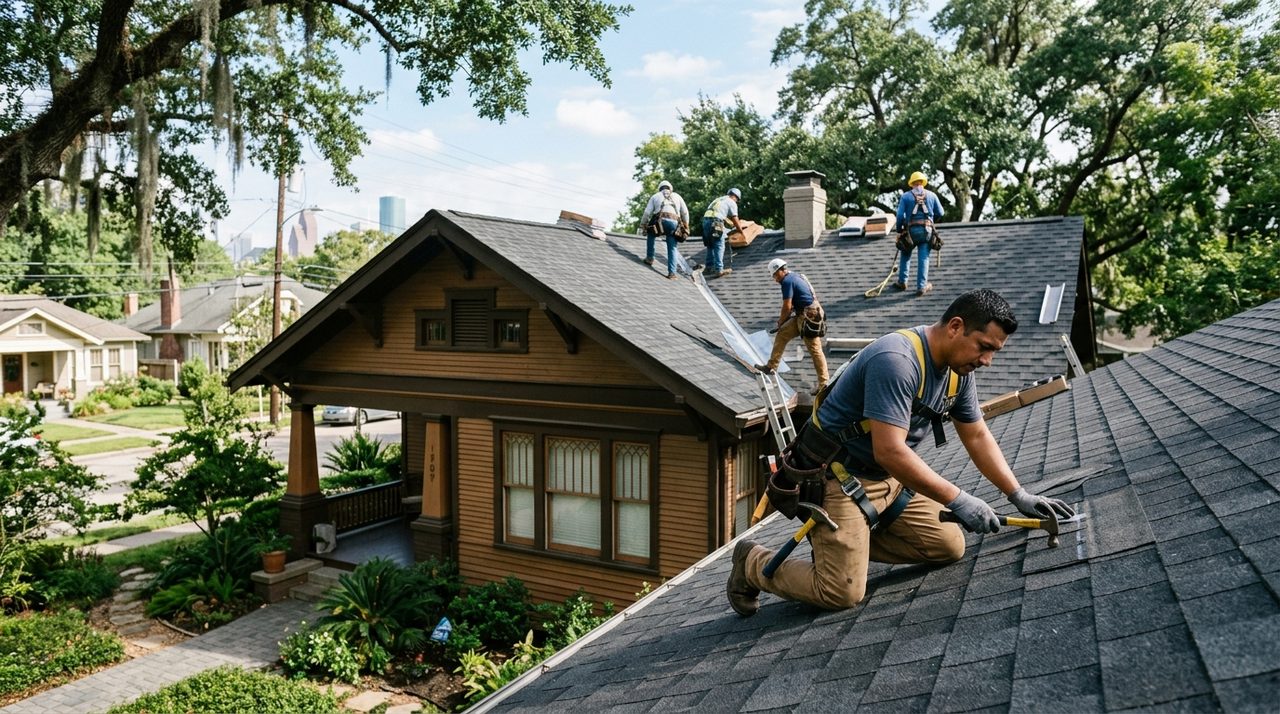
- Median home built
- 1993
- Median home value
- $1,354,300
- FEMA flood zone
- X500 (moderate)
- Typical re-roof cost (est.)
- $9,000–$16,000 (architectural shingle, 1,800–2,400 sq ft)
- Most common local issue
- Heat/UV-accelerated shingle breakdown on aging 1990s–2000s custom homes hitting first re-roof cycle
Ranked by verified Google rating × review volume × verification tier. How we rank →
Some highly-rated pros serve West University from nearby and may not keep a West University street address. Those are listed under "Also serving West University" with their real city and distance, so you always know where each business is based.
Min rating:
10 resultsBased in West University
Open Now
2505 Rice Boulevard, Houston, TX 77005
Also serving West University
Highly-rated pros based nearby who cover West University. Distance shown from the West University area.
Open Now
Serving West University Based in Galleria · 0.9 mi away
Closed
Serving West University Based in Upper Kirby · 1.2 mi away
Closed
Serving West University Based in Braeswood · 1.3 mi away
Serving West University Based in Bellaire · 1.7 mi away
Serving West University Based in Bellaire · 1.8 mi away
Closed
Serving West University Based in Bellaire · 2.1 mi away
Closed
Serving West University Based in Tanglewood · 2.1 mi away
Serving West University Based in Tanglewood · 2.2 mi away
Roofers in West University: What You Should Know
1990s–2000s Custom Homes Reaching Their First Re-Roof Cycle Under Extreme Heat Load
Why it matters to you
West University's census median year built is 1993, meaning a large share of the neighborhood's teardown-rebuild custom homes are now 25–35 years old — squarely in the window where Houston's 2,700+ annual cooling degree days have oxidized asphalt binders and thermally cycled ridge and hip lines into early failure. What was sold as a 30-year architectural shingle often delivers 15–18 years of effective life on south- and west-facing planes in this climate, so homeowners may be surprised when inspections reveal widespread granule loss and tab cracking well before the warranty period ends.
What a good pro does
A qualified roofer will do a full plane-by-plane inspection distinguishing cosmetic granule loss from fiberglass mat bruising and structural tab failure, not a drive-by estimate. When replacing, ask about Class 4 impact-resistant shingles and Energy Star-rated cool-roof options, which can reduce attic deck temperatures and qualify for utility rebates — particularly meaningful on West U's large two-story custom footprints. The contractor must pull a permit through the City of West University Place's own building department; inspectors there enforce local code independently of Houston's permitting center.
Sources: Municipal permit office (see area profile), ENERGY STAR / U.S. Dept. of Energy, International Residential Code (as adopted by City of Houston)
Flat and Low-Slope Sections on Original 1930s–1950s Bungalows: Ponding and Membrane Fatigue
Why it matters to you
The original bungalows and cottages that survived West University's teardown cycles often include flat or low-slope (under 2:12 pitch) rear additions, sunroom covers, or carport enclosures finished with modified bitumen or aged built-up roofing. Houston's rainfall intensity — Harvey deposited roughly 60 inches over four days in 2017, and West U sits in FEMA Zone X500, inside the 500-year floodplain — means these low-slope sections experience prolonged ponding that accelerates membrane delamination and invites deck rot under Houston's persistent 75%-plus average relative humidity.
What a good pro does
A roofer working on these sections should probe the deck substrate for soft spots before quoting membrane-only replacement; installing new TPO or modified bitumen over rotted OSB is a failure waiting to happen. Scupper and interior drain sizing should be checked against current drainage loads — what was adequate in 1950 may be undersized for today's storm intensities. Permits for membrane replacement on low-slope sections must be pulled through West U's permit office, and the city's inspectors will verify drainage compliance under local code.
Sources: FEMA National Flood Hazard Layer (NFHL), Municipal permit office (see area profile), International Residential Code (as adopted by City of Houston)
Attic Ventilation Gaps in Older and Poorly-Converted Homes Causing Silent Deck Rot
Why it matters to you
Many of West University's remaining pre-1960 homes were built with gable vents only, and some have had attic access blocked or ventilation paths disrupted during the kitchen additions and HVAC retrofits common to full-gut renovations in this market. Without balanced ridge-and-soffit ventilation meeting IRC R806 net-free-area ratios, Houston's year-round humidity condenses on roof decking — OSB and older plywood both delaminate silently over 5–8 years, meaning a roof that looks fine from the street may be sitting on a failing deck. Slab-on-grade construction (standard on post-1960 rebuilds in West U) offers no crawl-space buffer for moisture escaping upward.
What a good pro does
Before any re-roof, a thorough contractor will perform an attic inspection for deck delamination, measure existing ventilation net-free area against the IRC formula for the roof's square footage, and propose a ridge vent or power-vent solution if the balance is off. On West U's high-value properties — median home value exceeds $1.35 million — cutting this step to save a few hundred dollars risks a new $12,000–$16,000 roof system rotting its deck within a single decade. The ventilation upgrade is part of the permitted scope and will be reviewed by West University Place's own inspectors.
Sources: International Residential Code (as adopted by City of Houston), Municipal permit office (see area profile)
West University Place's Independent Permit Office: A Real Compliance Step Contractors Often Miss
Why it matters to you
Because West University Place is an incorporated independent city — not a Houston neighborhood and not unincorporated Harris County — all roofing permits must be pulled at West U's own building department, not at the City of Houston Permitting Center on Lamar. Texas does not issue a state roofing contractor license through TDLR, so the lack of state oversight makes contractor vetting especially important; West U's local registration and permit requirements are one of the few checkpoints that exist. Homeowners who accept bids from out-of-area storm-chasers unfamiliar with the jurisdiction risk uninspected work and complications with homeowner's insurance claims.
What a good pro does
Before signing a contract, ask the roofer to name the specific permit office they will use and confirm they have pulled permits in West University Place before — not just in Houston proper or Bellaire. Verify they carry general liability and workers' compensation insurance, since Texas has no state roofing license requirement to fall back on. The permit and final inspection from West U's inspectors also creates a documented record that is valuable if you file a TWIA or homeowner's insurance claim for future storm damage.
Sources: Municipal permit office (see area profile), Texas Windstorm Insurance Association (TWIA), City of Houston Permitting Center
Roofers in West University: What You Should Know
Hiring roofers in West University? West University Place is an independent municipality within the Inner Loop featuring a mix of original 1930s–1950s bungalows and larger custom homes built from the 1980s onward as teardown-rebuild cycles reshaped the neighborhood. Homeowners here navigate the city's own permitting process—separate from Houston's—and must account for aging systems in older homes alongside modern construction standards in newer builds. The tree-lined streets and high property values drive demand for premium finishes and careful code compliance.
- Housing era
- Mixed
- Foundation
- Not confirmed from available sources - likely mixed pier-and-beam on older pre-1950s homes and…
- Flood zone
- FEMA Zone X500 (moderate flood risk) per official NFHL data
- Permits
- City of West University Place (independent municipality - own permit office, not City of…
Housing stock & systems
Building era
Mixed: original homes from 1930s–1950s with significant infill and teardown-rebuild construction from the 1980s–2000s and continuing today.
Typical style
Traditional brick, Georgian/Colonial-influenced, neo-traditional custom homes (2-story), with some remaining early-20th-century bungalows and cottages.
Foundations
Not confirmed from available sources - likely mixed pier-and-beam on older pre-1950s homes and slab-on-grade on newer construction. Verify on a per-property basis.
Common systems
Older homes (1930s–1950s) may have original galvanized or cast-iron plumbing, outdated electrical panels, and window AC or early central HVAC. Newer construction (1980s–present) typically features copper or PEX plumbing, modern electrical, and high-efficiency central HVAC systems.
What that means for repairs
Teardown-and-rebuild activity has been the dominant renovation pattern for decades, replacing smaller original cottages with larger custom homes. Remaining older homes frequently undergo full-gut renovations including electrical rewiring, plumbing replacement, foundation repair, and HVAC modernization to meet current standards and market expectations.
Permits & restrictions
Permit jurisdiction
City of West University Place (independent municipality - own permit office, not City of Houston Permitting Center and not Harris County).
HOA & deed restrictions
No mandatory city-wide master HOA. West U functions as an independent municipality with its own zoning and code enforcement. Individual condo and townhome associations exist (e.g., The Oaks at West University Condominium Association), but most single-family homes have no HOA. Deed restrictions may exist on individual plats—check Harris County Clerk records for specific lots.
Historic districts
No City of Houston historic district designation applies. West University Place is an independent municipality outside Houston city limits, so HAHC Certificates of Appropriateness are not required. West U may have its own local design or zoning controls—check with the City of West University Place directly.
Contractor note
Contractors must pull permits through the City of West University Place, not through Houston or Harris County. West U's own inspectors enforce local codes, and the city's zoning and building requirements may differ from Houston's, so contractors unfamiliar with the jurisdiction should review local ordinances before bidding.
Flood & weather
FEMA flood zone
FEMA Zone X500 (moderate flood risk) per official NFHL data. West University Place sits between Brays Bayou to the south and Rice University to the east, with drainage flowing into Harris County Flood Control District channels.
Hurricane Harvey impact
Specific Harvey 2017 flood impact data for West University Place streets was not available in the research provided. The moderate flood risk zone designation and proximity to Brays Bayou suggest potential vulnerability, but confirmed street-level flooding details and repetitive-loss areas should be verified through HCFCD inundation maps and City of West University Place floodplain reports.
Heat & humidity load
Houston's extreme summer heat and humidity stress HVAC systems across all housing eras. Older pier-and-beam homes may experience moisture-related subfloor issues, while the mature tree canopy—a signature feature of West U—creates ongoing gutter maintenance demands and potential root intrusion into aging sewer lines.
Working with contractors here
Contractors in West University most commonly handle full-home renovations and teardown-rebuilds, driven by buyers acquiring older cottages on valuable lots and replacing them with larger custom homes. For surviving 1930s–1950s homes, foundation repair, whole-house repiping (replacing galvanized with copper or PEX), electrical panel upgrades, and HVAC replacement are frequent scopes. Newer 1990s–2000s homes generate demand for roof replacements, exterior paint, and kitchen/bath remodels as they reach their first major maintenance cycles. Job scoping must account for West University Place's independent permitting process, which can differ from Houston's in turnaround times and inspection requirements. The high-end market expectations in West U mean contractors should budget for premium materials and meticulous finish work.
Local Tip
Always ask for a written estimate before work begins. Texas contractors are required to provide one on jobs over $1,000.
About West University
West University Place is an independent municipality within the Inner Loop featuring a mix of original 1930s–1950s bungalows and larger custom homes built from the 1980s onward as teardown-rebuild cycles reshaped the neighborhood. Homeowners here navigate the city's own permitting process—separate from Houston's—and must account for aging systems in older homes alongside modern construction standards in newer builds. The tree-lined streets and high property values drive demand for premium finishes and careful code compliance.
- Median year built
- 1993
- Median home value
- $1,354,300
- Owner-occupied
- 72.4%
- Population
- 28,231
- Housing units
- 10,564
- Median income
- $215,708
Source: U.S. Census Bureau, ACS 5-Year 2023
Flood & storm risk
FEMA Zone X500Moderate flood riskWest University carries FEMA Zone X500 (moderate flood risk): outside the 100-year floodplain but inside the 500-year, so heavy-rain events still reach homes and flood-aware work pays off.
Source: FEMA National Flood Hazard Layer (NFHL). Flood zones vary by parcel — verify your individual FIRM panel.
Houston Storm Readiness in West University
Hurricane & flooding
In West University, where FEMA Zone X500 in the 500-year floodplain means heavy tropical rainfall is a real threat even outside the mapped 100-year zone, have a licensed roofer verify that all step and counter-flashing at dormers and chimneys are embedded and sealed, not just surface-caulked. Beryl 2024 produced multi-hour rain bands that exploited exactly those secondary leak points. Confirm the current FEMA panel for your West University parcel — the area maps to Zone X500, but adjacent lots can differ.
Severe storms & hail
Hail from the May 2024 derecho left thousands of roofs in the Houston metro with bruised matting that will not show as active leaks for six to eighteen months, so schedule a licensed roofer to probe shingle granule adhesion and mat integrity in West University while your claim window is still open. Waiting until visible ceiling staining appears usually means replacing decking in addition to shingles. In-city West University work falls under City of Houston floodplain and permitting rules.
Ice storms & freezes
Uri 2021 proved that even areas with FEMA Zone X500 in the 500-year floodplain probability well below the 100-year threshold can see roof damage when a hard freeze is followed by rapid warming and three inches of rain within 48 hours. Ask a roofer to verify that your valley metal is properly lapped and sealed so meltwater channeled by ice debris does not back up under the shingles in West University. In-city West University work falls under City of Houston floodplain and permitting rules.
Sources: FEMA National Flood Hazard Layer (NFHL), Ready.gov -- Hurricanes, CenterPoint Energy -- Storm Center, City of Houston -- Emergency Preparedness, Ready.gov -- Winter Weather, Harris County Flood Control District
Free West University Tools & Calculators
Houston-specific estimators to plan your project before you call a pro. All results are planning estimates — a licensed local pro confirms the details on site.
Hurricane Roof Wind-Load & TDI/WPI-8 Estimator
Open full tool & FAQ →115–120 mph
Estimated design wind speed for your zone
Outside the TDI catastrophe area, so a WPI-8 is generally not mandated — but Houston still sees hurricane-force gusts (Beryl, 2024). Insist on properly rated shingles installed to the manufacturer's high-wind nailing pattern (6 nails) and starter strips, or a wind claim can be denied for improper installation.
Find a Houston roofer →This is a planning estimate only — actual requirements depend on an on-site assessment by a licensed Houston pro. Wind-speed zones are approximate; your exact TDI/WPI-8 obligation depends on your address's designation. Verify with the Texas Department of Insurance before contracting.
Houston Freeze Prep & Pipe Insulation Checklist
Open full tool & FAQ →Your freeze checklist — 4 tasks
- 1
Disconnect & drain every outdoor hose bib
Remove hoses, drain the spigots, and cover each with an insulated faucet sock. Un-drained hose bibs are the #1 burst point in a Houston freeze.
- 2
Insulate exposed pipes in the attic & garage
Wrap any pipe in an unconditioned space (attic runs, garage walls) with foam sleeves. Houston homes rarely insulate these because they only matter a few nights a year — which is exactly why they burst.
- 3
Open cabinet doors & keep a pencil-width drip
On hard-freeze nights, open kitchen/bath cabinets so warm air reaches the pipes and let faucets on exterior walls drip to relieve pressure.
- 4
Protect the attic/garage water heater & its lines
An attic or garage tank sits in unconditioned space. Insulate the cold-inlet and hot-outlet lines and confirm the emergency drain pan is clear so a leak doesn't reach the ceiling.
This is a planning estimate only — actual requirements depend on an on-site assessment by a licensed Houston pro. If a pipe has already burst, shut off your main water supply and call a licensed Houston plumber immediately — freeze bursts flood fast.
Frequently Asked Questions
Do I need a permit from the City of West University Place for a full shingle re-roof, or can my contractor just swap shingles without pulling one?
Because West University Place is an independent municipality with its own building department — entirely separate from the City of Houston Permitting Center — your contractor must pull a permit through West U's own permit office for any full re-roof or structural deck repair, and the city's own inspectors will schedule the required inspection. Unlike Houston's nuanced carve-out for like-for-like non-structural shingle repair, West U's code requirements should be verified directly with the city before assuming any work is permit-exempt. Ask your contractor to confirm they have pulled the permit under the City of West University Place, not under Houston or Harris County, as the jurisdictions do not overlap. Contractors unfamiliar with West U's office have been known to miss this step, which can create title and insurance complications on a home valued at the neighborhood's median of roughly $1.35 million.
Sources: Municipal permit office (see area profile)
My West University home was built in 1994 and still has its original shingles — should I be worried about hail bruising that isn't visible from the street?
A 30-year-old architectural shingle on a West University custom home has endured Houston's average of 3–5 significant hail events per year, and fiberglass mat bruising from golf-ball-or-larger stones is genuinely invisible from ground level but voids manufacturer warranties and accelerates UV breakdown in Houston's 2,700+ cooling-degree-day climate. The practical lifespan of standard architectural shingles in the Houston heat environment is closer to 15–18 years, so a 1994 roof is well past that window regardless of visible surface condition. Have a roofer perform a physical close-up inspection — walking the roof and checking granule counts in the gutters — rather than relying on a drone or street-level look. If your homeowner's insurer questions the roof's condition, documented inspection records become important.
West University had older pier-and-beam bungalows before many teardowns — do those remaining 1930s–1950s homes face specific underlayment or flashing requirements that newer builds don't?
Original 1930s–1950s bungalows in West U that avoided teardown often have narrow eave overhangs, wide fascia boards of varying condition, and low-slope or nearly flat rear-addition sections that were not designed to current IRC flashing and drip-edge standards. When re-roofing these homes, the IRC requires drip edge at both eaves and rakes, and any existing step flashing at dormers or chimney penetrations must be replaced or brought up to current standard — a scope item that is frequently underestimated in bids on older cottages. The pier-and-beam foundation common in pre-1950s West U homes also means the structure can experience more seasonal movement than slab construction, which stresses ridge and hip flashing joints over time and warrants inspection before a new roof is installed. Budget for the possibility of partial deck replacement on these older homes, as original 1-inch board sheathing can be damaged beneath decades of layered repairs.
Sources: International Residential Code (as adopted by City of Houston)
West University is in FEMA Zone X500 — does that mean I can skip wind- or water-resistant underlayment upgrades since we're not in a high-risk flood zone?
Zone X500 means your property sits outside the 100-year floodplain but inside the 500-year boundary, so it is not in the highest-risk category — but it does not eliminate roof-level water intrusion risk from the intense rainfall events Houston generates, like Harvey's 60-plus inches or the routine heavy convective storms that push water under lifted shingles and through aging underlayment. Synthetic underlayment rated for temporary weather exposure (typically 30–90 days) and sealed roof-deck edges are worth specifying regardless of flood zone, because the risk during a re-roof window or after wind-lifted shingles is interior water damage, not rising groundwater. TWIA wind pool coverage eligibility in Harris County also ties to installed product standards, so using a rated underlayment and confirmed nail patterns protects both the physical roof and any TWIA coverage your policy may carry.
Sources: FEMA National Flood Hazard Layer (NFHL)Texas Windstorm Insurance Association (TWIA)
How long should I expect a re-roof project on a West University home to take, including the City of West University Place permit and inspection steps?
Actual roofing installation on a typical 1,800–2,400 square foot West U single-story or two-story custom home takes one to three days for an experienced crew, but the full project timeline — permit application, city review, installation, and final inspection — should be planned as two to four weeks under normal conditions. West University Place's permit office is a small independent operation, and turnaround times can stretch beyond Houston Permitting Center norms, particularly in the 6–18 months following a major storm event when application volume spikes. Post-storm demand surges, as seen after the May 2024 derecho, also push contractor scheduling out and can add 15–25 percent to baseline cost estimates of $9,000–$16,000 for a standard architectural shingle re-roof. Confirm with your contractor that the permit is applied for before materials are ordered, not after, to avoid inspection delays if the city schedules mid-project.
Sources: Municipal permit office (see area profile)
Texas has no state roofing license — how do I verify a roofer working in West University is actually legitimate, given the fraud risk after storms?
Texas does not license roofing contractors through TDLR or any state agency, which means the primary verification steps fall on you as the homeowner: confirm the contractor carries current general liability insurance and workers' compensation coverage by requesting certificates naming you as the certificate holder, and verify they are registered to pull permits with the City of West University Place directly (not just Houston or Harris County). Ask for the city permit number once applied — a legitimate contractor will have no hesitation providing it, and you can verify it with West U's permit office. Storm-chasing contractors from outside the region flooded the Houston market after Harvey and again after the 2024 derecho; a West University address, business registration, and track record of closed West U permits are concrete differentiators worth asking about before signing a contract.
Sources: Municipal permit office (see area profile)