Open Now
1406 W Fairmont Pkwy, La Porte, TX 77571
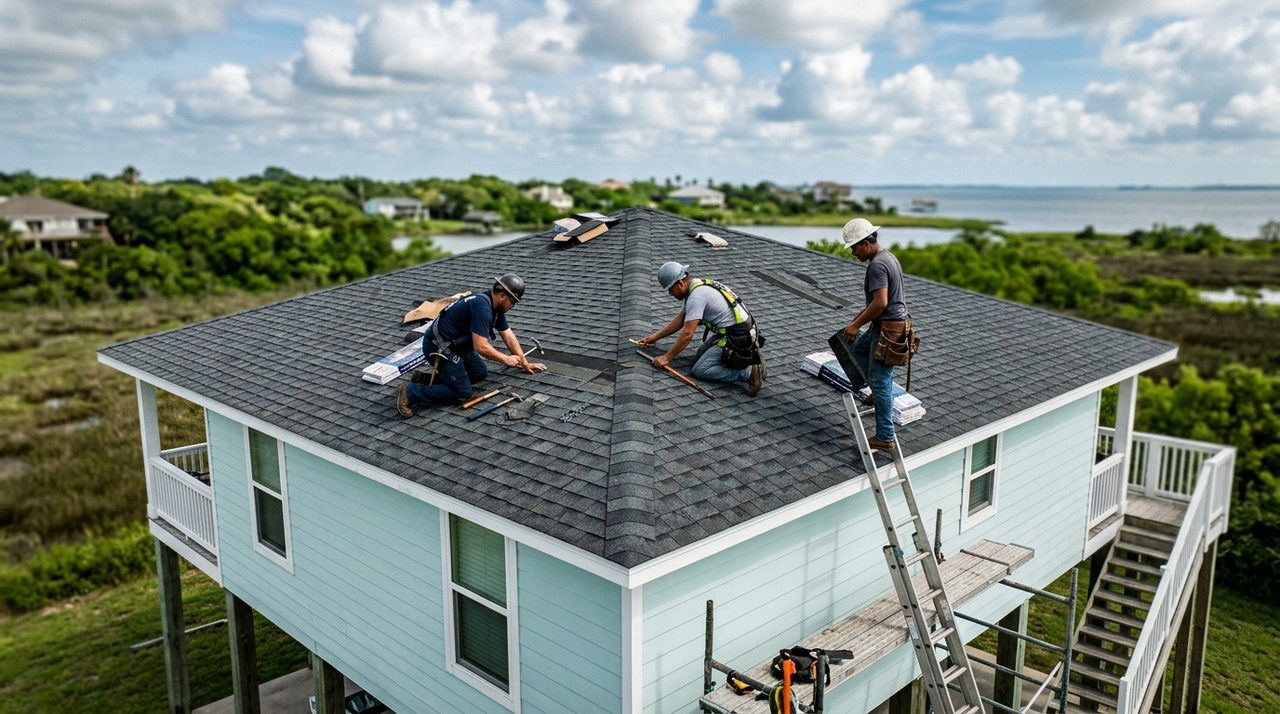
La Porte sits hard against Galveston Bay in southeast Harris County, putting its mix of 1950s–1970s ranch homes and newer Morgan's Landing tract houses squarely in TWIA's catastrophe zone — where salt-laden Gulf air accelerates shingle granule loss and metal flashing corrosion at rates inland Houston homeowners rarely see. Every re-roof here requires a permit pulled through the City of La Porte Building and Permits Department (not Harris County, not the City of Houston), and subdivision HOAs like Morgan's Landing layer ARC approval on top before a single shingle can change. This page explains the four roofing challenges that matter most in La Porte and what a qualified contractor actually does about them.
Ranked by verified Google rating × review volume × verification tier. How we rank →
Some highly-rated pros serve La Porte from nearby and may not keep a La Porte street address. Those are listed under "Also serving La Porte" with their real city and distance, so you always know where each business is based.
1406 W Fairmont Pkwy, La Porte, TX 77571
312 W Main St, La Porte, TX 77571
518 Shadylawn St, La Porte, TX 77571
Highly-rated pros based nearby who cover La Porte. Distance shown from the La Porte area.
Serving La Porte Based in Baytown · 4.3 mi away
Serving La Porte Based in Deer Park · 4.6 mi away
Serving La Porte Based in Seabrook · 4.6 mi away
Serving La Porte Based in Baytown · 4.9 mi away
Serving La Porte Based in Deer Park · 5.3 mi away
Serving La Porte Based in Baytown · 5.5 mi away
Serving La Porte Based in Deer Park · 6.3 mi away
Why it matters to you
La Porte's bayfront position means wind events — including the May 2024 derecho that swept southeast Harris County with 100-mph-plus straight-line gusts — hit older ranch-style homes with full force and little tree canopy to break the load. Most La Porte homes built before the 2006 IRC wind-resistance code revisions were nailed with only four fasteners per shingle tab rather than the six now required for high-wind zones, leaving ridge caps and field shingles vulnerable to uplift. Because La Porte falls within TWIA's designated catastrophe area, the installed nailing pattern and shingle product directly affect whether a TWIA wind policy will pay a claim.
What a good pro does
A qualified roofer working in La Porte should document the existing nail pattern during tear-off, upgrade to a six-nail application on new architectural shingles, and use a TWIA-eligible product listed on the association's approved materials schedule. The contractor must pull a permit through the City of La Porte Building and Permits Department — not Harris County or Houston — and schedule the required inspection before closing up the roof deck. Post-derecho demand surges have historically pushed La Porte area re-roof estimates 15–25% above baseline, so getting a written scope before signing anything is essential.
Sources: Texas Windstorm Insurance Association (TWIA), International Residential Code (as adopted by City of Houston), Municipal permit office (see area profile)
Why it matters to you
La Porte's direct exposure to Galveston Bay means airborne salt deposits on roofs year-round — a condition that corrodes galvanized step flashing, ridge vent metal, and exposed fasteners far faster than in inland Houston zip codes. On 1950s–1970s ranch homes that still have original or once-replaced galvanized flashing, oxidation creates pinhole leaks at chimney bases and dormers that mimic normal shingle wear but actually trace to compromised metal. Standard galvanized components rated for inland use will fail prematurely in La Porte's environment.
What a good pro does
A roofer familiar with La Porte's bay-adjacent conditions should specify stainless steel or aluminum flashing rather than standard galvanized, and use stainless or hot-dipped ring-shank nails at the deck. All exposed penetration boots should be EPDM or silicone rather than standard rubber, which chalks and cracks within a few Houston summers in salt air. Flashing replacement is a structural repair that requires a City of La Porte permit regardless of whether the shingle field itself is being replaced.
Sources: Municipal permit office (see area profile), International Residential Code (as adopted by City of Houston)
Why it matters to you
Morgan's Landing and Pelican Bay — two of La Porte's newer planned communities — both carry mandatory HOAs with Architectural Review Committees that require pre-approval for roofing material changes, including color shifts or any upgrade from standard 3-tab or dimensional shingles to metal or Class 4 impact-resistant products. ARC reviews in these communities can take 10–30 days, a timeline that collides badly with the urgency of storm-damaged roofs and the short windows contractors are available after major events. Homeowners who proceed without ARC sign-off risk fines and a forced re-roof at their own expense even if the work is otherwise code-compliant.
What a good pro does
Before selecting a shingle color or product for a Morgan's Landing or Pelican Bay home, request the community's current approved materials list directly from the HOA management company — do not rely on the roofer's assumption that last season's approved product is still on the list. Submit the ARC application with shingle brand, color code, and a product data sheet simultaneously with the City of La Porte permit application so both tracks run in parallel. Document all ARC correspondence in writing in case of a future dispute over material compliance.
Sources: Local HOA / deed restrictions (see area profile), Municipal permit office (see area profile)
Why it matters to you
La Porte's proximity to Galveston Bay pushes annual relative humidity well above Houston's already-high metro average, and the city's predominantly slab-on-grade housing stock — most built between 1960 and 1995 per Census data — means there is no crawl space to buffer moisture accumulation. Homes in this era were commonly built with box vents or gable-end vents only, without a continuous ridge-vent system, creating dead air pockets in attics where moisture condenses on OSB decking year-round. The result is silent delamination of the roof deck that only reveals itself during a re-roof tear-off — often requiring an unplanned deck board replacement that adds $800–$2,500 to the job estimate.
What a good pro does
A thorough pre-bid inspection in La Porte should include a flashlight survey of the attic deck for soft spots, staining, or visible delamination before any contract is signed, so deck replacement costs are scoped into the estimate rather than added as a change order. The contractor should calculate the net free area of existing ventilation against IRC R806 ratios for the attic square footage and propose a balanced ridge-and-soffit system if the current setup falls short. On La Porte's slab homes especially, getting ventilation right during the re-roof is cheaper than addressing premature deck rot five years later.
Sources: International Residential Code (as adopted by City of Houston), Municipal permit office (see area profile)
Hiring roofers in La Porte? La Porte is an incorporated city along Galveston Bay with housing stock ranging from 1950s ranch homes to modern master-planned communities like Morgan's Landing. Homeowners face a mix of coastal humidity challenges, slab foundation maintenance, and subdivision-specific HOA requirements that vary widely across the city. Proximity to petrochemical facilities and the bay means exterior materials and HVAC systems require extra attention to corrosion and salt-air exposure.
Building era
1950s–1970s in older core neighborhoods; 1980s–2000s suburban expansion; 2010s–present in master-planned communities like Morgan's Landing.
Typical style
Single-story ranch and bungalow styles in older areas; two-story brick-and-siding tract homes from the 1980s–2000s; contemporary Texas traditional brick/stone homes in newer planned communities.
Foundations
Predominantly slab-on-grade for post-1960 construction; some pier-and-beam in pre-1960 homes near the historic core and bayfront areas.
Common systems
Central AC is universal; older homes (1950s–1970s) may have original copper or galvanized plumbing and outdated electrical panels requiring upgrades; newer subdivisions use PEX plumbing and modern 200-amp electrical service.
What that means for repairs
Older ranch homes near the historic core frequently undergo kitchen and bathroom remodels, plumbing re-pipes from galvanized to PEX, and electrical panel upgrades. Exterior hardening against coastal humidity and storm damage is common across all eras. Newer homes in Morgan's Landing and similar communities see relatively little renovation but may need cosmetic updates and landscaping work.
Permit jurisdiction
City of La Porte Building and Permits Department (incorporated city with its own permitting authority).
HOA & deed restrictions
No city-wide HOA. Individual subdivisions vary: Morgan's Landing has a mandatory HOA with assessments, deed restriction enforcement, and community amenities. Pelican Bay also has a mandatory HOA. Older central La Porte neighborhoods may have recorded deed restrictions but no active HOA or only a voluntary civic association. Property-specific verification through the deed and Harris County Clerk records is necessary.
Historic districts
No City of Houston historic district designation confirmed. La Porte is a separate incorporated city and is not subject to HAHC oversight.
Contractor note
Contractors must pull permits through the City of La Porte, not Harris County or Houston. Subdivision-specific HOA architectural review committees (e.g., Morgan's Landing) may require pre-approval for exterior modifications, fencing, and roofing material changes before work begins.
FEMA flood zone
FEMA Zone X (low flood risk) per official NFHL data. However, La Porte is bay-adjacent and low-lying; individual parcels closer to Galveston Bay, Taylor Bayou, or drainage channels may carry higher flood designations. Property-specific FEMA panel review is recommended.
Hurricane Harvey impact
La Porte experienced flooding during Hurricane Harvey (2017), particularly in low-lying areas near the bay and along drainage channels. Specific street-level flood data for individual La Porte subdivisions was not confirmed in available research; homeowners should consult Harris County Flood Control District records and the city's post-Harvey damage assessments for parcel-level detail. Bay-adjacent properties and older neighborhoods with inadequate drainage infrastructure were generally more affected.
Heat & humidity load
Extreme heat and humidity combined with salt-air proximity to Galveston Bay accelerate exterior paint failure, metal corrosion on HVAC condensers and fasteners, and mold growth in poorly ventilated attics and crawlspaces. HVAC systems run near-continuously from May through October, making seasonal maintenance and refrigerant checks critical. Pier-and-beam homes in older areas are particularly susceptible to moisture-related subfloor and joist deterioration.
Working with contractors here
Contractors in La Porte most commonly handle HVAC maintenance and replacement, re-roofing after storm damage, plumbing re-pipes in 1950s–1970s homes, and foundation repair on slab-on-grade structures affected by expansive Gulf Coast clay soils. Coastal humidity and salt-air exposure drive significant exterior painting, siding repair, and metal corrosion remediation work. In newer communities like Morgan's Landing, work tends toward warranty-era cosmetic items, fence installation, and landscape hardscaping, but HOA architectural committee approval is typically required before starting. For older La Porte homes, electrical panel upgrades from outdated fuse boxes to modern breaker panels are a frequent scope item. Contractors should confirm La Porte city permit requirements early in the bidding process, as turnaround times and inspection schedules differ from Houston and unincorporated Harris County.
Local Tip
Always ask for a written estimate before work begins. Texas contractors are required to provide one on jobs over $1,000.
La Porte is an incorporated city along Galveston Bay with housing stock ranging from 1950s ranch homes to modern master-planned communities like Morgan's Landing. Homeowners face a mix of coastal humidity challenges, slab foundation maintenance, and subdivision-specific HOA requirements that vary widely across the city. Proximity to petrochemical facilities and the bay means exterior materials and HVAC systems require extra attention to corrosion and salt-air exposure.
Source: U.S. Census Bureau, ACS 5-Year 2023
Most of La Porte maps to FEMA Zone X (low mapped flood risk), but Houston's flash-flood reality means even low-risk blocks benefit from smart drainage and storm-hardened installs; risk climbs sharply on blocks nearest Galveston Bay, where it varies parcel to parcel.
Source: FEMA National Flood Hazard Layer (NFHL). Flood zones vary by parcel — verify your individual FIRM panel.
Wind uplift at the roof-to-wall connection is the structural failure mode that matters most in La Porte, TX since flooding is not the primary risk here. Ask your roofer to inspect the starter-course fastening pattern and, if your home was built before the 2009 IRC updates, discuss installing supplemental ring-shank nails along all perimeter rows before the next major storm. As a Harris County community, La Porte may follow county rather than City of Houston storm rebuild rules.
After a severe thunderstorm, the first thing a roofer should check in La Porte, TX is whether wind-driven rain has pushed up under any low-slope transition sections—areas where a steep roof meets a flatter porch or addition—because these joints separate under gust pressure and rarely reseal on their own. Sealing those transitions with a peel-and-stick modified bitumen patch costs far less than replacing the framing they protect. As a Harris County community, La Porte may follow county rather than City of Houston storm rebuild rules.
Even in lower-flood-risk La Porte, TX, a hard freeze following a rainstorm can trap water under lifted perimeter shingles and expand it into cracks in the decking, a failure mode that became widespread during Uri 2021. Ask a roofer to hand-seal any perimeter shingles showing daylight beneath them before December so freeze-water expansion does not open your deck to spring rains. With a median build year of 1983, the older building stock here is more exposed to hard-freeze damage than newer construction. Confirm the current FEMA panel for your La Porte parcel — the area maps to Zone X, but adjacent lots can differ.
Sources: FEMA National Flood Hazard Layer (NFHL), Ready.gov -- Hurricanes, CenterPoint Energy -- Storm Center, City of Houston -- Emergency Preparedness, Ready.gov -- Winter Weather, Harris County Flood Control District
Houston-specific estimators to plan your project before you call a pro. All results are planning estimates — a licensed local pro confirms the details on site.
Estimated design wind speed for your zone
Outside the TDI catastrophe area, so a WPI-8 is generally not mandated — but Houston still sees hurricane-force gusts (Beryl, 2024). Insist on properly rated shingles installed to the manufacturer's high-wind nailing pattern (6 nails) and starter strips, or a wind claim can be denied for improper installation.
Find a Houston roofer →This is a planning estimate only — actual requirements depend on an on-site assessment by a licensed Houston pro. Wind-speed zones are approximate; your exact TDI/WPI-8 obligation depends on your address's designation. Verify with the Texas Department of Insurance before contracting.
Disconnect & drain every outdoor hose bib
Remove hoses, drain the spigots, and cover each with an insulated faucet sock. Un-drained hose bibs are the #1 burst point in a Houston freeze.
Insulate exposed pipes in the attic & garage
Wrap any pipe in an unconditioned space (attic runs, garage walls) with foam sleeves. Houston homes rarely insulate these because they only matter a few nights a year — which is exactly why they burst.
Open cabinet doors & keep a pencil-width drip
On hard-freeze nights, open kitchen/bath cabinets so warm air reaches the pipes and let faucets on exterior walls drip to relieve pressure.
Protect the attic/garage water heater & its lines
An attic or garage tank sits in unconditioned space. Insulate the cold-inlet and hot-outlet lines and confirm the emergency drain pan is clear so a leak doesn't reach the ceiling.
This is a planning estimate only — actual requirements depend on an on-site assessment by a licensed Houston pro. If a pipe has already burst, shut off your main water supply and call a licensed Houston plumber immediately — freeze bursts flood fast.
Sources: Municipal permit office (see area profile)
Sources: International Residential Code (as adopted by City of Houston)
Sources: FEMA National Flood Hazard Layer (NFHL)Texas Windstorm Insurance Association (TWIA)
Sources: EPA Lead Renovation, Repair and Painting (RRP) Rule