Closed
Serving Third Ward Based in Midtown · 0.7 mi away
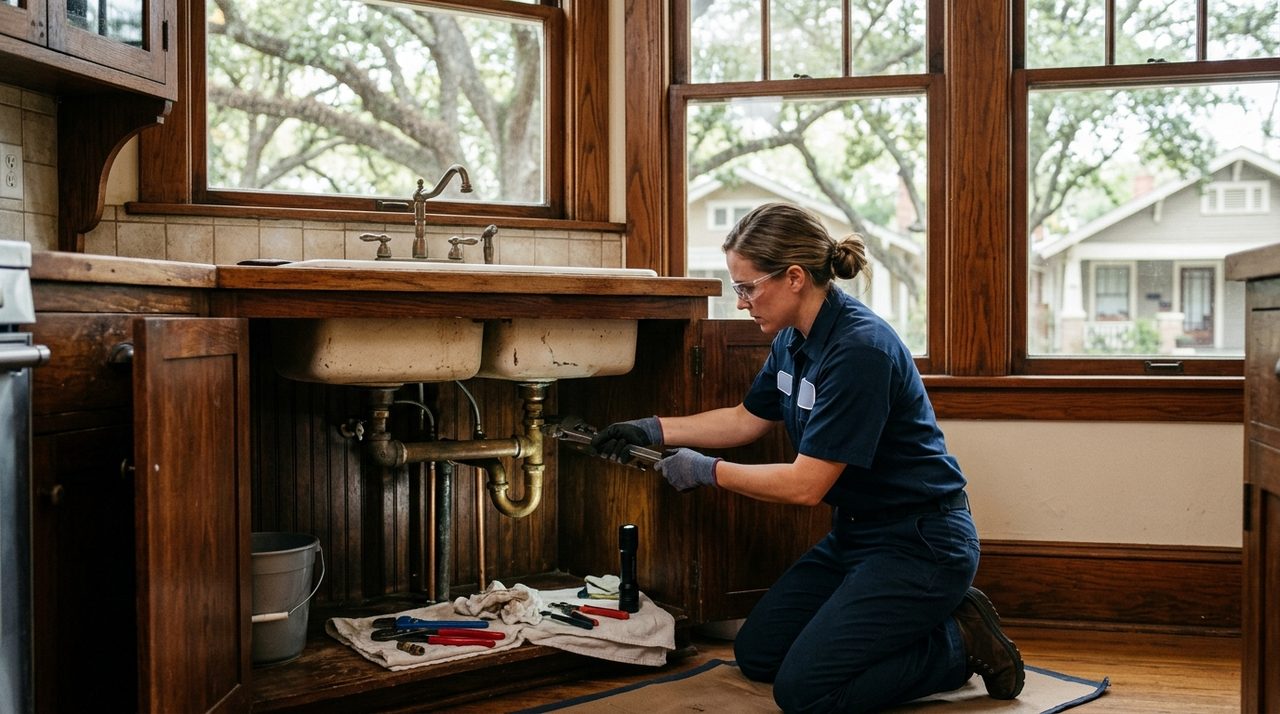
Third Ward's split housing stock — 1920s–1960s pier-and-beam bungalows still running original galvanized or cast-iron plumbing alongside post-2000 slab-on-grade townhomes wired for modern life — means a plumber working two houses apart on the same block can face entirely different scopes. Add the neighborhood's proximity to Brays Bayou and the City of Houston's permit requirements through the Houston Permitting Center, and choosing a plumber who actually understands the area's dual service profile matters more here than in newer, uniform subdivisions.
Ranked by verified Google rating × review volume × verification tier. How we rank →
Some highly-rated pros serve Third Ward from nearby and may not keep a Third Ward street address. Those are listed under "Also serving Third Ward" with their real city and distance, so you always know where each business is based.
Highly-rated pros based nearby who cover Third Ward. Distance shown from the Third Ward area.
Serving Third Ward Based in Midtown · 0.7 mi away
Serving Third Ward Based in Midtown · 0.9 mi away
Serving Third Ward Based in EaDo · 1.1 mi away
Serving Third Ward Based in Midtown · 1.5 mi away
Serving Third Ward Based in EaDo · 1.7 mi away
Serving Third Ward Based in Midtown · 1.7 mi away
Serving Third Ward Based in Midtown · 1.8 mi away
Serving Third Ward Based in Midtown · 1.9 mi away
Serving Third Ward Based in River Oaks · 2.3 mi away
Serving Third Ward Based in Medical Center · 2.8 mi away
Why it matters to you
Third Ward's older frame bungalows — many still largely original from the 1930s through 1960s — commonly retain galvanized steel supply lines and hub-and-spigot cast-iron drain lines that are now 60 to 90 years old. Galvanized pipe corrodes from the inside out, progressively narrowing water flow and eventually flaking rust into fixtures; cast-iron drain bottoms erode through a process called channeling that creates slow drains and hidden structural collapses beneath the crawl space or slab. As gentrification-driven gut renovations accelerate block by block in Third Ward, these pipes almost always surface as a hidden cost once walls open.
What a good pro does
A qualified plumber should perform a sewer camera inspection before or during any bungalow renovation to document drain-line condition under the pier-and-beam floor system, where access is far easier than under a slab. Supply-side repiping from galvanized to PEX typically runs $4,000–$12,000 for a 1,500–2,500 sq ft home in the Houston market (2024 estimate). All repipe and drain-line replacement work requires a plumbing permit through the Houston Permitting Center; the supervising plumber must hold a current Texas State Board of Plumbing Examiners (TSBPE) master or journeyman license, which homeowners can verify on the TSBPE public lookup before signing any contract.
Sources: Texas State Board of Plumbing Examiners, City of Houston Permitting Center
Why it matters to you
Parcels within a few blocks of Brays Bayou in Third Ward are exposed to sewer system surcharging during intense Houston rain events — the same dynamic that produced sewage backflow through floor drains and toilets across the metro during Harvey (2017) and again during Beryl (July 2024). Even though most of Third Ward maps to FEMA Zone X, flood risk varies parcel by parcel near the bayou, and older cast-iron drain lines in the bungalow stock lack the backwater valves that modern construction requires. Homeowners who have never had a camera inspection have no way to know whether their drain system is structurally intact enough to resist backpressure.
What a good pro does
A backwater (check) valve installed on the main drain line — a code-recognized device under the International Plumbing Code framework Texas adopts — gives older Third Ward homes a mechanical barrier against sewage intrusion during sewer system surcharges. Installation typically requires opening the floor in a pier-and-beam home to access the drain lateral, which is more straightforward in pier-and-beam construction than under a slab. A permit is required for this work through the Houston Permitting Center; homeowners on bayou-adjacent blocks should also review their parcel's FEMA flood map designation since Zone X boundaries shift at the parcel level near Brays Bayou.
Sources: Harris County Flood Control District, FEMA National Flood Hazard Layer (NFHL), International Residential Code (as adopted by City of Houston), City of Houston Permitting Center
Why it matters to you
Third Ward's post-2000 infill townhomes — the 2- and 3-story attached units that now line many blocks — almost universally install tank water heaters in the attached ground-floor garage, where Houston's near-100% summer humidity and ambient heat accelerate anode rod corrosion and sediment accumulation from Houston's moderately hard municipal water supply. A water heater that might last 12 years in a dry climate often reaches end-of-life in 8–10 years in this environment, and garage installations make leaks especially damaging when they go unnoticed against the concrete floor.
What a good pro does
Townhome owners should budget for water heater replacement around the 8-year mark and ask a plumber to inspect the anode rod during any service call. A standard 50-gallon gas tank replacement runs approximately $900–$1,800 installed in the Houston market (2024 estimate); upgrading to a tankless unit runs $2,000–$4,500 installed with venting, and project-specific HOAs on newer townhome developments may have architectural review requirements for exterior vent placement before work begins. The Houston Permitting Center requires a permit for water heater replacement, and the installing plumber must be TSBPE-licensed.
Sources: Texas State Board of Plumbing Examiners, City of Houston Permitting Center, Local HOA / deed restrictions (see area profile)
Why it matters to you
Houston has no citywide zoning code, which surprises many Third Ward homeowners into assuming permit requirements are similarly relaxed — they are not. The City of Houston requires plumbing permits for water heater replacements, repipes, sewer line work, and gas line modifications, all inspected through the Houston Permitting Center. The neighborhood's block-by-block variance in deed-restriction status (no single mandatory HOA covers Third Ward, though smaller project-specific HOAs govern some newer townhome developments) means a homeowner cannot assume their neighbor's experience applies to their own lot.
What a good pro does
Before any plumbing scope beyond a minor repair, confirm the plumber will pull the permit under the Houston Permitting Center process — not the homeowner's responsibility, but the homeowner's risk if the contractor skips it. Unpermitted work can trigger insurance claim denials and create disclosure obligations at resale. On townhome developments with project-specific HOAs, obtain written HOA approval for any exterior plumbing work (gas meter relocation, tankless vents, outdoor cleanout covers) before the permit application is filed, since HOA fines for unapproved exterior changes are independent of city permit compliance.
Sources: City of Houston Permitting Center, Texas State Board of Plumbing Examiners, Local HOA / deed restrictions (see area profile)
Hiring plumbers in Third Ward? Third Ward presents contractors with a split housing stock: early 20th-century pier-and-beam bungalows requiring foundation, plumbing, and electrical upgrades alongside modern slab-on-grade townhomes with contemporary systems. Proximity to Brays Bayou means flood-related remediation and drainage work remain ongoing concerns. The absence of a single mandatory HOA simplifies permitting but project-specific HOAs on newer townhome developments may impose architectural and material requirements.
Building era
1920s–1960s legacy homes with significant 2000s–2020s infill townhome construction.
Typical style
Early 20th-century frame bungalows and cottages; contemporary 2- to 3-story townhomes with attached garages; some student-oriented multifamily near UH and TSU.
Foundations
Mixed — older bungalows predominantly pier-and-beam; newer townhomes and infill predominantly slab-on-grade.
Common systems
Older homes: galvanized or cast-iron plumbing, 60–100 amp electrical panels, window units or aging central HVAC. Newer townhomes: PEX or copper plumbing, 200 amp panels, modern central HVAC with multi-zone capability.
What that means for repairs
Gut renovations and full-system upgrades of pre-1960s bungalows are common as the neighborhood gentrifies. Electrical panel upgrades, re-plumbing from galvanized to PEX, and pier-and-beam foundation leveling are frequent scopes. Newer townhomes see comparatively less renovation but occasional warranty-period repairs and cosmetic upgrades.
Permit jurisdiction
Houston Permitting Center (City of Houston).
HOA & deed restrictions
No single mandatory HOA covers the neighborhood. Multiple voluntary civic clubs operate including Canfield Oaks Civic Association, Third Ward is Home Civic Club, and University Village Civic Club. Newer townhome and condo developments commonly have small, project-specific mandatory HOAs governing shared driveways and common areas.
Historic districts
No City of Houston historic district designation confirmed for Third Ward as a whole. Individual structures may have landmark status — check HAHC records for specific addresses.
Contractor note
Houston has no citywide zoning, so building controls depend on subdivision-level deed restrictions that vary block by block. Contractors working on older homes should verify whether the lot is in a deed-restricted subdivision before proposing accessory structures or lot modifications.
FEMA flood zone
FEMA Zone X (low flood risk) per official NFHL data. However, Third Ward sits directly north of Brays Bayou and includes low-lying areas near bayou tributaries and older storm sewer infrastructure, which can create localized flooding risk not fully captured by Zone X designation.
Hurricane Harvey impact
Third Ward lies within the broader Brays Bayou watershed, which experienced significant flooding during Hurricane Harvey in 2017. However, no neighborhood-specific documentation was found quantifying the extent of Harvey damage or identifying specific flooded streets within Third Ward. Property-level Harvey impact should be verified through FEMA Harvey inundation layers, Harris County Flood Control District mapping tools, and seller's disclosure for any individual address.
Heat & humidity load
Older pier-and-beam bungalows with aging insulation and single-pane windows face extreme summer cooling loads; HVAC systems in these homes are frequently undersized or failing. High humidity under pier-and-beam homes can accelerate subfloor rot and encourage pest infestations. Newer townhomes perform better thermally but three-story designs can struggle with uneven cooling between floors, making multi-zone HVAC balancing a common summer service call.
Working with contractors here
Contractors in Third Ward most commonly handle two categories of work: full-system renovations of pre-1960s bungalows and routine maintenance on post-2000 townhomes. On older homes, pier-and-beam foundation leveling, galvanized plumbing replacement, electrical panel upgrades from 60 to 200 amps, and HVAC installation are the most frequent scopes. Newer townhomes generate calls for HVAC zone balancing, minor foundation settling on slab construction, and cosmetic remodels. Proximity to Brays Bayou means flood damage remediation—including drywall removal, mold treatment, and flooring replacement—remains a recurring need after heavy rain events. Job scoping should account for the wide variance in building age and condition even within a single block, and contractors should verify project-specific HOA requirements on newer developments before beginning exterior work.
Local Tip
Always ask for a written estimate before work begins. Texas contractors are required to provide one on jobs over $1,000.
Third Ward presents contractors with a split housing stock: early 20th-century pier-and-beam bungalows requiring foundation, plumbing, and electrical upgrades alongside modern slab-on-grade townhomes with contemporary systems. Proximity to Brays Bayou means flood-related remediation and drainage work remain ongoing concerns. The absence of a single mandatory HOA simplifies permitting but project-specific HOAs on newer townhome developments may impose architectural and material requirements.
Source: U.S. Census Bureau, ACS 5-Year 2023
Most of Third Ward maps to FEMA Zone X (low mapped flood risk), but Houston's flash-flood reality means even low-risk blocks benefit from smart drainage and storm-hardened installs; risk climbs sharply on blocks nearest Brays Bayou, where it varies parcel to parcel.
Source: FEMA National Flood Hazard Layer (NFHL). Flood zones vary by parcel — verify your individual FIRM panel.
Wind-driven debris during a Gulf hurricane can sever exposed gas meter risers and outdoor flex connectors; ask your plumber to confirm that the gas meter in Third Ward is properly supported and that the flexible connector behind your range or water heater meets current CSST bonding requirements before the season peaks. A quick pre-storm pressure test on the interior gas system lets you verify integrity before you evacuate. Because Third Ward drains toward Brays Bayou, block-level runoff can differ sharply from the mapped zone.
Straight-line winds from the May 2024 derecho exceeded 100 mph in some Houston corridors and toppled trees onto exterior gas lines in neighborhoods with low flood exposure like Third Ward — after any severe wind event, have a plumber perform a gas-system pressure test before restoring appliances. Even a small nick in a buried CSST line from root movement or a fallen limb can be difficult to detect without professional equipment. Confirm the current FEMA panel for your Third Ward parcel — the area maps to Zone X, but adjacent lots can differ.
Gas line demand spikes sharply during extended freezes, and corroded or undersized flex connectors on furnaces and water heaters in Third Ward can fail under that added thermal cycling stress — ask your plumber to inspect appliance connections and confirm that your water heater's temperature-pressure relief valve is functional before winter. A seized T&P valve is a code violation and a safety hazard that Uri-level conditions can push to failure. With a median build year of 1983, the older building stock here is more exposed to hard-freeze damage than newer construction. Because Third Ward drains toward Brays Bayou, block-level runoff can differ sharply from the mapped zone.
Sources: FEMA National Flood Hazard Layer (NFHL), Ready.gov -- Hurricanes, CenterPoint Energy -- Storm Center, City of Houston -- Emergency Preparedness, Ready.gov -- Winter Weather, Harris County Flood Control District
Houston-specific estimators to plan your project before you call a pro. All results are planning estimates — a licensed local pro confirms the details on site.
Disconnect & drain every outdoor hose bib
Remove hoses, drain the spigots, and cover each with an insulated faucet sock. Un-drained hose bibs are the #1 burst point in a Houston freeze.
Insulate exposed pipes in the attic & garage
Wrap any pipe in an unconditioned space (attic runs, garage walls) with foam sleeves. Houston homes rarely insulate these because they only matter a few nights a year — which is exactly why they burst.
Open cabinet doors & keep a pencil-width drip
On hard-freeze nights, open kitchen/bath cabinets so warm air reaches the pipes and let faucets on exterior walls drip to relieve pressure.
Protect the attic/garage water heater & its lines
An attic or garage tank sits in unconditioned space. Insulate the cold-inlet and hot-outlet lines and confirm the emergency drain pan is clear so a leak doesn't reach the ceiling.
This is a planning estimate only — actual requirements depend on an on-site assessment by a licensed Houston pro. If a pipe has already burst, shut off your main water supply and call a licensed Houston plumber immediately — freeze bursts flood fast.
Sources: City of Houston Permitting CenterTexas State Board of Plumbing Examiners
Sources: FEMA National Flood Hazard Layer (NFHL)Harris County Flood Control DistrictCity of Houston Permitting Center
Sources: City of Houston Permitting Center
Sources: Local HOA / deed restrictions (see area profile)City of Houston Permitting Center