Serving Third Ward Based in Midtown · 1.5 mi away
Best Handyman Services in Third Ward
Third Ward's handyman market splits sharply between 1920s–1960s pier-and-beam bungalows loaded with galvanized pipes, undersized panels, and decades of deferred maintenance, and post-2000 slab-on-grade townhomes that generate a comparatively lighter but distinct punch list. Every job falls under the Houston Permitting Center, and the block-by-block variance in building age and condition means a handyman arriving without knowing which era they're walking into can badly misprice the work.
Verified against Google Business data
Updated 2026
See the 10 Handyman Services Serving Third Ward 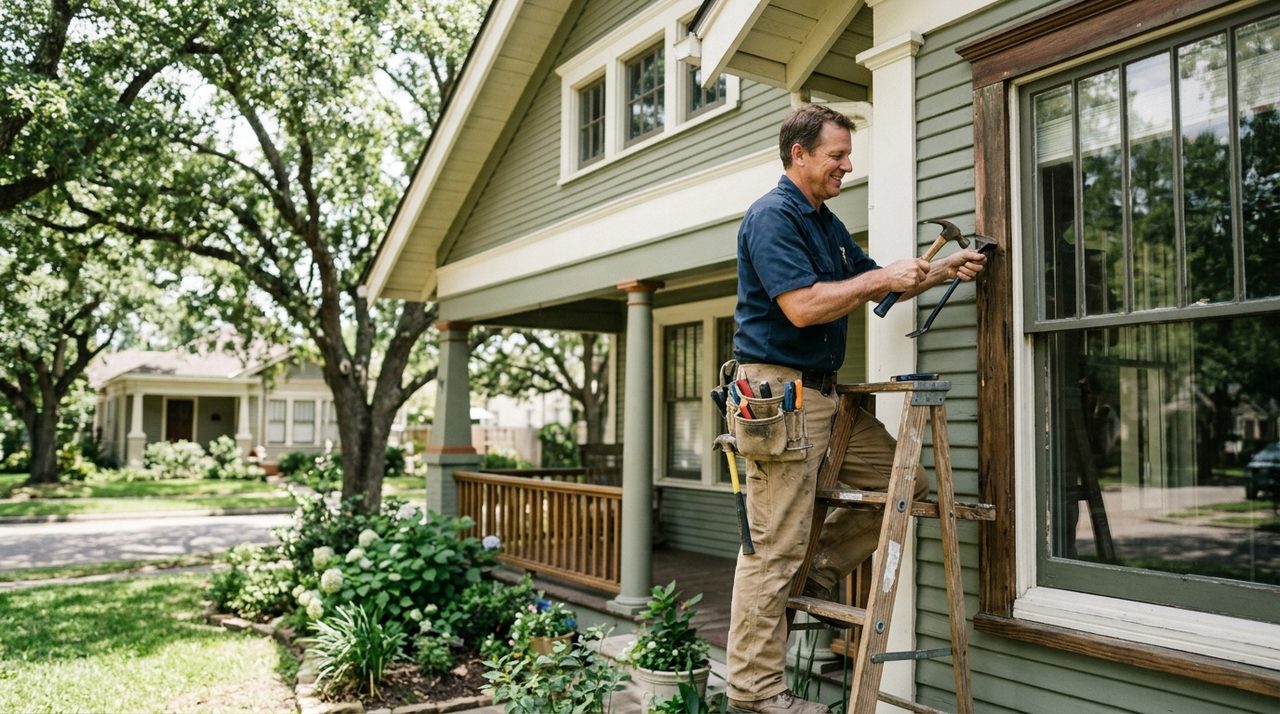
- Median home built
- 1983
- Median home value
- $384,100
- FEMA flood zone
- X (low)
- Typical cost (est.)
- $350–$600 half-day / $75–$150/hr
- Most common local issue
- Pre-1978 bungalow caulk, rot, and lead-paint exposure during patch work
Ranked by verified Google rating × review volume × verification tier. How we rank →
Some highly-rated pros serve Third Ward from nearby and may not keep a Third Ward street address. Those are listed under "Also serving Third Ward" with their real city and distance, so you always know where each business is based.
Min rating:
10 resultsAlso serving Third Ward
Highly-rated pros based nearby who cover Third Ward. Distance shown from the Third Ward area.
Open Now
Serving Third Ward Based in EaDo · 2.5 mi away
Closed
Serving Third Ward Based in Lazybrook / Timbergrove · 2.5 mi away
Closed
Serving Third Ward Based in EaDo · 2.7 mi away
Closed
Serving Third Ward Based in West University · 3.3 mi away
Serving Third Ward Based in West University · 4.2 mi away
Open Now
Serving Third Ward Based in Braeswood · 4.5 mi away
Serving Third Ward Based in Galleria · 5.7 mi away
Closed
Serving Third Ward Based in Lazybrook / Timbergrove · 5.7 mi away
Handyman Services in Third Ward: What You Should Know
Lead Paint Hidden in Every Bungalow Repair
Why it matters to you
Third Ward's stock of pre-1960s frame cottages and bungalows — many built before 1950 — almost certainly contains lead-based paint on window sashes, door casings, and exterior siding. When a handyman sands a sticking door, scrapes peeling porch trim, or patches a wall near original woodwork, they can disturb that paint and expose you and your family to lead dust without either party realizing it.
What a good pro does
Any renovation, repair, or painting work on a pre-1978 Third Ward bungalow that disturbs painted surfaces must be performed by a firm holding EPA RRP Lead-Safe Certified status — this is federal law, not a suggestion. Ask for the firm's certification number before work begins; a reputable operator will test or presume lead present, contain the work area, and use HEPA vacuums rather than dry-sweeping.
Sources: EPA Lead Renovation, Repair and Painting (RRP) Rule, City of Houston Permitting Center
Pier-and-Beam Floors and Crawl-Space Rot That Masquerade as Simple Repairs
Why it matters to you
The older bungalows in Third Ward sit on pier-and-beam foundations rather than slab, meaning there is a ventilated crawl space beneath the floor. Houston's average annual relative humidity routinely exceeds 75%, and summer dew points regularly top 75°F — conditions that turn an unventilated or poorly drained crawl space into a rot incubator. What looks like a squeaky floorboard or a soft spot near a bathroom threshold can signal rot that has migrated from the subfloor up through floor joists, a repair chain that escalates well beyond a simple board swap.
What a good pro does
A skilled handyman scopes pier-and-beam work by inspecting from below before quoting above. They look for joist deflection, fungal staining, and blocked or insufficient crawl-space ventilation. Cosmetic fixes — replacing a single rotted threshold — are priced separately from structural sistering of joists, which under City of Houston rules requires a permit and may need a licensed contractor depending on scope.
Sources: City of Houston Permitting Center, International Residential Code (as adopted by City of Houston), IICRC (water/mold restoration standards)
Lingering Uri Damage in Older Homes With Galvanized Supply Lines
Why it matters to you
Third Ward bungalows still running original galvanized or early CPVC supply lines took disproportionate damage during Winter Storm Uri in February 2021. Many owners patched visibly burst sections but deferred cosmetic repairs — cracked tile, split drywall where pipes were accessed, and corroded exterior hose bibs are still surfacing in homes now going through renovation as the neighborhood continues to gentrify. These deferred repairs complicate resale and can mask ongoing slow leaks.
What a good pro does
When scoping work on a pre-1980 Third Ward bungalow, a thorough handyman checks hose bib stems for freeze fractures, inspects drywall patches for secondary moisture intrusion, and notes any discolored grout or tile near supply-line access points. Plumbing repair or replacement of any supply line falls under the Texas State Board of Plumbing Examiners licensing requirement — a handyman can do cosmetic close-up work, but the pipe itself must be touched by or under the supervision of a licensed plumber.
Sources: Texas State Board of Plumbing Examiners, City of Houston Permitting Center
Townhome HOA Exterior Rules That Catch Owners Off Guard
Why it matters to you
While no single mandatory HOA governs the whole neighborhood, many of the post-2000 infill townhome projects scattered through Third Ward — particularly those near University of Houston and along Elgin — have small, project-specific mandatory HOAs governing shared driveways, exterior paint palettes, and fence materials. A homeowner who hires a handyman to repaint a front door or replace a storm-damaged fence panel with a different wood species can unknowingly trigger an architectural violation, even though Third Ward lacks the sprawling master-planned HOA structure of Sugar Land or Cinco Ranch.
What a good pro does
Before any exterior repair or cosmetic change on a post-2000 townhome, pull the deed restrictions for that specific development — not the broader neighborhood — and confirm whether an Architectural Control Committee submission is required. This step takes a few days and costs nothing; skipping it can mean a forced redo. A handyman experienced in Third Ward's infill stock will ask about HOA documents at intake rather than after the paint is dry.
Sources: Local HOA / deed restrictions (see area profile), City of Houston Permitting Center
Handyman Services in Third Ward: What You Should Know
Hiring handyman services in Third Ward? Third Ward presents contractors with a split housing stock: early 20th-century pier-and-beam bungalows requiring foundation, plumbing, and electrical upgrades alongside modern slab-on-grade townhomes with contemporary systems. Proximity to Brays Bayou means flood-related remediation and drainage work remain ongoing concerns. The absence of a single mandatory HOA simplifies permitting but project-specific HOAs on newer townhome developments may impose architectural and material requirements.
- Housing era
- 1920s–1960s legacy homes with significant 2000s–2020s infill townhome construction
- Foundation
- Mixed — older bungalows predominantly pier-and-beam
- Flood zone
- FEMA Zone X (low flood risk) per official NFHL data
- Permits
- Houston Permitting Center (City of Houston)
Housing stock & systems
Building era
1920s–1960s legacy homes with significant 2000s–2020s infill townhome construction.
Typical style
Early 20th-century frame bungalows and cottages; contemporary 2- to 3-story townhomes with attached garages; some student-oriented multifamily near UH and TSU.
Foundations
Mixed — older bungalows predominantly pier-and-beam; newer townhomes and infill predominantly slab-on-grade.
Common systems
Older homes: galvanized or cast-iron plumbing, 60–100 amp electrical panels, window units or aging central HVAC. Newer townhomes: PEX or copper plumbing, 200 amp panels, modern central HVAC with multi-zone capability.
What that means for repairs
Gut renovations and full-system upgrades of pre-1960s bungalows are common as the neighborhood gentrifies. Electrical panel upgrades, re-plumbing from galvanized to PEX, and pier-and-beam foundation leveling are frequent scopes. Newer townhomes see comparatively less renovation but occasional warranty-period repairs and cosmetic upgrades.
Permits & restrictions
Permit jurisdiction
Houston Permitting Center (City of Houston).
HOA & deed restrictions
No single mandatory HOA covers the neighborhood. Multiple voluntary civic clubs operate including Canfield Oaks Civic Association, Third Ward is Home Civic Club, and University Village Civic Club. Newer townhome and condo developments commonly have small, project-specific mandatory HOAs governing shared driveways and common areas.
Historic districts
No City of Houston historic district designation confirmed for Third Ward as a whole. Individual structures may have landmark status — check HAHC records for specific addresses.
Contractor note
Houston has no citywide zoning, so building controls depend on subdivision-level deed restrictions that vary block by block. Contractors working on older homes should verify whether the lot is in a deed-restricted subdivision before proposing accessory structures or lot modifications.
Flood & weather
FEMA flood zone
FEMA Zone X (low flood risk) per official NFHL data. However, Third Ward sits directly north of Brays Bayou and includes low-lying areas near bayou tributaries and older storm sewer infrastructure, which can create localized flooding risk not fully captured by Zone X designation.
Hurricane Harvey impact
Third Ward lies within the broader Brays Bayou watershed, which experienced significant flooding during Hurricane Harvey in 2017. However, no neighborhood-specific documentation was found quantifying the extent of Harvey damage or identifying specific flooded streets within Third Ward. Property-level Harvey impact should be verified through FEMA Harvey inundation layers, Harris County Flood Control District mapping tools, and seller's disclosure for any individual address.
Heat & humidity load
Older pier-and-beam bungalows with aging insulation and single-pane windows face extreme summer cooling loads; HVAC systems in these homes are frequently undersized or failing. High humidity under pier-and-beam homes can accelerate subfloor rot and encourage pest infestations. Newer townhomes perform better thermally but three-story designs can struggle with uneven cooling between floors, making multi-zone HVAC balancing a common summer service call.
Working with contractors here
Contractors in Third Ward most commonly handle two categories of work: full-system renovations of pre-1960s bungalows and routine maintenance on post-2000 townhomes. On older homes, pier-and-beam foundation leveling, galvanized plumbing replacement, electrical panel upgrades from 60 to 200 amps, and HVAC installation are the most frequent scopes. Newer townhomes generate calls for HVAC zone balancing, minor foundation settling on slab construction, and cosmetic remodels. Proximity to Brays Bayou means flood damage remediation—including drywall removal, mold treatment, and flooring replacement—remains a recurring need after heavy rain events. Job scoping should account for the wide variance in building age and condition even within a single block, and contractors should verify project-specific HOA requirements on newer developments before beginning exterior work.
Local Tip
Always ask for a written estimate before work begins. Texas contractors are required to provide one on jobs over $1,000.
About Third Ward
Third Ward presents contractors with a split housing stock: early 20th-century pier-and-beam bungalows requiring foundation, plumbing, and electrical upgrades alongside modern slab-on-grade townhomes with contemporary systems. Proximity to Brays Bayou means flood-related remediation and drainage work remain ongoing concerns. The absence of a single mandatory HOA simplifies permitting but project-specific HOAs on newer townhome developments may impose architectural and material requirements.
- Median year built
- 1983
- Median home value
- $384,100
- Owner-occupied
- 37.7%
- Population
- 35,866
- Housing units
- 18,321
- Median income
- $65,901
Source: U.S. Census Bureau, ACS 5-Year 2023
Flood & storm risk
FEMA Zone XLow flood riskMost of Third Ward maps to FEMA Zone X (low mapped flood risk), but Houston's flash-flood reality means even low-risk blocks benefit from smart drainage and storm-hardened installs; risk climbs sharply on blocks nearest Brays Bayou, where it varies parcel to parcel.
Source: FEMA National Flood Hazard Layer (NFHL). Flood zones vary by parcel — verify your individual FIRM panel.
Frequently Asked Questions
Do I need a permit from the City of Houston just to replace a rotted exterior door threshold on my Third Ward bungalow?
A straight threshold and weatherstripping swap is cosmetic work and does not require a Houston Permitting Center permit. However, if the rot has spread to the door frame's structural jack or king studs — common in Third Ward's 1920s–1950s frame bungalows where moisture has been wicking for decades — any structural framing repair does trigger a building permit through the City of Houston Permitting Center. Have your handyman probe the framing before quoting so you know whether the scope stays cosmetic or crosses into permitted territory.
Sources: City of Houston Permitting Center
My Third Ward townhome was built around 2010 on a slab. It's in FEMA Zone X, so why does water still pool at my back door after heavy rain?
FEMA Zone X means the parcel sits outside the 100-year floodplain on current maps, but Third Ward's position in the broader Brays Bayou watershed means intense Houston rain events — the kind that deliver 4-plus inches in two hours — overwhelm street drainage regardless of official flood zone. Townhome slabs are typically finished-floor elevated only a few inches above grade, and drainage swales between attached units often clog with debris. A handyman can re-slope the adjacent hardscape, clear and extend downspout elbows away from the foundation, and install a door sweep with a raised aluminum threshold saddle — all without a permit — to manage the majority of nuisance pooling.
How do I know if a handyman working on my pre-1960 Third Ward bungalow is actually qualified to handle lead paint, and what should I ask before hiring?
Under the EPA's Renovation, Repair and Painting rule, any firm disturbing more than six square feet of painted surface in a pre-1978 home must be an EPA Lead-Safe Certified firm — ask to see the firm's current EPA RRP certification number before signing anything. Individual workers on that crew should hold a Lead-Safe Certified Renovator credential as well. Third Ward's stock of pre-1960 bungalows almost universally has lead paint on windows, exterior siding, and interior trim, so this question is relevant on nearly every bungalow job, not just gut renovations.
Sources: EPA Lead Renovation, Repair and Painting (RRP) Rule
What's a realistic timeline and cost estimate for a full caulk-and-grout refresh on a 1950s Third Ward bungalow bathroom versus a newer townhome bathroom?
In a post-2000 townhome with standard tile and modern silicone joints, a single bathroom caulk-and-grout refresh is typically a half-day job running an estimated $200–$450 in the Houston metro. A 1950s bungalow bathroom is a different animal: original subway tile often has multiple layers of old caulk and latex grout that must be chemically softened before removal, and the high humidity from a crawl-space house with no exhaust fan commonly means mold remediation in the substrate adds scope and cost. Budget an estimated $400–$700 and plan for the possibility that tile removal reveals rotted cement board or a deteriorated pan liner, which escalates the project into licensed plumbing territory.
My Third Ward bungalow's block has a deed restriction I wasn't told about. Can that affect what a handyman is allowed to do on the exterior?
Yes — Houston has no citywide zoning, but many older Third Ward blocks are platted subdivisions with recorded deed restrictions that can limit fence height, accessory structure placement, and exterior materials even without a formal HOA enforcing them. A neighbor or civic club can sue to enforce valid deed restrictions in Harris County civil court. Before a handyman replaces a fence or builds a small storage platform on your lot, ask your title company or an attorney to pull the recorded restrictions for your specific subdivision plat — it takes one quick search to avoid a legal dispute.
Sources: Local HOA / deed restrictions (see area profile)Municipal permit office (see area profile)
Is there a better season to book a Third Ward handyman for exterior wood and caulk repairs, or is demand steady year-round?
Demand spikes sharply in Houston in two windows: late spring after hail and derecho season (typically April–June), and immediately after named storms or tropical events in late summer and early fall — Third Ward handymen were heavily backlogged after Hurricane Beryl in July 2024. The relative lull from late October through February is the best window to book exterior caulk work, wood rot repairs, and screen replacements because wait times are shorter and Houston's lower winter humidity (dew points drop into the 50s°F) gives fresh caulk and paint better cure conditions than a July afternoon at 77°F dew point.