Serving Third Ward Based in River Oaks · 1.8 mi away
Best Landscapers in Third Ward
Third Ward's split housing stock — 1920s–1960s pier-and-beam bungalows on narrow lots cheek-by-jowl with post-2000 slab-on-grade townhomes — creates two very different landscaping realities on the same block, all sitting on Houston's slow-draining Beaumont Black clay. Add Brays Bayou running along the neighborhood's southern edge, and drainage-smart planting and soil remediation are not optional extras here. Every permit for new irrigation or significant grading work goes through the Houston Permitting Center.
Verified against Google Business data
Updated 2026
See the 10 Landscapers Serving Third Ward 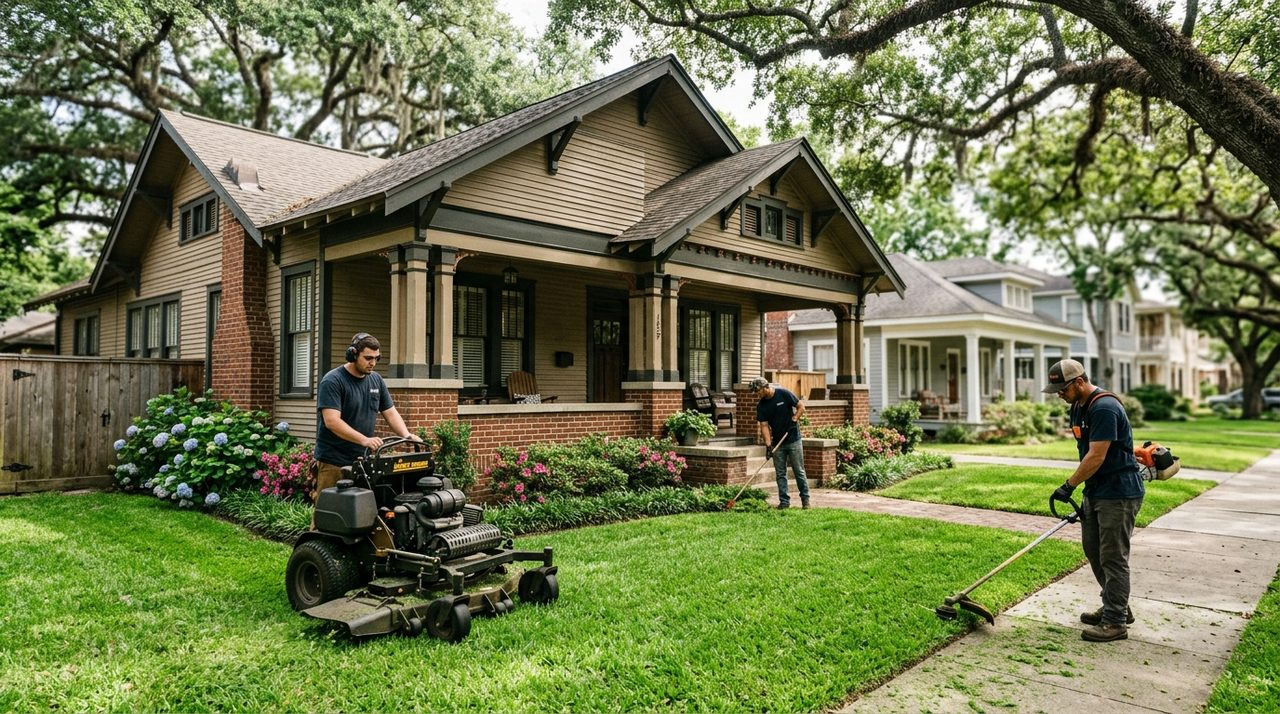
- Median home built
- 1983
- Median home value
- $384,100
- FEMA flood zone
- X (low)
- Typical landscape design & install (est.)
- $4,500–$18,000
- Most common local issue
- Clay-soil ponding on compact bungalow lots between older and newer construction grades
Ranked by verified Google rating × review volume × verification tier. How we rank →
Some highly-rated pros serve Third Ward from nearby and may not keep a Third Ward street address. Those are listed under "Also serving Third Ward" with their real city and distance, so you always know where each business is based.
Min rating:
10 resultsAlso serving Third Ward
Highly-rated pros based nearby who cover Third Ward. Distance shown from the Third Ward area.
Serving Third Ward Based in EaDo · 2.1 mi away
Closed
Serving Third Ward Based in Lazybrook / Timbergrove · 2.5 mi away
Serving Third Ward Based in Lazybrook / Timbergrove · 3.1 mi away
Closed
Serving Third Ward Based in EaDo · 3.8 mi away
Open Now
Serving Third Ward Based in South Houston · 4 mi away
Closed
Serving Third Ward Based in Upper Kirby · 4.2 mi away
Serving Third Ward Based in Galleria · 4.4 mi away
Closed
Serving Third Ward Based in The Heights · 4.6 mi away
Closed
Serving Third Ward Based in The Heights · 4.6 mi away
Landscapers in Third Ward: What You Should Know
Chronic Ponding Between Bungalows and Townhomes on Clay-Heavy Lots
Why it matters to you
Third Ward's infill boom placed new three-story townhomes — often built on slightly raised pads — directly beside 1920s–1940s bungalows whose original grades were set for a very different drainage pattern. The result is that rainwater sheeting off elevated townhome lots pools against older neighbors' foundations and beds on Beaumont Black clay that already drains poorly. Even blocks mapped FEMA Zone X see flooded plant beds and drowned turf after heavy Gulf rain events because the clay absorbs water far slower than it arrives.
What a good pro does
A landscaper working in Third Ward should assess the grade differential between your lot and adjacent new construction before specifying any planting plan. Practical fixes include installing a French drain along the shared property line (typically $2,500–$7,500 per project, estimated) or reshaping beds with a shallow dry creek outfall toward the street right-of-way. Any grading work that materially redirects drainage to a neighboring parcel triggers review under Houston Permitting Center rules, so scope this with a contractor who understands the City of Houston's site-drainage expectations.
Sources: Harris County Flood Control District, City of Houston Permitting Center, FEMA National Flood Hazard Layer (NFHL)
Brays Bayou-Adjacent Post-Flood Soil Recovery on Southern Blocks
Why it matters to you
Lots within a few blocks of Brays Bayou carry parcel-level flood risk that jumps well above the neighborhood's general Zone X designation, and those blocks flooded repeatedly during Harvey (2017) and subsequent heavy-rain events. Inundation leaves behind deposited silt, anaerobic soil layers, and a persistent weed-seed bank of opportunistic species that outcompete ornamentals during the recovery window — problems that routine re-sodding alone cannot fix.
What a good pro does
Before replanting anything on a flood-affected lot near the bayou, a knowledgeable landscaper will pull a soil sample to check pH and compaction, then recommend targeted amendment — compost incorporation, aerating, and sometimes a partial grade restoration — before putting St. Augustine sod back down (installed sod typically runs $1.00–$1.75 per square foot, estimated). Bermuda or native sedges tolerate periodic inundation better than St. Augustine on the lowest-lying spots. This is a distinct service line from standard maintenance, and homeowners should request a written remediation plan, not just a quote for sod.
Sources: Harris County Flood Control District, FEMA National Flood Hazard Layer (NFHL)
Tree Root Setbacks on Mixed Slab-and-Pier-and-Beam Blocks
Why it matters to you
Third Ward's older bungalows sit on pier-and-beam foundations, which tolerate root intrusion differently than the slab-on-grade construction used in every post-2000 townhome. A live oak or Chinese tallow planted to provide shade for a renovated bungalow may be sitting only 8–12 feet from a neighboring townhome's slab, where its roots can dry the underlying clay unevenly and accelerate differential settlement. Homeowners who purchased a renovated bungalow often inherit mature trees whose proximity to an adjacent new slab was never evaluated.
What a good pro does
A landscaper adding or retaining trees on Third Ward lots should map both the target home's foundation type and the neighbor's before recommending species and placement. For slab-adjacent planting within 15 feet, smaller-statured natives like yaupon holly or vitex are safer choices than fast-growing oaks or tallows. If an existing large tree is already within the danger zone of a townhome slab, root barrier installation can slow — though not eliminate — differential moisture draw, and the landscaper should document the recommendation in writing so the homeowner understands the residual risk.
Sources: International Residential Code (as adopted by City of Houston), Local HOA / deed restrictions (see area profile)
Irrigation Permits and Backflow Compliance at Houston Permitting Center
Why it matters to you
Third Ward's high rate of renovated bungalows and newly constructed townhomes means a steady stream of first-time irrigation installations — many homeowners assume their general landscaper can handle the whole job, but Texas law separates that work out. TCEQ requires a licensed irrigator to design and install any new irrigation system, and backflow prevention devices must meet TCEQ Chapter 344 standards and be tested annually by a separately licensed tester. The Houston Permitting Center requires a permit before installation begins, and the city's code enforcement activity in active redevelopment zones like Third Ward makes unpermitted irrigation a real liability.
What a good pro does
Before signing a landscape contract that includes irrigation, confirm in writing that the contractor either holds a TCEQ Irrigator license or will subcontract that specific scope to someone who does. The permit application goes through the Houston Permitting Center, and the licensed irrigator of record is responsible for the backflow preventer inspection at project close. Budget roughly $4,500–$18,000 for a full design-and-install landscape project that includes irrigation; the permitting and licensed-irrigator requirement is not an upsell — it is state law.
Sources: Texas Commission on Environmental Quality, City of Houston Permitting Center, Municipal permit office (see area profile)
Landscapers in Third Ward: What You Should Know
Hiring landscapers in Third Ward? Third Ward presents contractors with a split housing stock: early 20th-century pier-and-beam bungalows requiring foundation, plumbing, and electrical upgrades alongside modern slab-on-grade townhomes with contemporary systems. Proximity to Brays Bayou means flood-related remediation and drainage work remain ongoing concerns. The absence of a single mandatory HOA simplifies permitting but project-specific HOAs on newer townhome developments may impose architectural and material requirements.
- Housing era
- 1920s–1960s legacy homes with significant 2000s–2020s infill townhome construction
- Foundation
- Mixed — older bungalows predominantly pier-and-beam
- Flood zone
- FEMA Zone X (low flood risk) per official NFHL data
- Permits
- Houston Permitting Center (City of Houston)
Housing stock & systems
Building era
1920s–1960s legacy homes with significant 2000s–2020s infill townhome construction.
Typical style
Early 20th-century frame bungalows and cottages; contemporary 2- to 3-story townhomes with attached garages; some student-oriented multifamily near UH and TSU.
Foundations
Mixed — older bungalows predominantly pier-and-beam; newer townhomes and infill predominantly slab-on-grade.
Common systems
Older homes: galvanized or cast-iron plumbing, 60–100 amp electrical panels, window units or aging central HVAC. Newer townhomes: PEX or copper plumbing, 200 amp panels, modern central HVAC with multi-zone capability.
What that means for repairs
Gut renovations and full-system upgrades of pre-1960s bungalows are common as the neighborhood gentrifies. Electrical panel upgrades, re-plumbing from galvanized to PEX, and pier-and-beam foundation leveling are frequent scopes. Newer townhomes see comparatively less renovation but occasional warranty-period repairs and cosmetic upgrades.
Permits & restrictions
Permit jurisdiction
Houston Permitting Center (City of Houston).
HOA & deed restrictions
No single mandatory HOA covers the neighborhood. Multiple voluntary civic clubs operate including Canfield Oaks Civic Association, Third Ward is Home Civic Club, and University Village Civic Club. Newer townhome and condo developments commonly have small, project-specific mandatory HOAs governing shared driveways and common areas.
Historic districts
No City of Houston historic district designation confirmed for Third Ward as a whole. Individual structures may have landmark status — check HAHC records for specific addresses.
Contractor note
Houston has no citywide zoning, so building controls depend on subdivision-level deed restrictions that vary block by block. Contractors working on older homes should verify whether the lot is in a deed-restricted subdivision before proposing accessory structures or lot modifications.
Flood & weather
FEMA flood zone
FEMA Zone X (low flood risk) per official NFHL data. However, Third Ward sits directly north of Brays Bayou and includes low-lying areas near bayou tributaries and older storm sewer infrastructure, which can create localized flooding risk not fully captured by Zone X designation.
Hurricane Harvey impact
Third Ward lies within the broader Brays Bayou watershed, which experienced significant flooding during Hurricane Harvey in 2017. However, no neighborhood-specific documentation was found quantifying the extent of Harvey damage or identifying specific flooded streets within Third Ward. Property-level Harvey impact should be verified through FEMA Harvey inundation layers, Harris County Flood Control District mapping tools, and seller's disclosure for any individual address.
Heat & humidity load
Older pier-and-beam bungalows with aging insulation and single-pane windows face extreme summer cooling loads; HVAC systems in these homes are frequently undersized or failing. High humidity under pier-and-beam homes can accelerate subfloor rot and encourage pest infestations. Newer townhomes perform better thermally but three-story designs can struggle with uneven cooling between floors, making multi-zone HVAC balancing a common summer service call.
Working with contractors here
Contractors in Third Ward most commonly handle two categories of work: full-system renovations of pre-1960s bungalows and routine maintenance on post-2000 townhomes. On older homes, pier-and-beam foundation leveling, galvanized plumbing replacement, electrical panel upgrades from 60 to 200 amps, and HVAC installation are the most frequent scopes. Newer townhomes generate calls for HVAC zone balancing, minor foundation settling on slab construction, and cosmetic remodels. Proximity to Brays Bayou means flood damage remediation—including drywall removal, mold treatment, and flooring replacement—remains a recurring need after heavy rain events. Job scoping should account for the wide variance in building age and condition even within a single block, and contractors should verify project-specific HOA requirements on newer developments before beginning exterior work.
Local Tip
Always ask for a written estimate before work begins. Texas contractors are required to provide one on jobs over $1,000.
About Third Ward
Third Ward presents contractors with a split housing stock: early 20th-century pier-and-beam bungalows requiring foundation, plumbing, and electrical upgrades alongside modern slab-on-grade townhomes with contemporary systems. Proximity to Brays Bayou means flood-related remediation and drainage work remain ongoing concerns. The absence of a single mandatory HOA simplifies permitting but project-specific HOAs on newer townhome developments may impose architectural and material requirements.
- Median year built
- 1983
- Median home value
- $384,100
- Owner-occupied
- 37.7%
- Population
- 35,866
- Housing units
- 18,321
- Median income
- $65,901
Source: U.S. Census Bureau, ACS 5-Year 2023
Flood & storm risk
FEMA Zone XLow flood riskMost of Third Ward maps to FEMA Zone X (low mapped flood risk), but Houston's flash-flood reality means even low-risk blocks benefit from smart drainage and storm-hardened installs; risk climbs sharply on blocks nearest Brays Bayou, where it varies parcel to parcel.
Source: FEMA National Flood Hazard Layer (NFHL). Flood zones vary by parcel — verify your individual FIRM panel.
Frequently Asked Questions
Do I need a permit from the City of Houston to install a French drain or regrade my yard in Third Ward?
Grading work that materially alters drainage patterns on your lot falls under the Houston Permitting Center's jurisdiction, and projects that redirect stormwater off-site can require a grading or drainage permit before work begins. Simple French drains that daylight within your own property line are often permit-exempt, but if a contractor is cutting a swale toward the street or a neighboring easement, that changes the calculus — confirm the scope with the Houston Permitting Center before breaking ground. Third Ward's compact bungalow lots leave little room for error, and an unpermitted drainage modification that floods a neighbor is a liability problem, not just a code one.
Sources: City of Houston Permitting Center
My 1940s pier-and-beam bungalow in Third Ward has barely any yard — can a landscaper even install meaningful drainage on a narrow lot like this?
Narrow bungalow lots in Third Ward — often 25 to 40 feet wide — limit the run length of a French drain but don't eliminate options; a experienced local landscaper will typically route a shallow trench drain along the side yard and tie it to a dry well or a pop-up emitter at the front curb. The pier-and-beam foundation actually gives you a hidden advantage: if the crawlspace has open ventilation, regrading the perimeter slope away from the piers (minimum 6-inch fall over 10 feet) can move standing water away from the structure without major earthworks. Expect this type of targeted drainage correction on a compact Third Ward lot to run roughly $2,500–$5,000 as an estimate, depending on outfall distance and access.
Sources: Harris County Flood Control District
After a heavy rain the blocks nearest Brays Bayou on Third Ward's south side sometimes flood — does that affect what plants a landscaper should be putting in my yard?
Blocks that sit closest to Brays Bayou can see parcel-level flood risk that exceeds what the broader Third Ward FEMA Zone X designation suggests, so a landscaper working on those southern lots should treat plant selection as flood-tolerant by default. Species like inland sea oats, Gulf muhly, Louisiana iris, and bald cypress tolerate periodic inundation and recover on Beaumont clay far better than standard nursery tropicals or St. Augustine turf, which suffocate under prolonged saturation. Ask any landscaper quoting a job near the bayou corridor whether they've reviewed the Harris County Flood Control District's bayou-proximity maps for your specific parcel before finalizing a planting plan.
Sources: FEMA National Flood Hazard Layer (NFHL)Harris County Flood Control District
The townhome development I live in near UH has a small project HOA — do they have to approve landscaping changes before I call a contractor?
Many of Third Ward's post-2000 townhome developments have mandatory project-specific HOAs that govern shared driveways, courtyard plantings, and front-facade appearances even when no neighborhood-wide HOA exists, so you should pull your HOA governing documents before scheduling any exterior landscaping work. Common restrictions include approved mulch colors, maximum shrub heights at property lines, and prohibition on certain hardscape materials in common areas. Your HOA CC&Rs — not the City of Houston — are the controlling authority on those aesthetic questions, and an HOA-ordered removal of unapproved plants is not reimbursable by the landscaper if you skipped that approval step.
Sources: Local HOA / deed restrictions (see area profile)
When is the best time of year to schedule a full landscape install or sod replacement on a Third Ward property, given Houston's heat and rain patterns?
October through early December is the practical sweet spot for major landscape installs in Third Ward: soil temperatures are still warm enough for root establishment, summer fungal pressure (brown patch, take-all root rot) has dropped, and the Gulf hurricane season is largely done. Avoid scheduling sod or new tree planting between June and September if possible — extreme heat indexes above 100°F spike transplant stress and irrigation demand right when City of Houston Stage 2 water restrictions may limit how often you can run a new system. Spring installs in March–April work well for annuals and perennials but put large trees and sod in the ground right before the most punishing part of the season.
What license should I verify before hiring a landscaper in Third Ward to apply herbicides or weed killers to my lawn?
Any company applying herbicides or pesticides for hire in Texas must hold a Texas Department of Agriculture Commercial Pesticide Applicator License — this is separate from any general landscaping experience and is state-issued, not a City of Houston requirement. Ask the landscaper to provide their TDA license number before they spray anything on your lawn; you can verify it through the TDA's online lookup tool. This matters especially on Third Ward's older bungalow lots, where soil amendment history is often unknown and runoff toward storm drains is a concern on low-slope lots.