Serving Third Ward Based in EaDo · 0.7 mi away
Best Painters in Third Ward
Third Ward's housing stock spans more than a century — 1920s pier-and-beam bungalows on the same block as post-2000 slab-on-grade townhomes — and that split demands two very different approaches from any painter you hire. The pre-1978 bungalows that remain from the neighborhood's historic fabric trigger EPA Lead-Safe certification requirements the moment painted surfaces are disturbed, while the newer infill townhomes introduce their own quirks: stucco and Hardie-panel finishes exposed to Houston's punishing UV index and the moisture-laden air blowing up from Brays Bayou just blocks away. Understanding which category your home falls into before getting a bid will save you from mispriced quotes and paint failures that show up before the first anniversary.
Verified against Google Business data
Updated 2026
See the 10 Painters Serving Third Ward 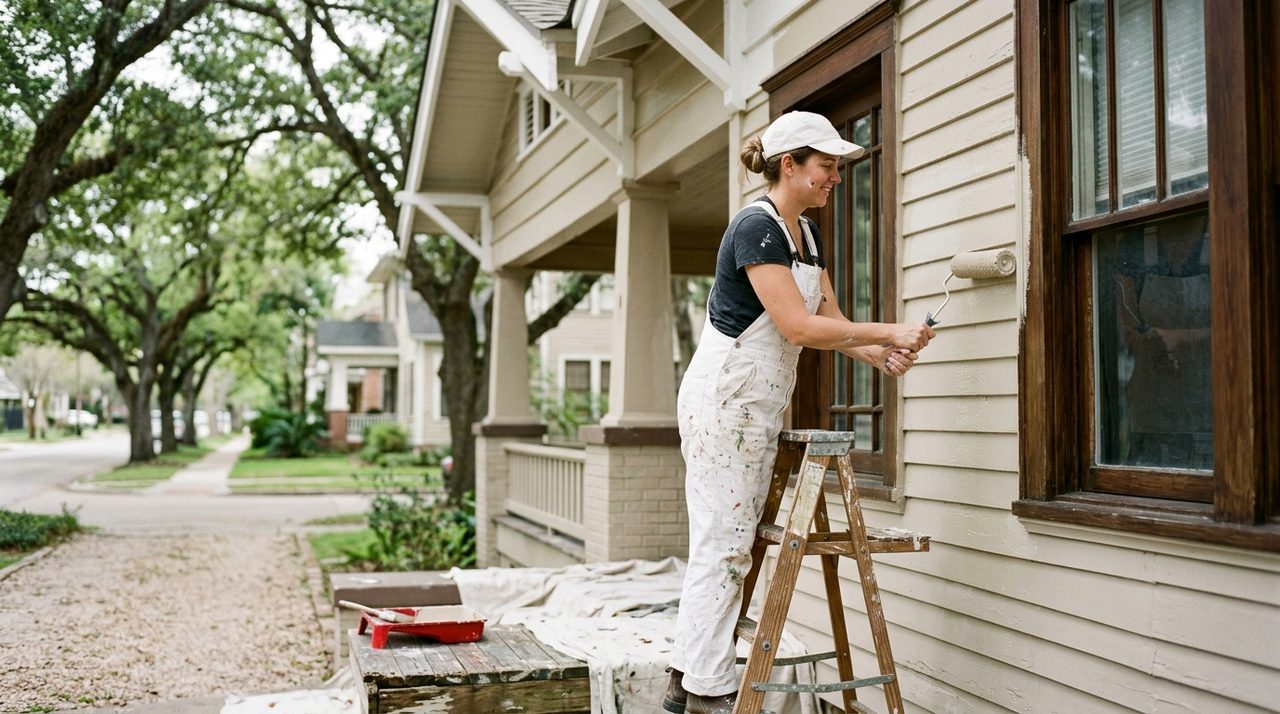
- Median home built
- 1983
- Median home value
- $384,100
- FEMA flood zone
- X (low)
- Typical cost (est.)
- $2,800–$7,500
- Most common local issue
- Lead-paint containment on pre-1978 bungalows during gut renovations
Ranked by verified Google rating × review volume × verification tier. How we rank →
Some highly-rated pros serve Third Ward from nearby and may not keep a Third Ward street address. Those are listed under "Also serving Third Ward" with their real city and distance, so you always know where each business is based.
Min rating:
10 resultsAlso serving Third Ward
Highly-rated pros based nearby who cover Third Ward. Distance shown from the Third Ward area.
Open Now
Serving Third Ward Based in Midtown · 1.4 mi away
Serving Third Ward Based in Midtown · 1.5 mi away
Open Now
Serving Third Ward Based in Midtown · 1.7 mi away
Closed
Serving Third Ward Based in River Oaks · 3 mi away
Closed
Serving Third Ward Based in West University · 3.5 mi away
Open Now
Serving Third Ward Based in West University · 3.5 mi away
Closed
Serving Third Ward Based in Lazybrook / Timbergrove · 4.1 mi away
Closed
Serving Third Ward Based in Lazybrook / Timbergrove · 4.4 mi away
Serving Third Ward Based in The Heights · 5.4 mi away
Painters in Third Ward: What You Should Know
Pre-1978 Bungalows Mean Lead-Safe Rules Apply to Your Repaint
Why it matters to you
A substantial share of Third Ward's original bungalow and cottage stock was built between the 1920s and the 1960s — well before the 1978 federal ban on residential lead paint. When ongoing gut renovations scrape, sand, or otherwise disturb those original painted surfaces, the EPA Renovation, Repair, and Painting (RRP) Rule under 40 CFR 745 kicks in. This is not optional, and it matters especially here because Third Ward's gentrification wave has generated a high volume of full-system bungalow renovations that combine painting with drywall replacement, electrical panel upgrades, and window trim work — exactly the combined scopes that trigger the rule.
What a good pro does
Insist that any painter working on a pre-1978 bungalow in Third Ward is employed by an EPA Lead-Safe Certified firm, and that the individual worker holds an EPA RRP Renovator certification — ask to see both certificates before work begins. The painter should set up proper plastic sheeting containment, use HEPA vacuuming, and dispose of debris per 40 CFR 745 protocols. Texas does not issue a standalone painting license through TDLR, so the EPA certification is the only credential that specifically governs this hazard, and a firm that cannot produce it should not be touching a pre-1978 home.
Sources: EPA Lead Renovation, Repair and Painting (RRP) Rule, Texas Department of Licensing & Regulation
Pier-and-Beam Movement Cracks Interior Drywall — And Paint Repairs Keep Failing
Why it matters to you
Third Ward's older bungalows sit on pier-and-beam foundations, which flex with seasonal moisture changes in the underlying Houston clay soil differently than slab-on-grade construction does. That movement telegraphs hairline cracks through interior plaster and drywall walls on a cycle that repeats with every drought-then-rain swing. Homeowners who simply paint over these cracks with standard joint compound and latex paint discover the crack returns through the new coat within months — sometimes weeks — because the substrate is still moving.
What a good pro does
A competent painter on a Third Ward bungalow should probe cracks before pricing the job and distinguish between active-movement cracks and settled ones. Active cracks require flexible, paintable caulk or an elastomeric filler rather than rigid joint compound, applied after any recent foundation leveling work is complete. It is worth coordinating a pier-and-beam foundation inspection before committing to an interior repaint if you are seeing new cracks or doors that have recently started sticking — painting over an actively shifting foundation is money spent twice.
Sources: International Residential Code (as adopted by City of Houston)
Post-Flood Repaint on Blocks Near Brays Bayou Requires More Than a Fresh Coat
Why it matters to you
Most of Third Ward maps to FEMA Zone X, but the flood risk is far from uniform: parcels closest to Brays Bayou carry meaningfully higher exposure, and Houston's intense short-duration rainfall events have pushed water into homes on blocks that do not appear on flood maps at all. Harvey 2017 and Beryl 2024 both left mineral tide lines, mold-stained drywall paper, and moisture-compromised gypsum board throughout bayou-adjacent Inner Loop neighborhoods. Painting over these surfaces with standard primer produces bleed-through staining and recurring mold growth — a failure pattern documented repeatedly in post-Harvey repaint jobs across Houston.
What a good pro does
Before any paint is applied to a wall with a documented or suspected flood history, the painter should conduct or coordinate a moisture meter check of the drywall. Readings above 15–17% mean the wall is not ready to paint. Where mold staining is present on intact drywall that does not require replacement, a shellac-based or purpose-formulated mold-encapsulant primer must be applied before finish coats — standard latex primer will not block the bleed-through. Budget $4–$8 per square foot of treated wall surface for this scope, separate from any drywall replacement costs, and verify that the painter has experience with post-flood sequences rather than standard residential repaint work.
Newer Third Ward Townhomes Have No Single HOA — But Some Project-Specific Ones Do Govern Exterior Colors
Why it matters to you
Unlike master-planned suburbs with blanket architectural review committees, Third Ward has no single mandatory HOA covering the neighborhood. However, the wave of post-2000 infill townhome developments — many built as clusters of two to six units sharing driveways or courtyard walls — commonly come with small, project-specific mandatory HOAs that govern exterior finishes and colors for the shared development. A homeowner in one of these clusters who assumes they have complete freedom to repaint their unit's exterior in any color may be wrong, and painting without approval can trigger a demand to repaint at the owner's expense.
What a good pro does
Before scheduling an exterior repaint on any post-2000 Third Ward townhome, pull your deed and review the declaration of covenants for your specific development — not the neighborhood broadly. If an architectural review process exists, get the color approval in writing before the painter purchases materials. The Houston Permitting Center does not require a standalone painting permit for routine residential exterior repaints, so the only approval hurdle is at the HOA level if one governs your unit. Your painter should be asking about this during the estimate walkthrough; one who doesn't is skipping a step that could cost you a repaint.
Sources: Local HOA / deed restrictions (see area profile), City of Houston Permitting Center
Painters in Third Ward: What You Should Know
Hiring painters in Third Ward? Third Ward presents contractors with a split housing stock: early 20th-century pier-and-beam bungalows requiring foundation, plumbing, and electrical upgrades alongside modern slab-on-grade townhomes with contemporary systems. Proximity to Brays Bayou means flood-related remediation and drainage work remain ongoing concerns. The absence of a single mandatory HOA simplifies permitting but project-specific HOAs on newer townhome developments may impose architectural and material requirements.
- Housing era
- 1920s–1960s legacy homes with significant 2000s–2020s infill townhome construction
- Foundation
- Mixed — older bungalows predominantly pier-and-beam
- Flood zone
- FEMA Zone X (low flood risk) per official NFHL data
- Permits
- Houston Permitting Center (City of Houston)
Housing stock & systems
Building era
1920s–1960s legacy homes with significant 2000s–2020s infill townhome construction.
Typical style
Early 20th-century frame bungalows and cottages; contemporary 2- to 3-story townhomes with attached garages; some student-oriented multifamily near UH and TSU.
Foundations
Mixed — older bungalows predominantly pier-and-beam; newer townhomes and infill predominantly slab-on-grade.
Common systems
Older homes: galvanized or cast-iron plumbing, 60–100 amp electrical panels, window units or aging central HVAC. Newer townhomes: PEX or copper plumbing, 200 amp panels, modern central HVAC with multi-zone capability.
What that means for repairs
Gut renovations and full-system upgrades of pre-1960s bungalows are common as the neighborhood gentrifies. Electrical panel upgrades, re-plumbing from galvanized to PEX, and pier-and-beam foundation leveling are frequent scopes. Newer townhomes see comparatively less renovation but occasional warranty-period repairs and cosmetic upgrades.
Permits & restrictions
Permit jurisdiction
Houston Permitting Center (City of Houston).
HOA & deed restrictions
No single mandatory HOA covers the neighborhood. Multiple voluntary civic clubs operate including Canfield Oaks Civic Association, Third Ward is Home Civic Club, and University Village Civic Club. Newer townhome and condo developments commonly have small, project-specific mandatory HOAs governing shared driveways and common areas.
Historic districts
No City of Houston historic district designation confirmed for Third Ward as a whole. Individual structures may have landmark status — check HAHC records for specific addresses.
Contractor note
Houston has no citywide zoning, so building controls depend on subdivision-level deed restrictions that vary block by block. Contractors working on older homes should verify whether the lot is in a deed-restricted subdivision before proposing accessory structures or lot modifications.
Flood & weather
FEMA flood zone
FEMA Zone X (low flood risk) per official NFHL data. However, Third Ward sits directly north of Brays Bayou and includes low-lying areas near bayou tributaries and older storm sewer infrastructure, which can create localized flooding risk not fully captured by Zone X designation.
Hurricane Harvey impact
Third Ward lies within the broader Brays Bayou watershed, which experienced significant flooding during Hurricane Harvey in 2017. However, no neighborhood-specific documentation was found quantifying the extent of Harvey damage or identifying specific flooded streets within Third Ward. Property-level Harvey impact should be verified through FEMA Harvey inundation layers, Harris County Flood Control District mapping tools, and seller's disclosure for any individual address.
Heat & humidity load
Older pier-and-beam bungalows with aging insulation and single-pane windows face extreme summer cooling loads; HVAC systems in these homes are frequently undersized or failing. High humidity under pier-and-beam homes can accelerate subfloor rot and encourage pest infestations. Newer townhomes perform better thermally but three-story designs can struggle with uneven cooling between floors, making multi-zone HVAC balancing a common summer service call.
Working with contractors here
Contractors in Third Ward most commonly handle two categories of work: full-system renovations of pre-1960s bungalows and routine maintenance on post-2000 townhomes. On older homes, pier-and-beam foundation leveling, galvanized plumbing replacement, electrical panel upgrades from 60 to 200 amps, and HVAC installation are the most frequent scopes. Newer townhomes generate calls for HVAC zone balancing, minor foundation settling on slab construction, and cosmetic remodels. Proximity to Brays Bayou means flood damage remediation—including drywall removal, mold treatment, and flooring replacement—remains a recurring need after heavy rain events. Job scoping should account for the wide variance in building age and condition even within a single block, and contractors should verify project-specific HOA requirements on newer developments before beginning exterior work.
Local Tip
Always ask for a written estimate before work begins. Texas contractors are required to provide one on jobs over $1,000.
About Third Ward
Third Ward presents contractors with a split housing stock: early 20th-century pier-and-beam bungalows requiring foundation, plumbing, and electrical upgrades alongside modern slab-on-grade townhomes with contemporary systems. Proximity to Brays Bayou means flood-related remediation and drainage work remain ongoing concerns. The absence of a single mandatory HOA simplifies permitting but project-specific HOAs on newer townhome developments may impose architectural and material requirements.
- Median year built
- 1983
- Median home value
- $384,100
- Owner-occupied
- 37.7%
- Population
- 35,866
- Housing units
- 18,321
- Median income
- $65,901
Source: U.S. Census Bureau, ACS 5-Year 2023
Flood & storm risk
FEMA Zone XLow flood riskMost of Third Ward maps to FEMA Zone X (low mapped flood risk), but Houston's flash-flood reality means even low-risk blocks benefit from smart drainage and storm-hardened installs; risk climbs sharply on blocks nearest Brays Bayou, where it varies parcel to parcel.
Source: FEMA National Flood Hazard Layer (NFHL). Flood zones vary by parcel — verify your individual FIRM panel.
Frequently Asked Questions
Do I need a permit from the City of Houston to repaint the exterior of my Third Ward bungalow?
A standalone residential repaint — no structural work, no window replacement, no drywall tear-out — does not require a permit from the Houston Permitting Center. However, if your painter is patching rotted wood framing, replacing fascia boards, or bundling any repair work that touches structure or trades, those scopes can trigger separate trade permits through the same City of Houston Permitting Center office. Always confirm the full scope with your contractor before work starts so nothing gets pulled after the fact.
Sources: City of Houston Permitting Center
My Third Ward townhome was built around 2010 — does it have a project-specific HOA that could reject my exterior paint color?
Newer townhome clusters in Third Ward commonly have small, mandatory HOAs governing shared driveways and exterior appearances, even though no single neighborhood-wide HOA exists. Before buying paint or signing a contract, ask your painter to help you locate the recorded deed restrictions for your specific development — your title documents or a quick Harris County Appraisal District search can confirm whether an architectural review step is required. Skipping that check and painting without approval can result in a forced repaint at your expense.
Sources: Local HOA / deed restrictions (see area profile)
What's the realistic timeline for an exterior repaint of a 1940s Third Ward bungalow, and what pushes the cost higher?
Budget roughly two to four weeks total when you factor in EPA Lead-Safe containment setup, surface prep on aged wood siding, and Houston's humidity-driven dry times — the actual brush time may be only two to three days, but prep and cure windows dominate the schedule. Cost estimates for an exterior repaint of a smaller pre-1960s bungalow typically run $3,500–$6,500, with lead-paint encapsulation requirements, extensive caulking of pier-and-beam-driven cracks, and rotted wood replacement all pushing toward the higher end. These are estimates; your painter should provide a written line-item quote separating surface prep from paint materials and labor.
Sources: EPA Lead Renovation, Repair and Painting (RRP) Rule
Is spring or fall a better time to schedule an exterior paint job in Third Ward?
Fall — October through early December — is generally the most reliable window for exterior painting in Third Ward: humidity drops toward 60–65%, temperatures stay in the 60s and 70s, and the late-season thunderstorm frequency is lower than spring. Spring painting is workable but Houston's April–May storm pattern can interrupt cure windows repeatedly, and relative humidity often climbs back above 75% after fronts stall. If you must paint in summer, schedule early-morning start times on east and south elevations so surfaces cool before application.
My Third Ward home is in FEMA Zone X — does that mean I don't need to worry about mold-blocking primer if I'm repainting after heavy rain got in?
Zone X means your parcel is outside the mapped 100-year floodplain on FEMA's current maps, but Third Ward's proximity to Brays Bayou means flash flooding can reach blocks that carry no special flood designation — Harvey and Beryl both demonstrated this. If any interior wall cavity held standing or wicking moisture after a storm, painting over standard drywall without moisture testing and a mold-encapsulant primer is a documented failure pattern regardless of your flood-zone label. Have your painter or a separate inspector confirm moisture readings below 15% before any interior repaint follows storm intrusion.
Texas doesn't license painters — so how do I actually verify a Third Ward painter is qualified to work on a pre-1978 bungalow?
TDLR does not issue a state painting license, so credentials to check instead are EPA Lead-Safe Certification for the firm and an EPA RRP Renovator certificate for the individual who will supervise surface disturbance — both are searchable on the EPA's public certification database. Ask the contractor to provide their EPA firm certification number in writing before they disturb any painted surface on a pre-1978 home, and confirm they carry general liability insurance naming you as an additional insured for the project. References from other Third Ward or inner-loop pre-1978 repaint jobs are a more useful quality signal than any state license that doesn't exist.
Sources: EPA Lead Renovation, Repair and Painting (RRP) RuleTexas Department of Licensing & Regulation