7670 FM 1486 S, Montgomery, TX 77316
Best Landscapers in Magnolia, TX
Magnolia's landscape market is unlike any single Houston neighborhood — you might be replanting St. Augustine in a NorthGrove HOA yard one week and regrading a half-acre ranch tract in unincorporated Montgomery County the next, with completely different rules governing each job. Montgomery County's expansive black clay soil creates reliable drainage and foundation problems even in FEMA Zone X parcels where homeowners assume they're in the clear. Understanding which permit desk to call — City of Magnolia or Montgomery County Engineering — and which subdivision's architectural review committee has a say can make or break a project timeline.
Verified against Google Business data
Updated 2026
See the 5 Landscapers Serving Magnolia 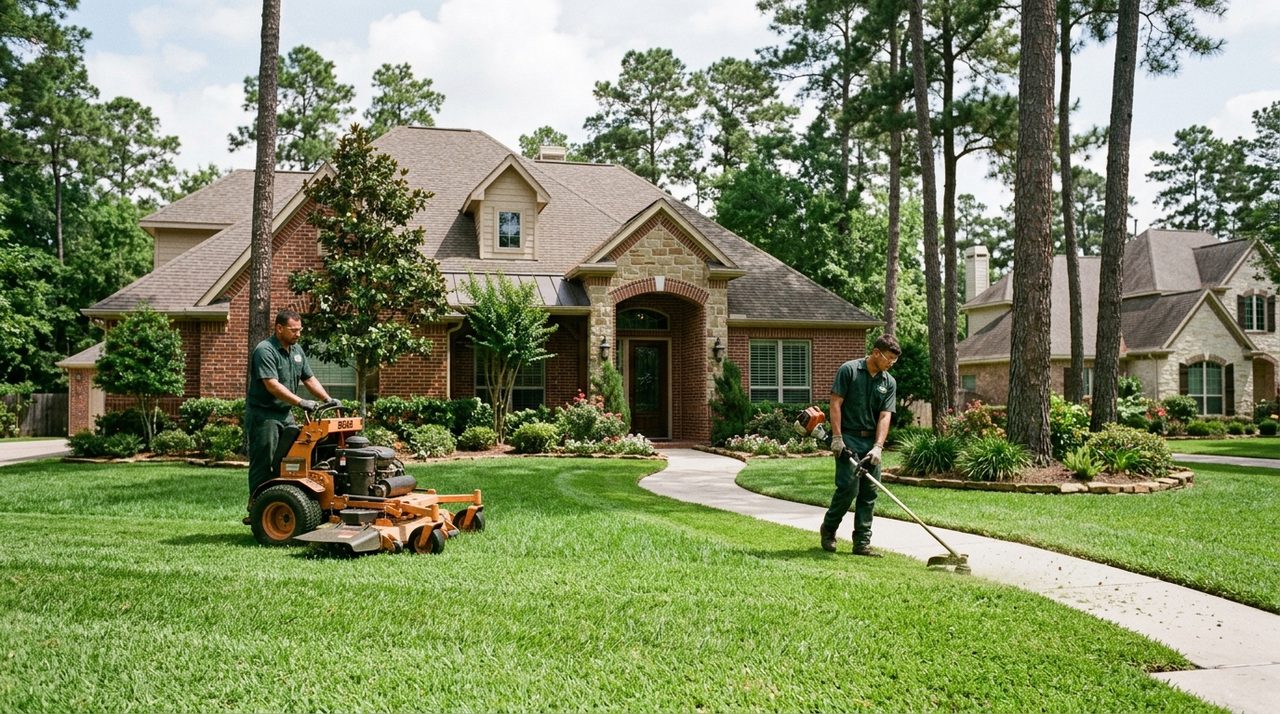
- Median home built
- 2002
- Median home value
- $285,200
- FEMA flood zone
- X (low)
- Typical cost (est.)
- $45–$18,000
- Most common local issue
- Clay-soil drainage ponding on acreage and subdivision lots alike
Ranked by verified Google rating × review volume × verification tier. How we rank →
Some highly-rated pros serve Magnolia from nearby and may not keep a Magnolia street address. Those are listed under "Also serving Magnolia" with their real city and distance, so you always know where each business is based.
Min rating:
5 resultsBased in Magnolia
Closed
37219 FM 1774, Magnolia, TX 77355
Also serving Magnolia
Highly-rated pros based nearby who cover Magnolia. Distance shown from the Magnolia area.
Closed
Serving Magnolia Based in The Woodlands · 3.7 mi away
Closed
Serving Magnolia Based in The Woodlands · 3.9 mi away
Serving Magnolia Based in The Woodlands · 6.3 mi away
Landscapers in Magnolia: What You Should Know
Clay-Soil Ponding on Large Lots Without a Bayou Outfall
Why it matters to you
Magnolia sits on the same expansive Montgomery County black clay that plagues the entire north Houston region — slow-draining, shrink-swell soil that creates standing water after Gulf rain events even though most of the area maps to FEMA Zone X. On the larger acreage tracts west of town, there is often no formal storm-drainage infrastructure to accept a French drain's discharge, so water simply migrates toward the slab or collects in low corners of the yard for days after a storm. Homeowners who installed sod in the 2010s construction boom are now watching grass suffocate in waterlogged beds annually.
What a good pro does
A qualified landscaper will start with a site elevation survey to identify positive flow paths and design dry creek beds or French drain systems that daylight to roadside swales or natural low points on the property — not just neighbor property lines. For typical residential acreage lots in Magnolia, drainage correction projects run an estimated $2,500–$7,500 depending on linear footage and outfall complexity. Grading work that alters drainage on parcels in unincorporated areas should be cleared with Montgomery County Engineering before breaking ground.
Sources: FEMA National Flood Hazard Layer (NFHL), Harris County Flood Control District, Municipal permit office (see area profile)
HOA Approval Maze in Master-Planned Subdivisions vs. No Rules on Acreage
Why it matters to you
Magnolia's housing stock creates a tale of two landscapes: NorthGrove, Magnolia Reserve, and Magnolia Ridge each have mandatory HOA covenants that specify approved turf species, mulch types, tree placement setbacks, and fence or landscape wall heights — and an architectural review committee that must sign off before exterior work begins. Miss that step and a homeowner faces a removal order at their own expense. Meanwhile, a half-mile away on an older acreage parcel, the same scope of work may face zero design restrictions, meaning the landscaper's only obligation is to meet any Montgomery County drainage or grading permit requirements.
What a good pro does
Before pricing any job in a platted Magnolia subdivision, a professional landscaper should pull the recorded deed restrictions and HOA design standards from Montgomery County Clerk records and submit a written ARC application with planting plan and materials list. On unrestricted acreage parcels, that review step goes away, but the contractor should still confirm with the property owner that no deed restrictions were recorded at the time of original subdivision platting — surprises still appear on older rural lots.
Sources: Local HOA / deed restrictions (see area profile), Municipal permit office (see area profile)
Irrigation Permits and TCEQ Licensing on Rapidly Growing Suburban Lots
Why it matters to you
Magnolia's median home was built around 2002, and a large share of the newer master-planned subdivision homes from the 2010s–2020s either have aging original irrigation systems or buyers who are installing one for the first time after purchase. Many homeowners do not realize that Texas law requires a TCEQ-licensed irrigator to design and install a new system, and that backflow prevention devices must comply with TCEQ Chapter 344 and be tested annually by a separately licensed backflow tester. Properties within Magnolia city limits must pull a permit through City of Magnolia; parcels in unincorporated Montgomery County fall under county or district-level requirements.
What a good pro does
Homeowners should ask any landscaper bidding irrigation work to provide their TCEQ Irrigator license number before signing a contract — it is a state-law requirement, not an optional credential. A reputable contractor will also pull the irrigation permit, schedule a backflow test at project completion, and leave the homeowner with documentation for their records. Smart-controller retrofits on existing systems can often be done without a full permit but should still be handled by or under the direct supervision of a licensed irrigator.
Sources: Texas Commission on Environmental Quality, Municipal permit office (see area profile)
Post-Derecho and Post-Freeze Tree Losses on Large Wooded Lots
Why it matters to you
Older ranch-style homes on Magnolia acreage tracts typically sit under mature East Texas pine and hardwood canopy — exactly the tree profiles that suffered the most during the May 2024 derecho and Winter Storm Uri in 2021. Shallow-rooted pines saturated by clay soil toppled onto fences and outbuildings, while freeze-sensitive species like sago palms, esperanza, and bougainvillea that had been established for a decade were wiped out across the area. On large lots, a single tree removal can run an estimated $800–$3,500, and storm-surge pricing after widespread events like Beryl or the derecho compresses contractor availability fast.
What a good pro does
A landscape professional working in Magnolia should steer acreage replanting toward wind-resistant, cold-hardy species suited for USDA Zone 9a — live oak, yaupon holly, and native grasses rather than Bradford pear or Leyland cypress, which become debris hazards. For debris removal after storms, homeowners should get at least two bids quickly because pricing escalates within days of a major event and contractor availability in outlying Montgomery County tightens faster than in the inner loop. Root-zone drainage around remaining large trees is also worth addressing at the same time to reduce topple risk in future saturated-soil events.
Sources: Harris County Flood Control District, FEMA National Flood Hazard Layer (NFHL)
Landscapers in Magnolia: What You Should Know
Hiring landscapers in Magnolia? Magnolia spans a wide range of housing types, from newer master-planned communities like NorthGrove and Magnolia Reserve to older ranch homes and custom builds on rural acreage. Homeowners here face a split landscape: HOA-governed subdivisions with strict approval processes alongside unrestricted parcels where homeowners have broad latitude. Contractors must be comfortable working with both Montgomery County permitting and varied subdivision-specific deed restrictions.
- Housing era
- Mixed — older stock from the 1970s–1990s in the original town area, significant 2000s…
- Foundation
- Predominantly slab-on-grade in post-1980 subdivisions
- Flood zone
- FEMA Zone X (low flood risk) per official NFHL data
- Permits
- City of Magnolia for properties within city limits
Housing stock & systems
Building era
Mixed — older stock from the 1970s–1990s in the original town area, significant 2000s infill, and heavy new construction concentration in the 2010s–2020s in master-planned communities.
Typical style
Texas traditional with brick and stone veneers in newer subdivisions; Craftsman-influenced and modern farmhouse elements in recent builds; ranch-style brick or siding homes on older acreage tracts.
Foundations
Predominantly slab-on-grade in post-1980 subdivisions; pier-and-beam may be found in older or custom acreage homes.
Common systems
Newer homes feature high-efficiency HVAC systems, PEX plumbing, and modern electrical panels; older 1970s–1990s stock may have original HVAC units, copper or CPVC plumbing, and smaller electrical panels that may need upgrades.
What that means for repairs
Older ranch-style homes on acreage are common renovation targets for kitchen and bathroom modernization, HVAC replacement, and electrical panel upgrades. Newer master-planned homes see less renovation but frequent cosmetic upgrades and outdoor living additions.
Permits & restrictions
Permit jurisdiction
City of Magnolia for properties within city limits; Montgomery County Engineering for unincorporated areas and ETJ parcels.
HOA & deed restrictions
No single area-wide HOA. Platted subdivisions each have their own mandatory HOA (e.g., Magnolia Reserve HOA, Magnolia Ridge HOA, NorthGrove HOA). Many acreage parcels and older subdivisions have no HOA. Deed restrictions may still apply on non-HOA lots — check Montgomery County Clerk records for specific parcels.
Historic districts
No historic district designation confirmed. Magnolia is not within the City of Houston and has no known HAHC-designated districts.
Contractor note
Contractors must verify whether a property falls within Magnolia city limits or unincorporated Montgomery County, as permitting requirements and inspections differ. HOA-governed subdivisions often require architectural review committee approval before exterior work begins.
Flood & weather
FEMA flood zone
FEMA Zone X (low flood risk) per official NFHL data. Much of the Magnolia area sits at higher elevations in upstream Montgomery County, away from major bayou floodplains.
Hurricane Harvey impact
No documented widespread structural flooding in the Magnolia area during Hurricane Harvey. None of the major Magnolia HOA or community sources reference Harvey-related rebuilding or large-scale flood damage. Central Montgomery County generally fared better than downstream Harris County bayou corridors, though localized drainage issues on individual properties cannot be ruled out — check specific property history for any claims.
Heat & humidity load
Extended Houston-area summers with high heat and humidity stress HVAC systems year-round. Newer homes with high-efficiency units handle the load well, but older 1970s–1990s stock may need HVAC replacement or duct sealing. Slab foundations on expansive clay soils can shift during summer drought cycles, making foundation monitoring and proper drainage critical.
Working with contractors here
Magnolia's diverse housing stock creates demand for a wide range of services. In newer master-planned communities, contractors frequently handle warranty-related repairs, outdoor living additions (patios, pools, outdoor kitchens), and fence installations that must meet HOA specifications. Older ranch-style homes on acreage generate steady demand for HVAC replacement, roof replacement, electrical panel upgrades, and kitchen/bath remodels. Foundation work is common across all eras due to the expansive clay soils in Montgomery County. Contractors working in HOA subdivisions should budget time for architectural review committee approvals and plan for potentially longer driveways and access considerations on rural acreage properties.
Local Tip
Always ask for a written estimate before work begins. Texas contractors are required to provide one on jobs over $1,000.
About Magnolia
Magnolia spans a wide range of housing types, from newer master-planned communities like NorthGrove and Magnolia Reserve to older ranch homes and custom builds on rural acreage. Homeowners here face a split landscape: HOA-governed subdivisions with strict approval processes alongside unrestricted parcels where homeowners have broad latitude. Contractors must be comfortable working with both Montgomery County permitting and varied subdivision-specific deed restrictions.
- Median year built
- 2002
- Median home value
- $285,200
- Owner-occupied
- 52.3%
- Population
- 3,230
- Housing units
- 1,380
- Median income
- $70,516
Source: U.S. Census Bureau, ACS 5-Year 2023
Flood & storm risk
FEMA Zone XLow flood riskMost of Magnolia maps to FEMA Zone X (low mapped flood risk), but Houston's flash-flood reality means even low-risk blocks benefit from smart drainage and storm-hardened installs.
Source: FEMA National Flood Hazard Layer (NFHL). Flood zones vary by parcel — verify your individual FIRM panel.
Frequently Asked Questions
Do I need a permit from Montgomery County or the City of Magnolia for a retaining wall or drainage correction on my acreage lot?
It depends entirely on whether your parcel falls inside Magnolia city limits or in unincorporated Montgomery County — and many Magnolia-area acreage tracts are the latter. Retaining walls over roughly 30 inches and grading work that materially redirects drainage typically require a permit; in unincorporated areas that goes through Montgomery County Engineering, not the City of Magnolia permit office. Before breaking ground, pull your property's jurisdiction from the Montgomery County Appraisal District records and call the correct desk, because an inspection stop-work order on a rural lot is costly to unwind.
Sources: Municipal permit office (see area profile)
My NorthGrove HOA requires ARC approval before landscape changes — how long does that review usually take, and can my landscaper start prep work while I wait?
Architectural review timelines in NorthGrove and similar Magnolia master-planned communities commonly run two to four weeks depending on submission completeness, and most ARC covenants prohibit any visible exterior work — including grading, bed edging, or material staging — before written approval is issued. Ask your landscaper to provide a full plot plan, plant list, and material specifications with your submission, since incomplete packages routinely restart the clock. Budget the ARC window into your project schedule before signing a contract with a start date.
Sources: Local HOA / deed restrictions (see area profile)
I live on an older 1980s ranch-style acreage lot outside any HOA in Magnolia — do deed restrictions still limit what I can plant or where I can put a fence line?
Possibly yes, even without an active HOA. Older platted subdivisions and some rural tracts in Montgomery County recorded deed restrictions with the county clerk that run with the land indefinitely, covering setbacks, structure heights, and sometimes allowable plant species or fence materials. Search the Montgomery County Clerk's online records by your subdivision name or legal description before assuming full latitude; violations can be enforced by neighboring property owners, not just an HOA board.
Sources: Local HOA / deed restrictions (see area profile)
My landscaper says a new irrigation system on my Magnolia subdivision lot requires a TCEQ-licensed irrigator — is that actually required out here, or just a sales pitch?
It is genuinely required statewide. Texas law mandates that anyone designing and installing a new irrigation system for hire hold a TCEQ Irrigator License, and backflow prevention devices must meet TCEQ Chapter 344 standards and be tested annually by a separately licensed backflow tester — this applies equally in Montgomery County subdivisions as it does inside Houston city limits. The City of Magnolia and Montgomery County Engineering also require a permit for new irrigation installations, so confirm your landscaper either holds the TCEQ irrigator license or is subcontracting to someone who does before work begins.
Sources: Texas Commission on Environmental QualityMunicipal permit office (see area profile)
Roughly how much should I budget for a French drain or drainage correction on a half-acre Magnolia lot, and what time of year makes most sense to schedule it?
For a standard residential lot, French drain and dry-creek drainage corrections are estimated at $2,500–$7,500 depending on linear footage and where the outfall ties in; on a larger half-acre acreage tract with no nearby bayou outfall, costs can run higher if a detention basin or extended swale is needed — treat any quote as a site-specific estimate. Fall (October through November) is the most practical window in Magnolia: summer heat stress on newly disturbed clay makes establishment harder, and scheduling ahead of winter rains lets grading and planted drainage channels settle before the next wet season. Avoid booking drainage work immediately after a wet spring when clay is saturated and heavy equipment will rut the yard significantly.
After the May 2024 derecho took out several large pines on my Magnolia wooded lot, can any landscaper handle the debris removal and replanting, or do I need a certified arborist?
General landscapers can legally handle debris hauling and replanting in Texas, since neither task requires a state license on its own. However, if damaged trees are still partially standing and require aerial cutting near structures, you want a company carrying proper liability insurance and ideally an ISA-certified arborist on staff, because mishandled felling on a rural lot can mean significant property damage with no recourse if coverage is inadequate. For species selection on replacement trees on large Magnolia lots, prioritize species with documented wind resistance — native live oaks, cedar elms, and Texas redbuds outperform shallow-rooted loblolly pines in Montgomery County's clay soil during high-wind events.