4105 FM 2351, Friendswood, TX 77546
Best Landscapers in Friendswood, TX
Friendswood's lots along Clear Creek's tributary network sit on classic Beaumont clay that drains slowly, and even FEMA Zone X parcels — the majority of the city — experienced flash ponding after Harvey and Beryl because surface grades in 1970s-era subdivisions like Wilderness Trails were never engineered for today's rain intensities. Add a patchwork of active subdivision HOAs (West Ranch, Forest of Friendswood, and others) that each carry their own plant-palette and landscape-wall approval requirements, and hiring the right landscaper here means vetting for soil knowledge, drainage experience, and familiarity with Friendswood's own permit office — not Houston's.
Verified against Google Business data
Updated 2026
See the 10 Landscapers Serving Friendswood 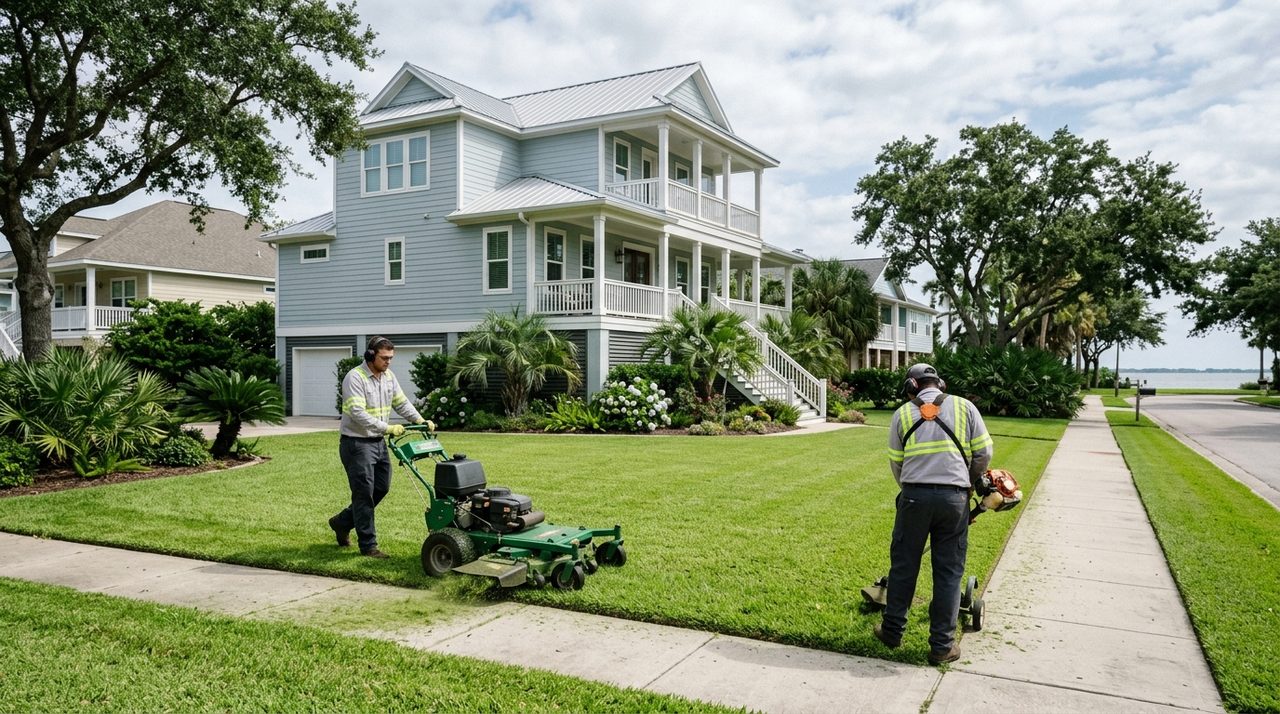
- Median home built
- 1990
- Median home value
- $399,500
- FEMA flood zone
- X (low)
- Typical cost (est.)
- $1.00–$1.75/sq ft sod install; $2,500–$7,500 French drain; $4,500–$18,000 design-build
- Most common local issue
- Clay-soil ponding on low-slope 1970s lots near Clear Creek tributaries
Ranked by verified Google rating × review volume × verification tier. How we rank →
Some highly-rated pros serve Friendswood from nearby and may not keep a Friendswood street address. Those are listed under "Also serving Friendswood" with their real city and distance, so you always know where each business is based.
Min rating:
10 resultsBased in Friendswood
Closed
807 S Friendswood Dr Suite 5, Friendswood, TX 77546
Closed
16911 Townes Rd, Friendswood, TX 77546
203 Laurel Dr, Friendswood, TX 77546
Closed
1620 S Friendswood Dr #149, Friendswood, TX 77546
Also serving Friendswood
Highly-rated pros based nearby who cover Friendswood. Distance shown from the Friendswood area.
Closed
Serving Friendswood Based in Pearland · 3.7 mi away
Open Now
Serving Friendswood Based in Pearland · 3.9 mi away
Closed
Serving Friendswood Based in League City · 4.4 mi away
Serving Friendswood Based in Webster · 5 mi away
Closed
Serving Friendswood Based in Clear Lake · 5.2 mi away
Landscapers in Friendswood: What You Should Know
Chronic Ponding on Low-Slope 1970s Lots
Why it matters to you
Older Friendswood subdivisions like Wilderness Trails were platted on nearly flat Galveston County clay grades that made sense for an earlier era of rainstorms but leave standing water for 24–48 hours after a Gulf rain event. Even properties that map to FEMA Zone X regularly see saturated root zones that kill St. Augustine turf and drown established shrubs, because the Beaumont clay beneath absorbs water so slowly that surface ponding is the rule, not the exception, after anything above two inches of rain.
What a good pro does
A qualified landscaper should begin with a site-level grade survey and a soil-probe assessment before specifying any plantings. French drain corridors or dry creek beds sized for a 10-year storm event — typically $2,500–$7,500 installed on a standard Friendswood residential lot (estimate) — are often the correct first fix, and that drainage work must be designed so it outlets to a legal discharge point without redirecting water onto neighboring properties. The City of Friendswood Building Inspections Department requires a grading/drainage permit for work that materially alters site runoff, so confirm permit scope before breaking ground.
Sources: Municipal permit office (see area profile), Harris County Flood Control District, FEMA National Flood Hazard Layer (NFHL)
Tree & Shrub Roots vs. Slab Foundations Across Three Housing Eras
Why it matters to you
Friendswood's housing stock runs from 1960s pier-and-beam homes in older sections to post-2000 slab-on-grade production houses in West Ranch, and the clay soil's notorious shrink-swell cycle means a live oak or Chinese tallow planted within 10–15 feet of a slab can accelerate differential settlement by drying the clay unevenly under the foundation — a repair that routinely costs far more than the tree ever enhanced the yard. Post-Harvey re-landscaping pressure has pushed some homeowners to plant fast-growing species too close to structures simply to restore privacy quickly.
What a good pro does
A knowledgeable landscaper will specify appropriate setbacks — generally 15 feet minimum from slab edge for large-canopy species — and recommend root barriers for medium-sized trees placed between 10 and 15 feet out. On 1960s Friendswood lots where pier-and-beam construction exists, the calculus differs slightly, but moisture management around the perimeter is equally critical to prevent wood-beam deterioration. Confirming foundation type via Galveston County Appraisal District records before planting recommendations are finalized is a concrete step that protects both homeowner and landscaper.
Sources: International Residential Code (as adopted by City of Houston), Local HOA / deed restrictions (see area profile)
HOA Architectural Review Before Any Landscape Installation
Why it matters to you
Friendswood has no city-wide mandatory HOA, but dozens of subdivision-level associations — West Ranch managed by RealManage, Forest of Friendswood as a recorded Texas nonprofit, and several others with active deed restrictions on file at the Galveston County Clerk — each specify approved turf species, allowable mulch types, fence and landscape-wall height limits, and sometimes even tree placement setbacks from property lines. A landscaper who installs sod, a timber retaining wall, or a new ornamental bed without first pulling the subdivision's CC&Rs risks triggering a removal order that falls entirely on the homeowner.
What a good pro does
Before writing a plant list or ordering materials, any landscaper working in Friendswood should identify the specific subdivision, locate its recorded deed restrictions through the Galveston County Clerk's online deed records, and submit an architectural review application to the active HOA if one exists. West Ranch projects in particular require advance ARC approval with a plat showing proposed plant locations, hardscape dimensions, and material specs. Build a minimum two-to-four week HOA review window into the project timeline so permit pulls and material orders don't get ahead of the approval.
Sources: Local HOA / deed restrictions (see area profile), Municipal permit office (see area profile)
TCEQ-Licensed Irrigation Installs and Backflow Compliance
Why it matters to you
Friendswood's moderate-to-large suburban lots — many in the 8,000–15,000 square foot range in 1990s and 2000s subdivisions — are popular candidates for full in-ground irrigation systems, especially as homeowners invest in outdoor living upgrades in communities like West Ranch. Texas law requires that any irrigation system design and installation be performed by a TCEQ-licensed Irrigator, not a general landscaper, and the City of Friendswood requires a permit before installation begins. Backflow prevention assemblies must meet TCEQ Chapter 344 standards and be tested annually by a separately licensed backflow tester — a requirement many homeowners discover only after the system is already in the ground.
What a good pro does
Confirm that your landscaper either holds a TCEQ Irrigator license directly or has a formal subcontracting relationship with one before any irrigation scope is included in your project contract. The City of Friendswood Building Inspections Department issues the required irrigation permit; do not allow work to begin without the permit card on site. Budget $150–$250 annually (estimate) for the mandatory backflow preventer test, and keep the test reports on file — some Friendswood HOAs and the city's code enforcement office can request proof of current compliance.
Sources: Texas Commission on Environmental Quality, Municipal permit office (see area profile)
Landscapers in Friendswood: What You Should Know
Hiring landscapers in Friendswood? Friendswood is an incorporated city with housing stock spanning from the 1960s through the 2010s, meaning contractors encounter everything from aging pier-and-beam foundations near Clear Creek to modern slab-on-grade production homes in master-planned communities like West Ranch. The city manages its own permitting, and the patchwork of active HOAs across dozens of subdivisions means architectural review requirements vary block by block. Proximity to Clear Creek creates recurring flood concerns in lower-lying sections despite many parcels mapping outside high-risk FEMA zones.
- Housing era
- 1960s–2010s, with major growth phases in the 1970s, 1990s, and 2000s
- Foundation
- Predominantly slab-on-grade (post-1970s production housing)
- Flood zone
- FEMA Zone X (low flood risk) per official NFHL API
- Permits
- City of Friendswood Building Inspections Department (independent city — does not use Houston or…
Housing stock & systems
Building era
1960s–2010s, with major growth phases in the 1970s, 1990s, and 2000s.
Typical style
Suburban traditional brick veneer single-family homes, 1- and 2-story plans with attached garages on moderate to large lots.
Foundations
Predominantly slab-on-grade (post-1970s production housing); some older 1960s-era homes may have pier-and-beam — confirm via Galveston CAD records.
Common systems
Older 1960s–1970s homes: original galvanized or copper plumbing, R-22 HVAC units nearing or past end of life, fuse panels or early breaker panels. 1990s–2010s homes: PVC/PEX plumbing, R-410A HVAC, 200-amp electrical panels. Attic-mounted air handlers are standard across eras.
What that means for repairs
Older subdivisions like Wilderness Trails see frequent HVAC replacements, re-piping from galvanized to PEX, and electrical panel upgrades. Newer master-planned communities like West Ranch focus on cosmetic remodels and outdoor living additions, often requiring HOA architectural review.
Permits & restrictions
Permit jurisdiction
City of Friendswood Building Inspections Department (independent city — does not use Houston or county permitting).
HOA & deed restrictions
No city-wide mandatory HOA. Dozens of subdivision-level HOAs exist, many actively managed (e.g., West Ranch managed by RealManage, Wilderness Trails with its own HOA website, Forest of Friendswood as a formal Texas nonprofit). Some older subdivisions show 'no current contact' on the city's HOA list, indicating defunct or inactive associations. Deed restrictions are common and recorded at the county level.
Historic districts
No historic district designation confirmed. Friendswood is an independent city and not subject to Houston's HAHC jurisdiction.
Contractor note
Contractors must pull permits through the City of Friendswood, not Harris or Galveston County. Many subdivisions require HOA architectural review before exterior work begins — always confirm the specific subdivision's requirements before scheduling.
Flood & weather
FEMA flood zone
FEMA Zone X (low flood risk) per official NFHL API. However, areas near Clear Creek and its tributaries carry significantly higher flood exposure. Property-level risk varies widely — always verify individual parcels, especially in older subdivisions closer to the creek.
Hurricane Harvey impact
Friendswood experienced significant flooding during Hurricane Harvey (2017), particularly in neighborhoods near Clear Creek and low-lying drainage channels. Older subdivisions closer to the creek were hit hardest, while newer elevated master-planned sections fared better. Specific repeatedly flooded streets are not confirmed in available sources — check Galveston County flood control mapping and past seller disclosures for property-level history.
Heat & humidity load
Coastal humidity and extended 95°F+ heat stress HVAC systems heavily, especially attic-mounted air handlers in older homes with inadequate insulation. Slab foundations on expansive clay soils experience seasonal movement during summer drought cycles, potentially affecting door frames and drywall. Roofing materials degrade faster due to UV exposure and Gulf moisture.
Working with contractors here
Friendswood's multi-decade housing stock creates a wide range of service demands. In 1960s–1970s subdivisions, contractors frequently handle whole-house re-piping, HVAC system replacements transitioning from R-22, and electrical panel upgrades from 100-amp to 200-amp service. Post-Harvey, flood remediation, foundation repair, and mold mitigation remain ongoing concerns in creek-adjacent areas. In newer master-planned communities like West Ranch, work tends toward kitchen and bath remodels, outdoor living additions, and fence replacements — all of which typically require HOA architectural approval before starting. Contractors should scope jobs with awareness that the City of Friendswood enforces its own building codes and inspection schedules, which differ from Houston's process.
Local Tip
Always ask for a written estimate before work begins. Texas contractors are required to provide one on jobs over $1,000.
About Friendswood
Friendswood is an incorporated city with housing stock spanning from the 1960s through the 2010s, meaning contractors encounter everything from aging pier-and-beam foundations near Clear Creek to modern slab-on-grade production homes in master-planned communities like West Ranch. The city manages its own permitting, and the patchwork of active HOAs across dozens of subdivisions means architectural review requirements vary block by block. Proximity to Clear Creek creates recurring flood concerns in lower-lying sections despite many parcels mapping outside high-risk FEMA zones.
- Median year built
- 1990
- Median home value
- $399,500
- Owner-occupied
- 76.9%
- Population
- 40,827
- Housing units
- 14,985
- Median income
- $125,052
Source: U.S. Census Bureau, ACS 5-Year 2023
Flood & storm risk
FEMA Zone XLow flood riskMost of Friendswood maps to FEMA Zone X (low mapped flood risk), but Houston's flash-flood reality means even low-risk blocks benefit from smart drainage and storm-hardened installs; risk climbs sharply on blocks nearest Clear Creek, where it varies parcel to parcel.
Source: FEMA National Flood Hazard Layer (NFHL). Flood zones vary by parcel — verify your individual FIRM panel.
Frequently Asked Questions
Do I need a permit from the City of Friendswood to install a retaining wall or do any major regrading in my yard?
Yes — Friendswood operates its own Building Inspections Department, completely separate from Harris or Galveston County, so all permits must be pulled directly through the city. Retaining walls exceeding 30 inches in height and grading work that materially alters drainage patterns typically require a permit and inspection; contact the City of Friendswood Building Inspections office to confirm thresholds before your landscaper breaks ground. Skipping this step risks a stop-work order and forced removal, which has happened on regrading jobs in older subdivisions like Wilderness Trails where neighbors share tight lot drainage.
Sources: Municipal permit office (see area profile)
My Friendswood home was built in the early 1970s — are there any landscaping considerations specific to that era of construction I should flag for a landscaper?
Homes from Friendswood's 1960s–1970s growth phase often have shallower original grading that wasn't designed for today's Gulf rain events, so a landscaper should walk the full lot perimeter and check how runoff currently exits before installing new beds or hardscape. Some of these older lots also sit closest to Clear Creek's tributary network, where parcel-level flood risk can be higher than the city's overall FEMA Zone X designation suggests. If your home is in a 1970s subdivision and you're adding significant bed area or turf, ask the landscaper specifically how the new design handles a 4-inch-per-hour downpour without redirecting flow onto neighboring property.
Sources: FEMA National Flood Hazard Layer (NFHL)Harris County Flood Control District
My subdivision in Friendswood requires HOA approval before landscaping changes — how long does that process usually take, and should my landscaper handle it?
Review timelines vary by subdivision: active HOAs like West Ranch (managed by RealManage) typically respond within 10–30 days, while older associations in subdivisions like Forest of Friendswood may operate on their own schedules. A landscaper experienced in Friendswood should be familiar with submitting plat drawings, plant lists, and material specs to the architectural review committee — it is reasonable to ask during your estimate whether they handle that paperwork or expect you to. Factor in at least 3–4 weeks of approval runway before scheduling installation, especially for projects involving landscape walls, large tree removals, or changes visible from the street.
Sources: Local HOA / deed restrictions (see area profile)
After Hurricane Beryl hit in 2024, several large trees in my Friendswood yard either toppled or lost major limbs — what should I ask a landscaper when replanting to avoid the same damage?
Ask specifically whether the replacement species is rated for sustained wind loads above 75 mph and how well it anchors in clay soil — Bradford pears and Leyland cypress are common upsells that perform poorly in both categories and should be avoided. Wind-tolerant native and adapted choices for the SE Houston area include live oak, Shumard oak, and yaupon holly, which have deeper or more flexible root systems than the species Beryl took down across the metro. Also ask whether the planter will account for root-zone drainage before backfilling, because trees in saturated Beaumont clay with poor drainage are far more likely to topple in the next storm.
What's a realistic cost estimate and timeline for a full front-and-back landscape design-and-install in a Friendswood subdivision like West Ranch?
For a standard Friendswood suburban lot in a community like West Ranch, a full design-and-install project including plantings, mulched beds, sod, and basic hardscape (no pool or major retaining walls) typically runs an estimated $6,000–$14,000, with projects that include irrigation and ornamental trees at the higher end of the $4,500–$18,000 metro range. Timeline from signed contract to completion is typically 3–6 weeks once HOA architectural review is cleared, which itself can add 2–4 weeks before a shovel goes in the ground. Get the HOA approval process started before you finalize the plant list, because West Ranch's architectural review committee has historically required specific mulch colors and may restrict certain tree placements near easements.
Sources: Local HOA / deed restrictions (see area profile)Municipal permit office (see area profile)
Is there a best time of year to install St. Augustine sod or do major planting in Friendswood, given the heat and occasional freeze risk?
The safest planting windows in Friendswood are mid-March through May and September through mid-October — spring installs give roots time to establish before peak 100°F-index July heat, while fall installs avoid both summer stress and freeze exposure. Avoid planting cold-sensitive tropicals like bougainvillea or sago palm until after the last average frost date (mid-February in Zone 9a/9b), and be aware that events like Winter Storm Uri in February 2021 can reach far below that threshold, so ask your landscaper to explain each plant's cold hardiness before committing. St. Augustine sod laid in June or July in full sun on Friendswood's clay soil will require aggressive irrigation for the first 4–6 weeks to survive, which matters if a MUD or city water restriction is active.