Closed
1413 Upland Dr, Houston, TX 77043
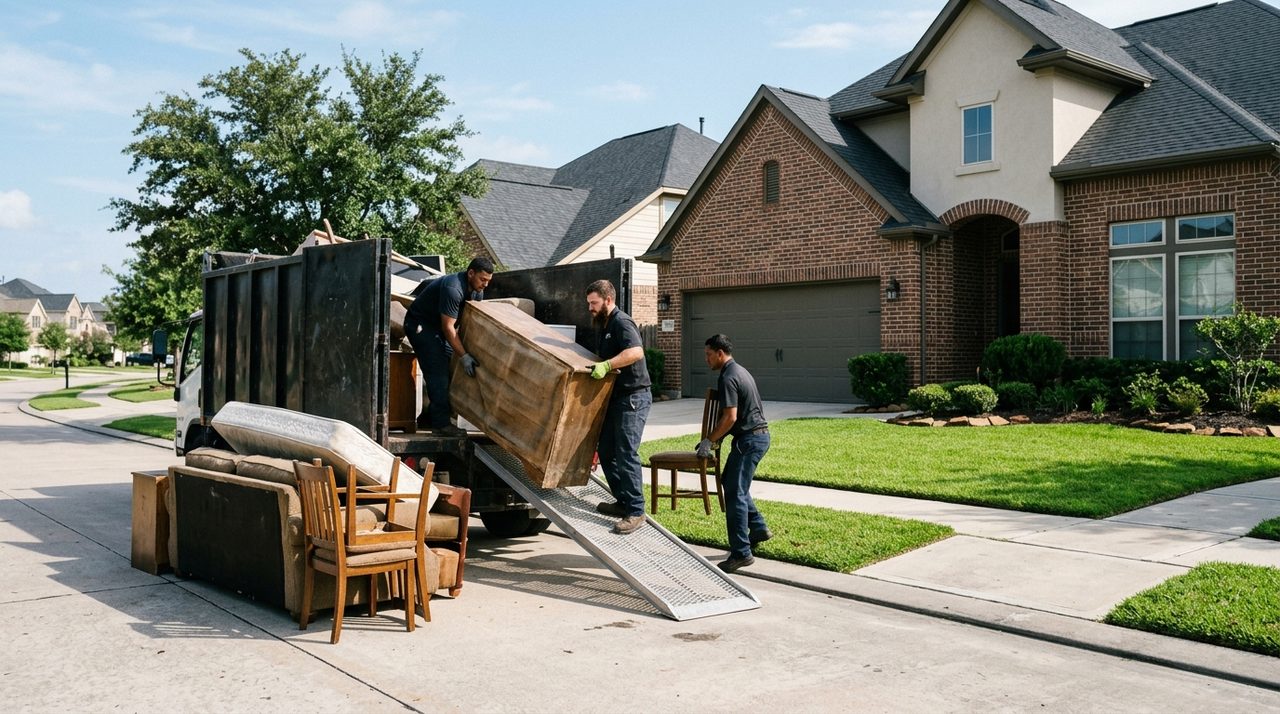
Spring Branch's 1950s–1960s brick ranch homes are deep in a renovation wave — re-plumbing, panel upgrades, HVAC swaps, and full teardown-rebuilds are happening block by block — and each project leaves behind debris loads that City of Houston bulk collection was never sized to handle. The mix of unrenovated originals next to freshly gut-renovated properties means a single street can generate everything from cast-iron drain pipes and old galvanized supply lines to whole-kitchen demolition debris in the same week. Understanding how disposal rules, HOA deed restrictions, and construction debris pricing actually work here saves Spring Branch homeowners real money and avoids avoidable fines.
Ranked by verified Google rating × review volume × verification tier. How we rank →
Some highly-rated pros serve Spring Branch from nearby and may not keep a Spring Branch street address. Those are listed under "Also serving Spring Branch" with their real city and distance, so you always know where each business is based.
1413 Upland Dr, Houston, TX 77043
1740 Elmview Dr, Houston, TX 77080
1729 Brittmoore Rd B5, Houston, TX 77043
920 Memorial City Way, Houston, TX 77024
800 Town and Country Blvd Suite 500, Houston, TX 77024
Highly-rated pros based nearby who cover Spring Branch. Distance shown from the Spring Branch area.
Serving Spring Branch Based in Lazybrook / Timbergrove · 1.4 mi away
Serving Spring Branch Based in Lazybrook / Timbergrove · 2 mi away
Serving Spring Branch Based in Brookhollow · 2.8 mi away
Serving Spring Branch Based in Jersey Village · 2.9 mi away
Serving Spring Branch Based in Brookhollow · 3.6 mi away
Why it matters to you
Spring Branch's ongoing teardown-rebuild and whole-house renovation activity — replacing galvanized supply lines, pulling cast-iron drains, swapping 60-amp panels — routinely leaves tile, lumber, old cabinetry, and piping staged in driveways or backyards for homeowners to deal with after the trade contractor has moved on. Because City of Houston scheduled bulk pickup runs on a limited route cycle and does not accept mixed construction and demolition debris, that pile can sit for weeks unless a private hauler is called. Mixing C&D material with standard household junk also triggers separate pricing at TCEQ-permitted transfer stations like Westpark and McCarty Road, catching homeowners off guard.
What a good pro does
A reputable Spring Branch hauler will sort on-site before loading — separating concrete, tile, and metal pipe (priced by the ton, roughly $60–$120/ton above base rates, estimated) from standard household junk — and will document disposal at a TCEQ-registered solid waste facility. Ask for the facility name before booking; illegal dumping is a Class B misdemeanor under Texas Health and Safety Code §365.012, and the liability can follow the property address.
Sources: Texas Commission on Environmental Quality, City of Houston Permitting Center, Municipal permit office (see area profile)
Why it matters to you
A significant share of Spring Branch's original brick ranch homes have never had a full interior renovation, meaning kitchen cabinets, window trim, and baseboards may date to the pre-1978 era when lead-based paint was still in use. When a whole-house clearout or estate cleanout involves painted wood furniture, built-in cabinetry, or older decorative items from these homes, EPA lead-safe rules govern how those materials should be handled, bagged, and disposed — rules that standard junk removal crews may not be trained to follow if they're treating the job like a straightforward garage cleanout.
What a good pro does
Before scheduling a full interior clearout of any unrenovated Spring Branch original, ask the hauler directly whether their crew is aware of EPA Renovation, Repair, and Painting (RRP) guidelines for debris handling and whether they separate suspected lead-painted materials for proper disposal. This is especially important for estate clearouts where long-term homeowners may have decades of painted furniture and cabinetry in storage. The City of Houston Permitting Center covers this jurisdiction, and disposal must go to a TCEQ-permitted facility equipped to accept the waste stream.
Sources: EPA Lead Renovation, Repair and Painting (RRP) Rule, Municipal permit office (see area profile), Texas Commission on Environmental Quality
Why it matters to you
Spring Branch sits on the same Houston Black Beaumont clay Vertisol that heaves and cracks patios, driveways, and walkways on a years-long shrink-swell cycle. On the neighborhood's original 1950s–1960s slab-on-grade properties, driveways and patio slabs are now 60-plus years old and frequently need replacement — generating broken concrete rubble that is dense, heavy, and explicitly excluded from standard junk-removal truck pricing. Homeowners who book a standard load and discover the hauler won't touch the concrete without an upcharge are often blindsided, especially when a foundation repair or driveway replacement project leaves a pile behind.
What a good pro does
Concrete disposal is priced separately by weight at Houston-area transfer stations — budget an estimated $60–$120 per ton on top of base haul fees, and a typical residential driveway replacement can generate two or more tons of rubble. Get an itemized quote that specifies whether concrete is included, excluded, or priced per ton before any hauler loads the first piece. Haulers must transport to a TCEQ-permitted C&D facility, not a general municipal solid waste site, to stay compliant.
Sources: Texas Commission on Environmental Quality, Municipal permit office (see area profile)
Why it matters to you
Spring Branch has no single area-wide HOA, but at least six mandatory HOAs with recorded deed restrictions operate within the broader neighborhood — including Spring Branch Estates and Spring Branch Estates II — and voluntary civic associations cover much of the older residential core. Rules on roll-off container placement, curbside debris duration, and prior approval requirements differ subdivision by subdivision and are not always obvious from street appearance. A homeowner in a mandatory HOA who leaves a loaded roll-off in the driveway overnight without approval can face fines that the hauler won't absorb.
What a good pro does
Before booking any dumpster drop or scheduling a multi-load curbside staging for a renovation clearout, pull your property's deed restrictions from Harris County Clerk records to confirm whether a mandatory HOA applies and what the debris staging rules actually say. Even where only a voluntary civic association is present, checking with neighbors first avoids friction. Good junk-removal companies operating in Spring Branch regularly ask about HOA status upfront and can adjust to same-day load-and-go service where overnight staging is prohibited.
Sources: Local HOA / deed restrictions (see area profile), Municipal permit office (see area profile)
Hiring junk removal in Spring Branch? Spring Branch's housing stock is dominated by 1950s–1960s single-family brick ranch homes on slab foundations, creating consistent demand for foundation repair, re-plumbing, and electrical upgrades. Ongoing teardown-and-rebuild activity means contractors regularly encounter both vintage systems and modern infill construction side by side. Deed restrictions and HOA rules vary subdivision by subdivision, so contractors should verify requirements on a per-project basis.
Building era
Primarily 1950s–1960s, with significant infill and townhome construction from the 2000s onward.
Typical style
One-story brick ranch houses (original stock); two-story contemporary/transitional homes and townhomes (infill).
Foundations
Predominantly concrete slab-on-grade for original 1950s–1960s homes; some pier-and-beam in earlier or custom structures. Confirm per-property via inspection or appraisal records.
Common systems
Original homes often have galvanized steel or cast-iron drain plumbing, older electrical panels (60–100 amp), and aging central HVAC units. Many properties have been partially updated but may still have legacy piping and wiring. Newer infill homes feature modern PEX plumbing, 200-amp panels, and high-efficiency HVAC systems.
What that means for repairs
Teardown-and-rebuild activity is very common as lot values support new construction. Remaining original homes frequently undergo whole-house renovations including re-plumbing (replacing galvanized lines), electrical panel upgrades, HVAC replacement, and kitchen/bath remodels. Foundation leveling is a recurring need on slab homes due to expansive clay soils.
Permit jurisdiction
City of Houston — Houston Permitting Center (Spring Branch is within Houston city limits).
HOA & deed restrictions
No single area-wide mandatory HOA. Voluntary civic associations (e.g., Spring Branch Civic Association, Spring Branch Oaks Civic Association) cover much of the older residential area. Some platted subdivisions have mandatory HOAs with recorded deed restrictions and mandatory assessments (e.g., Spring Branch Estates, Spring Branch Estates II). At least six mandatory HOAs are registered in the broader Spring Branch area. Deed restrictions are common at the subdivision level but vary by plat—check Harris County Clerk records for each property.
Historic districts
No City of Houston historic district designation confirmed.
Contractor note
Because deed restrictions and HOA requirements vary by subdivision, contractors should confirm any architectural review, fence/accessory structure, and material restrictions before beginning work. The City of Houston permitting process applies to all structural, electrical, plumbing, and mechanical work.
FEMA flood zone
FEMA Zone X (low flood risk) per the official NFHL API. However, Spring Branch is bisected by several tributaries of White Oak Bayou and Spring Branch Creek, and localized street flooding can still occur during heavy rain events. Property-level flood risk should be verified, especially for lots near drainage channels.
Hurricane Harvey impact
Research did not return specific Harvey damage documentation for this civic-association-defined area of Spring Branch. Broader media and City of Houston reporting indicate that portions of the Spring Branch area experienced significant flooding during Harvey, particularly near bayou tributaries and low-lying streets. Homeowners and contractors should check individual property flood claims history through FEMA and the Harris County Flood Control District for site-specific impact data.
Heat & humidity load
Extended Houston summers with sustained 95°F+ temperatures and high humidity stress aging HVAC systems and accelerate attic insulation degradation in 1950s–1960s ranch homes. Slab-on-grade foundations on expansive clay soils are vulnerable to differential settlement during summer drought cycles. Exterior paint and caulking on older brick veneer homes deteriorate quickly in UV-intense conditions.
Working with contractors here
The most common work in Spring Branch involves updating the mechanical and plumbing systems in 1950s–1960s ranch homes—re-plumbing galvanized supply lines, replacing cast-iron drains, upgrading electrical panels, and installing modern HVAC systems. Foundation repair is a perennial need due to expansive clay soils and slab-on-grade construction. Teardown-and-rebuild projects are frequent, requiring contractors familiar with City of Houston new-construction permitting and lot-specific deed restriction compliance. For renovation jobs on older homes, contractors should budget for potential asbestos abatement (siding, flooring, duct insulation) and lead paint remediation. Scoping should account for the wide variation between unrenovated originals and partially updated homes on the same block.
Local Tip
Always ask for a written estimate before work begins. Texas contractors are required to provide one on jobs over $1,000.
Spring Branch's housing stock is dominated by 1950s–1960s single-family brick ranch homes on slab foundations, creating consistent demand for foundation repair, re-plumbing, and electrical upgrades. Ongoing teardown-and-rebuild activity means contractors regularly encounter both vintage systems and modern infill construction side by side. Deed restrictions and HOA rules vary subdivision by subdivision, so contractors should verify requirements on a per-project basis.
Source: U.S. Census Bureau, ACS 5-Year 2023
Most of Spring Branch maps to FEMA Zone X (low mapped flood risk), but Houston's flash-flood reality means even low-risk blocks benefit from smart drainage and storm-hardened installs.
Source: FEMA National Flood Hazard Layer (NFHL). Flood zones vary by parcel — verify your individual FIRM panel.
Sources: Texas Commission on Environmental QualityCity of Houston Permitting Center
Sources: EPA Lead Renovation, Repair and Painting (RRP) Rule
Sources: FEMA National Flood Hazard Layer (NFHL)Harris County Flood Control District
Sources: Local HOA / deed restrictions (see area profile)
Sources: Texas Commission on Environmental QualityCity of Houston Permitting Center