Closed
20510 FM 1488, Magnolia, TX 77355
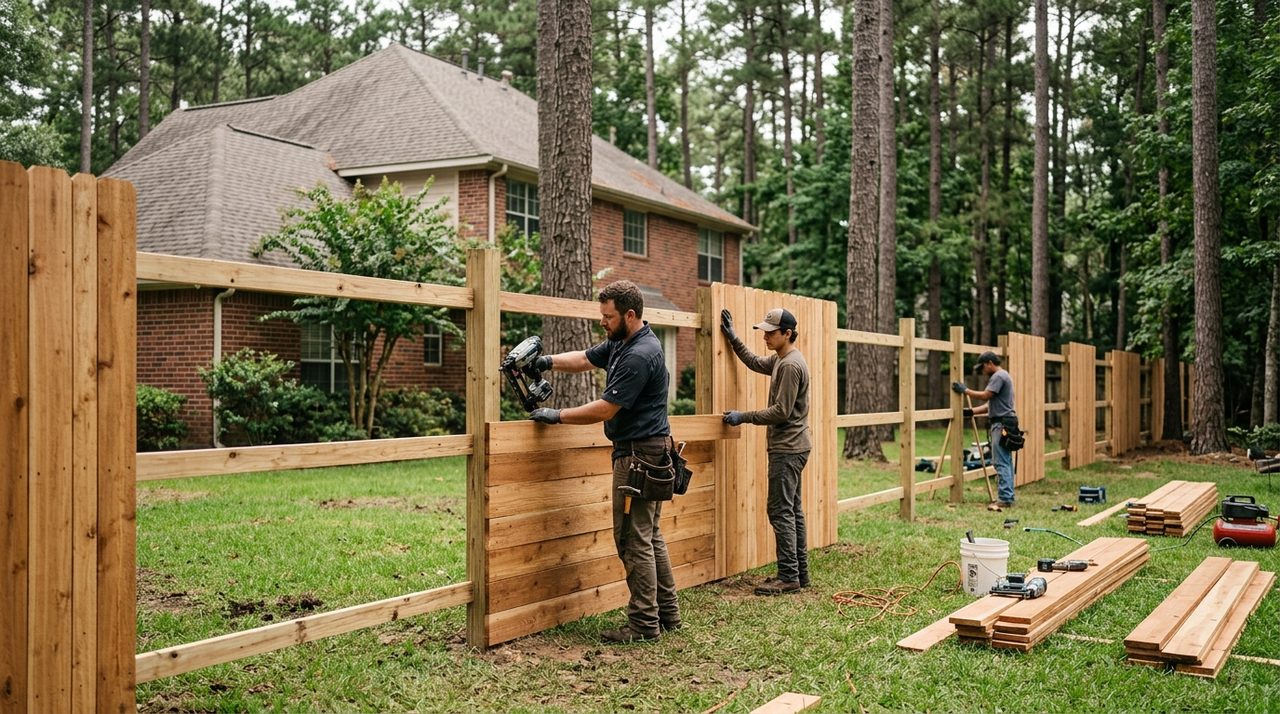
Magnolia, TX sits on Montgomery County's expansive clay soils and spans everything from NorthGrove's HOA-governed streets to decades-old ranch tracts with no deed restrictions — meaning a fence job here can range from a simple property-line replacement on unrestricted acreage to a multi-step architectural review process before a single post is set. Whether you're in Magnolia's city limits or on an unincorporated county parcel, understanding which rules apply to your specific lot is the first step to avoiding a costly redo.
Ranked by verified Google rating × review volume × verification tier. How we rank →
Some highly-rated pros serve Magnolia from nearby and may not keep a Magnolia street address. Those are listed under "Also serving Magnolia" with their real city and distance, so you always know where each business is based.
20510 FM 1488, Magnolia, TX 77355
28908 Richard Kaye Ln Suite B, Pinehurst, TX 77362
Highly-rated pros based nearby who cover Magnolia. Distance shown from the Magnolia area.
Serving Magnolia Based in The Woodlands · 0.2 mi away
Serving Magnolia Based in The Woodlands · 3 mi away
Serving Magnolia Based in The Woodlands · 3.1 mi away
Serving Magnolia Based in The Woodlands · 6.4 mi away
Why it matters to you
The same expansive Beaumont-series clay that makes foundation work a constant in Montgomery County will push fence posts out of alignment within a few seasons if they're set with standard shallow concrete footings. In Magnolia's post-2000 master-planned neighborhoods — where slab-on-grade construction dominates and native clay sits just beneath landscaped yards — posts tend to lean noticeably after the first drought-to-heavy-rain cycle, often pulling pickets loose or cracking concrete collars entirely.
What a good pro does
A knowledgeable fence builder working Magnolia lots will dig posts to at least 30–36 inches and use a tapered or flared concrete footing that resists clay uplift better than a straight-sided pour. On older 1970s–1990s ranch-style acreage tracts where drainage is less engineered, expect the installer to also assess low spots before placing the fence line, since standing water after a rain accelerates post rot and worsens heave cycles. Post replacement in this market typically runs $150–$300 per post including concrete — budget that per post if selective repairs are needed.
Sources: International Residential Code (as adopted by City of Houston), Harris County Flood Control District
Why it matters to you
NorthGrove, Magnolia Reserve, Magnolia Ridge, and similar subdivisions each maintain their own architectural review committee (ARC) that governs fence height, material (commonly cedar board-on-board, with chain-link prohibited facing streets), picket orientation, and sometimes stain color. Homeowners who skip ARC approval and pull a permit first — or worse, install without either — can face mandatory removal orders and fines, since the HOA's deed restrictions are legally recorded covenants that run with the land regardless of who owns it.
What a good pro does
Before any contractor sets foot on your lot in a platted Magnolia subdivision, pull the recorded deed restrictions from the Montgomery County Clerk's records and submit an ARC application with a site plan and material spec sheet. Many Magnolia ARCs require 30-day review windows, so a fence project that looks like a two-week job can realistically take six weeks start to finish. A contractor familiar with these communities will have ARC-ready documentation packets and can flag whether your specific HOA bans pressure-treated pine in favor of cedar.
Sources: Local HOA / deed restrictions (see area profile), Municipal permit office (see area profile)
Why it matters to you
Magnolia's city limits are not coterminous with the zip code — large portions of the 77354 and 77355 areas are actually unincorporated Montgomery County parcels, not City of Magnolia properties. That distinction matters because a fence on a city-limit parcel is permitted through the City of Magnolia's building department, while a fence 200 feet away on an unincorporated tract routes through Montgomery County Engineering, with different forms, fees, and inspection schedules. Contractors who don't verify this upfront can pull the wrong permit or skip one entirely on a parcel that actually required it.
What a good pro does
Ask your contractor to confirm your parcel's jurisdiction using the Montgomery County Appraisal District's online map or your property's deed before the contract is signed. For fences inside city limits, the City of Magnolia regulates heights and setbacks; for county parcels, Montgomery County Engineering's standards apply. Texas has no state-level fence-contractor license through TDLR, so the permit is the primary consumer protection — don't waive it in exchange for a lower quote.
Sources: Municipal permit office (see area profile), City of Houston Permitting Center
Why it matters to you
Magnolia is far enough inland that it sits outside TWIA's coastal wind-insurance territory, but the May 2024 derecho that swept the Houston metro delivered 70–90 mph gusts across Montgomery County, toppling thousands of standard 6-foot board-on-board privacy fences whose posts were undersized or set in inadequate concrete. On Magnolia's acreage lots, where fence runs can extend 300–500 linear feet without a corner post to anchor tension, a poorly set run can cascade in a single storm event.
What a good pro does
On long fence runs — common on Magnolia's rural acreage parcels — specify corner and end posts at 4×6 or steel-sleeve construction rather than standard 4×4, and insist on a minimum 24-inch concrete footing depth with diagonal bracing on gate posts. For privacy fences in open areas, a board-on-board pattern with a small gap between pickets provides modest wind relief compared to a flush shadowbox. Storm damage replacement in the Houston metro typically runs $3,000–$8,000 for an average suburban lot — investing in better post specs upfront is cheaper than a post-derecho full replacement.
Sources: Texas Windstorm Insurance Association (TWIA), International Residential Code (as adopted by City of Houston)
Hiring fence builders in Magnolia? Magnolia spans a wide range of housing types, from newer master-planned communities like NorthGrove and Magnolia Reserve to older ranch homes and custom builds on rural acreage. Homeowners here face a split landscape: HOA-governed subdivisions with strict approval processes alongside unrestricted parcels where homeowners have broad latitude. Contractors must be comfortable working with both Montgomery County permitting and varied subdivision-specific deed restrictions.
Building era
Mixed — older stock from the 1970s–1990s in the original town area, significant 2000s infill, and heavy new construction concentration in the 2010s–2020s in master-planned communities.
Typical style
Texas traditional with brick and stone veneers in newer subdivisions; Craftsman-influenced and modern farmhouse elements in recent builds; ranch-style brick or siding homes on older acreage tracts.
Foundations
Predominantly slab-on-grade in post-1980 subdivisions; pier-and-beam may be found in older or custom acreage homes.
Common systems
Newer homes feature high-efficiency HVAC systems, PEX plumbing, and modern electrical panels; older 1970s–1990s stock may have original HVAC units, copper or CPVC plumbing, and smaller electrical panels that may need upgrades.
What that means for repairs
Older ranch-style homes on acreage are common renovation targets for kitchen and bathroom modernization, HVAC replacement, and electrical panel upgrades. Newer master-planned homes see less renovation but frequent cosmetic upgrades and outdoor living additions.
Permit jurisdiction
City of Magnolia for properties within city limits; Montgomery County Engineering for unincorporated areas and ETJ parcels.
HOA & deed restrictions
No single area-wide HOA. Platted subdivisions each have their own mandatory HOA (e.g., Magnolia Reserve HOA, Magnolia Ridge HOA, NorthGrove HOA). Many acreage parcels and older subdivisions have no HOA. Deed restrictions may still apply on non-HOA lots — check Montgomery County Clerk records for specific parcels.
Historic districts
No historic district designation confirmed. Magnolia is not within the City of Houston and has no known HAHC-designated districts.
Contractor note
Contractors must verify whether a property falls within Magnolia city limits or unincorporated Montgomery County, as permitting requirements and inspections differ. HOA-governed subdivisions often require architectural review committee approval before exterior work begins.
FEMA flood zone
FEMA Zone X (low flood risk) per official NFHL data. Much of the Magnolia area sits at higher elevations in upstream Montgomery County, away from major bayou floodplains.
Hurricane Harvey impact
No documented widespread structural flooding in the Magnolia area during Hurricane Harvey. None of the major Magnolia HOA or community sources reference Harvey-related rebuilding or large-scale flood damage. Central Montgomery County generally fared better than downstream Harris County bayou corridors, though localized drainage issues on individual properties cannot be ruled out — check specific property history for any claims.
Heat & humidity load
Extended Houston-area summers with high heat and humidity stress HVAC systems year-round. Newer homes with high-efficiency units handle the load well, but older 1970s–1990s stock may need HVAC replacement or duct sealing. Slab foundations on expansive clay soils can shift during summer drought cycles, making foundation monitoring and proper drainage critical.
Working with contractors here
Magnolia's diverse housing stock creates demand for a wide range of services. In newer master-planned communities, contractors frequently handle warranty-related repairs, outdoor living additions (patios, pools, outdoor kitchens), and fence installations that must meet HOA specifications. Older ranch-style homes on acreage generate steady demand for HVAC replacement, roof replacement, electrical panel upgrades, and kitchen/bath remodels. Foundation work is common across all eras due to the expansive clay soils in Montgomery County. Contractors working in HOA subdivisions should budget time for architectural review committee approvals and plan for potentially longer driveways and access considerations on rural acreage properties.
Local Tip
Always ask for a written estimate before work begins. Texas contractors are required to provide one on jobs over $1,000.
Magnolia spans a wide range of housing types, from newer master-planned communities like NorthGrove and Magnolia Reserve to older ranch homes and custom builds on rural acreage. Homeowners here face a split landscape: HOA-governed subdivisions with strict approval processes alongside unrestricted parcels where homeowners have broad latitude. Contractors must be comfortable working with both Montgomery County permitting and varied subdivision-specific deed restrictions.
Source: U.S. Census Bureau, ACS 5-Year 2023
Most of Magnolia maps to FEMA Zone X (low mapped flood risk), but Houston's flash-flood reality means even low-risk blocks benefit from smart drainage and storm-hardened installs.
Source: FEMA National Flood Hazard Layer (NFHL). Flood zones vary by parcel — verify your individual FIRM panel.
Sources: Municipal permit office (see area profile)
Sources: Local HOA / deed restrictions (see area profile)
Sources: Local HOA / deed restrictions (see area profile)