10310 Telephone Rd, Houston, TX 77075
Best Appliance Repair in South Houston, TX
South Houston's 1950s–1970s slab-on-grade homes sit in FEMA Zone AE, meaning appliances here face a triple threat: flood exposure that voids manufacturer warranties, seasonal slab movement on expansive Harris County clay soils that walks washers off-level, and aging 100-amp electrical panels that can't cleanly power modern appliance control boards. This page cuts through the generic advice to explain exactly what those realities mean for your refrigerator, washer, or dishwasher — and what to confirm before any repair technician touches a gas line in this separately incorporated city.
Verified against Google Business data
Updated 2026
See the 10 Appliance Repair Serving South Houston 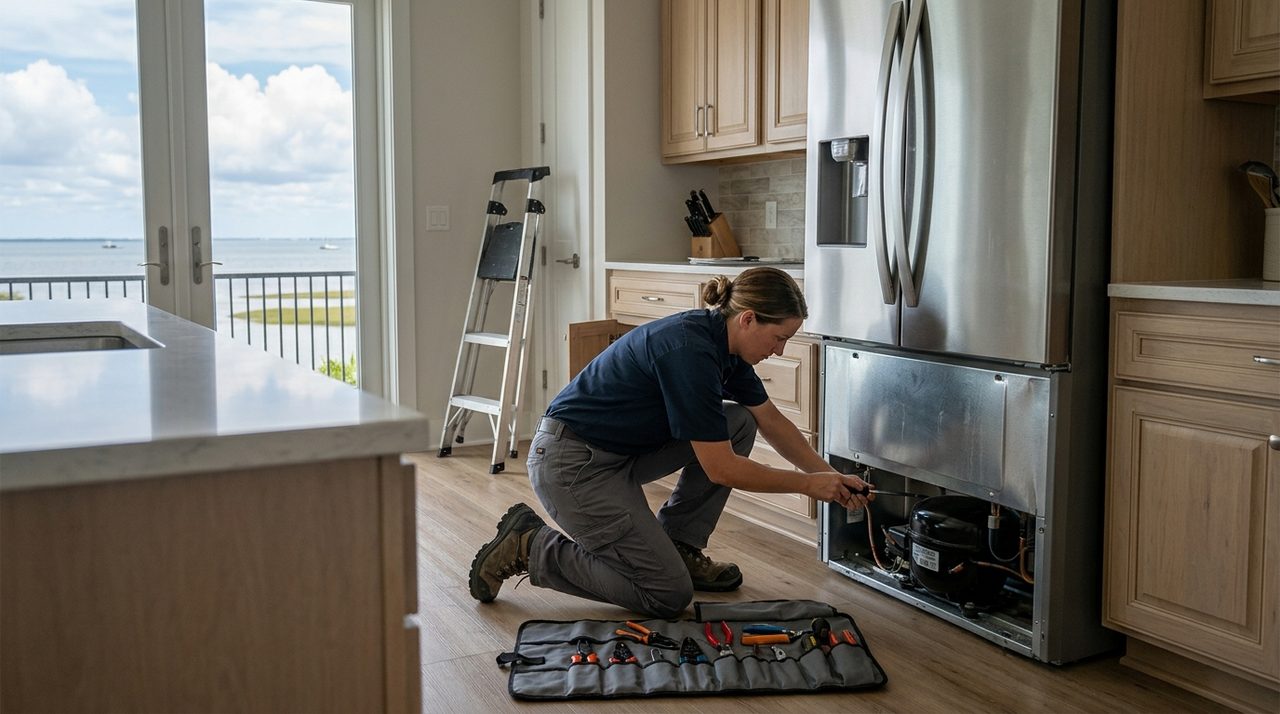
- Median home built
- 1969
- Median home value
- $176,100
- FEMA flood zone
- AE (high)
- Typical repair cost (est.)
- $150–$650
- Most common local issue
- Flood-exposed appliance bases with latent motor and control-board corrosion from Harvey and repeat AE-zone events
Ranked by verified Google rating × review volume × verification tier. How we rank →
Min rating:
10 results Closed
2931 Spencer Hwy, Pasadena, TX 77504
Open Now
3222 Burke Rd Suite 209E, Pasadena, TX 77504
15255 Gulf Fwy #120C, Houston, TX 77034
Closed
4417 Spencer Hwy, Pasadena, TX 77504
Closed
10216 Almeda Genoa Rd, Houston, TX 77075
Closed
1309 College Ave, South Houston, TX 77587
9189 Winkler Dr K, Houston, TX 77017
Open Now
1603 Spencer Hwy, South Houston, TX 77587
Closed
4405 Telephone Rd, Houston, TX 77087
Appliance Repair in South Houston: What You Should Know
Harvey Flooding Left Hidden Corrosion Inside Appliances Still Running Today
Why it matters to you
South Houston's FEMA Zone AE designation reflects real, repeated flooding — Tax Day 2016, Harvey 2017, and subsequent events pushed water into ground-floor laundry rooms, under kitchen cabinets, and into garage utility areas across this city's postwar housing stock. Appliances that sat in even a few inches of floodwater absorb moisture into motor windings and control-board connectors; manufacturers explicitly void warranties after flood exposure, and corrosion damage often stays latent for months or years before the appliance fails mid-cycle.
What a good pro does
A knowledgeable technician will inspect the base frame, motor housing, and wiring harness for rust staining and oxidized connectors before quoting a repair — not just the presenting symptom. On a washing machine or dishwasher in a South Houston home that's been through Harvey and is still on original 1960s–1970s plumbing, the honest conversation is repair-versus-replace: a $300–$500 bearing job on a flood-compromised unit of that vintage often isn't cost-effective.
Sources: FEMA National Flood Hazard Layer (NFHL), Municipal permit office (see area profile)
Clay Slab Heave Walks Front-Load Washers Off-Level and Destroys Bearings Early
Why it matters to you
The expansive Beaumont/Houston Black clay soil under South Houston's slab foundations heaves and settles with every wet-dry cycle — the same mechanism that keeps foundation repair contractors busy here year-round. Even a quarter-inch out-of-level across the washer footprint is enough to trigger violent spin-cycle vibration in front-load machines, and that vibration grinds down drum bearings and tears door gaskets far faster than the national average service life. Stacked washer-dryer units in closets are especially vulnerable because even small level changes amplify resonance.
What a good pro does
A repair call that includes re-leveling the machine to the current slab plane — not just replacing the worn bearing — is the only durable fix. Good technicians use a digital level, adjust all four feet, and verify spin balance before signing off. Because South Houston slabs continue to move seasonally, homeowners should recheck machine level each spring and fall and avoid permanently anchoring stacked units in ways that prevent re-leveling.
100-Amp Panels in 1950s–1960s Homes Can't Cleanly Power Modern Appliance Electronics
Why it matters to you
A large share of South Houston's housing stock was built with 100-amp electrical service — standard for the era but undersized for today's inverter-drive washers, two-door refrigerators with ice makers, and convection ranges. When Beryl (2024) and the May 2024 derecho knocked out CenterPoint grid power and it came back 'dirty,' the voltage fluctuations hit hardest in homes where the panel was already struggling: control boards in smart appliances burned out at higher rates in older homes without whole-home surge protection. Houston metro control board replacements run $300–$650 parts and labor — roughly the cost of a panel circuit upgrade.
What a good pro does
Before replacing a fried control board in a South Houston home built before 1975, ask the technician whether the appliance circuit is properly rated and protected. Appliance-only technicians cannot themselves upgrade the panel, but a good one will flag the underlying electrical issue so you can get an electrician involved rather than burning through a second control board after the next storm. Any new 240V circuit work tied to appliance replacement in South Houston requires a permit through the City of South Houston's own building department — not the City of Houston.
Sources: Municipal permit office (see area profile), Texas Department of Licensing & Regulation
Gas Appliance Reconnections Require City of South Houston Permits — Not Houston's Rules
Why it matters to you
South Houston is its own incorporated municipality, and its building department runs independent permit enforcement separate from the City of Houston Permitting Center. Homeowners replacing a gas range or gas dryer — common appliance upgrades in these postwar homes — sometimes assume Houston's like-for-like swap rules apply, but the City of South Houston may require a permit for gas line reconnection regardless of whether any pipe is modified. Getting this wrong means unpermitted gas work and potential issues with your homeowner's insurance in an AE flood zone where claims scrutiny is higher.
What a good pro does
Confirm the permit requirement directly with the City of South Houston building department before any gas appliance is disconnected and reconnected — and note that adjacent parcels may fall under Harris County Engineering jurisdiction rather than South Houston, so parcel-level confirmation matters. Texas law requires a TSBPE-licensed master plumber or licensed gas fitter for any gas piping work beyond the appliance itself; an appliance technician who offers to 'just hook it back up' without that credential is operating outside their legal lane.
Sources: Municipal permit office (see area profile), Texas State Board of Plumbing Examiners
Appliance Repair in South Houston: What You Should Know
Hiring appliance repair in South Houston? South Houston is a small incorporated city surrounded by southeast Harris County, with a housing stock dominated by 1950s–1970s slab-on-grade homes that face persistent flood risk and foundation movement on expansive clay soils. Homeowners here must prioritize drainage improvements, flood damage mitigation, and aging system upgrades. The patchwork of deed-restricted subdivisions and non-HOA blocks means contractor permitting runs through the City of South Houston rather than Houston's permitting center.
- Housing era
- Primarily 1950s–1970s with some pre-war stock and later infill
- Foundation
- Predominantly slab-on-grade
- Flood zone
- FEMA Zone AE (high flood risk) per official NFHL data
- Permits
- City of South Houston Permitting (separate incorporated city — not Houston Permitting Center)
Housing stock & systems
Building era
Primarily 1950s–1970s with some pre-war stock and later infill.
Typical style
Ranch-style and traditional suburban detached single-family homes; some smaller post-war cottages and bungalows in older plats.
Foundations
Predominantly slab-on-grade; limited pier-and-beam in pre-1950 structures.
Common systems
Original galvanized or early copper plumbing in older homes; aging central AC systems often undersized by modern standards; 100-amp electrical panels common in 1950s–1960s builds, many needing upgrade to 200-amp service.
What that means for repairs
Foundation repair and re-leveling are frequent due to expansive clay soils. Post-Harvey flood remediation drove significant interior gut-and-rebuild activity. Electrical panel upgrades and re-plumbing with PEX or copper are common as original systems age out.
Permits & restrictions
Permit jurisdiction
City of South Houston Permitting (separate incorporated city — not Houston Permitting Center). Unincorporated parcels in surrounding SE Harris County fall under Harris County Engineering.
HOA & deed restrictions
No city-wide mandatory HOA identified. The area is a patchwork of deed-restricted subdivisions and non-HOA blocks with some voluntary civic clubs. Specific HOA status must be confirmed through Harris County Clerk deed restriction records or the Texas HOA registry at hoa.texas.gov.
Historic districts
No City of Houston historic district designation confirmed. South Houston is a separate incorporated municipality with no known local historic district overlay.
Contractor note
Contractors must obtain permits through the City of South Houston's own building department, not the City of Houston. Confirm municipal jurisdiction at the parcel level, as adjacent properties may fall under Harris County or Pasadena ETJ depending on exact location.
Flood & weather
FEMA flood zone
FEMA Zone AE (high flood risk) per official NFHL data. The area sits in low-lying southeast Harris County near major drainage channels and bayous, contributing to elevated flood exposure during heavy rain events.
Hurricane Harvey impact
Southeast Harris County, including the South Houston and Pasadena corridor, experienced significant street and structure flooding during Hurricane Harvey (2017). Harris County Flood Control District sources confirm widespread inundation in the area, though a detailed street-by-street damage summary specific to the City of South Houston was not located in public records. Given the AE flood zone designation and regional flood patterns, substantial residential flood damage is strongly indicated.
Heat & humidity load
High heat and humidity stress aging HVAC systems in 1950s–1970s homes, many of which have inadequate insulation and single-pane windows. Standing water from summer thunderstorms exacerbates foundation movement on clay soils and creates conditions for mold growth in flood-damaged or poorly ventilated structures.
Working with contractors here
The most common contractor work in South Houston involves foundation repair, flood damage restoration, and drainage improvement — all driven by the AE flood zone designation and expansive clay soils beneath aging slab foundations. HVAC replacement is frequent as original systems in 1950s–1970s homes reach end of life, and many homeowners simultaneously upgrade insulation and ductwork. Electrical panel upgrades from 100-amp to 200-amp service are a routine scope item on renovation projects. Contractors should budget for potential mold remediation discovery during interior remodels, especially in homes that took Harvey flooding. Because South Houston is its own municipality, job scoping should confirm permit jurisdiction before bidding — the city's building department has its own inspection requirements separate from Houston or Harris County.
Local Tip
Always ask for a written estimate before work begins. Texas contractors are required to provide one on jobs over $1,000.
About South Houston
South Houston is a small incorporated city surrounded by southeast Harris County, with a housing stock dominated by 1950s–1970s slab-on-grade homes that face persistent flood risk and foundation movement on expansive clay soils. Homeowners here must prioritize drainage improvements, flood damage mitigation, and aging system upgrades. The patchwork of deed-restricted subdivisions and non-HOA blocks means contractor permitting runs through the City of South Houston rather than Houston's permitting center.
- Median year built
- 1969
- Median home value
- $176,100
- Owner-occupied
- 54.1%
- Population
- 16,017
- Housing units
- 5,529
- Median income
- $52,611
Source: U.S. Census Bureau, ACS 5-Year 2023
Flood & storm risk
FEMA Zone AEHigh flood riskMuch of South Houston maps to FEMA Zone AE (high flood risk), so flood-resilient detailing -- elevated equipment, water-tolerant materials, and drainage-first thinking -- is essential here, not optional.
Source: FEMA National Flood Hazard Layer (NFHL). Flood zones vary by parcel — verify your individual FIRM panel.
Frequently Asked Questions
Do I need a permit from the City of South Houston to replace my gas dryer or gas range?
Yes — because South Houston is its own incorporated municipality, any gas appliance reconnection requires a permit through the City of South Houston's building department, not the City of Houston Permitting Center. The work must be performed by a licensed master plumber or gas fitter regulated by the Texas State Board of Plumbing Examiners (TSBPE). Before scheduling a gas range or dryer swap, confirm your parcel's exact jurisdiction, since a handful of addresses near the city boundary fall under Harris County Engineering instead.
Sources: Municipal permit office (see area profile)Texas State Board of Plumbing Examiners
My home was built in 1963 and I've never replaced the washer or dishwasher. Should the repair tech check anything specific because of the age of the house?
Homes of that era in South Houston commonly still have original galvanized supply lines, which can shed rust flakes that clog dishwasher inlet screens and washing machine inlet valves faster than on newer plumbing. Ask the technician to inspect inlet valve screens, the drain hose connection, and whether the appliance is sitting on a corroded base — a known issue in homes that took on water in Harvey or subsequent AE-zone flood events even if the appliance appeared to survive. If the home still has a 100-amp panel, the tech should also confirm the appliance circuit is adequately rated before testing a new control board.
My refrigerator compressor died about two years after Beryl knocked out power for several days. Could the outage really be the cause this late?
It is plausible — voltage spikes during CenterPoint's grid restoration events after Beryl 2024 are a documented trigger for inverter compressor damage, and latent failures that show up 18–24 months later are common when a compressor sustains partial electrical damage rather than immediate burnout. A repair technician with experience in South Houston's post-storm landscape should check the compressor start components and control board for heat or surge damage before condemning the entire unit. If the home lacks a whole-home surge protector, that is worth addressing before installing any replacement compressor or appliance.
How long does an appliance repair typically take to schedule in South Houston after a major storm, and what is a realistic cost estimate?
After a widespread event like Beryl 2024 or the May 2024 derecho, dispatch times for appliance repair in the southeast Harris County area can stretch to one to three weeks as technicians prioritize emergency calls across the metro. Expect a $75–$125 trip/diagnostic surcharge on top of repair costs as an estimate during post-storm surge periods. For a control board replacement — the most common storm-related repair — budget an estimated $300–$650 parts and labor; if parts for your brand are backordered, add another one to three weeks for delivery.
My home is in FEMA Zone AE and flooded in 2017. The washer still runs, but can I get it repaired under warranty if it breaks now?
Manufacturers universally void warranties on appliances that have been flood-exposed, so a washer that was in standing water during Harvey 2017 almost certainly no longer carries any valid coverage — even if it has run for years since. When a repair technician opens the machine, flood-related corrosion in the motor winding or control board can disqualify the repair from any manufacturer parts warranty as well. Given South Houston's repeat flood history and the median home value of roughly $176,000, a repair-versus-replace conversation is worth having with the technician before committing to an expensive part on a flood-exposed unit.
Does Houston's hard water affect appliances differently in South Houston compared to west Houston suburbs?
South Houston draws from the City of Houston municipal supply, which averages 17–20 grains per gallon hardness, similar to inner-Loop Houston rather than the harder Carrizo-Wilcox aquifer groundwater common in Katy or Sugar Land. That said, 17–20 GPG is still well above the threshold where lime scale builds noticeably in dishwasher spray arms and refrigerator ice-maker orifices within two to three years. If you are scheduling a dishwasher repair for spray arm clogs or a refrigerator ice-maker issue, ask the technician whether descaling the inlet valve and spray components is part of the scope — it frequently adds only a small amount to the estimate but prevents a repeat call within a year.