1453 Hopper Rd, Houston, TX 77093
Best Water & Flood Restoration in Independence Heights
Independence Heights sits in FEMA Zone X500—outside the 100-year floodplain but squarely inside the 500-year boundary—meaning heavy-rain stalls and Gulf tropical events regularly push water into a neighborhood whose housing stock spans 1910s pier-and-beam bungalows, 1950s ranch homes with galvanized plumbing, and brand-new townhome infill, each demanding a completely different restoration playbook. The mixed foundation picture here is the central complication: when water enters a 1920s Craftsman on piers, it behaves nothing like water in a 2018 slab-on-grade townhome two lots away, and a contractor who only knows one approach will misread the drying timeline every time. Read on for what Independence Heights homeowners specifically need to know before hiring a water restoration firm.
Verified against Google Business data
Updated 2026
See the 10 Water & Flood Restoration Serving Independence Heights 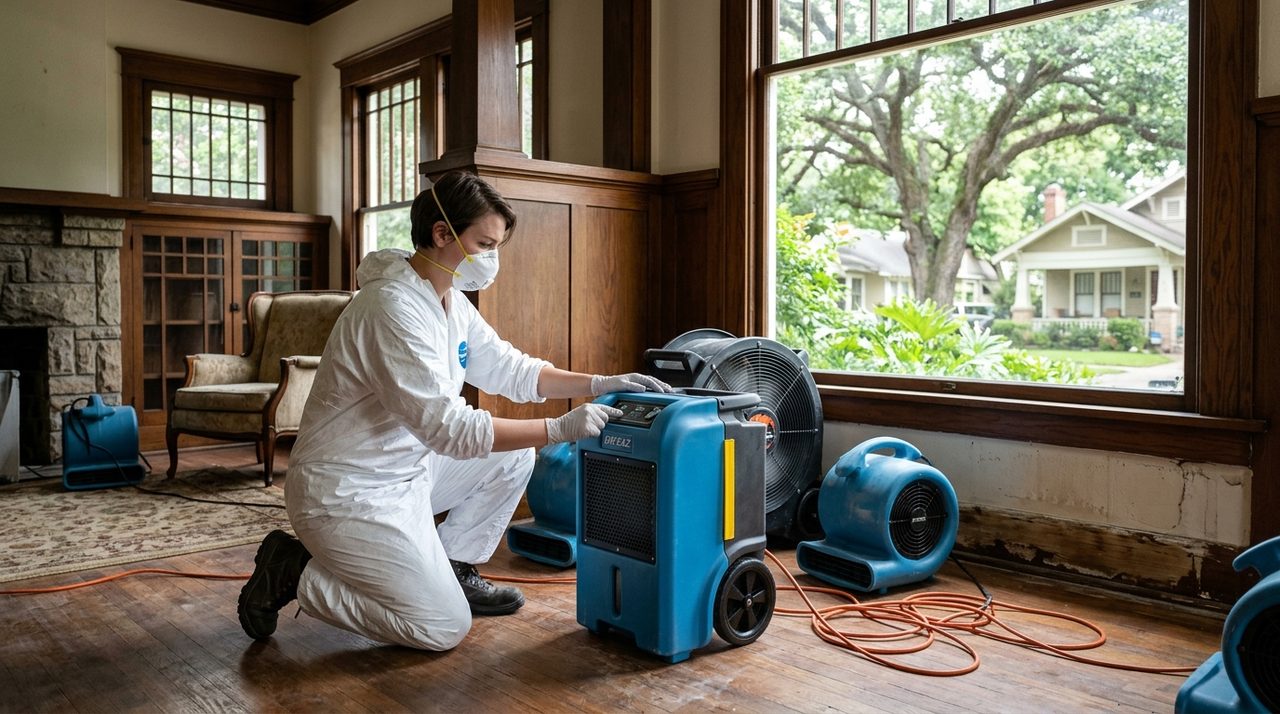
- Median home built
- 1966
- Median home value
- $153,975
- FEMA flood zone
- X500 (moderate)
- Typical mitigation cost (est.)
- $3,500–$15,000
- Most common local issue
- Moisture trapped in pier-and-beam crawl spaces after heavy-rain inundation
Ranked by verified Google rating × review volume × verification tier. How we rank →
Some highly-rated pros serve Independence Heights from nearby and may not keep a Independence Heights street address. Those are listed under "Also serving Independence Heights" with their real city and distance, so you always know where each business is based.
Min rating:
10 resultsBased in Independence Heights
Also serving Independence Heights
Highly-rated pros based nearby who cover Independence Heights. Distance shown from the Independence Heights area.
Open Now
Serving Independence Heights Based in Lazybrook / Timbergrove · 0.8 mi away
Open Now
Serving Independence Heights Based in Acres Homes · 2.2 mi away
Open Now
Serving Independence Heights Based in Garden Oaks · 2.2 mi away
Open Now
Serving Independence Heights Based in Garden Oaks · 2.6 mi away
Open Now
Serving Independence Heights Based in Lazybrook / Timbergrove · 3.5 mi away
Open Now
Serving Independence Heights Based in Spring Branch · 3.9 mi away
Open Now
Serving Independence Heights Based in Acres Homes · 4.3 mi away
Serving Independence Heights Based in Midtown · 4.3 mi away
Open Now
Serving Independence Heights Based in Acres Homes · 4.4 mi away
Water & Flood Restoration in Independence Heights: What You Should Know
Pier-and-Beam Crawl Spaces Hold Water Long After the Street Dries
Why it matters to you
The 1910s–1960s bungalows and ranch homes that make up most of Independence Heights's legacy housing stock sit on pier-and-beam foundations, meaning floodwater collects in an open crawl space directly beneath the living area. Even after surface water recedes, Houston's Black clay soil beneath those piers stays saturated for weeks, continuously wicking moisture up into wood floor joists, subfloor decking, and bottom plates—damage that is completely invisible from inside the house and that standard moisture meters at floor level routinely miss.
What a good pro does
A qualified restoration contractor should conduct crawl-space entry and direct moisture readings on joists and subfloor material using a calibrated pin-type meter, targeting readings below 19% wood moisture content before any reconstruction begins, per IICRC S500 protocols. Drying equipment—typically desiccant dehumidifiers rated for enclosed, unventilated cavities—must be deployed under the floor, not just inside the living area, and the drying log must be documented to support an insurance claim filed through the Houston Permitting Center's required demolition permit process.
Sources: IICRC (water/mold restoration standards), City of Houston Permitting Center, Harris County Flood Control District
Mid-Century HVAC Ductwork Is a Hidden Mold Factory After Any Inundation
Why it matters to you
Independence Heights's 1950s–1960s ranch homes—the neighborhood's median construction year is 1966—commonly have older flex-duct HVAC systems routed through unconditioned attic space or, in some cases, low crawl spaces. When Zone X500 storm events push water into these homes, flex duct insulation absorbs moisture and, in Houston's average 74% relative humidity environment, supports Cladosporium and Aspergillus growth within 48–72 hours. Homeowners who run the A/C immediately after water entry—a natural impulse in a Houston summer—spread spores through every supply register in the house.
What a good pro does
Before restarting any HVAC system, a restoration contractor should perform thermal imaging of the air handler cabinet and visible duct runs, and pull at least one section of flex duct for direct inspection of the inner liner and insulation batt. If saturation is confirmed, full duct replacement is the code-defensible scope, not drying in place; the HVAC contractor pulling the mechanical permit with the Houston Permitting Center will need to document the replacement as part of the restoration file. Mold remediation on ductwork requires a TDLR-licensed Mold Remediation Contractor if fungal growth is confirmed.
Sources: IICRC (water/mold restoration standards), Texas Department of Licensing & Regulation, City of Houston Permitting Center
Wind-Driven Rain from the May 2024 Derecho Soaked Walls From the Outside In on Older Bungalows
Why it matters to you
The May 2024 derecho delivered sustained winds across the Inner Loop that forced water through the aging window flanges, soffit vents, and wood-lap siding gaps common on Independence Heights's 1910s–1920s Craftsman bungalows—without producing any visible interior flooding. This top-down, outside-in intrusion pattern is easily mistaken for a simple roof leak, but the water actually tracks down through wall sheathing and settles in the bottom plates at floor level, where pier-and-beam construction offers no slab edge to stop lateral migration. Homeowners who patched only the roof or caulked windows without checking wall cavity moisture are likely sitting on hidden decay right now.
What a good pro does
A thorough post-derecho inspection on a pre-1960 Independence Heights bungalow requires infrared thermal imaging of all exterior walls, especially north- and west-facing elevations that took the brunt of the storm's wind vector, combined with moisture meter readings at 24-inch intervals from the top plate down to the bottom plate. Where readings exceed 16% in wall framing, selective drywall removal and targeted structural drying—not whole-room demolition—is often sufficient, but the scope must be documented with a demo permit from the Houston Permitting Center before any cavity work begins.
Sources: IICRC (water/mold restoration standards), City of Houston Permitting Center, Harris County Flood Control District
Infill Townhome HOA Rules Can Delay Emergency Demo When Hours Matter
Why it matters to you
Independence Heights has seen substantial townhome infill construction since the 2000s, and many of those clusters—including registered POA developments in the 77018 ZIP code—have mandatory HOA architectural review requirements that technically apply to exterior work even in an emergency. IICRC S500 calls for drying initiation within 24–48 hours of a water event; if a townhome owner needs to remove soaked exterior sheathing or place a debris dumpster in a shared driveway and has to wait for an architectural committee meeting, a manageable Category 2 gray-water loss can escalate to Category 3 territory as standing moisture breeds contamination.
What a good pro does
Townhome owners in HOA-governed Independence Heights clusters should request written emergency provisions from their association documents before any storm season—many Texas POA governing documents include expedited approval language for casualty events. A restoration contractor experienced in Houston's infill HOA landscape will contact the property manager and the Houston Permitting Center for the demolition permit simultaneously, not sequentially, shaving critical hours off the response window. Document every communication with the HOA with timestamps, as insurance adjusters will scrutinize any delay in drying initiation when setting the loss category.
Sources: Local HOA / deed restrictions (see area profile), City of Houston Permitting Center, IICRC (water/mold restoration standards)
Water & Flood Restoration in Independence Heights: What You Should Know
Hiring water & flood restoration in Independence Heights? Independence Heights spans over a century of construction, from 1910s bungalows and 1950s ranch homes to 2020s contemporary townhomes. Homeowners here face a wide range of service needs driven by aging pier-and-beam foundations, outdated plumbing and electrical in mid-century homes, and newer infill properties with their own HOA requirements. The neighborhood's moderate flood risk and mixed housing stock make contractor experience with both historic rehabilitation and modern code compliance essential.
- Housing era
- 1910s–1920s (original platted lots), 1950s–1960s (major mid-century build-out, median year built 1958), 2000s–2020s (infill…
- Foundation
- Mixed — pier-and-beam dominates pre-1960s housing
- Flood zone
- FEMA Zone X500 (moderate flood risk) — source
- Permits
- Houston Permitting Center (City of Houston jurisdiction — neighborhood annexed in 1929)
Housing stock & systems
Building era
1910s–1920s (original platted lots), 1950s–1960s (major mid-century build-out, median year built 1958), 2000s–2020s (infill townhomes and new single-family).
Typical style
Craftsman bungalows and vernacular cottages (1910s–1920s), one-story ranch and minimal-traditional (1950s–1960s), contemporary two- and three-story townhomes and modern single-family (2000s–2020s).
Foundations
Mixed — pier-and-beam dominates pre-1960s housing; slab-on-grade common in newer infill construction.
Common systems
Older homes often have galvanized or cast-iron plumbing, outdated 60–100 amp electrical panels, and window-unit or older central HVAC. Mid-century homes typically have early central HVAC with ductwork in unconditioned spaces. Newer infill features modern PEX or CPVC plumbing, 200-amp panels, and high-efficiency HVAC systems.
What that means for repairs
Significant renovation activity driven by new infill development replacing or updating older lots. Historic bungalows and mid-century ranch homes are frequently gut-renovated with foundation repair, full re-plumbing, electrical panel upgrades, and HVAC modernization. Townhome clusters are also emerging on previously single-family lots.
Permits & restrictions
Permit jurisdiction
Houston Permitting Center (City of Houston jurisdiction — neighborhood annexed in 1929).
HOA & deed restrictions
No single mandatory HOA for all of Independence Heights. The area operates under the City of Houston Super Neighborhood 13 council (voluntary civic/advocacy structure). Pocket developments and newer townhome clusters have their own mandatory HOAs, such as Independence Heights Homes Community Association, Inc. (registered POA in Harris County, ZIP 77018). Many legacy lots have no HOA.
Historic districts
No City of Houston historic district designation confirmed, despite the neighborhood's significant cultural history as an early 20th-century planned Black community (incorporated 1915, annexed by Houston 1929).
Contractor note
Contractors must navigate varying deed restrictions that are lot- and subdivision-specific rather than uniform across the neighborhood. New infill projects in HOA-governed clusters may have additional architectural review requirements beyond standard city permitting.
Flood & weather
FEMA flood zone
FEMA Zone X500 (moderate flood risk) — source: fema_nfhl. The neighborhood sits just north of Loop 610 and west of I-45 in a lower-elevation area of Houston's near northside. No specific bayou or creek adjacency was confirmed in research, but the I-45 corridor location places it in a drainage-sensitive area.
Hurricane Harvey impact
Specific street-by-street Harvey flood data was not confirmed in available research. The neighborhood's near-northside, lower-elevation location along the I-45 corridor suggests it was likely affected by significant street and structural flooding during Harvey, consistent with broader news coverage of nearby areas. Homeowners should verify parcel-level flood history through Harris County Flood Control District records and FEMA repetitive loss databases.
Heat & humidity load
Older pier-and-beam homes with minimal insulation and aging HVAC systems face extreme summer stress, leading to high energy bills and frequent HVAC service calls. Pier-and-beam crawlspaces are vulnerable to moisture buildup and pest intrusion in Houston's humid summers. Newer infill townhomes with modern insulation and sealed envelopes perform better but may experience condensation issues at transitions between conditioned and unconditioned spaces.
Working with contractors here
Foundation repair is one of the most common service needs, particularly for pier-and-beam homes built in the 1910s–1960s that have experienced decades of Houston's expansive clay soil movement. Re-plumbing is frequently required in mid-century homes still running galvanized or cast-iron drain lines. Electrical panel upgrades from 60-amp to 200-amp service are common as homeowners modernize older homes or add square footage. The active infill market means general contractors regularly handle teardown-and-rebuild projects, often requiring lot-specific deed restriction review. Contractors should be prepared for wide variation in job scope — from historic cottage restoration on one lot to modern townhome punch-list work on the next.
Local Tip
Always ask for a written estimate before work begins. Texas contractors are required to provide one on jobs over $1,000.
About Independence Heights
Independence Heights spans over a century of construction, from 1910s bungalows and 1950s ranch homes to 2020s contemporary townhomes. Homeowners here face a wide range of service needs driven by aging pier-and-beam foundations, outdated plumbing and electrical in mid-century homes, and newer infill properties with their own HOA requirements. The neighborhood's moderate flood risk and mixed housing stock make contractor experience with both historic rehabilitation and modern code compliance essential.
- Median year built
- 1966
- Median home value
- $153,975
- Owner-occupied
- 53.2%
- Population
- 72,226
- Housing units
- 25,388
- Median income
- $44,671
Source: U.S. Census Bureau, ACS 5-Year 2023
Flood & storm risk
FEMA Zone X500Moderate flood riskIndependence Heights carries FEMA Zone X500 (moderate flood risk): outside the 100-year floodplain but inside the 500-year, so heavy-rain events still reach homes and flood-aware work pays off.
Source: FEMA National Flood Hazard Layer (NFHL). Flood zones vary by parcel — verify your individual FIRM panel.
Houston Storm Readiness in Independence Heights
Hurricane & flooding
Pre-storm, arrange for a water-restoration professional to clear and test any sub-slab drainage or interior French-drain systems serving your Independence Heights home, since FEMA Zone X500 in the 500-year floodplain conditions can still deliver several feet of standing water during a slow-moving storm. Identifying extraction access points in advance cuts response time when the 48-hour mold clock starts. Much of the housing stock predates modern wind codes (median build year 1966), so retrofits matter more here. In-city Independence Heights work falls under City of Houston floodplain and permitting rules.
Severe storms & hail
Wind-driven rain from the May 2024 derecho caused water intrusion through soffit vents and poorly sealed exterior wall penetrations in countless Independence Heights homes that had never previously flooded. A water-restoration contractor can trace moisture migration paths with thermal imaging and place drying equipment specifically where building cavities are retaining water. Confirm the current FEMA panel for your Independence Heights parcel — the area maps to Zone X500, but adjacent lots can differ.
Ice storms & freezes
Ice-storm pipe failures in Independence Heights often go undetected until the thaw, by which point water may have been migrating through wall cavities for 12 to 36 hours — squarely inside the 48-hour mold-growth window defined by the IICRC S520 standard. Scheduling a moisture inspection immediately after any pipe-freeze event, rather than waiting for visible staining, is the single most cost-effective step a homeowner can take. With a median build year of 1966, the older building stock here is more exposed to hard-freeze damage than newer construction. In-city Independence Heights work falls under City of Houston floodplain and permitting rules.
Sources: FEMA National Flood Hazard Layer (NFHL), Ready.gov -- Hurricanes, CenterPoint Energy -- Storm Center, City of Houston -- Emergency Preparedness, Ready.gov -- Winter Weather, Harris County Flood Control District
Free Independence Heights Tools & Calculators
Houston-specific estimators to plan your project before you call a pro. All results are planning estimates — a licensed local pro confirms the details on site.
Houston Freeze Prep & Pipe Insulation Checklist
Open full tool & FAQ →Your freeze checklist — 4 tasks
- 1
Disconnect & drain every outdoor hose bib
Remove hoses, drain the spigots, and cover each with an insulated faucet sock. Un-drained hose bibs are the #1 burst point in a Houston freeze.
- 2
Insulate exposed pipes in the attic & garage
Wrap any pipe in an unconditioned space (attic runs, garage walls) with foam sleeves. Houston homes rarely insulate these because they only matter a few nights a year — which is exactly why they burst.
- 3
Open cabinet doors & keep a pencil-width drip
On hard-freeze nights, open kitchen/bath cabinets so warm air reaches the pipes and let faucets on exterior walls drip to relieve pressure.
- 4
Protect the attic/garage water heater & its lines
An attic or garage tank sits in unconditioned space. Insulate the cold-inlet and hot-outlet lines and confirm the emergency drain pan is clear so a leak doesn't reach the ceiling.
This is a planning estimate only — actual requirements depend on an on-site assessment by a licensed Houston pro. If a pipe has already burst, shut off your main water supply and call a licensed Houston plumber immediately — freeze bursts flood fast.
Frequently Asked Questions
Do I need a permit from the City of Houston to demo water-damaged drywall and flooring in my 1950s Independence Heights ranch home?
Yes — because Independence Heights was annexed by the City of Houston in 1929, all trade and demolition permits run through the Houston Permitting Center, not a suburban office. For flood restoration work, the contractor typically pulls a structural demolition permit, while any licensed plumber or electrician exposed during demo pulls their own separate trade permits. Skipping this step can prevent you from closing your insurance claim, because insurers often require a Certificate of Completion before issuing final payment.
Sources: City of Houston Permitting Center
My 1920s pier-and-beam bungalow flooded but the crawl space still smells musty weeks later — does Independence Heights's soil make that worse?
Houston's expansive Black clay soil is notorious for holding moisture against foundation piers and perimeter grade beams long after surface water recedes, which prolongs crawl-space drying well beyond a slab-on-grade home nearby. IICRC S500 standards call for drying initiation within 24–48 hours, but in a pier-and-beam structure on clay soil the effective drying window can stretch to several weeks if dehumidifiers and airflow aren't maintained continuously. Ask your restoration contractor to provide daily moisture-meter readings from the subfloor joists and soil — not just the interior rooms — to confirm the crawl space is genuinely dry before reconstruction begins.
My Independence Heights home is in FEMA Zone X500 — will my restoration contractor classify bayou or street flood water as Category 3, and does the zone affect that?
FEMA flood-zone designation doesn't directly set the water category — that's determined by the water source and contamination level under IICRC S500. In Independence Heights, street flooding during heavy-rain stalls typically mixes with Houston's combined sewer overflows, which nearly always qualifies as Category 3 (black water) regardless of whether a home sits in Zone AE or X500. Category 3 classification under IICRC S500 requires full removal of porous materials — drywall, insulation, carpet — at least 12 inches above the flood line, and your contractor should document water-source evidence and any field testing to defend that scope if your insurer attempts a Category 2 reclassification.
Sources: IICRC (water/mold restoration standards)FEMA National Flood Hazard Layer (NFHL)
What's a realistic timeline and cost estimate for restoring a mid-century ranch home in Independence Heights after a significant interior flood?
For a typical 1,500–2,200 sq ft one-story ranch on a slab (or with a shallow pier-and-beam crawl), estimate roughly $6,000–$15,000 for the mitigation phase — water extraction, drying equipment, and demo — and an additional $30,000–$60,000 or more for full reconstruction depending on flooring, drywall, cabinetry, and whether galvanized plumbing lines exposed during demo need replacement, which is common in Independence Heights homes built in the 1950s–1960s. The mitigation phase alone typically runs 5–14 days of active drying before reconstruction can begin; if aging cast-iron drain lines are breached and need re-plumbing, add several more weeks. All figures are estimates and vary significantly based on scope and current Houston labor costs.
Does the Texas mold license requirement apply to contractors working on older Independence Heights homes, or only to large commercial jobs?
Texas law requires any firm performing mold assessment or mold remediation — regardless of the property size or age — to hold a TDLR-issued Mold Assessment Consultant (MAC) or Mold Remediation Contractor (MRC) license under Texas Occupations Code Chapter 1958; there is no residential exemption. This matters especially in Independence Heights's older housing stock, where moisture trapped behind plaster walls or under original wood subfloors in 1910s–1960s homes can reveal substantial hidden mold during demo. Before hiring a restoration contractor for any job that involves opening walls on a pre-1980 home here, verify their TDLR license number at the TDLR public license lookup.
I own a newer infill townhome in Independence Heights with a mandatory HOA — can the HOA actually slow down emergency flood demo, and what should I do?
Pocket HOAs in newer Independence Heights townhome clusters — such as those registered as POAs in Harris County under ZIP 77018 — may technically require architectural review for exterior material removal, dumpster placement, or re-cladding choices even in an emergency. The practical move is to start all interior demo immediately (drying must begin within 24–48 hours per IICRC S500), document everything photographically, and have your contractor notify the HOA board in writing simultaneously rather than waiting for approval before touching interior walls. For exterior work, check your HOA CC&Rs for any emergency or insurance-loss exception clause, which many Texas POA documents include.
Sources: IICRC (water/mold restoration standards)Local HOA / deed restrictions (see area profile)