Open Now
21137 Arcadia Park Ln, Humble, TX 77338
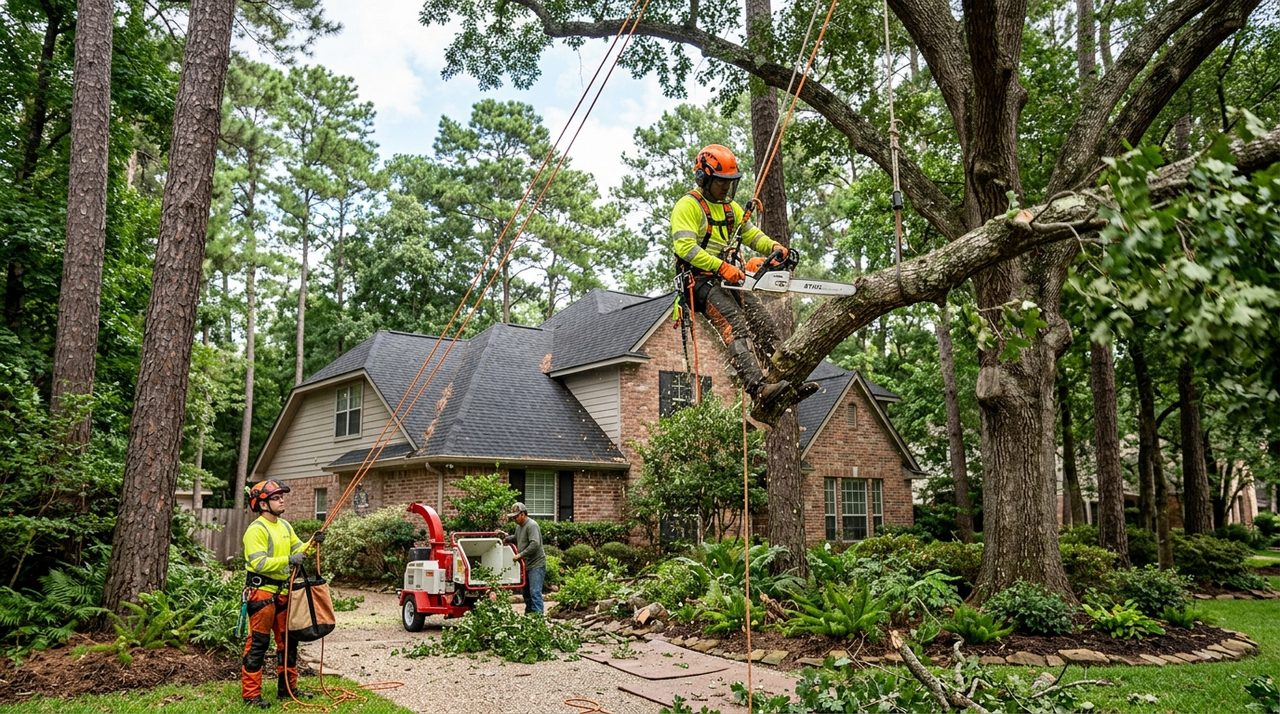
Humble, TX sits at the edge of Houston's Piney Woods transition zone in NE Harris County, where loblolly pines damaged by southern pine beetle and mature water oaks over 1980s-era slab foundations create a tree-removal workload unlike anything you'll find inside the Loop. Add a three-way permitting split — City of Humble, City of Houston, and unincorporated Harris County — plus subdivision-by-subdivision HOA rules that vary block to block, and even a simple dead-tree removal requires verifying two separate approvals before a chainsaw starts. This page cuts through that complexity so Humble homeowners know what to expect on permits, costs, and contractor vetting in this specific corner of NE Houston.
Ranked by verified Google rating × review volume × verification tier. How we rank →
Some highly-rated pros serve Humble from nearby and may not keep a Humble street address. Those are listed under "Also serving Humble" with their real city and distance, so you always know where each business is based.
21137 Arcadia Park Ln, Humble, TX 77338
4714 Fieldwick Ln, Humble, TX 77338
16622 Shrub Oak Dr, Humble, TX 77396
Highly-rated pros based nearby who cover Humble. Distance shown from the Humble area.
Serving Humble Based in Kingwood · 5.1 mi away
Serving Humble Based in Kingwood · 5.8 mi away
Serving Humble Based in Kingwood · 6.4 mi away
Serving Humble Based in Porter · 6.8 mi away
Why it matters to you
Humble's position on the western edge of the Piney Woods means many subdivisions platted in the 1980s and 1990s were built among or adjacent to loblolly pine stands. Southern pine beetle (Dendroctonus frontalis) infestations, amplified by drought stress cycles, have left a significant number of dead-standing pines throughout NE Harris County neighborhoods. Once a pine dies, its wood becomes brittle and structurally unpredictable within 12–18 months — a falling trunk or large limb poses a direct threat to the slab-on-grade homes below, and to neighboring fences and structures on lots where census data shows median builds from 1983.
What a good pro does
A qualified crew — ideally one with an ISA Certified Arborist on staff — will assess brittleness before rigging any dead pine, often choosing crane-assisted sectional removal over conventional climbing to reduce the risk of uncontrolled wood failure. Expect base removal costs for a dead pine over 60 feet to run $2,500–$5,000 or more as an estimate, with a 25–50% hazard premium on top of what the same live tree would cost. Verify the contractor carries adequate liability insurance and ask for a certificate of insurance before work starts — Texas does not license tree removal contractors through TDLR, so insurance verification is your primary protection.
Sources: Municipal permit office (see area profile)
Why it matters to you
Unlike a Bellaire or West University homeowner who deals with one strict city tree ordinance, Humble property owners face a genuinely ambiguous permitting landscape: your lot may fall under City of Humble permits, Houston Permitting Center rules, or Harris County Engineering for unincorporated areas — and the answer changes street by street. While the City of Houston does not require a homeowner permit for routine private-property tree removal, the City of Humble and Harris County each have their own code requirements, and assuming your address falls under Houston's more permissive rules without checking is a common and expensive mistake.
What a good pro does
Before scheduling any removal, confirm your governing jurisdiction using your property's address on Harris County Appraisal District records and cross-reference with the relevant permit office. A reputable Humble-area tree company should proactively ask which jurisdiction governs your lot and pull any required permits as part of the scope of work — if a contractor skips this step entirely, treat it as a red flag. Post-storm emergency removals don't exempt you from permit requirements; some jurisdictions issue expedited emergency permits, but you or your contractor still need to initiate the process.
Sources: Municipal permit office (see area profile), City of Houston Permitting Center
Why it matters to you
Many of Humble's platted subdivisions — including those with active HOAs like Foxwood — require written architectural committee approval before any tree over a specified caliper (commonly 6–8 inches DBH) can be removed, regardless of what the city or county permits allow. Because there is no single area-wide HOA covering all of Humble, homeowners in one subdivision may face a formal approval process with replanting requirements while a neighbor three streets over in a deed-restriction-only block faces no HOA review at all. Skipping HOA approval can trigger fines and forced replanting that cost more than the removal itself.
What a good pro does
Confirm your HOA status through hoa.texas.gov or Harris County Clerk records before contacting tree companies for quotes, and build HOA approval lead time — often two to four weeks for an architectural committee review cycle — into your project timeline. When you request quotes, give contractors your HOA's removal and replanting requirements upfront so they can include compliant stump grinding depth and any required documentation photos in their proposal. A knowledgeable Humble-area arborist will already be familiar with common local HOA restrictions and can help you draft the approval request.
Sources: Local HOA / deed restrictions (see area profile)
Why it matters to you
The May 2024 derecho pushed 100-mph straight-line winds through the NE Houston corridor, and Hurricane Beryl followed in July 2024 — back-to-back events that overwhelmed tree crews across Harris County and brought a wave of out-of-state operators with no local track record. Humble's mix of mature pines, water oaks, and Chinese tallow trees in older 1980s-1990s subdivisions produced widespread uprooting and limb failures, and homeowners who waited weeks for a legitimate crew sometimes hired storm-chasers who left stumps unground, debris in drainage swales, and no insurance documentation. Even in FEMA Zone X, where Humble mostly maps, storm-damaged tree debris landing in drainage paths matters because the area borders the San Jacinto River watershed where localized flooding risk climbs sharply parcel by parcel.
What a good pro does
In the weeks after a named storm, expect removal estimates to run 40–80% above normal rates as an estimate — a mid-size water oak that would cost $900 in a quiet month may run $1,400–$1,600 right after a major event. Prioritize verifying insurance and ISA certification over speed, and get at least two written quotes even under time pressure. If storm-damaged debris is blocking a drainage swale or county right-of-way, contact Harris County Flood Control District to clarify whether curbside debris pickup applies before paying for private haul-out.
Sources: Harris County Flood Control District, FEMA National Flood Hazard Layer (NFHL)
Hiring tree removal in Humble? Humble spans incorporated city limits, City of Houston boundaries, and unincorporated Harris County, creating a patchwork of permitting jurisdictions that contractors must navigate carefully. Many platted subdivisions have mandatory HOAs with architectural control requirements, while older pockets may rely only on deed restrictions or civic clubs. The predominantly post-1970s housing stock means slab foundations and aging HVAC systems are common service concerns.
Building era
Primarily late 1970s through 2000s across most subdivisions; some newer infill development ongoing.
Typical style
Not confirmed from available sources - typical NE Houston suburban mix expected (traditional brick, ranch, and contemporary styles). Check Harris County Appraisal District for specific subdivisions.
Foundations
Predominantly concrete slab-on-grade, consistent with post-1970s mass-production construction practices in the Houston metro area.
Common systems
Forced-air HVAC (many original systems in 1980s-1990s homes approaching or past useful life), copper and CPVC plumbing, 200-amp electrical panels in newer homes with some older 100-amp panels in 1970s-era construction.
What that means for repairs
HVAC replacement and roof replacement are common due to age of housing stock. Kitchen and bathroom remodels are frequent in 1980s-1990s era homes. Homeowners in HOA-governed subdivisions must obtain architectural approval before exterior modifications.
Permit jurisdiction
Mixed jurisdiction: City of Humble Permits (within Humble city limits), Houston Permitting Center (within Houston city limits), or Harris County Engineering (unincorporated areas). Verify exact jurisdiction by property address before pulling permits.
HOA & deed restrictions
No single area-wide mandatory HOA. Many platted subdivisions have their own mandatory HOAs with architectural control (e.g., Foxwood HOA requires approval for all property improvements and modifications). Some older or smaller areas may have only deed restrictions or civic clubs. Confirm HOA status for any specific address via hoa.texas.gov or Harris County Clerk records.
Historic districts
No City of Houston historic district designation confirmed.
Contractor note
Contractors must verify which jurisdiction governs each property before starting work, as the Humble area straddles three permitting authorities. HOA architectural approval is commonly required in addition to municipal permits.
FEMA flood zone
FEMA Zone X (low flood risk) per official NFHL data. However, the broader Humble area includes properties along San Jacinto River tributaries and local drainage channels; individual parcels may carry different flood zone designations. Always verify flood zone by specific property address.
Hurricane Harvey impact
No documented, citable Harvey flood-impact information was confirmed for Humble/NE Houston from available research. The broader NE Houston area near the San Jacinto River and Lake Houston experienced significant Harvey-related flooding, but specific street-level impact for Humble subdivisions should be verified through Harris County Flood Control District inundation maps and seller disclosure records.
Heat & humidity load
Extended Houston summers with sustained temperatures above 95°F and high humidity stress aging HVAC systems in 1980s-1990s homes. Slab foundations in clay soils are susceptible to seasonal movement during summer drought cycles, potentially causing door/window alignment issues and minor cracking. Attic temperatures can exceed 150°F, accelerating roof aging and increasing demand for attic insulation and ventilation upgrades.
Working with contractors here
HVAC replacement and repair is the most consistent service need in Humble, driven by aging systems in the large stock of 1980s-1990s homes facing Houston's extreme summer heat. Roof replacement is common, as many original roofs have exceeded their 20-25 year lifespan. Foundation monitoring and minor repair work is frequent due to the expansive clay soils typical of NE Harris County. Contractors should be prepared to navigate HOA architectural review processes in most subdivisions, which can add lead time to exterior projects. The mixed permitting jurisdiction (City of Humble, City of Houston, or Harris County) means contractors must verify the governing authority for each job site before beginning work.
Local Tip
Always ask for a written estimate before work begins. Texas contractors are required to provide one on jobs over $1,000.
Humble spans incorporated city limits, City of Houston boundaries, and unincorporated Harris County, creating a patchwork of permitting jurisdictions that contractors must navigate carefully. Many platted subdivisions have mandatory HOAs with architectural control requirements, while older pockets may rely only on deed restrictions or civic clubs. The predominantly post-1970s housing stock means slab foundations and aging HVAC systems are common service concerns.
Source: U.S. Census Bureau, ACS 5-Year 2023
Most of Humble maps to FEMA Zone X (low mapped flood risk), but Houston's flash-flood reality means even low-risk blocks benefit from smart drainage and storm-hardened installs; risk climbs sharply on blocks nearest the San Jacinto River, where it varies parcel to parcel.
Source: FEMA National Flood Hazard Layer (NFHL). Flood zones vary by parcel — verify your individual FIRM panel.
Beryl 2024 left tens of thousands of trees down across the Houston area, and lower-flood-risk zones like Humble, TX were not spared from wind-throw damage that crushed vehicles, fences, and rooflines. Scheduling removal of any large tree with a cavity, dead crown, or proximity to your home now means you are not competing for post-storm crews when wait times stretch to weeks. Because Humble drains toward the San Jacinto River, block-level runoff can differ sharply from the mapped zone.
After any severe thunderstorm drops large limbs in your yard in Humble, TX, have a licensed contractor assess the parent tree for hidden decay before assuming the remaining structure is sound. Snap failures during the May 2024 derecho frequently involved trees that had experienced prior lightning strikes or previous partial limb loss that had gone uninspected. Because Humble drains toward the San Jacinto River, block-level runoff can differ sharply from the mapped zone.
Freeze-cracked bark and split branch unions caused by Uri 2021 left thousands of Houston-area trees with compromised structural integrity that persisted well into subsequent years, so Humble, TX homeowners should request a post-freeze assessment even if no immediate failure occurred. A licensed contractor can identify cold-induced damage that will accelerate decay and create a hazard within one to three growing seasons. With a median build year of 1983, the older building stock here is more exposed to hard-freeze damage than newer construction. Because Humble drains toward the San Jacinto River, block-level runoff can differ sharply from the mapped zone.
Sources: FEMA National Flood Hazard Layer (NFHL), Ready.gov -- Hurricanes, CenterPoint Energy -- Storm Center, City of Houston -- Emergency Preparedness, Ready.gov -- Winter Weather, Harris County Flood Control District
Houston-specific estimators to plan your project before you call a pro. All results are planning estimates — a licensed local pro confirms the details on site.
Grouped by mature root aggression & water demand.
Trunk center to the nearest exterior wall.
The root zone likely reaches your foundation's soil during Houston's dry summers, when clay shrinks most. Watch for sticking doors and diagonal cracks, keep soil moisture even with a soaker hose during drought, and have a foundation pro evaluate if you see any movement.
Find a Houston foundation pro →This is a planning estimate only — actual requirements depend on an on-site assessment by a licensed Houston pro. Guidance is based on general species root behavior in expansive clay, not a soil test.
Disconnect & drain every outdoor hose bib
Remove hoses, drain the spigots, and cover each with an insulated faucet sock. Un-drained hose bibs are the #1 burst point in a Houston freeze.
Insulate exposed pipes in the attic & garage
Wrap any pipe in an unconditioned space (attic runs, garage walls) with foam sleeves. Houston homes rarely insulate these because they only matter a few nights a year — which is exactly why they burst.
Open cabinet doors & keep a pencil-width drip
On hard-freeze nights, open kitchen/bath cabinets so warm air reaches the pipes and let faucets on exterior walls drip to relieve pressure.
Protect the attic/garage water heater & its lines
An attic or garage tank sits in unconditioned space. Insulate the cold-inlet and hot-outlet lines and confirm the emergency drain pan is clear so a leak doesn't reach the ceiling.
This is a planning estimate only — actual requirements depend on an on-site assessment by a licensed Houston pro. If a pipe has already burst, shut off your main water supply and call a licensed Houston plumber immediately — freeze bursts flood fast.
Sources: Local HOA / deed restrictions (see area profile)
Sources: City of Houston Permitting CenterMunicipal permit office (see area profile)
Sources: FEMA National Flood Hazard Layer (NFHL)Harris County Flood Control District