1435 Band Rd, Rosenberg, TX 77471
Best Landscapers in Rosenberg, TX
Rosenberg's Fort Bend County clay soils, mixed housing stock ranging from mid-century ranch homes near the railroad-era core to 2000s–2020s production-builder subdivisions like Oaks of Rosenberg and The Preserve, and subdivision-specific HOA rules create a landscaping environment where one-size-fits-all approaches fail fast. Most parcels sit in FEMA Zone X but flash-flood ponding on flat, poorly-draining clay is a routine frustration even off the Brazos River corridor. Understanding which permit desk — the City of Rosenberg Building & Permitting Department or Fort Bend County Engineering — controls your lot, and whether your HOA's architectural review committee must sign off first, can determine whether a landscape project goes smoothly or gets torn out.
Verified against Google Business data
Updated 2026
See the 8 Landscapers Serving Rosenberg 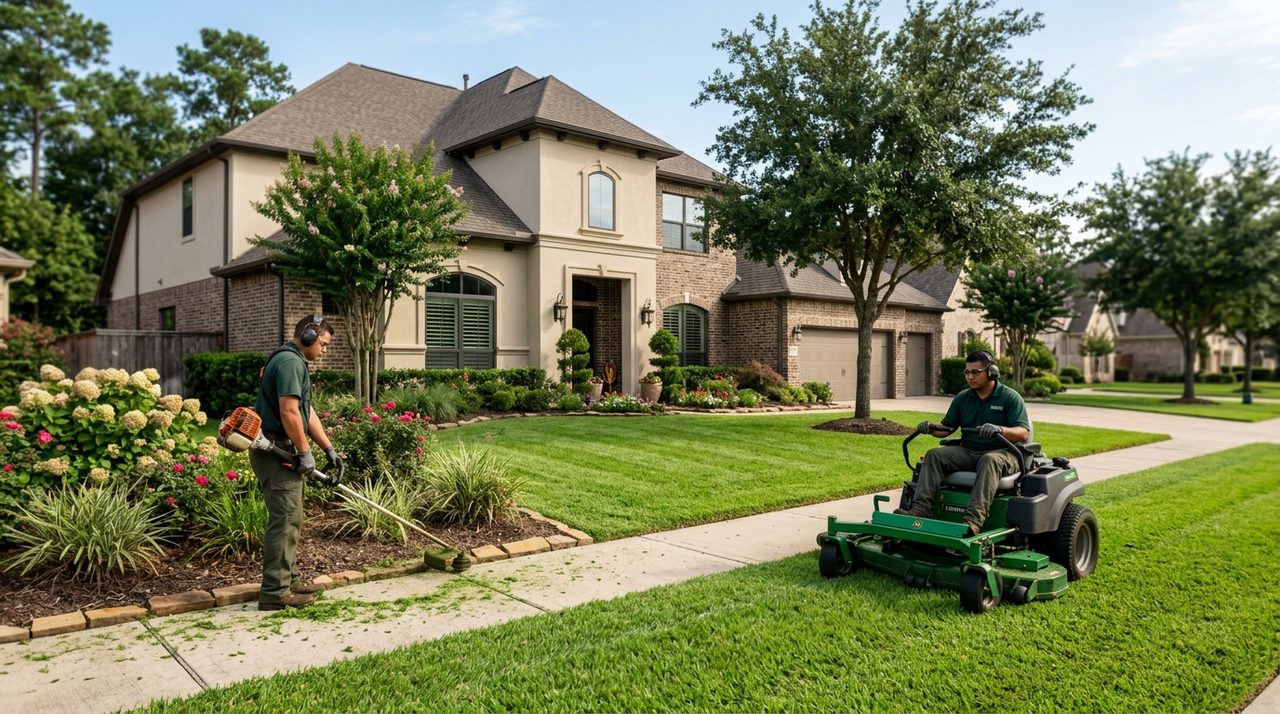
- Median home built
- 1994
- Median home value
- $218,600
- FEMA flood zone
- X (low)
- Typical cost (est.)
- $160–$220/mo maintenance; $4,500–$18,000 design-install
- Most common local issue
- Clay-soil ponding and slow drainage on flat Fort Bend lots
Ranked by verified Google rating × review volume × verification tier. How we rank →
Some highly-rated pros serve Rosenberg from nearby and may not keep a Rosenberg street address. Those are listed under "Also serving Rosenberg" with their real city and distance, so you always know where each business is based.
Min rating:
8 resultsBased in Rosenberg
Closed
1316 Tobola St, Rosenberg, TX 77471
Also serving Rosenberg
Highly-rated pros based nearby who cover Rosenberg. Distance shown from the Rosenberg area.
Closed
Serving Rosenberg Based in Richmond · 4.7 mi away
Closed
Serving Rosenberg Based in Richmond · 4.9 mi away
Closed
Serving Rosenberg Based in Richmond · 5.1 mi away
Closed
Serving Rosenberg Based in Richmond · 5.2 mi away
Closed
Serving Rosenberg Based in Richmond · 5.2 mi away
Serving Rosenberg Based in Richmond · 5.9 mi away
Landscapers in Rosenberg: What You Should Know
Chronic Ponding on Rosenberg's Flat, Expansive Clay Lots
Why it matters to you
Fort Bend County's Houston Black clay absorbs rainfall slowly, swells after Gulf rain events, and stays saturated long enough to drown turf and ornamental roots — a problem amplified by the nearly flat topography across Rosenberg's newer subdivisions built since the 1990s. Even though most Rosenberg parcels map to FEMA Zone X (low mapped flood risk), standing water after a routine thunderstorm is a common homeowner complaint in subdivisions like Oaks of Rosenberg, where production-builder grading often directs sheet flow toward rear yards with no engineered outfall. Beds and sod installed without accounting for this shrink-swell clay cycle typically fail within one to two growing seasons.
What a good pro does
A qualified landscaper should perform a site-grade assessment and, where needed, install a French drain or dry-creek swale routed to the subdivision's drainage easement — a scope that typically runs $2,500–$7,500 as an estimate depending on linear footage and outfall access. Any grading work that alters drainage patterns on a city-limits lot requires coordination with the City of Rosenberg Building & Permitting Department; properties in unincorporated Fort Bend County fall under Fort Bend County Engineering review instead. Confirm jurisdiction early, as approval timelines differ between the two offices.
Sources: Municipal permit office (see area profile), FEMA National Flood Hazard Layer (NFHL), Harris County Flood Control District
HOA Architectural Review in Master-Planned Subdivisions
Why it matters to you
Rosenberg's newer master-planned communities — including Oaks of Rosenberg Community Association and The Preserve at Rosenberg Community Association — carry recorded CC&Rs that commonly regulate turf species, mulch type, tree placement setbacks, landscape wall heights, and even the color of decorative rock. Homeowners in these subdivisions who start a landscape project without architectural committee approval risk receiving a non-compliance notice and a mandatory removal order, which can turn a $6,000 install into a costly do-over. Unlike River Oaks or Memorial-area neighborhoods, these rules are governed by the POA itself, not a city zoning board, so there is no city appeals process — the HOA document is the final word.
What a good pro does
Before any design work is finalized, your landscaper should obtain and review your subdivision's CC&Rs and current ARC submission requirements, which in Fort Bend County master-planned communities are typically available through the management company listed in Fort Bend County property records. Submit the proposed plant list, hardscape materials, and grading plan to the ARC and get written approval before materials are ordered. A landscaper familiar with Rosenberg's subdivision-specific rules can often pre-screen species choices to avoid rejection cycles and shorten the approval timeline.
Sources: Local HOA / deed restrictions (see area profile), Municipal permit office (see area profile)
Irrigation Permits, TCEQ Licensing & MUD Water Restrictions
Why it matters to you
Many of Rosenberg's 1990s–2020s production-builder homes have aging or incorrectly spaced irrigation systems originally installed by the builder, and homeowners frequently want upgrades — not realizing that any modification or new installation requires a TCEQ-licensed irrigator to design and perform the work, plus a permit from the City of Rosenberg Building & Permitting Department (or Fort Bend County Engineering for unincorporated parcels). Backflow prevention devices must meet TCEQ Chapter 344 requirements and be tested annually by a separately licensed backflow prevention assembly tester. Subdivisions served by a Municipal Utility District water supply can face Stage 2 irrigation restrictions during summer droughts, meaning an improperly timed or over-zoned system can trigger fines on top of excessive water bills.
What a good pro does
Hire a landscaper who either holds a TCEQ Irrigator license or works with a licensed irrigator subcontractor — ask to see the license number and verify it on the TCEQ license lookup before signing a contract. The permit application for a new irrigation system goes to the City of Rosenberg Building & Permitting Department for in-city lots; budget for the permit fee and a rough-in inspection. Smart controller retrofits programmed to your MUD's current restriction schedule are a practical upgrade that typically pays back in water-bill savings within one to two seasons, and the estimated install cost for a controller upgrade runs $300–$700 depending on zone count.
Sources: Texas Commission on Environmental Quality, Municipal permit office (see area profile), Texas Department of Licensing & Regulation
Tree & Shrub Root Setbacks on Rosenberg's Slab-on-Grade Homes
Why it matters to you
The overwhelming majority of Rosenberg's post-1970s housing stock — including all production-builder homes in subdivisions like Oaks of Rosenberg and The Preserve — sits on concrete slab-on-grade foundations that are vulnerable to differential settlement when clay soil moisture changes unevenly beneath the slab. Large-rooted trees planted too close to the foundation accelerate this risk by drawing moisture out of the clay on one side, causing that portion of the slab to drop relative to the rest of the home. Rosenberg's median home value of approximately $218,600 (ACS 2023) means a $10,000–$20,000 foundation repair bill from an improperly placed live oak represents a disproportionate financial exposure for the typical homeowner.
What a good pro does
A knowledgeable landscaper will apply a minimum 10–15 foot setback between the trunk of any large-canopy tree (live oak, red oak, Chinese tallow) and the nearest foundation edge, and will recommend root barriers for species planted in the 8–12 foot range. For older core-area homes near Rosenberg's railroad-era neighborhoods where pier-and-beam construction may be present — verify via Fort Bend CAD records or a foundation inspection — the risk profile differs, and a landscaper should adjust planting plans accordingly. Selecting native or adapted species with less aggressive root systems, such as desert willow or vitex, near foundation zones is a concrete alternative that still delivers the shade and curb appeal Rosenberg homeowners want.
Sources: International Residential Code (as adopted by City of Houston), Municipal permit office (see area profile)
Landscapers in Rosenberg: What You Should Know
Hiring landscapers in Rosenberg? Rosenberg spans a historic railroad-era core surrounded by modern master-planned subdivisions, creating a wide range of home service needs from aging mid-century systems to newer production-builder homes. Homeowners must verify HOA status, deed restrictions, and flood exposure on a subdivision-by-subdivision basis, as conditions vary significantly across the city. Fort Bend County's expansive clay soils and flat terrain make foundation maintenance and drainage management recurring concerns for all eras of housing.
- Housing era
- Mixed
- Foundation
- Predominantly concrete slab-on-grade in post-1970s construction (inferred from regional practice)
- Flood zone
- FEMA Zone X (low flood risk) — source
- Permits
- City of Rosenberg Building & Permitting Department for properties within city limits
Housing stock & systems
Building era
Mixed: mid-20th century homes near the original city core; 1990s–2020s production homes in surrounding master-planned subdivisions such as Oaks of Rosenberg and The Preserve at Rosenberg.
Typical style
Contemporary production-builder suburban (brick/stone veneer, 1- and 2-story, attached garages) in newer subdivisions; modest ranch and traditional styles in older core areas.
Foundations
Predominantly concrete slab-on-grade in post-1970s construction (inferred from regional practice); older pre-1960s homes near the city core may include pier-and-beam — confirm via Fort Bend CAD or inspection.
Common systems
Newer subdivisions: central HVAC (14+ SEER), copper/PEX plumbing, 200-amp electrical panels. Older core homes: original HVAC units potentially past service life, galvanized or copper plumbing, 100–150 amp panels potentially needing upgrades.
What that means for repairs
Older core-area homes frequently require electrical panel upgrades, re-plumbing from galvanized to PEX/copper, and HVAC replacement. Newer subdivision homes see cosmetic remodeling, patio additions, and fence replacements subject to HOA architectural review.
Permits & restrictions
Permit jurisdiction
City of Rosenberg Building & Permitting Department for properties within city limits; Fort Bend County Engineering for unincorporated areas.
HOA & deed restrictions
Subdivision-specific. Newer master-planned communities such as Oaks of Rosenberg Community Association and The Preserve at Rosenberg Community Association have mandatory HOA/POA membership with recorded CC&Rs. Older inner-Rosenberg neighborhoods may have no HOA or only informal deed-restriction committees. Verify HOA status via deed, Fort Bend County property records, or the City of Rosenberg HOA contact list.
Historic districts
No historic district designation confirmed. Rosenberg's historic downtown area has heritage significance but no formal historic preservation overlay was identified in the research.
Contractor note
Contractors must determine whether a property falls within Rosenberg city limits or unincorporated Fort Bend County, as permit requirements and inspections differ. In HOA-governed subdivisions, architectural review committee approval is typically required before exterior work begins.
Flood & weather
FEMA flood zone
FEMA Zone X (low flood risk) — source: fema_nfhl. Rosenberg is situated near the Brazos River, and localized flooding can occur along tributaries and drainage channels even in Zone X areas. Property-level flood risk should be verified via Fort Bend County Drainage District data.
Hurricane Harvey impact
Fort Bend County experienced severe regional flooding during Hurricane Harvey (2017), but specific street-level or subdivision-level flood data for Rosenberg neighborhoods was not confirmed in available research. Some areas near the Brazos River and low-lying drainage corridors likely experienced impacts, but which platted subdivisions flooded versus stayed dry cannot be stated definitively without FEMA loss data or City of Rosenberg floodplain reports.
Heat & humidity load
Extreme summer heat and humidity drive heavy HVAC demand across all housing eras. Slab-on-grade foundations on Fort Bend County's expansive clay soils are vulnerable to seasonal moisture cycling — prolonged summer drought followed by heavy rain events causes soil shrinkage and swelling that can lead to foundation movement. Proper drainage and foundation watering programs are commonly recommended.
Working with contractors here
Contractors in Rosenberg most commonly handle HVAC servicing and replacement, foundation repair due to expansive clay soils, and re-plumbing of older galvanized systems in the city's mid-century core. In newer master-planned subdivisions, work tends toward warranty-related repairs, fence and patio installations, and exterior modifications that require HOA architectural committee approval before proceeding. Roof replacements following hail and storm events are a steady demand driver across all eras. Contractors should verify permit jurisdiction (city vs. county) and HOA requirements early in the scoping process, as failing to obtain proper approvals can result in project delays and fines.
Local Tip
Always ask for a written estimate before work begins. Texas contractors are required to provide one on jobs over $1,000.
About Rosenberg
Rosenberg spans a historic railroad-era core surrounded by modern master-planned subdivisions, creating a wide range of home service needs from aging mid-century systems to newer production-builder homes. Homeowners must verify HOA status, deed restrictions, and flood exposure on a subdivision-by-subdivision basis, as conditions vary significantly across the city. Fort Bend County's expansive clay soils and flat terrain make foundation maintenance and drainage management recurring concerns for all eras of housing.
- Median year built
- 1994
- Median home value
- $218,600
- Owner-occupied
- 51.3%
- Population
- 39,467
- Housing units
- 15,741
- Median income
- $64,897
Source: U.S. Census Bureau, ACS 5-Year 2023
Flood & storm risk
FEMA Zone XLow flood riskMost of Rosenberg maps to FEMA Zone X (low mapped flood risk), but Houston's flash-flood reality means even low-risk blocks benefit from smart drainage and storm-hardened installs; risk climbs sharply on blocks nearest the Brazos River, where it varies parcel to parcel.
Source: FEMA National Flood Hazard Layer (NFHL). Flood zones vary by parcel — verify your individual FIRM panel.
Frequently Asked Questions
Do I need a permit from the City of Rosenberg to install a retaining wall or make significant grading changes in my yard?
If your property sits inside Rosenberg city limits, you pull permits through the City of Rosenberg Building & Permitting Department; properties in unincorporated Fort Bend County go through Fort Bend County Engineering instead — so confirm your jurisdiction before scheduling any work. Retaining walls exceeding roughly 30 inches in height and grading work that redirects drainage typically trigger a permit requirement, though exact thresholds can vary, so call the appropriate office to confirm for your specific project. Skipping this step can result in stop-work orders and required removal, which is a real exposure on the newer subdivisions where code enforcement is active.
Sources: Municipal permit office (see area profile)
My 1970s ranch home in Rosenberg's older core has no HOA — do I still need landscaping approval before I plant or grade?
Older neighborhoods near Rosenberg's railroad-era core often have no active HOA or only an informal deed-restriction committee, so you likely won't face an architectural review committee the way residents of Oaks of Rosenberg or The Preserve at Rosenberg do. That said, you should still verify against your deed and Fort Bend County property records, since some older areas carry recorded deed restrictions that survive without a formal HOA enforcing them. Even without HOA oversight, any grading work or irrigation installation inside city limits still requires the applicable City of Rosenberg permits.
Sources: Local HOA / deed restrictions (see area profile)Municipal permit office (see area profile)
Rosenberg is mostly FEMA Zone X, so is drainage correction really necessary for my flat suburban lot?
FEMA Zone X means your parcel is outside the mapped 100-year floodplain, which affects flood insurance requirements — it does not mean your yard drains well on its own. Fort Bend County's flat terrain and expansive Beaumont/Houston Black clay absorb rainfall slowly, so even Zone X lots commonly see hours-long ponding after Gulf rain events, which can suffocate turf roots and erode bed edges. If your lot is close to the Brazos River corridor, flood risk climbs significantly parcel by parcel regardless of the broad Zone X designation, so a French drain or regrading correction is practical prevention, not unnecessary upsell.
Sources: FEMA National Flood Hazard Layer (NFHL)Harris County Flood Control District
After the 2021 freeze and back-to-back storm seasons, what plant species hold up best in Rosenberg's climate without constant replacement?
Winter Storm Uri demonstrated that sago palms, bougainvillea, and esperanza — common in Fort Bend County landscaping — can die outright in a hard freeze, so Rosenberg homeowners who want low-replacement-risk landscapes should anchor beds with hardier USDA Zone 9a-tolerant plants like dwarf yaupon holly, Gulf muhly, salvia greggii, and native live oaks. Bradford pear and Leyland cypress are high-risk additions for a different reason: both proved brittle in the May 2024 derecho and Hurricane Beryl's wind events, creating debris hazards on suburban lots. A landscaper familiar with Fort Bend County conditions should walk you through wind-resistance ratings alongside cold-hardiness before finalizing any planting plan.
If I want an irrigation system installed in my newer Rosenberg subdivision, does my landscaper need a special license and what does permitting look like?
Texas requires that anyone designing and installing an irrigation system hold a TCEQ-licensed Irrigator credential; a general landscaper without that license must subcontract the irrigation scope to someone who does, or have a licensed Irrigator directly supervising a licensed Irrigation Technician. The City of Rosenberg requires a permit before a new irrigation system is installed on properties within city limits, and backflow prevention devices must meet TCEQ Chapter 344 standards and be tested annually by a licensed backflow tester. Ask your landscaper for their irrigator license number and confirm a city permit will be pulled before work begins — this protects you if you ever sell the home or face a code inspection.
Sources: Texas Commission on Environmental QualityMunicipal permit office (see area profile)
What's a realistic timeline and budget estimate for a full front-and-back landscape install on a typical Rosenberg production-builder home?
For a standard 1990s–2010s production-builder lot in Rosenberg's newer subdivisions — think quarter-acre with existing sod, a few beds, and no major trees — a full design-and-install project covering new sod, beds, a couple of accent trees, mulch, and basic drainage corrections runs an estimated $6,000–$14,000 depending on how much hardscape and irrigation work is included. HOA-governed communities like Oaks of Rosenberg or The Preserve at Rosenberg add time to the process, since architectural review committee approval is required before exterior landscape work can begin — budget two to four weeks for that review step before a crew can start. St. Augustine sod installation alone typically runs an estimated $1.00–$1.75 per square foot installed, so a 2,000-square-foot back yard is roughly $2,000–$3,500 just for sod.
Sources: Local HOA / deed restrictions (see area profile)