Open Now
12651 Briar Forest Dr # 245, Houston, TX 77077
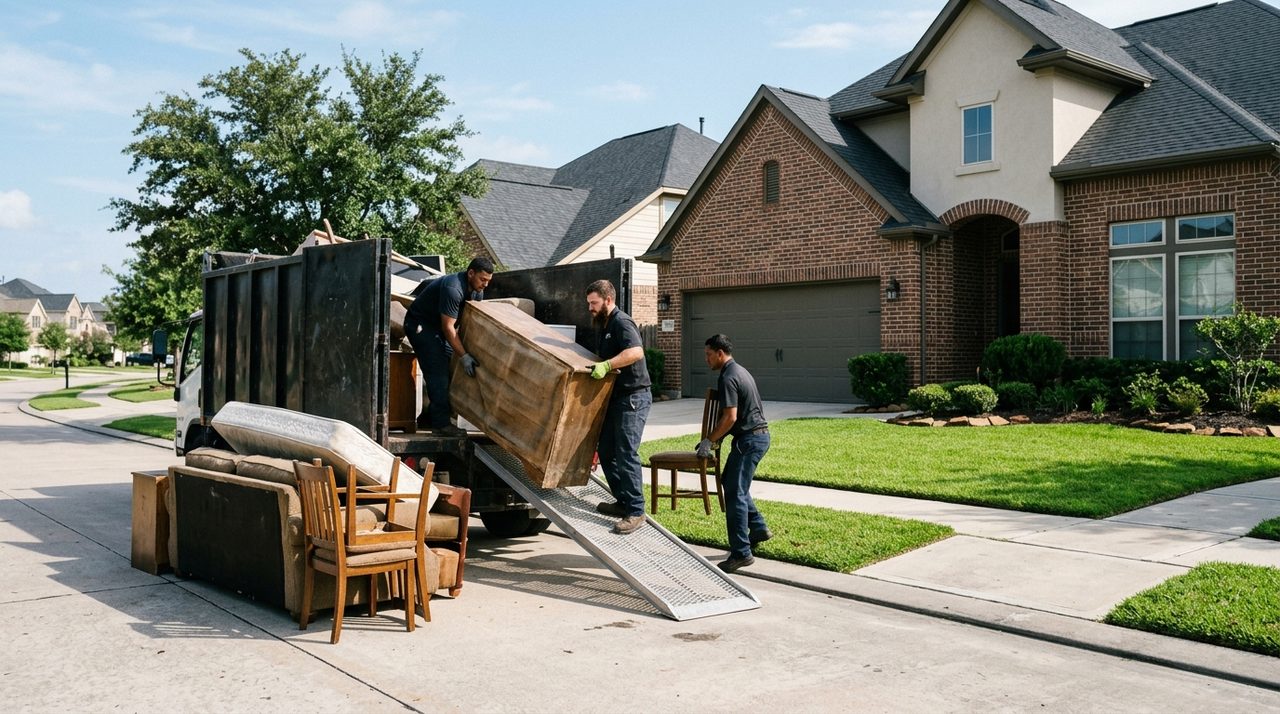
Westchase's housing stock — a dense patchwork of 1970s through 1990s single-family homes spread across dozens of separately platted subdivisions along Beltway 8 — generates a steady stream of junk-removal work: aging appliances swapped out after decades of hard use, garage accumulations from long-term owners, and concrete hardscape cracked by Houston's expansive clay soils. Because no single HOA governs the entire district, the rules governing where a roll-off can sit and how long curbside debris may linger vary subdivision by subdivision — and the City of Houston's Houston Permitting Center, not a suburb office, is the relevant permit authority for any trade work connected to a removal project. This page covers the specific removal challenges Westchase homeowners actually face, with realistic cost estimates and a clear-eyed look at what separates a compliant haul-out from a costly misstep.
Ranked by verified Google rating × review volume × verification tier. How we rank →
Some highly-rated pros serve Westchase from nearby and may not keep a Westchase street address. Those are listed under "Also serving Westchase" with their real city and distance, so you always know where each business is based.
12651 Briar Forest Dr # 245, Houston, TX 77077
Highly-rated pros based nearby who cover Westchase. Distance shown from the Westchase area.
Serving Westchase Based in Briargrove · 2.6 mi away
Serving Westchase Based in Briargrove · 3.1 mi away
Serving Westchase Based in Alief · 3.4 mi away
Serving Westchase Based in Spring Branch · 3.4 mi away
Serving Westchase Based in Alief · 3.7 mi away
Serving Westchase Based in Spring Branch · 4.1 mi away
Serving Westchase Based in Spring Branch · 4.1 mi away
Serving Westchase Based in Tanglewood · 4.5 mi away
Serving Westchase Based in Spring Branch · 5.2 mi away
Why it matters to you
Westchase is not governed by one master association — it is composed of multiple separately platted subdivisions, each potentially carrying its own deed restrictions and architectural review requirements. One block may allow a roll-off container in the driveway for a week; the next block over may prohibit it entirely or limit curbside debris to 24–48 hours. Homeowners who skip this verification step can face fines billed directly to them, not to the hauler.
What a good pro does
Before booking any junk removal, pull your subdivision's deed restrictions through Harris County deed records to confirm whether container placement or extended curbside staging requires prior written approval. A thorough hauler will ask for this information upfront and schedule same-day or next-day full removal if your subdivision prohibits staged loads — avoiding fines entirely. The City of Houston does not require a separate city permit for the junk removal business itself, but disposal must go to a TCEQ-permitted facility.
Sources: Local HOA / deed restrictions (see area profile), Texas Commission on Environmental Quality, Municipal permit office (see area profile)
Why it matters to you
Westchase's median home was built in 1986, and many long-term owners have accumulated decades of possessions — including items that require careful disposal. CRT televisions, fluorescent tube lighting, old propane cylinders, and furniture painted before 1978 (which may contain lead under EPA rules) all surface regularly in garage and estate clearouts of homes this age. Standard residential junk haulers who toss these items with ordinary household debris can expose you to liability under federal EPA lead-safe guidelines.
What a good pro does
A qualified hauler working in Westchase's older subdivisions will sort clearout loads on-site, separating electronics and fluorescent lamps for proper recycling, offloading propane tanks to a certified exchange, and flagging any pre-1978 painted materials under EPA lead-safe protocols. Expect a partial truckload garage clearout in this area to run roughly $200–$350 (estimate); a full estate clearout truckload commonly runs $400–$650 (estimate), with potential add-on fees for specialty items.
Sources: EPA Lead Renovation, Repair and Painting (RRP) Rule, Texas Commission on Environmental Quality
Why it matters to you
Nearly every Westchase home sits on a slab-on-grade foundation over Houston's expansive Beaumont/Houston Black clay, which swells and shrinks with the drought-to-rain cycles common on the Gulf Coast. Driveways, patio slabs, and sidewalks poured in the 1970s and 1980s are now cracking and heaving, prompting replacement — and the resulting concrete rubble cannot go into a standard household junk load. Most transfer stations, including the Westpark and McCarty Road facilities, charge a separate per-ton tipping fee for concrete and C&D debris that can run $60–$120 per ton above base rates (estimate), a surprise that catches homeowners off guard.
What a good pro does
When calling for quotes, disclose the cubic-yard estimate of any concrete rubble separately from your household items — a reputable hauler will price the two streams independently and confirm the disposal route meets TCEQ solid waste facility requirements. Do not allow a hauler to mix concrete rubble with standard junk in a single load, as that can violate municipal solid waste rules and inflate costs unpredictably.
Sources: Texas Commission on Environmental Quality, City of Houston Permitting Center
Why it matters to you
Westchase's 1970s–1990s homes are deep into the lifecycle where original HVAC air handlers, water heaters, and kitchen appliances are reaching end of life — a pattern accelerated when Winter Storm Uri (February 2021) killed water heaters and HVAC units across west Houston in a single freeze event. On slab-on-grade homes there is no basement staging area, so dead compressor units, air handlers, and refrigerators must be maneuvered through living areas and out through a single-story floor plan before haul-away, complicating labor time and access fees.
What a good pro does
Book appliance haul-away as a dedicated trip rather than tacking it onto a general junk load — haulers who specialize in heavy-item removal carry proper dollies and team staffing for slab homes and will coordinate with your HVAC or appliance installer on timing. Single-item large appliance pickup in the Houston metro typically runs $75–$150 (estimate); a multi-unit combo removal (old HVAC plus water heater plus refrigerator) often lands in the $250–$400 range (estimate). Confirm the hauler disposes of refrigerants through a TCEQ-compliant process, as improper refrigerant release is a federal violation.
Sources: Texas Commission on Environmental Quality, City of Houston Permitting Center
Hiring junk removal in Westchase? Westchase is a large, mixed-use district near Beltway 8 composed of multiple separately platted subdivisions, each with its own potential HOA and deed restrictions. Housing stock ranges from 1970s–1990s single-family homes to newer multifamily and townhome developments, nearly all built on slab-on-grade foundations. Contractors must verify deed restrictions and HOA rules on a per-subdivision basis, as there is no single umbrella association governing the entire area.
Building era
Primarily 1970s through 1990s, with continued multifamily and townhome development into the 2000s and 2010s.
Typical style
Contemporary suburban: traditional-to-transitional single-family homes, brick or stucco façade garden-style apartments, and townhomes.
Foundations
Slab-on-grade (nearly universal for post-1960s suburban Harris County construction).
Common systems
Central A/C with gas furnace, copper or CPVC plumbing transitioning to PEX in renovations, standard residential electrical panels (100–200 amp). Older 1970s–1980s homes may still have original galvanized supply lines or polybutylene piping requiring replacement.
What that means for repairs
Kitchen and bath remodels are common in aging 1970s–1980s homes. Plumbing re-pipes (replacing galvanized or polybutylene), HVAC system replacements on units past their 20-year lifespan, and slab foundation repair driven by Houston's expansive clay soils are frequent project types.
Permit jurisdiction
City of Houston — Houston Permitting Center.
HOA & deed restrictions
No single area-wide mandatory HOA exists. The Westchase District is a Texas Legislature-created management district focused on commercial improvements, not residential lot governance. The Westchase Super Neighborhood Council is a City of Houston advisory body. A Westchase Community Association (501(c)(4), formed 1974) exists, but its authority over individual residential lots is not clearly documented. Individual subdivisions within the Westchase area may have their own mandatory HOAs — must be verified per subdivision via Harris County deed records.
Historic districts
No City of Houston historic district designation confirmed.
Contractor note
Contractors must confirm which subdivision a property belongs to and check for active deed restrictions and HOA architectural review requirements before beginning exterior work, fencing, or additions. The lack of a single governing HOA means rules vary block by block.
FEMA flood zone
FEMA Zone X (low flood risk) per official NFHL data. Drainage is influenced by local bayous and channels within the Harris County Flood Control system; proximity to specific drainage channels should be verified on a per-property basis.
Hurricane Harvey impact
No Westchase-specific street-level Harvey flood impact documentation was found in available sources. The area is east of the Addicks and Barker Reservoir watersheds and experienced varying levels of impact during Harvey. Flood history should be verified through Harris County Flood Control District records and individual property disclosure for any specific address.
Heat & humidity load
Sustained summer heat puts heavy strain on aging HVAC systems in 1970s–1980s homes; capacitor failures, refrigerant leaks, and compressor burnout are common seasonal calls. Slab-on-grade foundations on Houston's expansive clay soils experience movement during summer drought cycles, leading to door/window sticking and drywall cracks that trigger foundation inspection and repair demand.
Working with contractors here
Westchase keeps contractors busy with the bread-and-butter maintenance demands of aging 1970s–1990s suburban homes: HVAC replacements, whole-house plumbing re-pipes, and slab foundation repair. The area's slab-on-grade construction on expansive clay means foundation work is a recurring need, especially after drought-to-rain cycles. Roof replacements on 20–30-year-old composition shingle roofs are common, and many homeowners are upgrading aging electrical panels to support modern loads. Because Westchase comprises many separate subdivisions, contractors must scope each job with attention to the specific subdivision's deed restrictions and any HOA architectural review — exterior modifications, fence styles, and material choices may vary significantly from one block to the next.
Local Tip
Always ask for a written estimate before work begins. Texas contractors are required to provide one on jobs over $1,000.
Westchase is a large, mixed-use district near Beltway 8 composed of multiple separately platted subdivisions, each with its own potential HOA and deed restrictions. Housing stock ranges from 1970s–1990s single-family homes to newer multifamily and townhome developments, nearly all built on slab-on-grade foundations. Contractors must verify deed restrictions and HOA rules on a per-subdivision basis, as there is no single umbrella association governing the entire area.
Source: U.S. Census Bureau, ACS 5-Year 2023
Most of Westchase maps to FEMA Zone X (low mapped flood risk), but Houston's flash-flood reality means even low-risk blocks benefit from smart drainage and storm-hardened installs.
Source: FEMA National Flood Hazard Layer (NFHL). Flood zones vary by parcel — verify your individual FIRM panel.
Sources: City of Houston Permitting CenterTexas Commission on Environmental Quality
Sources: Local HOA / deed restrictions (see area profile)
Sources: Local HOA / deed restrictions (see area profile)