Closed
2505 Washington Ave, Houston, TX 77007
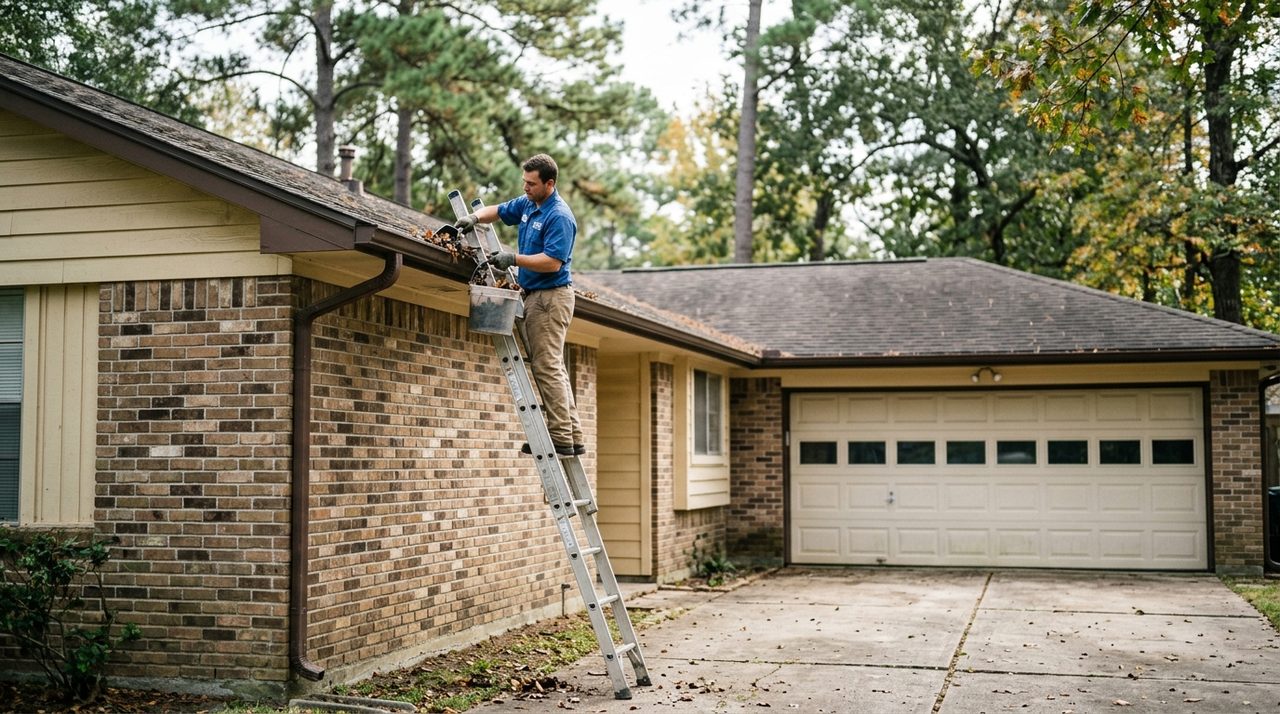
Lazybrook and Timbergrove's 1950s–1960s ranch-style brick homes sit inside the 610 Loop within drainage distance of White Oak Bayou, meaning a clogged gutter isn't just a nuisance — it's a direct risk to aging foundations and already-tight lot drainage. These mid-century rooflines commonly carry original or early-replacement gutters with spike-and-ferrule hangers that have been through decades of Houston heat cycles and at least one deep freeze, making this a neighborhood where the condition of the gutter system itself deserves inspection every time a crew shows up. This page covers the specific challenges facing Lazybrook/Timbergrove homeowners and what to realistically expect from a cleaning visit.
Ranked by verified Google rating × review volume × verification tier. How we rank →
Some highly-rated pros serve Lazybrook / Timbergrove from nearby and may not keep a Lazybrook / Timbergrove street address. Those are listed under "Also serving Lazybrook / Timbergrove" with their real city and distance, so you always know where each business is based.
2505 Washington Ave, Houston, TX 77007
1345 Martin St, Houston, TX 77018
1923 Washington Ave Suite #3050, Houston, TX 77007
931 W 41st St, Houston, TX 77018
Highly-rated pros based nearby who cover Lazybrook / Timbergrove. Distance shown from the Lazybrook / Timbergrove area.
Serving Lazybrook / Timbergrove Based in Brookhollow · 1.9 mi away
Serving Lazybrook / Timbergrove Based in Brookhollow · 3.4 mi away
Serving Lazybrook / Timbergrove Based in Acres Homes · 3.7 mi away
Serving Lazybrook / Timbergrove Based in Acres Homes · 3.7 mi away
Serving Lazybrook / Timbergrove Based in Independence Heights · 4 mi away
Serving Lazybrook / Timbergrove Based in Tanglewood · 4.1 mi away
Why it matters to you
The original ranch homes in Lazybrook and Timbergrove were built in the 1950s and 1960s, and many still carry aluminum gutters attached with spike-and-ferrule hangers — a fastener style that works loose with every thermal expansion cycle Houston summers produce. When debris accumulates and standing water adds weight, these aging hangers pull farther from the fascia, creating a slight backward pitch that traps water rather than draining it. Because the neighborhood sits within drainage reach of White Oak Bayou, even modest overflow from a sagging gutter run concentrates water against the foundation perimeter repeatedly across a season.
What a good pro does
A thorough cleaning visit here should include a hanger inspection along every run, not just a debris blow-out. Any hanger pulling more than a quarter inch from the fascia board should be replaced with a hidden screw-style bracket rated for Houston's humidity. A properly pitched gutter (roughly one-quarter inch drop per ten feet toward the downspout) should be verified after debris removal, since accumulated loads can temporarily mask a sag that reappears once the gutter is empty. No City of Houston permit is required for this level of repair, but homeowners on lots with deed restrictions should confirm no exterior-modification language applies before changing gutter profiles.
Sources: City of Houston Permitting Center, Local HOA / deed restrictions (see area profile)
Why it matters to you
Whether a 1950s ranch in this neighborhood sits on a slab or on pier-and-beam — and both types exist in Houston housing of this era — the Houston Black clay soil underneath responds badly to repeated saturation along the foundation perimeter. A clogged gutter that spills rainwater at the drip line does exactly that: it dumps concentrated runoff inches from the footing rather than routing it to the yard or street. For homes already undergoing renovation or foundation evaluation, adding a chronic moisture source at the perimeter can worsen differential movement regardless of foundation type.
What a good pro does
After cleaning, a good crew checks that every downspout discharges at least four to six feet from the foundation line and that the splash block or extension is directing flow away from the slab or pier footings. In Lazybrook/Timbergrove's narrow lots, this sometimes means adding a downspout extension across a concrete walk rather than discharging directly into a planting bed against the house. Harris County Flood Control District mapping of White Oak Bayou's drainage corridor is worth reviewing if your lot is within a block of the bayou, since grade changes upstream can affect how quickly surface water moves after heavy rain.
Sources: Harris County Flood Control District, FEMA National Flood Hazard Layer (NFHL)
Why it matters to you
The established tree canopy in Lazybrook and Timbergrove — live oaks, cedar elms, and the occasional loblolly pine that have grown for decades on 1950s lots — generates a debris surge in gutters after any significant wind event. Hurricane Beryl in July 2024 and the May 2024 derecho both moved through the Harris County interior, depositing bark strips, Spanish moss mats, small branches, and shingle granules into gutters across the neighborhood in a matter of hours. Homes with aging 3-tab shingles already shedding granules before the storm see granule-and-debris plugs form at downspout elbows that resist standard leaf-blowing.
What a good pro does
After a named storm or derecho, schedule cleaning within two weeks rather than waiting for the next routine visit — debris left sitting in Houston's humidity begins to break down into a compacted, moisture-retaining mat within days. Request that the crew hand-clear downspout elbows and flush each run with water under pressure rather than relying solely on a blower pass, which won't shift compacted granule plugs. Post-storm cleans on larger or two-story infill homes in this neighborhood typically run $275–$450 (estimated) given debris volume and any storm-damage inspection time. Texas does not require a state trade license for gutter cleaning, so verify that any operator carries general liability insurance before booking.
Sources: Harris County Flood Control District
Why it matters to you
Lazybrook and Timbergrove's proximity to White Oak Bayou places the neighborhood in a corridor that Harris County Mosquito Control District consistently monitors for Aedes aegypti and Culex quinquefasciatus activity. A debris dam holding even two to three inches of standing water in a shaded gutter run — common under the dense canopy of a 60-year-old live oak — can produce a mosquito brood in as little as seven to ten days during Houston's May-through-October peak season. This is not a hypothetical: the bayou corridor provides baseline mosquito pressure, and clogged gutters on individual properties amplify it at the parcel level.
What a good pro does
Twice-annual cleaning (spring before mosquito season peaks and late fall after leaf drop) is the minimum for heavily shaded ranch rooflines in this neighborhood. If mature trees overhang the roof, a third mid-summer pass is worth the cost given how quickly pine needles and oak tassels accumulate in peak growing months. After each cleaning, run a hose through every gutter run to confirm water moves freely to the downspout outlet with no pooling visible from the ground; standing water anywhere after flushing signals a pitch or obstruction problem that needs to be corrected before the next rain.
Sources: Harris County Flood Control District, FEMA National Flood Hazard Layer (NFHL)
Hiring gutter cleaning in Lazybrook / Timbergrove? Lazybrook/Timbergrove is defined by 1950s–1960s ranch-style brick homes inside the 610 Loop, many of which are now reaching the age where major systems need replacement or full renovation. Proximity to White Oak Bayou introduces flood-risk considerations for any ground-level work, and the Timbergrove Manor Civic Club requires design review approval before permitting for new construction and renovations, adding a step contractors must plan for.
Building era
1950s–1960s, with ongoing infill and teardown rebuilds.
Typical style
One-story, mid-century ranch-style brick homes; newer two-story infill construction is increasing.
Foundations
Not confirmed from available sources - both slab-on-grade and pier-and-beam are common in 1950s–1960s Houston construction. Verify on a per-property basis.
Common systems
Original homes likely have galvanized or cast-iron drain lines, copper supply lines, older electrical panels (60–100 amp), and aging central HVAC systems. Many have undergone partial updates over the decades.
What that means for repairs
Teardowns and full rebuilds are common as land values inside the Loop have risen. Whole-home remodels of original ranches are also frequent, including kitchen and bath modernizations, re-plumbing, and electrical panel upgrades. Timbergrove Manor Civic Club requires design review before City of Houston permitting for new construction and major renovations.
Permit jurisdiction
City of Houston Permitting Center (neighborhood is within Houston city limits, inside the 610 Loop).
HOA & deed restrictions
No mandatory master HOA. Governance is through civic clubs: Timbergrove Manor Civic Club (TMCC, 501(c)(4)) and Lazybrook Civic Club. Deed restrictions are enforced at the subdivision level and vary by section. Whether civic club dues are legally mandatory varies by section and is not definitively documented in public-facing materials.
Historic districts
No City of Houston historic district designation confirmed. HAHC Certificates of Appropriateness are not required for exterior work based on available research.
Contractor note
Contractors working in Timbergrove must obtain civic club design review approval before applying for City of Houston permits for new construction and major renovations. Deed restrictions vary by section, so scope of work and exterior modifications should be verified against the specific lot's recorded restrictions.
FEMA flood zone
FEMA Zone X (low flood risk) per official NFHL data. However, the neighborhood borders White Oak Bayou, and properties closer to the bayou may carry higher effective flood risk. Individual properties should be checked against HCFCD inundation maps and may require elevation certificates.
Hurricane Harvey impact
Specific Harvey 2017 impact data for Lazybrook/Timbergrove is not available from the sources reviewed. The neighborhood's adjacency to White Oak Bayou suggests some homes near the bayou likely experienced flooding, but street-level or block-level inundation data was not confirmed. Check HCFCD Harvey inundation maps and Harris County Repetitive Loss/Severe Repetitive Loss lists for property-specific history.
Heat & humidity load
Original 1950s–1960s homes with aging HVAC systems face heavy summer cooling loads. Older ductwork in attics or crawlspaces may be poorly insulated, driving up energy costs. Pier-and-beam homes (where present) may see moisture-related issues under the house during Houston's humid summers. Bayou-adjacent lots may experience increased mosquito pressure and standing water concerns.
Working with contractors here
The dominant work in Lazybrook/Timbergrove involves either full teardown-and-rebuild projects or deep renovations of 60–70-year-old ranch homes. Re-plumbing (replacing galvanized or cast-iron lines), electrical panel upgrades, and HVAC replacement are among the most common system jobs. Foundation evaluation is important given the age of the housing stock, though the predominant foundation type is not uniformly documented. Contractors should budget time for Timbergrove Manor Civic Club design review when scoping exterior-facing or new construction work, as this approval is required before the City of Houston will issue permits. Flood risk near White Oak Bayou should be assessed before any ground-level or below-grade scope, including foundation work and landscaping drainage.
Local Tip
Always ask for a written estimate before work begins. Texas contractors are required to provide one on jobs over $1,000.
Lazybrook/Timbergrove is defined by 1950s–1960s ranch-style brick homes inside the 610 Loop, many of which are now reaching the age where major systems need replacement or full renovation. Proximity to White Oak Bayou introduces flood-risk considerations for any ground-level work, and the Timbergrove Manor Civic Club requires design review approval before permitting for new construction and renovations, adding a step contractors must plan for.
Source: U.S. Census Bureau, ACS 5-Year 2023
Most of Lazybrook / Timbergrove maps to FEMA Zone X (low mapped flood risk), but Houston's flash-flood reality means even low-risk blocks benefit from smart drainage and storm-hardened installs.
Source: FEMA National Flood Hazard Layer (NFHL). Flood zones vary by parcel — verify your individual FIRM panel.
Wind-driven rain during a hurricane pushes water horizontally into trough seams and end caps — have a gutter technician reseal any open joints and clear debris before storm season so the system functions as designed. In Lazybrook / Timbergrove, the bigger post-storm threat is often structural damage from overflowing gutters undermining window sills and door frames rather than direct flooding. In-city Lazybrook / Timbergrove work falls under City of Houston floodplain and permitting rules.
The May 2024 derecho demonstrated that Lazybrook / Timbergrove isn't immune to structural gutter damage even without flooding; wind-lifted sections land on HVAC equipment, cars, and windows. Replacing standard gutter spikes with hex screws and adding hangers every 18 inches is the most cost-effective pre-storm hardening a gutter cleaning professional can perform. In-city Lazybrook / Timbergrove work falls under City of Houston floodplain and permitting rules.
After a Houston hard freeze, walk the roofline and look for gutter sections that have pulled away from the fascia under ice weight, since even low-flood-risk homes in Lazybrook / Timbergrove can take on wall and soffit moisture from a detached run during the melt. Scheduling a post-freeze gutter inspection with a qualified professional catches hanger damage before it progresses through the wet spring. In-city Lazybrook / Timbergrove work falls under City of Houston floodplain and permitting rules.
Sources: FEMA National Flood Hazard Layer (NFHL), Ready.gov -- Hurricanes, CenterPoint Energy -- Storm Center, City of Houston -- Emergency Preparedness, Ready.gov -- Winter Weather, Harris County Flood Control District
Houston-specific estimators to plan your project before you call a pro. All results are planning estimates — a licensed local pro confirms the details on site.
Disconnect & drain every outdoor hose bib
Remove hoses, drain the spigots, and cover each with an insulated faucet sock. Un-drained hose bibs are the #1 burst point in a Houston freeze.
Insulate exposed pipes in the attic & garage
Wrap any pipe in an unconditioned space (attic runs, garage walls) with foam sleeves. Houston homes rarely insulate these because they only matter a few nights a year — which is exactly why they burst.
Open cabinet doors & keep a pencil-width drip
On hard-freeze nights, open kitchen/bath cabinets so warm air reaches the pipes and let faucets on exterior walls drip to relieve pressure.
Protect the attic/garage water heater & its lines
An attic or garage tank sits in unconditioned space. Insulate the cold-inlet and hot-outlet lines and confirm the emergency drain pan is clear so a leak doesn't reach the ceiling.
This is a planning estimate only — actual requirements depend on an on-site assessment by a licensed Houston pro. If a pipe has already burst, shut off your main water supply and call a licensed Houston plumber immediately — freeze bursts flood fast.
Sources: City of Houston Permitting CenterLocal HOA / deed restrictions (see area profile)
Sources: FEMA National Flood Hazard Layer (NFHL)Harris County Flood Control District
Sources: Local HOA / deed restrictions (see area profile)