Best Foundation Repair in Waller, TX
Waller, TX sits atop Waller County's expansive black clay soils — the same Houston Black and Beaumont clay formations that drive foundation movement across the northwest Houston metro — and the area's split housing stock makes the problem especially variable: newer subdivision homes in developments like Beacon Hill were built slab-on-grade in the 2010s and 2020s, while older rural properties dating to the mid-20th century may sit on pier-and-beam systems that have had decades to shift. Permit jurisdiction here is not a given — work inside the City of Waller goes through the City of Waller permit office, while the same street in unincorporated Waller County falls under a different framework entirely, a distinction that catches homeowners off guard at resale. This page explains what that combination of reactive clay, multi-era housing, and fragmented oversight means for your foundation repair decisions.
- Median home built
- 1987
- Median home value
- $115,100
- FEMA flood zone
- X (low)
- Typical cost (est.)
- $3,500–$25,000 depending on method and pier count
- Most common local issue
- Drought-cycle perimeter void formation on large rural and subdivision lots with clay soils
Ranked by verified Google rating × review volume × verification tier. How we rank →
Foundation Repair in Waller: What You Should Know
Waller County's Expansive Clay Heaves and Shrinks Under Every Slab — Especially on Larger Lots with Sparse Irrigation
Why it matters to you
Waller County's native soils are dominated by the same Houston Black and Beaumont clay formations that affect the entire northwest Houston region. On the larger lots common outside Waller's newer subdivisions, foundation perimeters are often far from any irrigation infrastructure, meaning the soil dries unevenly during La Niña drought cycles like 2022–2023. That uneven moisture loss causes one corner of a slab to drop while another holds, cracking brick veneer, sticking door frames, and producing diagonal drywall cracks that repeat each wet-dry cycle — a pattern homeowners sometimes dismiss as 'settling' until the differential movement becomes severe.
What a good pro does
A qualified foundation contractor will probe the perimeter for void formation, measure interior elevations with a manometer or zip level across multiple reference points, and document differential movement before recommending any repair. On Waller's larger lots, the contractor should also map the irrigation coverage — or its absence — and specify a soaker-hose maintenance zone along the slab perimeter as part of the written repair plan. Pressed concrete pilings (the legacy 1980s–90s Houston method) are still offered widely in this market at roughly $3,500–$9,000 for a typical job but carry a controversial track record; get three written proposals with pier counts and depth specs before committing.
Sources: Municipal permit office (see area profile), International Residential Code (as adopted by City of Houston)
Older Rural Properties May Have Under-Slab Plumbing Damage from Uri That Was Never Fully Repaired
Why it matters to you
Waller's rural housing stock includes homes built in the 1970s and 1980s — the U.S. Census ACS 5-Year 2023 data puts the area's median year built at 1987 — many of which were plumbed with cast-iron under-slab drain lines. Winter Storm Uri in February 2021 froze and burst thousands of these lines across the Houston metro, and many homeowners patched the visible interior damage without addressing cracked under-slab pipes. A slow ongoing leak from one of those lines saturates the clay directly beneath the slab, causing localized heave followed by settlement as the soil structure breaks down — and the resulting cracks look identical to drought-cycle movement, making misdiagnosis easy and expensive.
What a good pro does
Before signing any foundation repair contract on a Waller home built before 1990, insist that the contractor recommend — or that you independently arrange — a hydrostatic plumbing test. This test pressurizes the drain system to identify under-slab leaks and costs an estimated $250–$400. Any plumbing repair or rerouting under the slab must be performed or overseen by a plumber licensed through the Texas State Board of Plumbing Examiners (TSBPE). Skipping the plumbing test and proceeding straight to pier installation can leave the root cause in place, leading to repeat movement within a few years.
Sources: Texas State Board of Plumbing Examiners, Municipal permit office (see area profile)
Navigating the City of Waller vs. Unincorporated Waller County Permit Split Before Any Underpinning Work Begins
Why it matters to you
Unlike the City of Houston, which has a centralized Development Services Department for foundation repair permits, properties in the Waller area fall under two entirely different jurisdictions depending on their parcel boundary — the City of Waller's permit office for incorporated parcels, or Waller County engineering oversight for unincorporated land. Many foundation contractors who primarily work the Houston metro are unfamiliar with Waller County's process and may propose to proceed without verifying jurisdiction, which can leave a homeowner with unpermitted work. Unpermitted foundation repairs surface on TREC seller's disclosure forms and can complicate or kill a sale, a real concern given that the Beacon Hill subdivision and other newer Waller-area communities attract buyers who will order thorough inspections.
What a good pro does
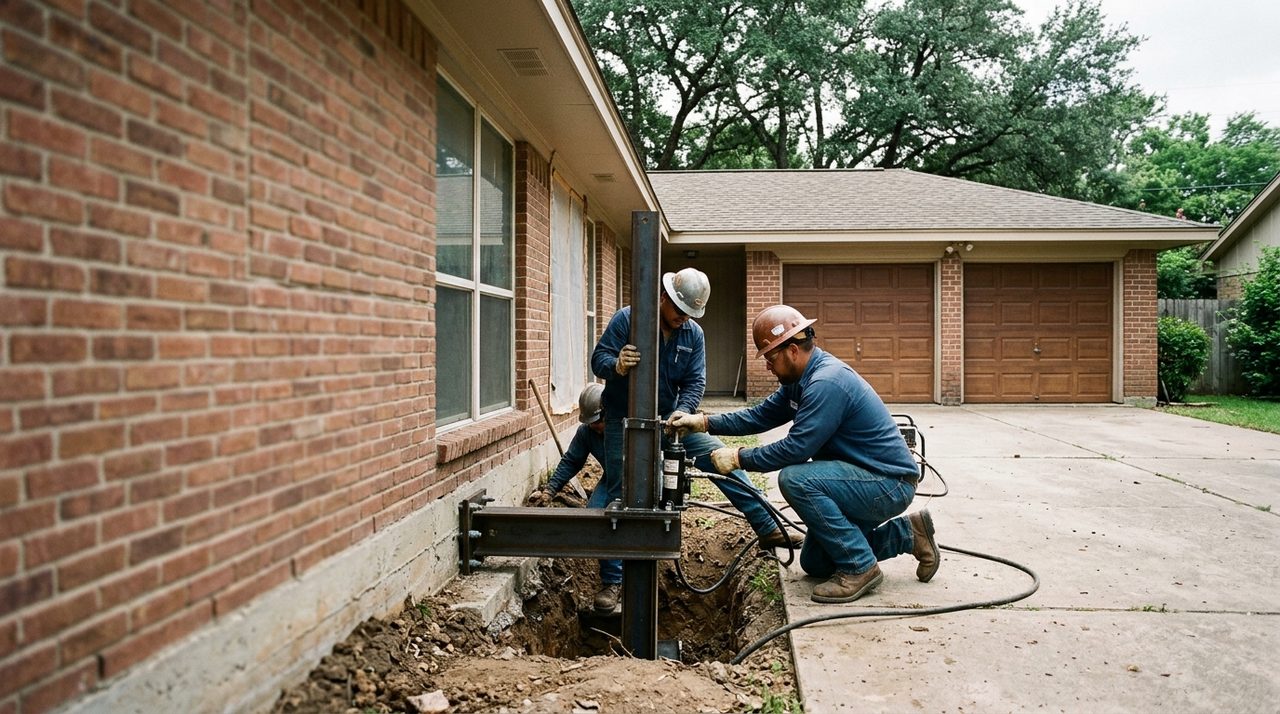
Before work begins, verify the parcel's jurisdiction by address through the City of Waller or Waller County. Ask every contractor bidding the job to confirm in writing how they intend to pull the permit, which office they will use, and what the inspection schedule looks like — not just an assertion that 'the permit is handled.' For steel push pier underpinning (estimated $1,200–$1,800 per pier, 8–16 piers typical) or any other structural underpinning, the permit and inspection trail is the document that protects you at resale. Texas requires sellers to disclose known foundation movement and repairs on the TREC disclosure form, making a clean, documented permit record a financial asset.
Sources: Municipal permit office (see area profile), Texas Department of Licensing & Regulation, Local HOA / deed restrictions (see area profile)
Large Trees on Waller's Spacious Lots Create Asymmetric Soil Moisture Loss That Tilts Slabs Over Time
Why it matters to you
Waller's rural and semi-rural properties frequently feature mature live oaks, water oaks, and post oaks whose root systems can extend two to three times the canopy radius — easily reaching within striking distance of a slab on a typical Waller-area lot. On expansive clay, those roots aggressively mine soil moisture during the dry season, causing localized shrinkage and foundation drop on the tree side while the open-yard side holds steady. Newer subdivision homes built in the 2010s on previously cleared land may not face this yet, but trees planted as part of those developments will begin exerting meaningful soil influence within 10–15 years.
What a good pro does
A thorough foundation inspection for a Waller property should include a site sketch noting the species, approximate canopy radius, and distance from the foundation for any significant tree within 30 feet. Where roots are confirmed as a contributing factor, the long-term repair plan must address moisture management — consistent perimeter irrigation to prevent soil from drying unevenly — not just structural underpinning. On older rural parcels, root barrier installation may be appropriate where tree removal is not an option. Because Texas does not separately license foundation repair contractors through TDLR, verifying that the contractor carries general liability and workers' compensation insurance and has documented experience with tree-adjacent slab repair in clay-soil conditions is the homeowner's primary quality control.
Sources: Texas Department of Licensing & Regulation, International Residential Code (as adopted by City of Houston), Municipal permit office (see area profile)
Foundation Repair in Waller: What You Should Know
Hiring foundation repair in Waller? Waller sits in unincorporated and incorporated areas of Waller County northwest of Houston, featuring a mix of older rural properties and newer subdivision development. Homeowners here benefit from relatively low flood risk but should verify deed restrictions and permit jurisdiction on a parcel-by-parcel basis, as the regulatory landscape varies significantly across the area.
- Housing era
- Not confirmed - housing stock spans multiple decades, with newer construction (2010s–2020s) appearing in…
- Foundation
- Not confirmed - slab-on-grade is typical for newer construction in the region
- Flood zone
- FEMA Zone X (low flood risk) - source
- Permits
- Not confirmed with certainty
Housing stock & systems
Building era
Not confirmed - housing stock spans multiple decades, with newer construction (2010s–2020s) appearing in subdivisions like Beacon Hill alongside older rural properties.
Typical style
Not confirmed - likely a mix of ranch-style homes on larger lots and newer suburban construction in master-planned communities.
Foundations
Not confirmed - slab-on-grade is typical for newer construction in the region; older properties may include pier-and-beam.
Common systems
Not confirmed - newer homes likely feature modern central HVAC and PEX plumbing; older rural properties may have aging systems requiring updates.
What that means for repairs
Not confirmed - older rural properties in the area likely drive demand for system upgrades (HVAC, plumbing, electrical), while newer subdivision homes may require cosmetic updates and outdoor living additions.
Permits & restrictions
Permit jurisdiction
Not confirmed with certainty. Properties within the City of Waller would use the City of Waller permit office; properties in unincorporated Waller County would fall under Waller County engineering. Verify jurisdiction by parcel address.
HOA & deed restrictions
Not confirmed - some subdivisions in the Waller area may have mandatory HOAs or POAs, but no specific HOA was identified for the broader Waller community. Check deed and Waller County real property records or the TREC HOA Management Certificate database.
Historic districts
No City of Houston historic district designation confirmed. Waller is outside the City of Houston and HAHC jurisdiction.
Contractor note
Contractors should verify whether each job site falls within the City of Waller or unincorporated Waller County, as permit requirements and inspection processes differ. Deed restrictions, if any, should be confirmed through Waller County Clerk records before beginning exterior modifications.
Flood & weather
FEMA flood zone
FEMA Zone X (low flood risk) - source: fema_nfhl. Specific bayou or creek proximity for individual parcels should be verified, but the overall area carries minimal federally designated flood risk.
Hurricane Harvey impact
Not confirmed - no street-level flood data or Harvey inundation records were found for the specific Waller neighborhood area. Check Harris County and Waller County flood claim records for parcel-specific Harvey impact.
Heat & humidity load
Houston-area summers bring sustained high heat and humidity. Homes in Waller, particularly older rural structures, may experience increased HVAC strain, moisture intrusion issues, and foundation movement during prolonged dry spells. Newer subdivision homes benefit from modern insulation and drainage but still require regular HVAC maintenance and attic ventilation checks.
Working with contractors here
Contractors working in Waller encounter a split market: newer subdivision homes needing warranty-era repairs, outdoor living additions, and fence installations, alongside older rural properties requiring full system overhauls including HVAC replacement, re-plumbing, and electrical panel upgrades. The low flood risk reduces demand for flood mitigation work, but foundation monitoring remains important given the expansive clay soils common across Waller County. Job scoping should account for potentially longer material delivery times given the area's distance from central Houston supply hubs, and contractors must confirm the applicable permit jurisdiction before starting work.
Local Tip
Always ask for a written estimate before work begins. Texas contractors are required to provide one on jobs over $1,000.
About Waller
Waller sits in unincorporated and incorporated areas of Waller County northwest of Houston, featuring a mix of older rural properties and newer subdivision development. Homeowners here benefit from relatively low flood risk but should verify deed restrictions and permit jurisdiction on a parcel-by-parcel basis, as the regulatory landscape varies significantly across the area.
- Median year built
- 1987
- Median home value
- $115,100
- Owner-occupied
- 27.6%
- Population
- 3,062
- Housing units
- 1,300
- Median income
- $37,163
Source: U.S. Census Bureau, ACS 5-Year 2023
Flood & storm risk
FEMA Zone XLow flood riskMost of Waller maps to FEMA Zone X (low mapped flood risk), but Houston's flash-flood reality means even low-risk blocks benefit from smart drainage and storm-hardened installs.
Source: FEMA National Flood Hazard Layer (NFHL). Flood zones vary by parcel — verify your individual FIRM panel.
Houston Storm Readiness in Waller
Hurricane & flooding
Wind-driven rain during a hurricane can saturate soil on the windward side of your home while the leeward side stays dry, creating differential moisture conditions beneath your slab that show up as sticking doors weeks later in Waller, TX. Schedule a Zip-Level elevation reading after any named storm passes so a foundation professional can distinguish normal seasonal movement from storm-induced settlement requiring pier work. As a Waller County community, Waller may follow county rather than City of Houston storm rebuild rules.
Severe storms & hail
The May 2024 derecho caused structural racking in thousands of Houston homes, and racking places diagonal tension on slab corners that can widen existing hairline cracks into visible gaps in Waller, TX over the following weeks. Schedule a foundation survey within 30 days of any severe wind event to establish a post-storm baseline before summer drying compounds any movement. As a Waller County community, Waller may follow county rather than City of Houston storm rebuild rules.
Ice storms & freezes
In Waller, TX, where mapped flood risk is low, the primary post-freeze foundation threat is not surface water but slab-leak-driven soil saturation — Uri 2021 caused widespread pipe failures that fed water silently under slabs for days before homeowners noticed. After any hard freeze, have a plumber pressure-test your lines first, then schedule a foundation elevation check if any under-slab leak is confirmed. Confirm the current FEMA panel for your Waller parcel — the area maps to Zone X, but adjacent lots can differ.
Sources: FEMA National Flood Hazard Layer (NFHL), Ready.gov -- Hurricanes, CenterPoint Energy -- Storm Center, City of Houston -- Emergency Preparedness, Ready.gov -- Winter Weather, Harris County Flood Control District
Free Waller Tools & Calculators
Houston-specific estimators to plan your project before you call a pro. All results are planning estimates — a licensed local pro confirms the details on site.
Houston Soil & Tree Proximity Risk Calculator
Open full tool & FAQ →Grouped by mature root aggression & water demand.
Trunk center to the nearest exterior wall.
The root zone likely reaches your foundation's soil during Houston's dry summers, when clay shrinks most. Watch for sticking doors and diagonal cracks, keep soil moisture even with a soaker hose during drought, and have a foundation pro evaluate if you see any movement.
Find a Houston foundation pro →This is a planning estimate only — actual requirements depend on an on-site assessment by a licensed Houston pro. Guidance is based on general species root behavior in expansive clay, not a soil test.
Houston Freeze Prep & Pipe Insulation Checklist
Open full tool & FAQ →Your freeze checklist — 4 tasks
- 1
Disconnect & drain every outdoor hose bib
Remove hoses, drain the spigots, and cover each with an insulated faucet sock. Un-drained hose bibs are the #1 burst point in a Houston freeze.
- 2
Insulate exposed pipes in the attic & garage
Wrap any pipe in an unconditioned space (attic runs, garage walls) with foam sleeves. Houston homes rarely insulate these because they only matter a few nights a year — which is exactly why they burst.
- 3
Open cabinet doors & keep a pencil-width drip
On hard-freeze nights, open kitchen/bath cabinets so warm air reaches the pipes and let faucets on exterior walls drip to relieve pressure.
- 4
Protect the attic/garage water heater & its lines
An attic or garage tank sits in unconditioned space. Insulate the cold-inlet and hot-outlet lines and confirm the emergency drain pan is clear so a leak doesn't reach the ceiling.
This is a planning estimate only — actual requirements depend on an on-site assessment by a licensed Houston pro. If a pipe has already burst, shut off your main water supply and call a licensed Houston plumber immediately — freeze bursts flood fast.
Frequently Asked Questions
Do I need a permit for foundation underpinning work on my Waller, TX property, and who issues it?
Sources: Municipal permit office (see area profile)
My Waller property was built in the late 1980s — is it more likely to have pier-and-beam or slab-on-grade, and does that change how foundation repair works?
Does Waller's low FEMA flood zone rating (Zone X) mean soil saturation from heavy rain isn't a foundation concern here?
How long does a typical foundation repair job take in Waller, TX, and are there times of year to avoid scheduling it?
Sources: Municipal permit office (see area profile)
Should I get a hydrostatic plumbing test before signing a foundation repair contract on my older Waller home?
If my Waller subdivision has an HOA, do I need approval before a contractor trenches around my slab for underpinning?
Sources: Local HOA / deed restrictions (see area profile)