1331 Broadway St Suite M, Pearland, TX 77581
Best Foundation Repair in Pearland, TX
Pearland's rapid build-out from the 1990s through the 2010s left the city with thousands of post-tensioned concrete slabs sitting directly on Brazoria County's expansive clay soils — a combination that produces predictable but manageable foundation movement as those slabs approach and pass the 20-year mark. Add the seasonal drought-to-downpour swings that have become routine across Southeast Houston, the fact that most subdivisions require HOA architectural approval before any exterior repair work begins, and the reality that permits run through the City of Pearland's own inspection office rather than Houston's, and it's clear that generic foundation advice won't cut it here. This page breaks down the specific issues Pearland homeowners face, what they cost, and how to navigate the local permitting and HOA process correctly.
Verified against Google Business data
Updated 2026
See the 10 Foundation Repair Serving Pearland 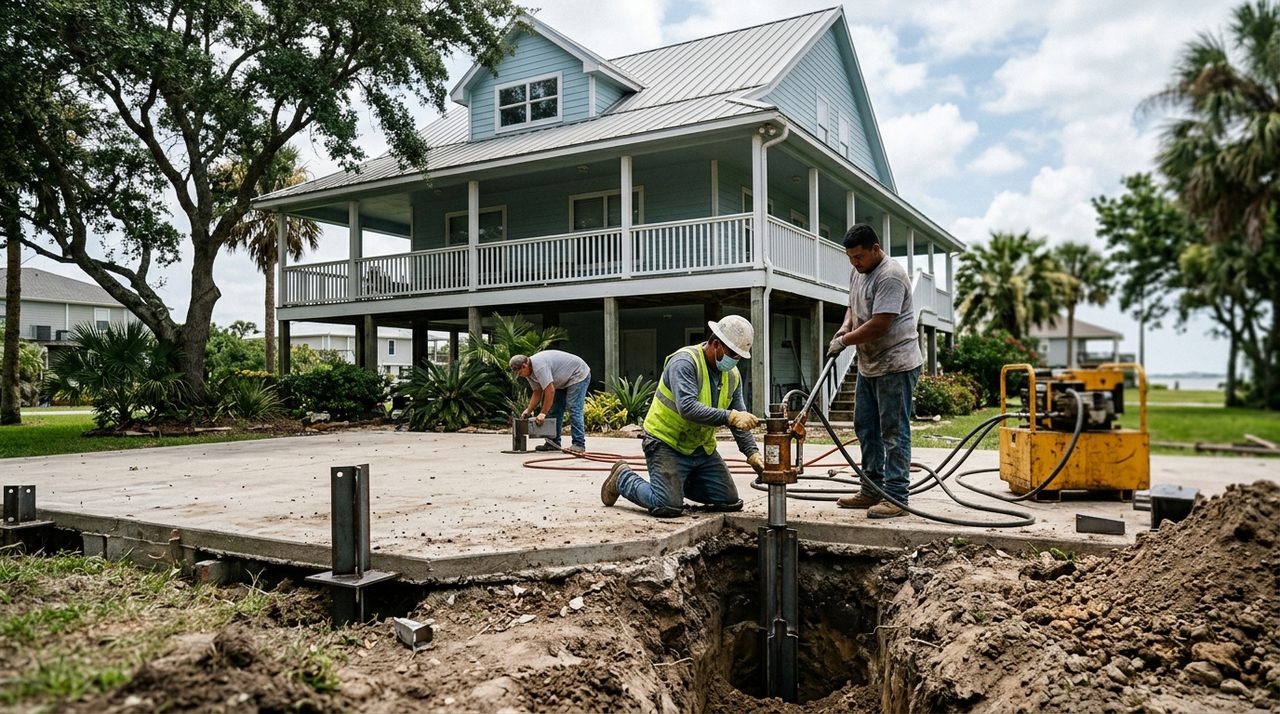
- Median home built
- 2003
- Median home value
- $330,900
- FEMA flood zone
- X (low)
- Typical repair cost (est.)
- $3,500–$25,000 depending on method and pier count
- Most common local issue
- Drought-cycle perimeter voids under 1990s–2000s post-tensioned slabs on Brazoria County clay
Ranked by verified Google rating × review volume × verification tier. How we rank →
Some highly-rated pros serve Pearland from nearby and may not keep a Pearland street address. Those are listed under "Also serving Pearland" with their real city and distance, so you always know where each business is based.
Min rating:
10 resultsBased in Pearland
4806 W Walnut St #300, Pearland, TX 77581
Closed
2119 County Rd 129 Suite A, Pearland, TX 77581
Closed
3503 Lockheed St Suite A, Pearland, TX 77581
Open Now
7102 Brookside Rd, Pearland, TX 77581
Also serving Pearland
Highly-rated pros based nearby who cover Pearland. Distance shown from the Pearland area.
Serving Pearland Based in South Houston · 5.9 mi away
Closed
Serving Pearland Based in Friendswood · 6 mi away
Serving Pearland Based in Braeswood · 6.1 mi away
Serving Pearland Based in Friendswood · 6.6 mi away
Serving Pearland Based in Friendswood · 6.6 mi away
Foundation Repair in Pearland: What You Should Know
Brazoria County Clay Is Baking Your Slab Perimeter During Dry Years
Why it matters to you
Pearland's lots sit on some of the same expansive Beaumont clay formations that run northeast through the Houston metro, and the 2022–2023 La Niña drought cycle hit Brazoria County hard. When the clay dries out, it pulls away from the slab edge, leaving a perimeter void that goes unsupported — and on a post-tensioned slab common to Pearland's 1990s–2010s production homes, that uneven support creates diagonal cracks through brick veneer, sticking doors, and sloping floors. Most homeowners in subdivisions like Silverlake or Shadow Creek Ranch first notice the problem in August or September after a dry summer, by which point the void is already well established.
What a good pro does
A qualified contractor will probe the slab perimeter for voids before recommending any underpinning, and should discuss a soaker-hose irrigation schedule (running 30–45 minutes per zone, 3–4 nights per week along the foundation edge during drought) as a preventive measure alongside any structural repair. Mudjacking or polyurethane foam injection — estimated at $800–$5,000 depending on scope — can fill existing voids; steel push piers ($1,200–$1,800 per pier installed, estimated) address deeper settlement. Any underpinning that requires exterior trenching will require a permit through the City of Pearland Permitting office, not the Houston Permitting Center.
Sources: Municipal permit office (see area profile), International Residential Code (as adopted by City of Houston)
Post-Tensioned Slabs Require Specialized Contractors — Not Every Crew Is Qualified
Why it matters to you
Unlike the older conventionally reinforced slabs found in Houston's inner neighborhoods, most Pearland homes built after the mid-1980s use post-tensioned slabs, where high-strength steel cables are stressed after the concrete cures. Cutting into or trenching around a post-tensioned slab without locating those cables first can sever a tendon, turning a $5,000 repair into a structural emergency costing multiples of that. Because Pearland's housing stock is concentrated in the 1993–2015 build window (Census median year built: 2003), post-tensioned construction is the norm here — not the exception.
What a good pro does
Before signing any foundation repair contract, confirm in writing that the contractor has experience with post-tensioned slabs specifically, and that they will use a cable-locating device (GPR or electromagnetic) before any slab penetration or perimeter excavation. Texas does not issue a standalone foundation repair license through TDLR, so contractor vetting falls on the homeowner — ask for proof of general liability and workers' compensation insurance, confirm the permit will be pulled with the City of Pearland, and request at least three written proposals with pier counts, depths, and specifications before committing.
Sources: Texas Department of Licensing & Regulation, Municipal permit office (see area profile)
HOA Architectural Approval Adds Weeks to Your Repair Timeline — Plan for It
Why it matters to you
Virtually every major Pearland subdivision — Silverlake, Southgate Estates, Springfield, and dozens of others across Brazoria County — carries mandatory HOA CC&Rs with an architectural review committee (ARC) that must approve exterior modifications before work begins. Foundation repair involving perimeter trenching, visible concrete work, or any changes to grading and drainage qualifies as an exterior modification under most of these governing documents, and starting work without ARC approval can result in fines, mandatory restoration, and complications at resale. Approval timelines typically run two to six weeks depending on the management company.
What a good pro does
Before scheduling a contractor, pull your subdivision's CC&Rs (available from your HOA management company or Brazoria County Appraisal District records) and submit an ARC request with the contractor's scope of work, any excavation plan, and expected site restoration details. Run the permit application to the City of Pearland in parallel so that approval timing aligns. Texas requires sellers to disclose known foundation movement and documented repairs on the TREC disclosure form, so keeping a complete paper trail — ARC approval, City of Pearland permit, inspection sign-off, and the contractor's warranty — protects your resale position in a market where the median home value is approximately $330,900.
Sources: Local HOA / deed restrictions (see area profile), Municipal permit office (see area profile)
Under-Slab Plumbing Leaks Can Masquerade as Soil Movement — Test First
Why it matters to you
Pearland homes built in the 1990s and early 2000s commonly used ABS or PVC drain lines under the slab — materials that hold up better than cast iron but are not immune to joint failures, root intrusion, or shifting-soil stress fractures. A slow leak from a cracked drain line saturates the clay directly beneath the slab, causing localized heave as the soil swells and then settlement as the soil structure degrades — symptoms that look identical to drought-cycle differential movement. Homeowners in Pearland who had interior pipe work done after Winter Storm Uri in 2021 should be especially alert, since cosmetic wall patches sometimes left under-slab lines incompletely repaired.
What a good pro does
Before agreeing to pier underpinning — which runs $10,000–$25,000 estimated for a typical 8–16 pier steel push pier job on a Pearland-scale home — spend $250–$400 on a hydrostatic plumbing test to rule out active under-slab leaks. If a leak is confirmed, a plumber licensed through TSBPE must perform or oversee the repair; that work requires its own City of Pearland permit separate from any structural foundation permit. Addressing the plumbing failure first can stabilize the soil and may eliminate the need for underpinning entirely, or at minimum define a much smaller repair scope.
Sources: Texas State Board of Plumbing Examiners, Municipal permit office (see area profile), International Residential Code (as adopted by City of Houston)
Foundation Repair in Pearland: What You Should Know
Hiring foundation repair in Pearland? Pearland is a large, incorporated suburban city in Brazoria County comprising dozens of master-planned subdivisions built primarily from the 1990s through the 2010s. Most homes are brick-veneer traditional construction on post-tensioned concrete slabs, meaning contractors here deal heavily with slab foundation movement, composition roof replacements, and HVAC systems aging into their first or second major service cycle. Permitting runs through the City of Pearland—not Houston or the county—and most subdivisions carry mandatory HOAs with architectural review requirements that affect exterior work.
- Housing era
- Primarily 1990s–2010s, with continued new construction in some subdivisions
- Foundation
- Post-tensioned concrete slab-on-grade (dominant for post-1970s production housing in this area)
- Flood zone
- FEMA Zone X (low flood risk) — source
- Permits
- City of Pearland Permitting (incorporated city — not Houston Permitting Center or Brazoria County…
Housing stock & systems
Building era
Primarily 1990s–2010s, with continued new construction in some subdivisions.
Typical style
Suburban brick or brick-veneer traditional single-family homes, typically 1- and 2-story, with composition asphalt shingle roofs.
Foundations
Post-tensioned concrete slab-on-grade (dominant for post-1970s production housing in this area).
Common systems
Central HVAC (gas furnace with split-system AC or heat pump), copper or CPVC supply plumbing with ABS/PVC drain lines, 200-amp electrical panels. Homes from the 1990s may have original R-410A or older R-22 refrigerant systems nearing end of life.
What that means for repairs
Kitchen and bathroom remodels are common as 1990s–early 2000s homes age past 20 years. Roof replacements are a major recurring need due to Gulf Coast hail and wind events. Some homeowners add outdoor living spaces, but HOA architectural guidelines often require pre-approval for additions, fencing, and exterior changes.
Permits & restrictions
Permit jurisdiction
City of Pearland Permitting (incorporated city — not Houston Permitting Center or Brazoria County Engineering).
HOA & deed restrictions
Most Brazoria County Pearland subdivisions have mandatory HOAs with recorded CC&Rs and architectural review committees. Examples include Silverlake HOA (Crest Management, 281-272-6377) and Springfield HOA. Older or more central Pearland areas may have voluntary associations or simpler deed restrictions. HOA dues typically range from $200–$900/year for smaller neighborhoods up to $600–$2,400+/year for amenity-rich master-planned communities. Specific HOA status must be verified per subdivision via resale certificate.
Historic districts
No historic district designation confirmed. Pearland is a relatively modern suburban city with no known HAHC or local historic overlays.
Contractor note
Contractors must pull permits through the City of Pearland, which has its own inspection process separate from Houston and Brazoria County. Nearly all subdivisions require HOA architectural approval for exterior modifications before work begins, so contractors should factor approval timelines into project scheduling.
Flood & weather
FEMA flood zone
FEMA Zone X (low flood risk) — source: fema_nfhl. However, portions of Pearland near Clear Creek and associated tributaries may carry higher flood risk designations; buyers and contractors should verify zone status at the parcel level, especially in western Pearland areas closer to waterways.
Hurricane Harvey impact
Parts of Pearland experienced flooding during Hurricane Harvey (2017), particularly areas near Clear Creek and low-lying bayou tributaries. Some master-planned communities in western Pearland reported significant water intrusion. Specific street-level impact varies widely by subdivision and proximity to drainage channels — not confirmed at a granular level from available research. Homeowners should check individual property flood history through Brazoria County records.
Heat & humidity load
Extended 95°F+ summers with high humidity stress HVAC systems heavily in these slab-on-grade homes. Attic temperatures can exceed 140°F, accelerating shingle degradation and demanding adequate attic ventilation and radiant barrier consideration. Expansive clay soils undergo seasonal shrink-swell cycles that can cause slab movement and related cosmetic or structural cracking, making foundation watering programs and drainage management important recurring service needs.
Working with contractors here
The dominant work in Pearland centers on maintaining 1990s–2010s production homes: HVAC replacements and repairs (original systems from the 1990s and early 2000s are reaching end of life), roof replacements driven by Gulf Coast storm damage and aging shingles, and kitchen/bath remodels as homes pass the 20-year mark. Slab foundation repair and drainage correction are recurring needs due to Brazoria County's expansive clay soils. Contractors should be aware that nearly every major subdivision requires HOA architectural approval for exterior work—including roof material and color, fence installation, and additions—which can add 2–6 weeks to project timelines. City of Pearland permits and inspections follow their own code enforcement process, and contractors accustomed to Houston's permitting system should confirm local requirements before starting work.
Local Tip
Always ask for a written estimate before work begins. Texas contractors are required to provide one on jobs over $1,000.
About Pearland
Pearland is a large, incorporated suburban city in Brazoria County comprising dozens of master-planned subdivisions built primarily from the 1990s through the 2010s. Most homes are brick-veneer traditional construction on post-tensioned concrete slabs, meaning contractors here deal heavily with slab foundation movement, composition roof replacements, and HVAC systems aging into their first or second major service cycle. Permitting runs through the City of Pearland—not Houston or the county—and most subdivisions carry mandatory HOAs with architectural review requirements that affect exterior work.
- Median year built
- 2003
- Median home value
- $330,900
- Owner-occupied
- 76.6%
- Population
- 125,983
- Housing units
- 46,105
- Median income
- $112,470
Source: U.S. Census Bureau, ACS 5-Year 2023
Flood & storm risk
FEMA Zone XLow flood riskMost of Pearland maps to FEMA Zone X (low mapped flood risk), but Houston's flash-flood reality means even low-risk blocks benefit from smart drainage and storm-hardened installs; as a Brazoria County coastal community, tropical surge and wind add a layer generic guidance misses.
Source: FEMA National Flood Hazard Layer (NFHL). Flood zones vary by parcel — verify your individual FIRM panel.
Houston Storm Readiness in Pearland
Hurricane & flooding
Beryl 2024 reminded Houston homeowners that even neighborhoods with low FEMA flood designations experience localized ponding when storm-sewer inlets back up, and that standing water against a foundation for even 12 hours can trigger clay heave in Pearland, TX. Before the season, confirm your gutters discharge at least five feet from the foundation and that splash blocks direct water toward the street, keeping clay moisture content consistent beneath the slab. As a Brazoria County community, Pearland may follow county rather than City of Houston storm rebuild rules.
Severe storms & hail
The May 2024 derecho caused structural racking in thousands of Houston homes, and racking places diagonal tension on slab corners that can widen existing hairline cracks into visible gaps in Pearland, TX over the following weeks. Schedule a foundation survey within 30 days of any severe wind event to establish a post-storm baseline before summer drying compounds any movement. Confirm the current FEMA panel for your Pearland parcel — the area maps to Zone X, but adjacent lots can differ.
Ice storms & freezes
Ice loading from roof accumulation during a hard freeze transfers compressive stress to your foundation corners, and in Pearland, TX that added load on clay subgrade that has stiffened from cold can create corner settlement that persists after the thaw. A TDLR-licensed foundation contractor should inspect visible brick-to-foundation transitions and interior door frames after any multi-day freeze event, even if no pipe damage occurred. As a Brazoria County community, Pearland may follow county rather than City of Houston storm rebuild rules.
Sources: FEMA National Flood Hazard Layer (NFHL), Ready.gov -- Hurricanes, CenterPoint Energy -- Storm Center, City of Houston -- Emergency Preparedness, Ready.gov -- Winter Weather, Harris County Flood Control District
Free Pearland Tools & Calculators
Houston-specific estimators to plan your project before you call a pro. All results are planning estimates — a licensed local pro confirms the details on site.
Houston Soil & Tree Proximity Risk Calculator
Open full tool & FAQ →Grouped by mature root aggression & water demand.
Trunk center to the nearest exterior wall.
Moderate risk
The root zone likely reaches your foundation's soil during Houston's dry summers, when clay shrinks most. Watch for sticking doors and diagonal cracks, keep soil moisture even with a soaker hose during drought, and have a foundation pro evaluate if you see any movement.
Find a Houston foundation pro →This is a planning estimate only — actual requirements depend on an on-site assessment by a licensed Houston pro. Guidance is based on general species root behavior in expansive clay, not a soil test.
Houston Freeze Prep & Pipe Insulation Checklist
Open full tool & FAQ →Your freeze checklist — 4 tasks
- 1
Disconnect & drain every outdoor hose bib
Remove hoses, drain the spigots, and cover each with an insulated faucet sock. Un-drained hose bibs are the #1 burst point in a Houston freeze.
- 2
Insulate exposed pipes in the attic & garage
Wrap any pipe in an unconditioned space (attic runs, garage walls) with foam sleeves. Houston homes rarely insulate these because they only matter a few nights a year — which is exactly why they burst.
- 3
Open cabinet doors & keep a pencil-width drip
On hard-freeze nights, open kitchen/bath cabinets so warm air reaches the pipes and let faucets on exterior walls drip to relieve pressure.
- 4
Protect the attic/garage water heater & its lines
An attic or garage tank sits in unconditioned space. Insulate the cold-inlet and hot-outlet lines and confirm the emergency drain pan is clear so a leak doesn't reach the ceiling.
This is a planning estimate only — actual requirements depend on an on-site assessment by a licensed Houston pro. If a pipe has already burst, shut off your main water supply and call a licensed Houston plumber immediately — freeze bursts flood fast.
Frequently Asked Questions
Do I need a permit from the City of Pearland for foundation repair, and who actually inspects the work?
Yes — underpinning work such as steel pier installation or any structural repair to your slab requires a permit through the City of Pearland's own permitting office, not Houston's Development Services Department or Brazoria County Engineering. Pearland runs its own inspection process with its own code enforcement timeline, so a contractor who normally works Houston jobs should verify Pearland's specific submission and inspection requirements before scheduling your job. Permits that are skipped can surface as a material defect on your resale inspection, which is a real risk in a market where most Pearland homes trade in the $300,000–$400,000 range.
Sources: Municipal permit office (see area profile)
My Pearland home was built around 2000 and I've never had foundation work done — should I be concerned about the under-slab drain lines before signing a repair contract?
Homes built in the 1990s and early 2000s across the Southeast Houston area often used cast-iron or ABS under-slab drain lines that are now 20–30 years old, and Winter Storm Uri (February 2021) cracked many of these lines even in Pearland homes that didn't show obvious interior damage. Before authorizing any pier installation or void fill, request a hydrostatic plumbing test — an estimate runs $250–$400 — because a slow under-slab leak will continue saturating the Brazoria County clay and undermine any repair made purely to the slab structure. A foundation contractor who doesn't mention this step before quoting is a red flag; if plumbing work is needed, it must be performed by a TSBPE-licensed plumber.
Does my Silverlake or Shadow Creek Ranch HOA need to approve foundation repair before the contractor can start digging around my perimeter?
In most Pearland master-planned subdivisions — including Silverlake (managed by Crest Management) and Shadow Creek Ranch — the HOA's architectural review committee must approve exterior work before it begins, and perimeter trenching for pier installation is typically treated as a visible exterior modification. Approval timelines commonly run two to six weeks, so requesting HOA sign-off at the same time you're collecting contractor bids is the most efficient approach. Skipping this step can result in a stop-work notice and fines under the recorded CC&Rs, which adds cost and delays your project.
Sources: Local HOA / deed restrictions (see area profile)
Pearland is in FEMA Zone X — does low flood-risk mapping mean foundation settlement is less of a concern in my neighborhood?
Zone X means your parcel is outside the 100-year floodplain on FEMA's current maps, but it says nothing about your soil's behavior during Houston's intense rain events — Brazoria County's expansive clay still swells and shrinks dramatically with seasonal moisture swings regardless of flood-zone designation. The more relevant risk for a typical Pearland subdivision lot is the dry-to-saturated cycle: drought years bake voids under the slab perimeter, then heavy Gulf Coast rains rush in before the clay can rehydrate slowly. Low mapped flood risk also means you are unlikely to face the elevation-certificate complications that affect AE-zone properties, which is one fewer regulatory hurdle at resale.
What's a realistic timeline and cost estimate for a foundation repair job on a typical 2,200-square-foot Pearland slab?
For a 1990s–2000s production home in Pearland with moderate perimeter settlement, a steel push pier job typically involves 8–14 piers at an estimated $1,200–$1,800 per pier installed, putting the rough total in the $10,000–$25,000 range — get at least three written proposals with pier counts and target depths before committing. Add roughly two to six weeks for HOA architectural approval and allow a week or more for the City of Pearland to schedule its inspection after installation. If polyurethane foam injection is appropriate for interior void fill, that scope runs an estimated $2,000–$5,000 for a moderate job and may be completed faster, but confirm it's the right solution for your specific slab conditions rather than a lower-cost substitute for underpinning.
Sources: Municipal permit office (see area profile)Local HOA / deed restrictions (see area profile)
Is there a best time of year to schedule foundation repair in Pearland, and does the rainy season affect how the work is done?
Late fall through early spring — roughly October through February — is generally the most stable period for foundation repair on Pearland's clay soils because soil moisture is more uniform after summer's extreme drying cycle has ended and before the next season of heavy Gulf Coast rains begins. Doing repair work when the clay is at or near its equilibrium moisture level gives piers a more accurate final lift position; a crew installing piers in August on bone-dry, shrunken clay may find the slab continues to move once fall rains rehydrate the soil. That said, a reputable Pearland contractor should advise you on timing specific to your slab's condition rather than simply scheduling the next available slot.