2850 S Sam Houston Pkwy E, Houston, TX 77047
Best Foundation Repair in Braeswood
Braeswood's position straddling Brays Bayou puts its 1950s–1960s ranch homes and post-flood slab rebuilds through a punishment cycle that most Houston neighborhoods never face: repeated long-duration saturation from events like Harvey (2017) and Beryl (2024) followed by baking La Niña droughts that pull expansive Harris County clay away from slab perimeters within a single calendar year. Understanding how that saturation-then-shrinkage sequence intersects with the neighborhood's mixed pier-and-beam and slab-on-grade stock — and how City of Houston permit requirements and Braeswood's section-by-section HOA patchwork govern the repair process — is what separates an effective fix from one that fails on the next flood cycle.
Verified against Google Business data
Updated 2026
See the 10 Foundation Repair Serving Braeswood 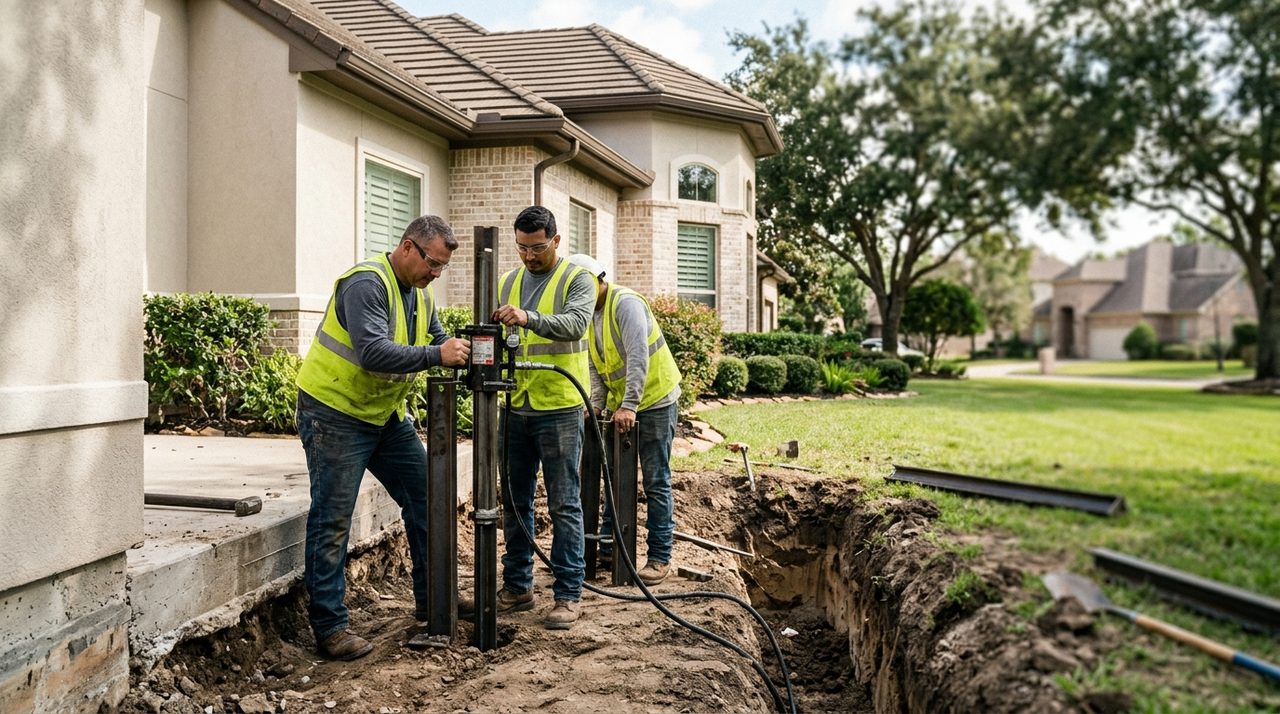
- Median home built
- 1996
- Median home value
- $385,354
- FEMA flood zone
- AE (high)
- Typical repair cost (est.)
- $3,500–$25,000+ depending on method and pier count
- Most common local issue
- Post-flood saturation settlement on original 1950s–1960s slabs in FEMA Zone AE
Ranked by verified Google rating × review volume × verification tier. How we rank →
Some highly-rated pros serve Braeswood from nearby and may not keep a Braeswood street address. Those are listed under "Also serving Braeswood" with their real city and distance, so you always know where each business is based.
Min rating:
10 resultsBased in Braeswood
Closed
10218 Bassoon Dr, Houston, TX 77025
Also serving Braeswood
Highly-rated pros based nearby who cover Braeswood. Distance shown from the Braeswood area.
Serving Braeswood Based in Medical Center · 1.2 mi away
Closed
Serving Braeswood Based in Meyerland · 2 mi away
Closed
Serving Braeswood Based in Bellaire · 2.6 mi away
Closed
Serving Braeswood Based in Bellaire · 2.6 mi away
Closed
Serving Braeswood Based in Bellaire · 2.7 mi away
Closed
Serving Braeswood Based in Meyerland · 2.9 mi away
Closed
Serving Braeswood Based in Bellaire · 3.3 mi away
Closed
Serving Braeswood Based in Westbury · 3.4 mi away
Foundation Repair in Braeswood: What You Should Know
Bayou-Corridor Saturation Settlement: When Brays Bayou Soaks the Clay Under Your Slab
Why it matters to you
Braeswood parcels nearest Brays Bayou sit in FEMA Zone AE and absorbed standing water for multiple days during both Harvey and Beryl. Prolonged saturation reconsolidates Harris County's expansive black clay, stripping bearing capacity and triggering settlement weeks or even months after the water recedes — long after most homeowners assume the crisis has passed. On Braeswood's original 1950s–1960s slabs, which were often poured with minimal post-tension reinforcement by today's standards, even a few inches of differential drop can crack brick veneer, rack door frames, and open interior drywall seams in a pattern that worsens with each subsequent flood cycle.
What a good pro does
A thorough contractor will start with an elevation survey across multiple interior floor points to map differential movement, then cross-reference the home's documented flood history through Harris County Flood Control District records before recommending a pier type. In Braeswood's FEMA AE zone, any underpinning work that involves trenching around the perimeter may also trigger a City of Houston floodplain development review under the Substantial Improvement rules, so the contractor must coordinate with the Houston Permitting Center — not just pull a standard foundation permit — before breaking ground.
Sources: Harris County Flood Control District, FEMA National Flood Hazard Layer (NFHL), City of Houston Permitting Center
Cast-Iron Under-Slab Drain Lines: The Hidden Companion Damage in Pre-1970s Braeswood Homes
Why it matters to you
Braeswood's surviving original ranch homes were built in the 1950s and 1960s with cast-iron under-slab drain lines that are now 55–70 years old. Repeated flood inundation accelerates internal corrosion, and slow ongoing leaks from those lines saturate the clay directly beneath the slab — creating localized heave as soil expands, followed by settlement as the weakened soil structure collapses. Because the symptom looks identical to pure drought-cycle movement, many homeowners sign pier contracts without realizing the real driver is a failing drain line. Post-Uri pipe failures compounded this: properties in Braeswood that had wall-level plumbing patched in 2021 may still have cracked under-slab cast-iron that was never addressed.
What a good pro does
Before any repair contract is signed, insist on a hydrostatic plumbing test — a licensed plumber fills the under-slab drain system with water and monitors for pressure loss. Texas State Board of Plumbing Examiners (TSBPE) licensure is required for anyone performing or overseeing that test. If a leak is confirmed, re-routing to PEX or lining the existing cast-iron is the first repair, not pier installation; driving piers into soil that continues to be saturated by a leaking line is money spent twice.
Sources: Texas State Board of Plumbing Examiners, City of Houston Permitting Center
Pressing Pilings vs. Steel Piers: Getting the Right Method for Braeswood's Mixed Housing Stock
Why it matters to you
Braeswood's block-by-block mix of original slab homes and post-1990s infill rebuilds means two adjacent properties may need entirely different repair approaches. Pressed concrete pilings — the legacy Houston method dominant in repair proposals through the 1990s — are controversial on flood-zone lots because repeated saturation can erode the clay 'skin friction' that holds them in place, causing pilings to slip over time. Steel push piers driven to a load-bearing stratum are generally more reliable on Braeswood's bayou-adjacent soils but cost significantly more: roughly $1,200–$1,800 per pier installed (estimate), versus $150–$400 per pressed piling. Homeowners receiving proposals that differ by $10,000 or more are often comparing these two methods without being told so explicitly.
What a good pro does
Require every written proposal to specify pier type, pier count, installed depth or refusal criteria, and warranty terms in writing. A reputable contractor will explain why the recommended method suits your specific soil profile and flood history rather than defaulting to the cheapest option. All underpinning work in the City of Houston requires a foundation repair permit from the Houston Permitting Center; ask to see the permit application before work begins, and verify it reflects the actual scope — not a stripped-down description intended to minimize fees.
Sources: City of Houston Permitting Center, Municipal permit office (see area profile)
Braeswood's Section-by-Section HOA Patchwork and FEMA Substantial Improvement Review
Why it matters to you
Braeswood has no single governing HOA. The Braeswood Place Homeowners Association covers certain sections under a reconstitution effort, while separate mandatory associations — including the Seventy-Six Fifty-Five South Braeswood HOA — govern other plats, and some lots fall under individually recorded deed restrictions with no active HOA at all. Exterior foundation work, including perimeter trenching and visible pier installation, can trigger deed-restriction review that varies lot by lot. Separately, because Braeswood is largely FEMA Zone AE, any renovation project — including one where foundation repair is bundled with flood-damage remediation — that exceeds 50% of the structure's pre-improvement market value triggers Substantial Improvement rules, potentially requiring the entire structure to be brought into compliance with current floodplain regulations.
What a good pro does
Before contracting any repair scope, the homeowner should pull the specific lot's deed restriction instrument from Harris County records and contact whichever HOA or POA governs that section to confirm whether an architectural review committee approval is required for exterior work. Separately, contact the City of Houston's Floodplain Management office (under Development Services) to determine whether a proposed repair-and-remediation package crosses the Substantial Improvement threshold — this conversation should happen before permit application, not after. Incomplete documentation here creates real legal and financial liability at resale, since Texas TREC disclosure forms require sellers to report known foundation movement and all prior repairs.
Sources: Local HOA / deed restrictions (see area profile), FEMA National Flood Hazard Layer (NFHL), City of Houston Permitting Center
Foundation Repair in Braeswood: What You Should Know
Hiring foundation repair in Braeswood? Braeswood straddles Brays Bayou in southwest Houston, placing flood mitigation at the center of virtually every home service decision. The neighborhood's mix of original 1950s–1960s ranch homes and post-flood teardown rebuilds means contractors encounter widely varying foundation types, electrical panels, and plumbing systems on a single block. Multiple mandatory HOAs and recorded deed restrictions add a layer of compliance review before exterior modifications.
- Housing era
- 1950s–1960s original construction with significant teardown/infill waves in the late 1990s–2010s, accelerating after repeated…
- Foundation
- Mixed — older homes include both pier-and-beam and slab-on-grade
- Flood zone
- FEMA Zone AE (high flood risk) — source
- Permits
- City of Houston — Houston Permitting Center
Housing stock & systems
Building era
1950s–1960s original construction with significant teardown/infill waves in the late 1990s–2010s, accelerating after repeated flood events.
Typical style
Original one-story ranch and mid-century traditional homes alongside newer two-story traditional, transitional, and soft Mediterranean custom infill.
Foundations
Mixed — older homes include both pier-and-beam and slab-on-grade; virtually all post-1990s infill and rebuilds are slab-on-grade (not explicitly documented for this neighborhood; based on typical Houston-area patterns).
Common systems
Original homes may have galvanized or cast-iron drain lines, R-22 HVAC systems, and Federal Pacific or Zinsco electrical panels. Rebuilt homes typically feature PEX or copper plumbing, modern high-SEER HVAC, and 200-amp panels. Mixed vintage makes system audits essential.
What that means for repairs
Post-flood teardown-and-rebuild is the dominant renovation activity, often involving full elevation of new structures. Remaining original ranch homes frequently undergo foundation repair, re-plumbing with PEX, HVAC replacement, and flood-damage remediation including mold abatement and drywall replacement.
Permits & restrictions
Permit jurisdiction
City of Houston — Houston Permitting Center.
HOA & deed restrictions
Braeswood Place Homeowners Association (BPHA) operates as a mandatory-membership POA for certain sections of Braeswood Place, with a section-by-section reconstitution effort underway. Additional smaller mandatory HOAs exist (e.g., Seventy-Six Fifty-Five South Braeswood HOA). The broader Braeswood corridor is a patchwork of multiple associations, condo/townhome HOAs, and some individually restricted plats with no single umbrella organization.
Historic districts
No City of Houston historic district designation confirmed.
Contractor note
Contractors must verify which HOA or POA governs a specific lot before exterior work, as deed restrictions vary section by section. Elevation and flood-proofing projects may trigger additional City of Houston floodplain development permits and FEMA Substantial Improvement/Substantial Damage reviews.
Flood & weather
FEMA flood zone
FEMA Zone AE (high flood risk) — source: fema_nfhl. The neighborhood is situated along Brays Bayou, one of Houston's most flood-prone waterways, with direct exposure to bayou overflow during major rain events.
Hurricane Harvey impact
Braeswood and the adjacent Braeswood Place area along Brays Bayou were among the hardest-hit neighborhoods during Hurricane Harvey (2017), consistent with severe flooding also experienced during the Memorial Day 2015 and Tax Day 2016 flood events. Widespread home inundation triggered a major wave of teardowns, elevations, and full rebuilds throughout the corridor. Specific block-level inundation depths were not confirmed in available research but are well-documented in FEMA and Harris County Flood Control District records.
Heat & humidity load
High heat and humidity stress aging HVAC systems in original 1950s–1960s homes, many of which still run undersized or outdated units. Mold recurrence is a persistent concern in previously flooded structures, particularly in pier-and-beam crawl spaces and behind repaired drywall. Summer storms can re-saturate soils near the bayou, exacerbating foundation movement on clay soils.
Working with contractors here
Flood remediation and prevention dominate the contractor workload in Braeswood — from mold abatement and drywall replacement in previously inundated homes to full structural elevation of new builds. Foundation repair is common on original 1950s–1960s slab and pier-and-beam homes settling on expansive clay soils worsened by repeated saturation cycles. Re-plumbing from galvanized or cast-iron to PEX and upgrading electrical panels from original 100-amp service are frequent companion scopes on older homes. Contractors should scope every project with flood history in mind: verify whether a property has triggered FEMA Substantial Improvement thresholds, which can mandate elevation or floodproofing for any renovation exceeding 50% of the structure's market value. The section-by-section HOA and deed restriction landscape means exterior modification approvals — fencing, roofing material, paint colors — require lot-specific verification before work begins.
Local Tip
Always ask for a written estimate before work begins. Texas contractors are required to provide one on jobs over $1,000.
About Braeswood
Braeswood straddles Brays Bayou in southwest Houston, placing flood mitigation at the center of virtually every home service decision. The neighborhood's mix of original 1950s–1960s ranch homes and post-flood teardown rebuilds means contractors encounter widely varying foundation types, electrical panels, and plumbing systems on a single block. Multiple mandatory HOAs and recorded deed restrictions add a layer of compliance review before exterior modifications.
- Median year built
- 1996
- Median home value
- $385,354
- Owner-occupied
- 54.9%
- Population
- 64,425
- Housing units
- 29,040
- Median income
- $76,187
Source: U.S. Census Bureau, ACS 5-Year 2023
Flood & storm risk
FEMA Zone AEHigh flood riskMuch of Braeswood maps to FEMA Zone AE (high flood risk), so flood-resilient detailing -- elevated equipment, water-tolerant materials, and drainage-first thinking -- is essential here, not optional; risk climbs sharply on blocks nearest Brays Bayou, where it varies parcel to parcel.
Source: FEMA National Flood Hazard Layer (NFHL). Flood zones vary by parcel — verify your individual FIRM panel.
Houston Storm Readiness in Braeswood
Hurricane & flooding
Drainage grading away from your foundation is your first line of defense when Braeswood sits squarely in FEMA Zone AE inside the 100-year floodplain and proximity to Brays Bayou territory — confirm that soil slopes at least six inches over the first ten feet before storm season. After any hurricane-level saturation event, watch for sticking doors and diagonal cracks at window corners, which are early indicators that clay soil consolidation has shifted your foundation unevenly. Confirm the current FEMA panel for your Braeswood parcel — the area maps to Zone AE, but adjacent lots can differ.
Severe storms & hail
Heavy rainfall from a single Houston thunderstorm cell can deposit four to six inches in under an hour, and in Braeswood that runoff can temporarily surround your slab and trigger localized clay heave that later reverses as soil dries. Have a foundation repair contractor assess your perimeter drain system and confirm downspout extensions are intact and unblocked after each significant storm season. Confirm the current FEMA panel for your Braeswood parcel — the area maps to Zone AE, but adjacent lots can differ.
Ice storms & freezes
Winter Storm Uri 2021 showed that Houston's expansive clay soils, already wet from winter rainfall, can experience shallow frost movement when temperatures drop below freezing for multiple consecutive days, and in high-floodplain areas like Braeswood that combination of saturated clay and freeze stress can shift interior piers noticeably. Have a TDLR-licensed foundation contractor survey slab elevations in late spring, after seasonal moisture normalizes, to identify any frost-related movement that occurred during the winter. In-city Braeswood work falls under City of Houston floodplain and permitting rules.
Sources: FEMA National Flood Hazard Layer (NFHL), Ready.gov -- Hurricanes, CenterPoint Energy -- Storm Center, City of Houston -- Emergency Preparedness, Ready.gov -- Winter Weather, Harris County Flood Control District
Free Braeswood Tools & Calculators
Houston-specific estimators to plan your project before you call a pro. All results are planning estimates — a licensed local pro confirms the details on site.
Houston Soil & Tree Proximity Risk Calculator
Open full tool & FAQ →Grouped by mature root aggression & water demand.
Trunk center to the nearest exterior wall.
Moderate risk
The root zone likely reaches your foundation's soil during Houston's dry summers, when clay shrinks most. Watch for sticking doors and diagonal cracks, keep soil moisture even with a soaker hose during drought, and have a foundation pro evaluate if you see any movement.
Find a Houston foundation pro →This is a planning estimate only — actual requirements depend on an on-site assessment by a licensed Houston pro. Guidance is based on general species root behavior in expansive clay, not a soil test.
Houston Freeze Prep & Pipe Insulation Checklist
Open full tool & FAQ →Your freeze checklist — 4 tasks
- 1
Disconnect & drain every outdoor hose bib
Remove hoses, drain the spigots, and cover each with an insulated faucet sock. Un-drained hose bibs are the #1 burst point in a Houston freeze.
- 2
Insulate exposed pipes in the attic & garage
Wrap any pipe in an unconditioned space (attic runs, garage walls) with foam sleeves. Houston homes rarely insulate these because they only matter a few nights a year — which is exactly why they burst.
- 3
Open cabinet doors & keep a pencil-width drip
On hard-freeze nights, open kitchen/bath cabinets so warm air reaches the pipes and let faucets on exterior walls drip to relieve pressure.
- 4
Protect the attic/garage water heater & its lines
An attic or garage tank sits in unconditioned space. Insulate the cold-inlet and hot-outlet lines and confirm the emergency drain pan is clear so a leak doesn't reach the ceiling.
This is a planning estimate only — actual requirements depend on an on-site assessment by a licensed Houston pro. If a pipe has already burst, shut off your main water supply and call a licensed Houston plumber immediately — freeze bursts flood fast.
Frequently Asked Questions
Do I need a permit from the City of Houston to get foundation repair done on my Braeswood home?
Yes — foundation underpinning work (steel push piers, helical piers, or pressed pilings) requires a permit through the City of Houston Permitting Center, which serves all of Braeswood as an incorporated Houston neighborhood. You can verify permit issuance and inspection status directly through the Houston Permitting Center's online portal; do not rely solely on your contractor's assurance that paperwork is filed. Unpermitted foundation work is a disclosure liability under Texas law and will surface on any buyer's inspection when you sell.
Sources: City of Houston Permitting Center
My Braeswood ranch home was built in the early 1960s and has a pier-and-beam foundation — do foundation repair companies in Houston typically handle that, or only slabs?
Most established Houston foundation contractors work on both pier-and-beam and slab-on-grade, but the repair scope is very different — pier-and-beam houses allow under-floor access for shimming, sistering joists, or replacing deteriorated wood piers, while slabs require exterior trenching or interior void-fill injection. On 1960s Braeswood pier-and-beam homes, ask contractors specifically how many pier-and-beam jobs they've completed in the past year and request references, since many newer Houston companies focus almost exclusively on the more common slab-on-grade work. Also confirm whether any wood pier replacement will require a plumbing inspection if drain lines run through the crawl space.
My Braeswood house flooded during Beryl in 2024 and I'm now seeing cracks at the door frames. How long after a flood event should I wait before getting a foundation inspection?
Waiting 60 to 90 days after standing water recedes is a reasonable minimum before commissioning a formal foundation inspection, because saturated Beaumont clay can continue to reconsolidate and shift for weeks after the water is gone — a measurement taken too soon may not capture the full extent of settlement. Brays Bayou corridor properties in FEMA Zone AE are especially prone to this delayed-settlement pattern after long-duration events like Beryl. When you do schedule the inspection, make sure the contractor reviews your elevation certificate and notes whether any remediation scope could push you toward FEMA's Substantial Improvement threshold, which can trigger mandatory elevation of the structure.
Sources: FEMA National Flood Hazard Layer (NFHL)Harris County Flood Control District
If I need foundation repair and my Braeswood lot is covered by the Braeswood Place HOA, do I need HOA approval before the contractor starts trenching around the perimeter?
Yes — exterior foundation work that involves visible trenching, excavation, or any alteration to landscaping or the perimeter grade typically requires architectural review approval from the relevant HOA or POA before work begins, and Braeswood's deed restrictions are enforced section by section rather than by one umbrella organization. Confirm which association governs your specific lot before submitting any application, since the Braeswood Place HOA, the Seventy-Six Fifty-Five South Braeswood HOA, and other smaller entities each maintain separate approval processes. Your foundation contractor should not be the one making this determination — pull your deed and confirm with a title search or your HOA management contact.
Sources: Local HOA / deed restrictions (see area profile)
Is there a better or worse time of year to schedule foundation repair on a Braeswood home given Houston's weather cycles?
Late spring and early summer — April through June — tends to be the most diagnostically reliable window in Braeswood: the clay has usually rebounded from winter dryness, Brays Bayou corridor soils are at a more stable mid-range moisture level, and you're scheduling before peak hurricane season complicates outdoor excavation work. Avoid committing to repair immediately after a major flood event (for the reconsolidation reasons above) or during extended drought when soil is at its driest extreme and pier installation torque readings may be misleading. Mid-fall, after the first autumn rains stabilize soil moisture, is a solid second-choice window.
What questions should I ask a foundation repair contractor before signing a contract for my 1960s Braeswood slab home specifically because it's in FEMA Zone AE?
Ask whether they will recommend a hydrostatic plumbing test before finalizing the repair scope — on a pre-1970s Braeswood home with cast-iron drain lines, an undetected under-slab leak is a realistic companion issue that can render the repair ineffective. Also ask whether any elevation change resulting from the repair could affect your existing elevation certificate, since even modest slab lifting can alter your documented finished-floor elevation and require a new FEMA elevation certificate before your next flood insurance policy renewal. Finally, confirm that the contractor will pull a City of Houston foundation permit and that you will receive the final signed inspection record — not just a warranty card — for your resale file.
Sources: FEMA National Flood Hazard Layer (NFHL)City of Houston Permitting CenterTexas State Board of Plumbing Examiners