Closed
Serving West University Based in Bellaire · 2.6 mi away
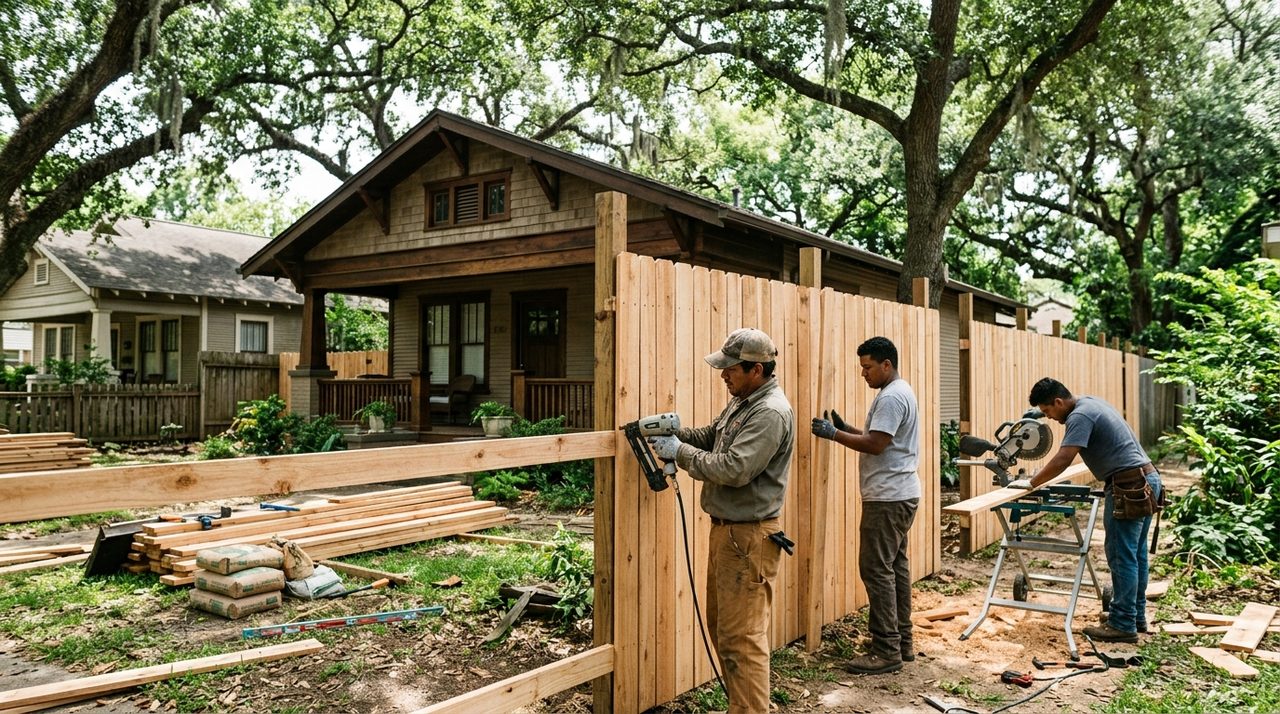
West University Place is an independent municipality—not a Houston neighborhood—with its own permit office, its own inspectors, and its own code requirements that trip up contractors accustomed to Houston Permitting Center workflows. Fencing here spans a remarkable range: 1930s-era bungalows on native Harris County clay sit on the same block as 2000s custom two-stories rebuilt after teardown, meaning clay-soil post heave and post-installation permit compliance are live concerns for virtually every project. With median home values near $1.35 million and a tax-paying voter base that expects meticulous finish work, fence projects in West U demand both technical precision and correct jurisdictional paperwork from the first post to the final inspection.
Ranked by verified Google rating × review volume × verification tier. How we rank →
Some highly-rated pros serve West University from nearby and may not keep a West University street address. Those are listed under "Also serving West University" with their real city and distance, so you always know where each business is based.
Highly-rated pros based nearby who cover West University. Distance shown from the West University area.
Serving West University Based in Bellaire · 2.6 mi away
Serving West University Based in Bellaire · 3.3 mi away
Serving West University Based in Medical Center · 3.3 mi away
Serving West University Based in Braeswood · 3.4 mi away
Serving West University Based in Bellaire · 3.5 mi away
Serving West University Based in Tanglewood · 3.5 mi away
Serving West University Based in Tanglewood · 3.6 mi away
Serving West University Based in Midtown · 3.6 mi away
Serving West University Based in Bellaire · 3.8 mi away
Serving West University Based in Lazybrook / Timbergrove · 3.9 mi away
Why it matters to you
Because West University Place is an incorporated municipality completely separate from the City of Houston, permits for fence work must be pulled through the City of West University Place's own building department — not the Houston Permitting Center and not Harris County. Contractors who regularly work in Montrose or Rice Military and assume Houston's rules apply here will find themselves out of compliance, and work done without the correct West U permit can trigger forced removal regardless of build quality.
What a good pro does
Before a single post is set, your fence contractor must submit to West University Place's permit office and schedule inspections through the city's own inspectors. A good contractor will review West U's current fence ordinance — height limits and setback requirements can differ from Houston's — before bidding the project, and will factor West U's inspection turnaround into the project timeline rather than treating it as an afterthought.
Sources: Municipal permit office (see area profile)
Why it matters to you
West University's lots sit on the same expansive Houston Black clay formation that causes foundation movement across the Inner Loop. Fence posts set in standard concrete collars are particularly vulnerable: as the clay swells after heavy rain and then shrinks in dry summers, it exerts lateral force on the footing, causing posts to lean or crack concrete within a few seasons — a problem documented on both the original 1930s-era lots and on teardown-rebuild parcels where soil was disturbed during new construction and then re-compacted unevenly.
What a good pro does
A competent fence installer in West U will drill post holes to at least 36 inches on the clay-rich lots here — deeper than the 24-inch standard sometimes used in sandier soils — and use a fast-setting concrete mixed dry-in-hole to minimize water retention around the post base. For corner and gate posts bearing the most load, some contractors use helical anchors or oversized concrete bells rather than straight cylindrical footings, which resist clay's lateral heave forces more effectively.
Sources: International Residential Code (as adopted by City of Houston), Harris County Flood Control District
Why it matters to you
West University's signature tree-lined streets create dense canopy that keeps wood fencing shaded and damp for extended periods after rain — ideal conditions for fungal rot to take hold in post bases and bottom boards. On older lots where the original drainage grades have been altered by decades of landscaping and the addition of large custom homes on adjacent properties, standing water after Gulf Coast rain events can sit against fence posts long enough to begin decay within two to three years on improperly treated lumber.
What a good pro does
In West U, cedar is the standard privacy-fence material for good reason: its natural oils resist decay better than untreated pine in Houston's year-round humidity. However, even cedar posts in ground contact benefit from pressure-treated or composite post sleeves at the soil line. A thorough contractor will also inspect the finished grade along the fence line and flag drainage conflicts before installation rather than after the first rot cycle forces a post replacement — individual post replacements run an estimated $150–$300 each including concrete, so preventing early failure matters on a $1.3 million lot.
Sources: International Residential Code (as adopted by City of Houston)
Why it matters to you
West University's newer custom two-stories — many rebuilt from the 1980s onward after teardown — are surrounded by solid 6-foot cedar privacy fences that become dangerous projectiles in high-wind events. The May 2024 derecho and Hurricane Beryl in 2024 produced damaging gusts across the Inner Loop, and solid board-on-board panels with undersized post embedment are among the first structures to fail. Full storm-damage fence replacement in the Houston metro typically runs an estimated $3,000–$8,000 for an average suburban lot, a significant unplanned expense even in this high-income neighborhood.
What a good pro does
Wind-resilient installation in West U means setting posts a minimum of one-third of total post length in concrete — so a fence with a 6-foot above-grade height needs posts embedded at least 2 feet deep, ideally deeper on the clay soils here. Wind-relief gaps between boards (even a quarter-inch per board) meaningfully reduce lateral wind load on the whole fence run. For replacement projects after storm damage, homeowners should also check whether their windstorm insurer (TWIA or a private carrier) requires documentation of post depth and concrete footing before settling a fence claim.
Sources: Texas Windstorm Insurance Association (TWIA), International Residential Code (as adopted by City of Houston), Municipal permit office (see area profile)
Hiring fence builders in West University? West University Place is an independent municipality within the Inner Loop featuring a mix of original 1930s–1950s bungalows and larger custom homes built from the 1980s onward as teardown-rebuild cycles reshaped the neighborhood. Homeowners here navigate the city's own permitting process—separate from Houston's—and must account for aging systems in older homes alongside modern construction standards in newer builds. The tree-lined streets and high property values drive demand for premium finishes and careful code compliance.
Building era
Mixed: original homes from 1930s–1950s with significant infill and teardown-rebuild construction from the 1980s–2000s and continuing today.
Typical style
Traditional brick, Georgian/Colonial-influenced, neo-traditional custom homes (2-story), with some remaining early-20th-century bungalows and cottages.
Foundations
Not confirmed from available sources - likely mixed pier-and-beam on older pre-1950s homes and slab-on-grade on newer construction. Verify on a per-property basis.
Common systems
Older homes (1930s–1950s) may have original galvanized or cast-iron plumbing, outdated electrical panels, and window AC or early central HVAC. Newer construction (1980s–present) typically features copper or PEX plumbing, modern electrical, and high-efficiency central HVAC systems.
What that means for repairs
Teardown-and-rebuild activity has been the dominant renovation pattern for decades, replacing smaller original cottages with larger custom homes. Remaining older homes frequently undergo full-gut renovations including electrical rewiring, plumbing replacement, foundation repair, and HVAC modernization to meet current standards and market expectations.
Permit jurisdiction
City of West University Place (independent municipality - own permit office, not City of Houston Permitting Center and not Harris County).
HOA & deed restrictions
No mandatory city-wide master HOA. West U functions as an independent municipality with its own zoning and code enforcement. Individual condo and townhome associations exist (e.g., The Oaks at West University Condominium Association), but most single-family homes have no HOA. Deed restrictions may exist on individual plats—check Harris County Clerk records for specific lots.
Historic districts
No City of Houston historic district designation applies. West University Place is an independent municipality outside Houston city limits, so HAHC Certificates of Appropriateness are not required. West U may have its own local design or zoning controls—check with the City of West University Place directly.
Contractor note
Contractors must pull permits through the City of West University Place, not through Houston or Harris County. West U's own inspectors enforce local codes, and the city's zoning and building requirements may differ from Houston's, so contractors unfamiliar with the jurisdiction should review local ordinances before bidding.
FEMA flood zone
FEMA Zone X500 (moderate flood risk) per official NFHL data. West University Place sits between Brays Bayou to the south and Rice University to the east, with drainage flowing into Harris County Flood Control District channels.
Hurricane Harvey impact
Specific Harvey 2017 flood impact data for West University Place streets was not available in the research provided. The moderate flood risk zone designation and proximity to Brays Bayou suggest potential vulnerability, but confirmed street-level flooding details and repetitive-loss areas should be verified through HCFCD inundation maps and City of West University Place floodplain reports.
Heat & humidity load
Houston's extreme summer heat and humidity stress HVAC systems across all housing eras. Older pier-and-beam homes may experience moisture-related subfloor issues, while the mature tree canopy—a signature feature of West U—creates ongoing gutter maintenance demands and potential root intrusion into aging sewer lines.
Working with contractors here
Contractors in West University most commonly handle full-home renovations and teardown-rebuilds, driven by buyers acquiring older cottages on valuable lots and replacing them with larger custom homes. For surviving 1930s–1950s homes, foundation repair, whole-house repiping (replacing galvanized with copper or PEX), electrical panel upgrades, and HVAC replacement are frequent scopes. Newer 1990s–2000s homes generate demand for roof replacements, exterior paint, and kitchen/bath remodels as they reach their first major maintenance cycles. Job scoping must account for West University Place's independent permitting process, which can differ from Houston's in turnaround times and inspection requirements. The high-end market expectations in West U mean contractors should budget for premium materials and meticulous finish work.
Local Tip
Always ask for a written estimate before work begins. Texas contractors are required to provide one on jobs over $1,000.
West University Place is an independent municipality within the Inner Loop featuring a mix of original 1930s–1950s bungalows and larger custom homes built from the 1980s onward as teardown-rebuild cycles reshaped the neighborhood. Homeowners here navigate the city's own permitting process—separate from Houston's—and must account for aging systems in older homes alongside modern construction standards in newer builds. The tree-lined streets and high property values drive demand for premium finishes and careful code compliance.
Source: U.S. Census Bureau, ACS 5-Year 2023
West University carries FEMA Zone X500 (moderate flood risk): outside the 100-year floodplain but inside the 500-year, so heavy-rain events still reach homes and flood-aware work pays off.
Source: FEMA National Flood Hazard Layer (NFHL). Flood zones vary by parcel — verify your individual FIRM panel.
Sources: Municipal permit office (see area profile)
Sources: FEMA National Flood Hazard Layer (NFHL)Harris County Flood Control District
Sources: Municipal permit office (see area profile)
Sources: Local HOA / deed restrictions (see area profile)