2537 Roy Rd, Pearland, TX 77581
Best Water & Flood Restoration in Pearland, TX
Pearland's 1990s–2010s brick-veneer slab homes sit on Brazoria County's expansive clay soils that grip moisture against post-tensioned slab edges long after visible water recedes—making water damage here a slow, hidden problem even on blocks that sit in FEMA Zone X. When flash flooding, tropical rain bands, or a burst supply line saturates a production home built between 1995 and 2012, homeowners face a race against Houston's 74% average humidity and 90°F summer heat before mold takes hold in flex ductwork, wall cavities, and bottom plates. This page explains the four water-damage realities specific to Pearland's housing stock, permit jurisdiction, and HOA landscape so you can make faster, smarter decisions when water intrudes.
Verified against Google Business data
Updated 2026
See the 10 Water & Flood Restoration Serving Pearland 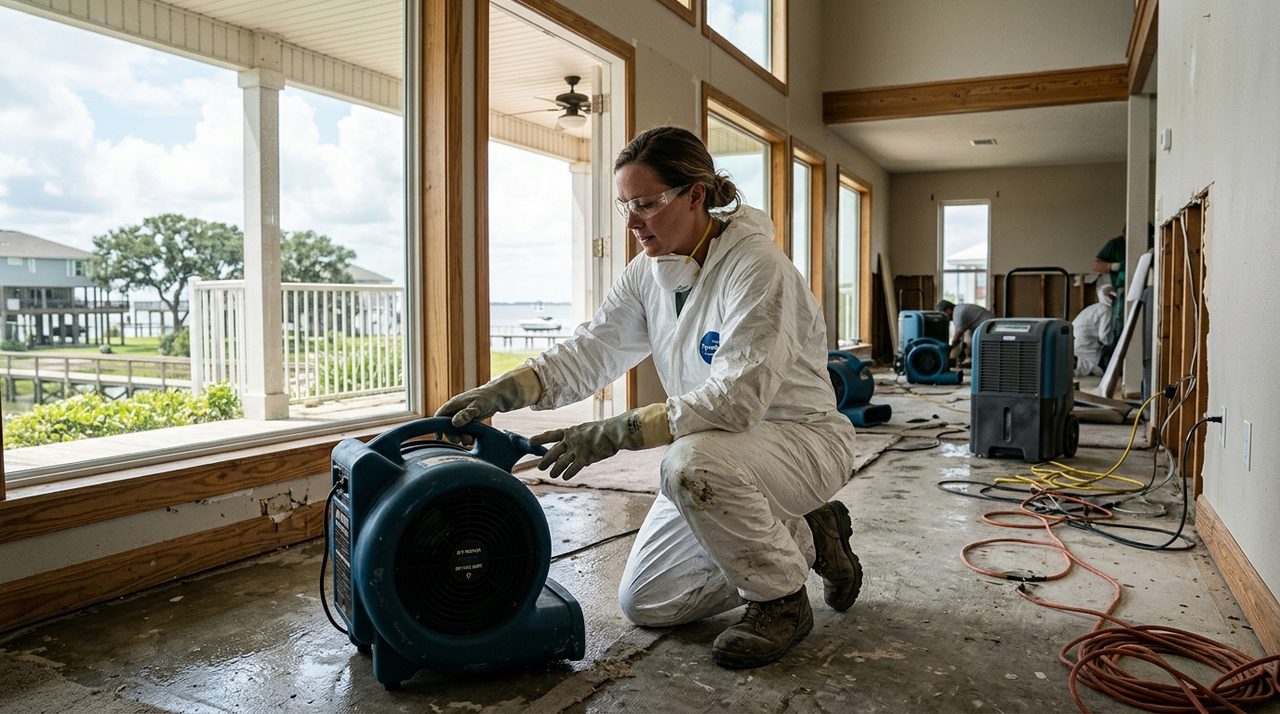
- Median home built
- 2003
- Median home value
- $330,900
- FEMA flood zone
- X (low)
- Typical mitigation cost (est.)
- $3,500–$40,000 depending on water category and scope
- Most common local issue
- Hidden moisture under post-tensioned slabs and in aging flex ductwork after flash flooding or pipe bursts
Ranked by verified Google rating × review volume × verification tier. How we rank →
Some highly-rated pros serve Pearland from nearby and may not keep a Pearland street address. Those are listed under "Also serving Pearland" with their real city and distance, so you always know where each business is based.
Min rating:
10 resultsBased in Pearland
Closed
2235 Camden Arbor Trl, Houston, TX 77089
Open Now
17810 County Rd 125, Pearland, TX 77581
Open Now
5929 Bardet St Ste 107, Pearland, TX 77584
Also serving Pearland
Highly-rated pros based nearby who cover Pearland. Distance shown from the Pearland area.
Open Now
Serving Pearland Based in Friendswood · 5.3 mi away
Open Now
Serving Pearland Based in South Houston · 5.5 mi away
Open Now
Serving Pearland Based in Friendswood · 6.4 mi away
Serving Pearland Based in Friendswood · 6.8 mi away
Open Now
Serving Pearland Based in Friendswood · 7.8 mi away
Open Now
Serving Pearland Based in South Houston · 7.8 mi away
Water & Flood Restoration in Pearland: What You Should Know
Clay Soil Keeps Your Post-Tensioned Slab Wet Long After the Water Recedes
Why it matters to you
Pearland homes built in the 1990s and 2000s almost universally sit on post-tensioned concrete slabs over Brazoria County's heavy clay soils. When a flash flood or interior plumbing failure saturates the ground around and beneath your slab, that clay retains moisture against the slab perimeter for weeks—wicking water upward into bottom plates, baseboards, and drywall long after a shop vac or pump removes standing water from your floors. Homeowners on FEMA Zone X lots often assume low flood-map designation means lower damage risk, but extended ground saturation is a function of soil type, not flood-zone designation.
What a good pro does
A qualified restoration contractor will deploy calibrated moisture meters and thermal imaging cameras at the slab edge and along bottom plates to map the true drying boundary, not just the visible wet line. Commercial-grade desiccant or refrigerant dehumidifiers and directional air movers must run continuously—often for five to ten days in a Pearland summer—until readings confirm structural dryness. Any firm performing mold assessment on materials affected by delayed drying must hold a TDLR-issued Mold Remediation Contractor (MRC) license under Texas Occupations Code Chapter 1958.
Sources: IICRC (water/mold restoration standards), Texas Department of Licensing & Regulation, FEMA National Flood Hazard Layer (NFHL)
Aging Flex Ductwork in 1990s–2000s Homes Becomes a Mold Incubator Within 72 Hours
Why it matters to you
A large share of Pearland's production homes—those built between roughly 1993 and 2005—were fitted with flex duct insulation that is now 20-plus years old. When floodwater or a burst supply line in an unconditioned attic space contacts this ductwork, the fibrous insulation jacket absorbs moisture and does not self-dry; Pearland's outdoor dewpoint regularly exceeds 75°F in summer, so the HVAC system cycling air through a damp duct network actively distributes Aspergillus and Cladosporium spores throughout the living space within 48–72 hours of the intrusion event. Many homeowners discover this only months later when allergy symptoms or visible mold appear at supply registers.
What a good pro does
Restoration contractors should scope a full duct inspection with a moisture meter at every flex-duct run as part of the initial assessment—not as an add-on after drying is complete. If insulation jacket saturation is confirmed, IICRC S500 best practices call for duct replacement rather than attempted drying, because fibrous insulation cannot be reliably restored to pre-loss moisture content. Estimated mold remediation costs in Pearland-area homes that include duct replacement typically run $4,000–$10,000 for the HVAC component alone, based on current Houston-metro labor and materials pricing.
Sources: IICRC (water/mold restoration standards), Texas Department of Licensing & Regulation, Texas Commission on Environmental Quality
City of Pearland Permits Are Required for Demo and Trade Work—and the Process Is Separate from Houston's
Why it matters to you
Because Pearland is an incorporated city in Brazoria County, all demolition, structural drying scopes that expose plumbing or electrical, and mold remediation work requiring structural tear-out must be permitted through the City of Pearland Permitting office—not the Houston Permitting Center and not Brazoria County Engineering. Contractors who routinely work the City of Houston and assume the same permit forms, fee schedules, and inspection cadences apply in Pearland will cause delays that directly harm your insurance claim timeline; a Certificate of Completion from the correct jurisdiction is typically required before an adjuster will close a structural claim.
What a good pro does
When vetting restoration contractors, confirm they have pulled permits specifically through City of Pearland and know the local inspection schedule. The restoration contractor typically pulls the demolition permit; your plumber must hold a TSBPE license and pull their own trade permit through Pearland, and any licensed electrician exposed during demo must do the same through the city. Ask for permit numbers before work begins—not after.
Sources: Municipal permit office (see area profile), Texas State Board of Plumbing Examiners, Texas Department of Licensing & Regulation
Silverlake and Other Pearland HOAs Can Slow Emergency Demo Work If You Don't Act Preemptively
Why it matters to you
Most of Pearland's master-planned subdivisions—including Silverlake (managed by Crest Management) and Springfield—have recorded CC&Rs and active architectural review committees that technically govern exterior modifications, dumpster placement, and exposed building materials visible from the street. Water damage restoration has an unforgiving clock: IICRC S500 standards call for drying initiation within 24–48 hours of water intrusion to prevent Category 2 losses from escalating to Category 3, which triggers a dramatically larger demo scope and cost. Waiting several days for a formal HOA architectural approval before a contractor can place a roll-off dumpster or begin exterior wall demo can push your loss into a higher damage category.
What a good pro does
Notify your HOA in writing—by email if possible for a timestamp—at the same time you call a restoration contractor, citing the emergency nature of the work. Most Pearland HOA CC&Rs include emergency exception language that permits work necessary to prevent further damage without waiting for formal committee approval, provided written notice is given promptly. Document every exterior item removed and every dumpster placed with dated photographs; this protects you both with the HOA and with your insurance carrier when the adjuster reviews the scope of demo.
Sources: Local HOA / deed restrictions (see area profile), IICRC (water/mold restoration standards), Municipal permit office (see area profile)
Water & Flood Restoration in Pearland: What You Should Know
Hiring water & flood restoration in Pearland? Pearland is a large, incorporated suburban city in Brazoria County comprising dozens of master-planned subdivisions built primarily from the 1990s through the 2010s. Most homes are brick-veneer traditional construction on post-tensioned concrete slabs, meaning contractors here deal heavily with slab foundation movement, composition roof replacements, and HVAC systems aging into their first or second major service cycle. Permitting runs through the City of Pearland—not Houston or the county—and most subdivisions carry mandatory HOAs with architectural review requirements that affect exterior work.
- Housing era
- Primarily 1990s–2010s, with continued new construction in some subdivisions
- Foundation
- Post-tensioned concrete slab-on-grade (dominant for post-1970s production housing in this area)
- Flood zone
- FEMA Zone X (low flood risk) — source
- Permits
- City of Pearland Permitting (incorporated city — not Houston Permitting Center or Brazoria County…
Housing stock & systems
Building era
Primarily 1990s–2010s, with continued new construction in some subdivisions.
Typical style
Suburban brick or brick-veneer traditional single-family homes, typically 1- and 2-story, with composition asphalt shingle roofs.
Foundations
Post-tensioned concrete slab-on-grade (dominant for post-1970s production housing in this area).
Common systems
Central HVAC (gas furnace with split-system AC or heat pump), copper or CPVC supply plumbing with ABS/PVC drain lines, 200-amp electrical panels. Homes from the 1990s may have original R-410A or older R-22 refrigerant systems nearing end of life.
What that means for repairs
Kitchen and bathroom remodels are common as 1990s–early 2000s homes age past 20 years. Roof replacements are a major recurring need due to Gulf Coast hail and wind events. Some homeowners add outdoor living spaces, but HOA architectural guidelines often require pre-approval for additions, fencing, and exterior changes.
Permits & restrictions
Permit jurisdiction
City of Pearland Permitting (incorporated city — not Houston Permitting Center or Brazoria County Engineering).
HOA & deed restrictions
Most Brazoria County Pearland subdivisions have mandatory HOAs with recorded CC&Rs and architectural review committees. Examples include Silverlake HOA (Crest Management, 281-272-6377) and Springfield HOA. Older or more central Pearland areas may have voluntary associations or simpler deed restrictions. HOA dues typically range from $200–$900/year for smaller neighborhoods up to $600–$2,400+/year for amenity-rich master-planned communities. Specific HOA status must be verified per subdivision via resale certificate.
Historic districts
No historic district designation confirmed. Pearland is a relatively modern suburban city with no known HAHC or local historic overlays.
Contractor note
Contractors must pull permits through the City of Pearland, which has its own inspection process separate from Houston and Brazoria County. Nearly all subdivisions require HOA architectural approval for exterior modifications before work begins, so contractors should factor approval timelines into project scheduling.
Flood & weather
FEMA flood zone
FEMA Zone X (low flood risk) — source: fema_nfhl. However, portions of Pearland near Clear Creek and associated tributaries may carry higher flood risk designations; buyers and contractors should verify zone status at the parcel level, especially in western Pearland areas closer to waterways.
Hurricane Harvey impact
Parts of Pearland experienced flooding during Hurricane Harvey (2017), particularly areas near Clear Creek and low-lying bayou tributaries. Some master-planned communities in western Pearland reported significant water intrusion. Specific street-level impact varies widely by subdivision and proximity to drainage channels — not confirmed at a granular level from available research. Homeowners should check individual property flood history through Brazoria County records.
Heat & humidity load
Extended 95°F+ summers with high humidity stress HVAC systems heavily in these slab-on-grade homes. Attic temperatures can exceed 140°F, accelerating shingle degradation and demanding adequate attic ventilation and radiant barrier consideration. Expansive clay soils undergo seasonal shrink-swell cycles that can cause slab movement and related cosmetic or structural cracking, making foundation watering programs and drainage management important recurring service needs.
Working with contractors here
The dominant work in Pearland centers on maintaining 1990s–2010s production homes: HVAC replacements and repairs (original systems from the 1990s and early 2000s are reaching end of life), roof replacements driven by Gulf Coast storm damage and aging shingles, and kitchen/bath remodels as homes pass the 20-year mark. Slab foundation repair and drainage correction are recurring needs due to Brazoria County's expansive clay soils. Contractors should be aware that nearly every major subdivision requires HOA architectural approval for exterior work—including roof material and color, fence installation, and additions—which can add 2–6 weeks to project timelines. City of Pearland permits and inspections follow their own code enforcement process, and contractors accustomed to Houston's permitting system should confirm local requirements before starting work.
Local Tip
Always ask for a written estimate before work begins. Texas contractors are required to provide one on jobs over $1,000.
About Pearland
Pearland is a large, incorporated suburban city in Brazoria County comprising dozens of master-planned subdivisions built primarily from the 1990s through the 2010s. Most homes are brick-veneer traditional construction on post-tensioned concrete slabs, meaning contractors here deal heavily with slab foundation movement, composition roof replacements, and HVAC systems aging into their first or second major service cycle. Permitting runs through the City of Pearland—not Houston or the county—and most subdivisions carry mandatory HOAs with architectural review requirements that affect exterior work.
- Median year built
- 2003
- Median home value
- $330,900
- Owner-occupied
- 76.6%
- Population
- 125,983
- Housing units
- 46,105
- Median income
- $112,470
Source: U.S. Census Bureau, ACS 5-Year 2023
Flood & storm risk
FEMA Zone XLow flood riskMost of Pearland maps to FEMA Zone X (low mapped flood risk), but Houston's flash-flood reality means even low-risk blocks benefit from smart drainage and storm-hardened installs; as a Brazoria County coastal community, tropical surge and wind add a layer generic guidance misses.
Source: FEMA National Flood Hazard Layer (NFHL). Flood zones vary by parcel — verify your individual FIRM panel.
Houston Storm Readiness in Pearland
Hurricane & flooding
Before hurricane season, commission a moisture baseline scan from an IICRC-certified restoration firm so any post-storm water intrusion in Pearland, TX can be quantified and documented for your insurer immediately. Beryl 2024 showed that even low-mapped-risk neighborhoods saw flash flooding that saturated flooring assemblies within hours of peak rainfall. As a Brazoria County community, Pearland may follow county rather than City of Houston storm rebuild rules.
Severe storms & hail
Straight-line winds exceeding 80 mph, as recorded during the 2024 derecho, broke seals on sliding glass doors and drove water into flooring assemblies throughout Pearland, TX neighborhoods with no prior flood history. Contact a licensed Texas restoration firm — TDLR regulates their mold-assessment and remediation work — to inspect and dry any affected areas before summer humidity accelerates microbial growth. Confirm the current FEMA panel for your Pearland parcel — the area maps to Zone X, but adjacent lots can differ.
Ice storms & freezes
Ice accumulation on exterior pipe chases and uninsulated attic runs caused widespread freeze-and-burst events across Pearland, TX during Uri 2021, and the resulting water losses required IICRC-trained technicians with commercial dehumidifiers to dry out wall and ceiling cavities that building materials alone could not off-gas. Confirming you have a preferred restoration contractor's number before a freeze forecast arrives eliminates critical delays when crews are in high demand across the metro. As a Brazoria County community, Pearland may follow county rather than City of Houston storm rebuild rules.
Sources: FEMA National Flood Hazard Layer (NFHL), Ready.gov -- Hurricanes, CenterPoint Energy -- Storm Center, City of Houston -- Emergency Preparedness, Ready.gov -- Winter Weather, Harris County Flood Control District
Free Pearland Tools & Calculators
Houston-specific estimators to plan your project before you call a pro. All results are planning estimates — a licensed local pro confirms the details on site.
Houston Freeze Prep & Pipe Insulation Checklist
Open full tool & FAQ →Your freeze checklist — 4 tasks
- 1
Disconnect & drain every outdoor hose bib
Remove hoses, drain the spigots, and cover each with an insulated faucet sock. Un-drained hose bibs are the #1 burst point in a Houston freeze.
- 2
Insulate exposed pipes in the attic & garage
Wrap any pipe in an unconditioned space (attic runs, garage walls) with foam sleeves. Houston homes rarely insulate these because they only matter a few nights a year — which is exactly why they burst.
- 3
Open cabinet doors & keep a pencil-width drip
On hard-freeze nights, open kitchen/bath cabinets so warm air reaches the pipes and let faucets on exterior walls drip to relieve pressure.
- 4
Protect the attic/garage water heater & its lines
An attic or garage tank sits in unconditioned space. Insulate the cold-inlet and hot-outlet lines and confirm the emergency drain pan is clear so a leak doesn't reach the ceiling.
This is a planning estimate only — actual requirements depend on an on-site assessment by a licensed Houston pro. If a pipe has already burst, shut off your main water supply and call a licensed Houston plumber immediately — freeze bursts flood fast.
Frequently Asked Questions
My Pearland home is in FEMA Zone X — do I still need to worry about mold after a heavy rain event?
Zone X means your lot is outside the mapped 100-year floodplain, but Brazoria County's heavy clay soils drain slowly, and intense Gulf rain bands can overwhelm Pearland's storm infrastructure even on technically low-risk blocks — as many homeowners discovered during Beryl's 2024 rain totals. Floodwater doesn't have to reach your baseboards to cause a problem; window well intrusion, a backed-up floor drain, or a slow roof leak during extended tropical rain can saturate wall cavities and bottom plates enough to trigger mold within 48–72 hours in Pearland's summer heat. Zone X status affects your flood insurance requirements, not the physics of drying your home.
Sources: FEMA National Flood Hazard Layer (NFHL)IICRC (water/mold restoration standards)
Does the City of Pearland require a permit to tear out wet drywall and flooring after a flood, or is that considered regular maintenance?
The City of Pearland Permitting office — which operates independently from Houston's Permitting Center and Brazoria County Engineering — requires a demolition permit for structural demo work, and separate trade permits are needed if plumbing or electrical is exposed during the tearout. Do not assume Houston permit rules apply here; the forms, fees, and inspection scheduling are all Pearland-specific. Your restoration contractor should pull the demo permit before work begins, while any licensed plumber or electrician doing follow-on repairs pulls their own trade permits through the same City of Pearland office.
Sources: Municipal permit office (see area profile)
Our Pearland home was built in 1999 — is it likely to have the kind of flex ductwork that holds moisture after a pipe burst?
Yes, almost certainly. Production homes built in Pearland through the late 1990s and early 2000s were nearly universally fitted with fiberglass-wrapped flex duct running through unconditioned attic space, and that insulation batting absorbs and holds moisture long after a burst supply line or roof intrusion is repaired. If your home's original HVAC system is still in place — many 1999-era systems are now 25+ years old and well past typical service life — a restoration contractor should inspect the duct runs with a moisture meter before closing up ceilings, because wet flex duct insulation will sustain mold growth regardless of how well the surrounding framing is dried.
How does the mold contractor licensing requirement work in Texas, and how do I verify a Pearland restoration company is properly licensed?
Texas law under Occupations Code Chapter 1958 requires any firm performing mold assessment or mold remediation to hold a TDLR-issued Mold Assessment Consultant (MAC) or Mold Remediation Contractor (MRC) license — there is no separate city-level license in Pearland, so the TDLR credential is the one to verify. You can look up a company's MRC license number for free on the TDLR public license search at tdlr.texas.gov before signing any remediation contract. A legitimate Pearland restoration firm will also subcontract electrical and plumbing repairs to TDLR-licensed electricians and TSBPE-licensed plumbers rather than doing that trade work unlicensed under the restoration scope.
Sources: Texas Department of Licensing & RegulationTexas State Board of Plumbing Examiners
My subdivision is in Silverlake — will the HOA really slow down emergency water damage work, and what can I do about it?
Silverlake's HOA architectural review requirements technically apply to exterior work including dumpster placement and any visible exterior material removal, but the time-sensitive reality of water damage — IICRC S500 standards call for drying to begin within 24–48 hours to prevent Category 2 water from deteriorating to Category 3 — means you cannot wait for a standard review cycle. Contact Silverlake's management company (Crest Management, 281-272-6377) immediately to notify them of the emergency and request expedited review or a temporary variance for equipment and dumpster placement; most HOAs have an emergency provision in their CC&Rs for exactly this scenario, but you have to ask for it proactively rather than assume it.
Sources: Local HOA / deed restrictions (see area profile)IICRC (water/mold restoration standards)
Our insurance adjuster is calling our Pearland flash-flood loss 'gray water' — but the water came in through the garage from street runoff. Is that accurate, and does it matter for the scope of repairs?
Street runoff in Pearland — especially during tropical rain events — routinely picks up lawn chemicals, automotive fluids, and potential sewage contamination from overwhelmed storm infrastructure, which is why IICRC S500 standards generally classify exterior flood intrusion as Category 3 (black water) rather than Category 2 (gray water). The classification matters enormously: Category 3 requires demolition of all porous materials — drywall, insulation, flooring — to at least 12 inches above the flood line, while Category 2 allows more limited demo, so insurers have a financial incentive to push for the lower category. Ask your restoration contractor to document the water source and, if available, request water testing results to defend the Category 3 classification to your adjuster.
Sources: IICRC (water/mold restoration standards)Texas Commission on Environmental Quality