Closed
Serving Garden Oaks Based in Lazybrook / Timbergrove · 2.5 mi away
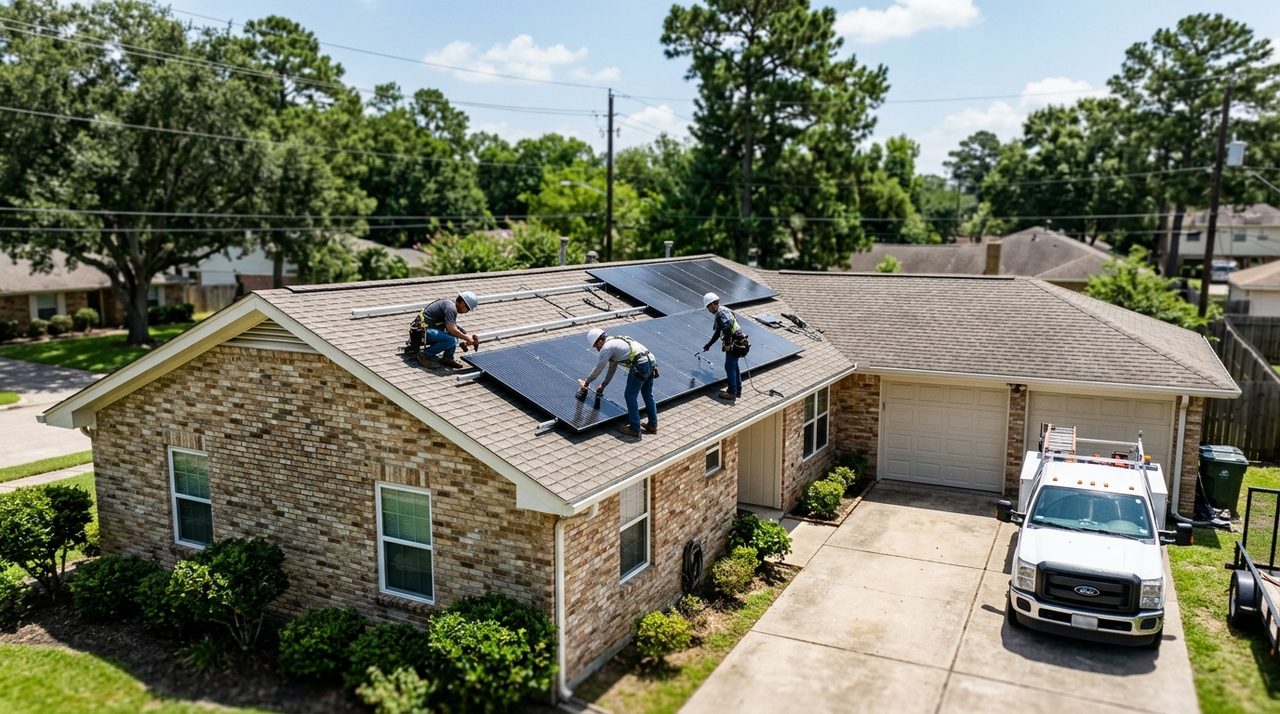
Garden Oaks's split housing stock—original 1930s–1950s bungalows with 60–100 amp panels and pier-and-beam frames sitting beside 2000s-era custom rebuilds on the same block—creates two completely different solar installation profiles within the same deed-restricted neighborhood. Every permitted solar installation here runs through the City of Houston's Houston Permitting Center, and the Garden Oaks Civic Club's deed restrictions mean your array placement must be reviewed for compliance before a nail goes in the roof. If you're in one of the older cottages, there's a strong chance your roof, panel, and electrical service all need attention before a solar installer can even begin.
Ranked by verified Google rating × review volume × verification tier. How we rank →
Some highly-rated pros serve Garden Oaks from nearby and may not keep a Garden Oaks street address. Those are listed under "Also serving Garden Oaks" with their real city and distance, so you always know where each business is based.
Highly-rated pros based nearby who cover Garden Oaks. Distance shown from the Garden Oaks area.
Serving Garden Oaks Based in Lazybrook / Timbergrove · 2.5 mi away
Serving Garden Oaks Based in Lazybrook / Timbergrove · 3.7 mi away
Serving Garden Oaks Based in Spring Branch · 3.8 mi away
Serving Garden Oaks Based in Brookhollow · 3.8 mi away
Serving Garden Oaks Based in Lazybrook / Timbergrove · 3.9 mi away
Serving Garden Oaks Based in Brookhollow · 3.9 mi away
Serving Garden Oaks Based in Midtown · 5 mi away
Serving Garden Oaks Based in Midtown · 5.3 mi away
Serving Garden Oaks Based in EaDo · 5.5 mi away
Why it matters to you
A large share of Garden Oaks's original 1930s–1950s bungalows still run on 60- or 100-amp electrical service—panels that were sized for a world without central air conditioning, let alone a rooftop solar array and battery backup. The City of Houston's Houston Permitting Center will not approve a solar interconnection on an undersize or code-deficient panel, meaning the panel upgrade is a prerequisite, not an optional add-on. Homeowners who receive a solar quote without a panel assessment first are likely looking at an unbudgeted $3,000–$6,000 line item that surfaces mid-project.
What a good pro does
A qualified solar installer operating in Garden Oaks should pull your CenterPoint usage history, walk your existing electrical panel, and confirm service capacity before producing any system sizing quote. The master electrician on the project—required by TDLR to pull all electrical permits in Texas—should submit the panel upgrade and the solar permit as a coordinated package to the Houston Permitting Center rather than sequentially, which can shave two to four weeks off the timeline.
Sources: Texas Department of Licensing & Regulation, Municipal permit office (see area profile), City of Houston Permitting Center
Why it matters to you
Garden Oaks's original cottage stock, with a Census median year built of 1963, means many unrenovated roofs are now well past the 12–15 year effective lifespan that Houston's UV index (averaging 10–11) and summer heat cycles impose on standard 3-tab asphalt shingles. An installer who mounts a panel array on a shingle roof that has five or fewer years of life remaining is setting you up for an $8,000–$14,000 panel removal and reinstallation cost when that roof fails—a cost almost never disclosed upfront. Harvey-era emergency repairs (2017–2019) on some Garden Oaks homes used budget materials that are aging faster than standard shingles.
What a good pro does
Before signing a solar contract on any pre-1990 Garden Oaks bungalow, insist on a written roof-age assessment from the installer. A reputable installer—ideally holding NABCEP PV Installation Professional certification—will either require a re-roof or document in the contract that the roof's remaining life is shorter than the panel warranty term. Bundling a roof replacement with the solar installation is often the cost-efficient path, and the combined project still qualifies for the 30% federal Investment Tax Credit on the solar portion.
Sources: North American Board of Certified Energy Practitioners (NABCEP), ENERGY STAR / U.S. Dept. of Energy, International Residential Code (as adopted by City of Houston)
Why it matters to you
Garden Oaks operates under deed restrictions enforced by the Garden Oaks Civic Club and Garden Oaks Maintenance Organization (GOMO), and Texas Property Code §202.010 protects your right to install solar while explicitly allowing civic organizations to require that panels not be visible from the street. On Garden Oaks's east-west-running streets with south-facing front facades—common in the neighborhood's grid layout—a 'not visible from street' restriction can force panels onto the rear slope, which may face north or east and cut system production by 15–25% compared to an optimal south-facing orientation. Three registered mandatory HOAs also operate within the neighborhood's boundaries, with exact coverage not publicly confirmed, meaning your specific lot may face stricter review.
What a good pro does
Before any design work, pull the deed restrictions for your section of Garden Oaks and confirm with GOMO whether your lot falls under one of the three registered mandatory HOAs. A solar installer experienced in Houston inner-loop deed-restricted neighborhoods will model production estimates for rear-slope placement specifically—not generic Houston averages—so you can make an informed decision about whether the investment still pencils out. If forced to a suboptimal orientation, a properly sized system (modeled against your actual CenterPoint billing data) can partially compensate by increasing panel count.
Sources: Local HOA / deed restrictions (see area profile), City of Houston Permitting Center, North American Board of Certified Energy Practitioners (NABCEP)
Why it matters to you
Winter Storm Uri (February 2021) and subsequent grid stress events have made battery backup a top priority for Garden Oaks homeowners, particularly in the older bungalows where outages hit hardest. However, the same vintage homes that need backup most urgently—those with 60–100 amp panels, older wiring, and limited dedicated circuits—are the most complex to integrate with a Tesla Powerwall or Enphase IQ Battery under City of Houston code. CenterPoint's interconnection tariff for storage-paired systems requires a separate metering application that adds 6–10 weeks to the project timeline on top of the standard Houston Permitting Center electrical permit queue.
What a good pro does
Homeowners in older Garden Oaks bungalows should budget the panel upgrade, solar installation, and battery integration as a single permitted project rather than phasing them, which avoids duplicate permit fees and repeated inspection scheduling at the Houston Permitting Center. The master electrician responsible for pulling the permit under TDLR rules must specify the battery enclosure location and fire separation details in the submittal package—AHJs in Houston have inconsistent standards on this, and incomplete submittals are the single biggest cause of permit delays on storage-paired projects in the inner loop.
Sources: Texas Department of Licensing & Regulation, Municipal permit office (see area profile), City of Houston Permitting Center
Hiring solar installers in Garden Oaks? Garden Oaks presents a split housing stock of original 1930s–1950s bungalows and modern custom homes, creating two distinct home-service profiles on the same streets. Deed restrictions enforced by the Garden Oaks Civic Club govern exterior modifications, so contractors should verify compliance before starting work. The neighborhood sits in FEMA Zone X with low flood risk, but aging plumbing and electrical in vintage homes drive steady renovation demand.
Building era
1930s–1950s (original stock), with significant contemporary infill from 2000s–present.
Typical style
Craftsman-style bungalows and cottages (original); contemporary and transitional custom builds (newer).
Foundations
Not confirmed from available sources — likely mixed pier-and-beam (older bungalows) and slab-on-grade (newer construction). Verify on a per-property basis.
Common systems
Original homes may have galvanized or cast-iron drain lines, older copper supply lines, 60–100 amp electrical panels, and aging forced-air or window-unit HVAC. Newer builds typically have PEX plumbing, 200-amp panels, and modern high-efficiency HVAC systems.
What that means for repairs
Teardown-and-rebuild activity is very common due to the large lot sizes and high land values. Older bungalows undergo kitchen and bath remodels, electrical panel upgrades, and re-plumbing. Foundation repair on pier-and-beam vintage homes is a recurring need.
Permit jurisdiction
City of Houston — Houston Permitting Center (HPW).
HOA & deed restrictions
Most of Garden Oaks operates under the Garden Oaks Civic Club / Garden Oaks Maintenance Organization (GOMO), which enforces deed restrictions but does not charge a mandatory annual HOA fee. Section 4 specifically has no transfer fee. However, three mandatory HOAs are registered in the Garden Oaks area per Texas Real Estate Commission filings — exact names and boundaries not confirmed.
Historic districts
No City of Houston historic district designation confirmed. No references to HAHC review or Certificates of Appropriateness were found for Garden Oaks, though a formal city historic-district list was not available in research — verify with Houston Planning & Development if exterior changes are planned.
Contractor note
Deed restrictions enforced by the civic club may regulate exterior materials, setbacks, and accessory structures. Contractors should review the applicable section's deed restrictions before beginning exterior work, and confirm whether the specific property falls under one of the three registered mandatory HOAs.
FEMA flood zone
FEMA Zone X (low flood risk) per official NFHL data. Garden Oaks is not immediately adjacent to a major bayou, though Little White Oak Bayou runs to the neighborhood's general south/southeast.
Hurricane Harvey impact
No source in the available research directly addresses Hurricane Harvey flooding specific to Garden Oaks. No quantified damage figures, flooded-street lists, or recurring flood problem areas were identified. Not confirmed — check Harris County Flood Control District records and FEMA claims data for property-level Harvey impact.
Heat & humidity load
Original 1930s bungalows with limited insulation and older HVAC systems face heavy cooling loads during Houston summers, driving frequent AC repair and duct-sealing calls. Mature tree canopy helps shade but produces debris that clogs gutters and stresses roofing. Newer builds with modern insulation and high-efficiency systems fare better but still demand annual HVAC maintenance.
Working with contractors here
Garden Oaks generates two parallel workstreams: full teardown-and-rebuild projects replacing aging bungalows with contemporary custom homes, and deep renovations of vintage 1930s–1950s cottages. Older homes frequently need foundation leveling on pier-and-beam systems, full re-plumbing to replace galvanized lines, and electrical panel upgrades from 60-amp to 200-amp service. The civic club's deed restriction enforcement means exterior remodels — roofing material changes, fence styles, and additions — should be reviewed for compliance before permitting. Large lot sizes and mature landscaping often complicate equipment access and staging, so job scoping should account for tree protection and limited driveway widths on older properties.
Local Tip
Always ask for a written estimate before work begins. Texas contractors are required to provide one on jobs over $1,000.
Garden Oaks presents a split housing stock of original 1930s–1950s bungalows and modern custom homes, creating two distinct home-service profiles on the same streets. Deed restrictions enforced by the Garden Oaks Civic Club govern exterior modifications, so contractors should verify compliance before starting work. The neighborhood sits in FEMA Zone X with low flood risk, but aging plumbing and electrical in vintage homes drive steady renovation demand.
Source: U.S. Census Bureau, ACS 5-Year 2023
Most of Garden Oaks maps to FEMA Zone X (low mapped flood risk), but Houston's flash-flood reality means even low-risk blocks benefit from smart drainage and storm-hardened installs.
Source: FEMA National Flood Hazard Layer (NFHL). Flood zones vary by parcel — verify your individual FIRM panel.
Wind damage, not flooding, is the primary hurricane threat for solar systems in lower-risk Garden Oaks, so prioritize a pre-season inspection confirming your racking's hurricane-rated uplift capacity meets the local design wind speed in the City of Houston building code. Loose or improperly torqued rail clamps were a leading cause of panel loss across the metro after Beryl 2024's sustained tropical-force winds. Much of the housing stock predates modern wind codes (median build year 1963), so retrofits matter more here. Confirm the current FEMA panel for your Garden Oaks parcel — the area maps to Zone X, but adjacent lots can differ.
Wind uplift from severe thunderstorm straight-line winds — not just hurricanes — is the most common cause of panel dislodgement in Garden Oaks; confirm with your TDLR-licensed installer that your racking was installed with hurricane-rated lag screws into verified rafter locations, not just into decking. The May 2024 derecho demonstrated that 80-plus-mph gusts arrive with little warning and no opportunity for last-minute hardware checks. In-city Garden Oaks work falls under City of Houston floodplain and permitting rules.
Winter Storm Uri demonstrated that even low-flood-risk areas of the Houston metro face multi-day power outages when the ERCOT grid is stressed; solar homeowners in Garden Oaks should test their battery backup system's automatic transfer function annually, ideally before December, to confirm it will island critical loads smoothly if the grid fails during a freeze. A TDLR-licensed solar technician can perform this test and verify that the rapid-shutdown system resets correctly when grid power is restored. With a median build year of 1963, the older building stock here is more exposed to hard-freeze damage than newer construction. Confirm the current FEMA panel for your Garden Oaks parcel — the area maps to Zone X, but adjacent lots can differ.
Sources: FEMA National Flood Hazard Layer (NFHL), Ready.gov -- Hurricanes, CenterPoint Energy -- Storm Center, City of Houston -- Emergency Preparedness, Ready.gov -- Winter Weather, Harris County Flood Control District
Houston-specific estimators to plan your project before you call a pro. All results are planning estimates — a licensed local pro confirms the details on site.
Disconnect & drain every outdoor hose bib
Remove hoses, drain the spigots, and cover each with an insulated faucet sock. Un-drained hose bibs are the #1 burst point in a Houston freeze.
Insulate exposed pipes in the attic & garage
Wrap any pipe in an unconditioned space (attic runs, garage walls) with foam sleeves. Houston homes rarely insulate these because they only matter a few nights a year — which is exactly why they burst.
Open cabinet doors & keep a pencil-width drip
On hard-freeze nights, open kitchen/bath cabinets so warm air reaches the pipes and let faucets on exterior walls drip to relieve pressure.
Protect the attic/garage water heater & its lines
An attic or garage tank sits in unconditioned space. Insulate the cold-inlet and hot-outlet lines and confirm the emergency drain pan is clear so a leak doesn't reach the ceiling.
This is a planning estimate only — actual requirements depend on an on-site assessment by a licensed Houston pro. If a pipe has already burst, shut off your main water supply and call a licensed Houston plumber immediately — freeze bursts flood fast.
Sources: City of Houston Permitting CenterMunicipal permit office (see area profile)
Sources: City of Houston Permitting Center
Sources: Local HOA / deed restrictions (see area profile)
Sources: Texas Department of Licensing & RegulationNorth American Board of Certified Energy Practitioners (NABCEP)