Closed
10770 Tri City Beach Rd, Beach City, TX 77523
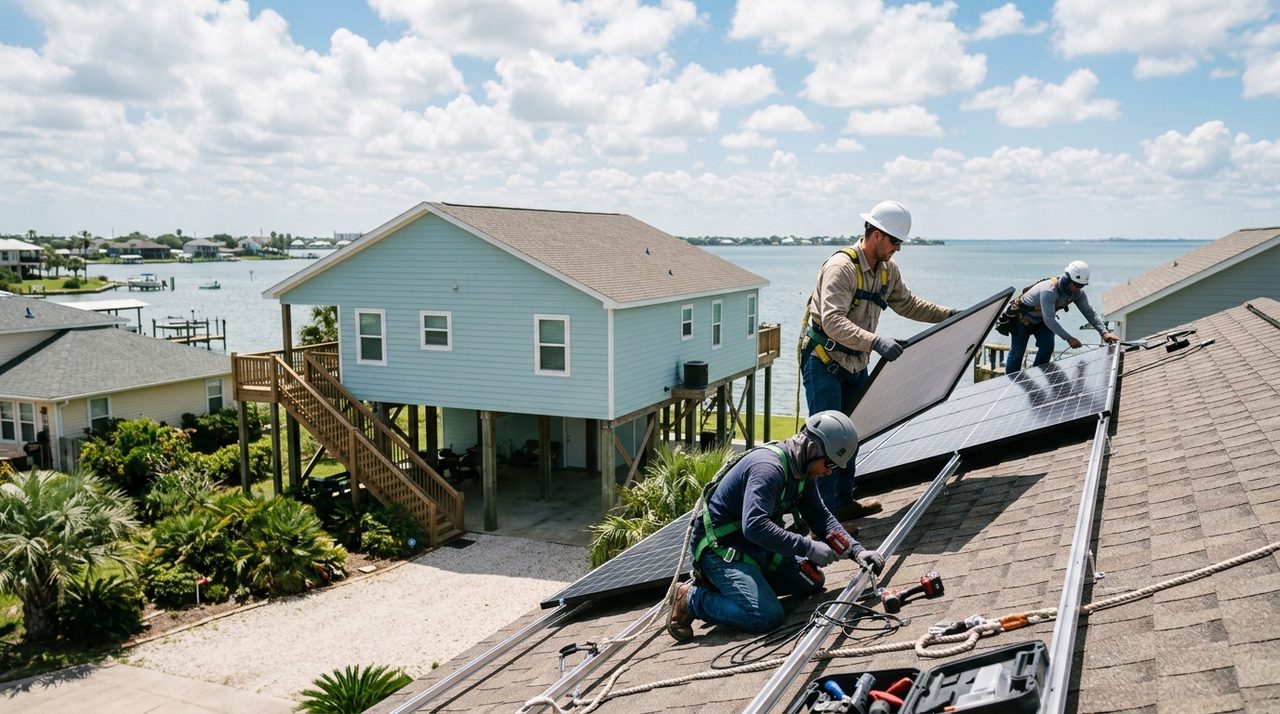
Baytown homeowners weighing solar face a distinct set of variables: a housing stock split between 1950s–1970s ranch homes with aging electrical panels and 1990s–2010s brick-veneer tract subdivisions, all permitting through the City of Baytown's independent office rather than Houston or Harris County. Add the corrosive marine-industrial air drifting off the Houston Ship Channel and Galveston Bay, subdivision-level HOAs with their own Architectural Review Committees, and Houston's punishing 9-month cooling season, and a solar installation here demands more due diligence than the installer's brochure will suggest. This page breaks down the specific challenges Baytown homeowners face so you can ask the right questions before signing a contract.
Ranked by verified Google rating × review volume × verification tier. How we rank →
10770 Tri City Beach Rd, Beach City, TX 77523
Why it matters to you
Baytown's median year-built is 1981, and the older in-town neighborhoods from the 1950s–1970s frequently still carry 100-amp or sub-panel electrical service — equipment that cannot safely accept a solar inverter tie-in or a battery system like a Tesla Powerwall without a full panel replacement first. An installer who quotes only the solar hardware without assessing your existing service entrance is setting you up for a change-order surprise of $3,000–$6,000 after permits are already pulled. In a city where owner-occupancy sits at roughly 53%, many of these older homes have been maintained on tight budgets, making pre-installation electrical inspections non-negotiable.
What a good pro does
A qualified installer operating in Baytown must pull both an electrical permit and a building permit through the City of Baytown Permitting office — not Houston Permitting Center and not Harris County Engineering. The master electrician on the project, who must hold a valid TDLR Electrical Contractor license to pull the permit, should walk your main panel and sub-panels before any system is sized. Ask for the panel assessment in writing before the proposal is finalized so panel upgrade costs are baked into the contract, not added later.
Sources: Municipal permit office (see area profile), Texas Department of Licensing & Regulation
Why it matters to you
Baytown's proximity to the Houston Ship Channel and Galveston Bay means the air carries elevated levels of salt and industrial particulates that accelerate galvanic corrosion on aluminum racking, stainless fasteners, and MC4 electrical connectors. Standard residential racking hardware rated for inland installations can show visible oxidation and connector degradation within 4–6 years in this environment — a timeframe well inside a 25-year panel warranty period. This is the same corrosive environment that drives above-average demand for exterior painting and metal-component replacement among Baytown contractors generally, and solar hardware is not immune.
What a good pro does
Ask prospective installers to specify the exact racking manufacturer and connector series they plan to use and confirm those components carry a marine-environment or C4/C5 corrosion classification. Roof attachments should use stainless steel lag bolts and flashing rather than standard zinc-coated hardware. A reputable installer with NABCEP PV Installation Professional certification will be familiar with these specifications; verify that credential before signing.
Sources: North American Board of Certified Energy Practitioners (NABCEP), International Residential Code (as adopted by City of Houston)
Why it matters to you
Baytown has no city-wide HOA, but several newer subdivisions — including Sterling Point (managed by Crest Management), The Park at Independence Bend, Eastpoint Subdivision (219 homes), and Baytown Country Club Manor — enforce recorded CC&Rs that govern exterior modifications. Texas Property Code §202.010 protects your legal right to install solar, but it explicitly allows HOAs to require placement where panels are 'not visible from the street.' In a typical Baytown 1990s–2010s tract subdivision where the primary roof slope faces south toward the street, this can force arrays onto a rear east- or west-facing pitch, reducing annual production by an estimated 15–25% compared to optimal south orientation — a real payback hit on a home with a median value of roughly $188,000.
What a good pro does
Before submitting to your HOA's Architectural Review Committee, have your installer model production estimates for both the compliant rear-slope placement and the optimal south-facing placement, so you understand the output difference in writing. Many HOAs will approve a compromise layout when the applicant presents a professional production analysis. Confirm HOA governance status for your specific address using a Texas Property Code §209 management certificate request — older in-town Baytown blocks may have no enforceable HOA at all, giving you full placement flexibility.
Sources: Local HOA / deed restrictions (see area profile), Municipal permit office (see area profile)
Why it matters to you
Baytown's 1990s–2010s brick-veneer subdivision homes — the bulk of the HOA-managed housing stock — are now 15–35 years old, putting many original 3-tab asphalt shingle roofs at or near end of life. Houston's combination of 95°F+ summer heat, UV index averaging 10–11, and high humidity degrades standard shingles in 12–15 years rather than the rated 20–25, and Baytown's coastal moisture load accelerates that further. An installer who mounts a 25-year panel array on a 14-year-old shingle roof in Sterling Point or Independence Bend is creating a near-certain scenario where panels must be removed and reinstalled within 5–8 years for a re-roof, at an estimated additional cost of $8,000–$14,000 — a disclosure many installers skip.
What a good pro does
Request a roof certification or third-party roofing inspection as part of your solar proposal process. If the roof has fewer than 10 years of estimated remaining life, the financially sound approach is to bundle a full re-roof with the solar installation so racking penetrations are made into fresh substrate with a unified warranty. The City of Baytown requires permits for both roofing and solar electrical work; coordinating both trades under one permit pull — with the master electrician of record on the solar side holding a valid TDLR license — streamlines inspections and reduces redundant fees.
Sources: Municipal permit office (see area profile), Texas Department of Licensing & Regulation, International Residential Code (as adopted by City of Houston)
Hiring solar installers in Baytown? Baytown is an incorporated city east of Houston with a diverse housing stock ranging from 1950s-era non-HOA neighborhoods to modern master-planned HOA subdivisions. Homeowners should verify their specific subdivision's deed restrictions and HOA status, as governance varies block by block. Proximity to the Houston Ship Channel and coastal waterways means moisture management, corrosion resistance, and flood preparedness are critical home maintenance considerations.
Building era
Mixed: older in-town areas from 1950s–1970s; many HOA-managed subdivisions built 1990s–2010s.
Typical style
One- and two-story traditional brick or brick-veneer tract homes in newer subdivisions; ranch-style and bungalow homes in older non-HOA areas.
Foundations
Predominantly slab-on-grade in post-1970s subdivisions; some older homes may have pier-and-beam — not confirmed in research for specific neighborhoods.
Common systems
Older homes (1950s–1970s): original copper or galvanized plumbing, older electrical panels. Newer subdivisions (1990s–2010s): PEX or CPVC plumbing, 200-amp electrical panels, central HVAC with standard efficiency units.
What that means for repairs
Older non-HOA neighborhoods see plumbing re-pipes, panel upgrades, and foundation leveling. Newer HOA subdivisions focus on cosmetic updates and HVAC replacements as original systems age out of warranty.
Permit jurisdiction
City of Baytown Permitting — Baytown is an incorporated city with its own building codes and permit office, separate from Houston Permitting Center and Harris County Engineering.
HOA & deed restrictions
No single city-wide HOA. Multiple subdivision-level mandatory HOAs exist, including Sterling Point Community Association (managed by Crest Management), The Park at Independence Bend HOA, Eastpoint Subdivision HOA (219 homes), and Baytown Country Club Manor HOA. Older in-town areas may have no HOA or only informal civic clubs. Verify HOA status via Texas Property Code §209 management certificates for any specific address.
Historic districts
No City of Houston historic district designation confirmed. Baytown is an independent incorporated city and does not fall under HAHC jurisdiction.
Contractor note
Contractors must pull permits through the City of Baytown, not Houston or Harris County. HOA Architectural Review Committee approval may be required in subdivisions like Sterling Point or Independence Bend before exterior modifications begin.
FEMA flood zone
FEMA Zone X (low flood risk) per official NFHL API data at the queried point. However, Baytown is a large city and many areas near the San Jacinto River, Goose Creek, and Cedar Bayou carry higher flood designations. Property-specific FEMA lookups are strongly recommended.
Hurricane Harvey impact
Not confirmed from provided research with specific damage figures. Baytown's location near the San Jacinto River and coastal waterways made it vulnerable during Hurricane Harvey in 2017, and the broader region experienced significant flooding. Homeowners should check Harris County Flood Control District records for address-specific Harvey inundation data.
Heat & humidity load
Baytown's coastal proximity produces high humidity and salt-air exposure, accelerating corrosion on HVAC condensers, metal roofing components, and exterior hardware. Summer heat loads on older homes with original insulation and single-pane windows can strain HVAC systems significantly. Moisture intrusion and mold risk are elevated in older pier-and-beam structures.
Working with contractors here
Contractors in Baytown most commonly handle HVAC replacements, plumbing re-pipes, and foundation work — driven by the area's split between aging 1950s–1970s housing and maturing 1990s–2000s tract homes. Corrosion from the industrial and coastal environment creates above-average demand for exterior painting, metal component replacement, and roof maintenance. In HOA-managed subdivisions, contractors should confirm architectural committee requirements before beginning any visible exterior work, as communities like Sterling Point and Independence Bend enforce recorded CC&Rs. The City of Baytown's independent permitting process means contractors familiar only with Houston or unincorporated Harris County codes need to verify local requirements.
Local Tip
Always ask for a written estimate before work begins. Texas contractors are required to provide one on jobs over $1,000.
Baytown is an incorporated city east of Houston with a diverse housing stock ranging from 1950s-era non-HOA neighborhoods to modern master-planned HOA subdivisions. Homeowners should verify their specific subdivision's deed restrictions and HOA status, as governance varies block by block. Proximity to the Houston Ship Channel and coastal waterways means moisture management, corrosion resistance, and flood preparedness are critical home maintenance considerations.
Source: U.S. Census Bureau, ACS 5-Year 2023
Most of Baytown maps to FEMA Zone X (low mapped flood risk), but Houston's flash-flood reality means even low-risk blocks benefit from smart drainage and storm-hardened installs; risk climbs sharply on blocks nearest Galveston Bay and the Houston Ship Channel, where it varies parcel to parcel.
Source: FEMA National Flood Hazard Layer (NFHL). Flood zones vary by parcel — verify your individual FIRM panel.
Wind damage, not flooding, is the primary hurricane threat for solar systems in lower-risk Baytown, TX, so prioritize a pre-season inspection confirming your racking's hurricane-rated uplift capacity meets the local design wind speed in the City of Houston building code. Loose or improperly torqued rail clamps were a leading cause of panel loss across the metro after Beryl 2024's sustained tropical-force winds. Because Baytown drains toward Galveston Bay and the Houston Ship Channel, block-level runoff can differ sharply from the mapped zone.
Hail damage to solar panels in Baytown, TX is often invisible from the ground but detectable through performance monitoring — if your system's daily output drops noticeably after a storm, that is a signal to request a licensed inspection before the damage compounds. Cracked panel glass also creates a ground-fault risk that your inverter's built-in GFCI may flag as an error code. Confirm the current FEMA panel for your Baytown parcel — the area maps to Zone X, but adjacent lots can differ.
For Baytown, TX homeowners whose primary storm concern is wind and power disruption rather than flood, a freeze event like Uri 2021 highlights the value of solar battery backup: when CenterPoint lost generation capacity statewide, a charged battery bank sustained critical loads regardless of what was happening on the grid. Confirm with your TDLR-licensed installer that your battery's thermal management system is rated to operate in temperatures below 20°F, which Uri brought to the Houston area. With a median build year of 1981, the older building stock here is more exposed to hard-freeze damage than newer construction. Confirm the current FEMA panel for your Baytown parcel — the area maps to Zone X, but adjacent lots can differ.
Sources: FEMA National Flood Hazard Layer (NFHL), Ready.gov -- Hurricanes, CenterPoint Energy -- Storm Center, City of Houston -- Emergency Preparedness, Ready.gov -- Winter Weather, Harris County Flood Control District
Houston-specific estimators to plan your project before you call a pro. All results are planning estimates — a licensed local pro confirms the details on site.
Disconnect & drain every outdoor hose bib
Remove hoses, drain the spigots, and cover each with an insulated faucet sock. Un-drained hose bibs are the #1 burst point in a Houston freeze.
Insulate exposed pipes in the attic & garage
Wrap any pipe in an unconditioned space (attic runs, garage walls) with foam sleeves. Houston homes rarely insulate these because they only matter a few nights a year — which is exactly why they burst.
Open cabinet doors & keep a pencil-width drip
On hard-freeze nights, open kitchen/bath cabinets so warm air reaches the pipes and let faucets on exterior walls drip to relieve pressure.
Protect the attic/garage water heater & its lines
An attic or garage tank sits in unconditioned space. Insulate the cold-inlet and hot-outlet lines and confirm the emergency drain pan is clear so a leak doesn't reach the ceiling.
This is a planning estimate only — actual requirements depend on an on-site assessment by a licensed Houston pro. If a pipe has already burst, shut off your main water supply and call a licensed Houston plumber immediately — freeze bursts flood fast.
Sources: Municipal permit office (see area profile)
Sources: Municipal permit office (see area profile)
Sources: North American Board of Certified Energy Practitioners (NABCEP)Texas Department of Licensing & Regulation