5619 Coastal Way, Houston, TX 77085
Best Pressure Washing in Westbury
Westbury's roughly 5,000 mid-century ranch homes — most built on concrete slabs in the 1950s and 1960s over Houston Black clay — accumulate decades of mold, efflorescence, and tannic staining that routine hosing cannot touch. Southwest Houston's humidity, the neighborhood's mature tree canopy, and the mineral-rich clay soil beneath every slab combine to make pressure washing one of the most high-return maintenance tasks a Westbury homeowner can schedule. Understanding which surfaces need soft-wash chemistry versus direct pressure, and how the Westbury Civic Club's deed restrictions govern exterior appearances, separates a one-season fix from lasting results.
Verified against Google Business data
Updated 2026
See the 10 Pressure Washing Serving Westbury 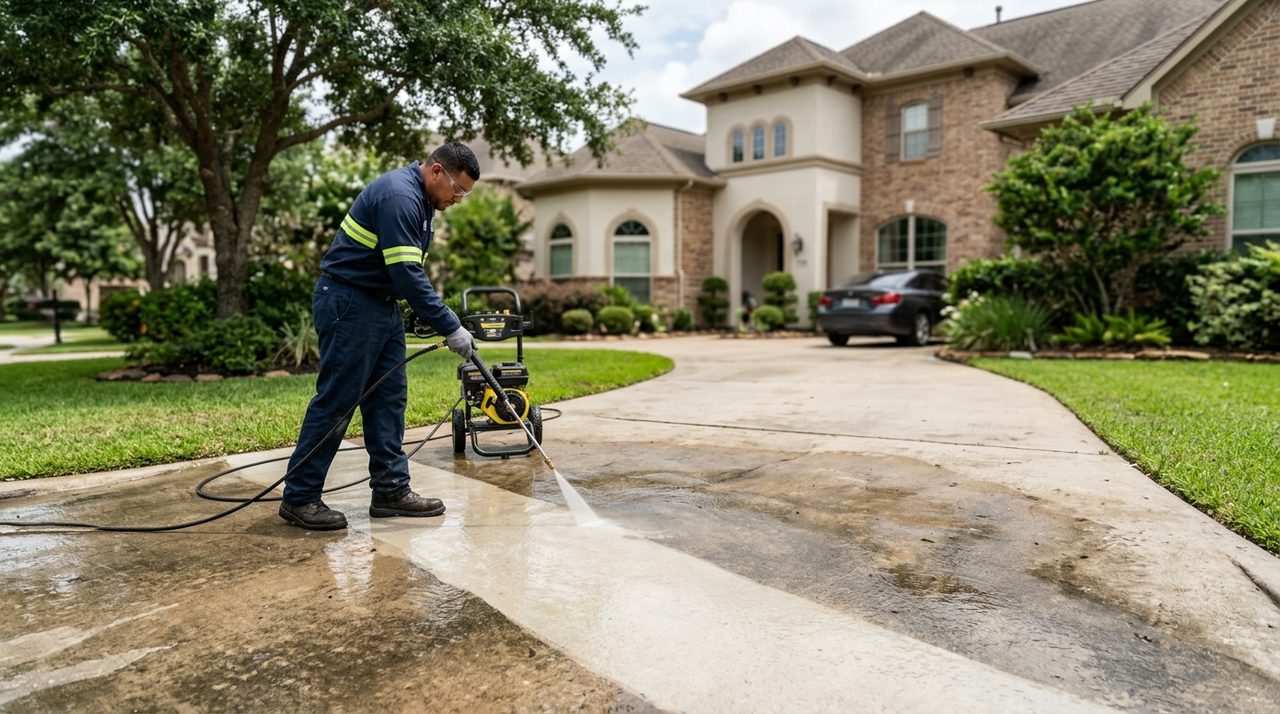
- Median home built
- 1977
- Median home value
- $257,773
- FEMA flood zone
- X (low)
- Typical cost (est.)
- $250–$900
- Most common local issue
- Efflorescence & clay-mud staining on 60-year-old brick veneer and slab edges
Ranked by verified Google rating × review volume × verification tier. How we rank →
Some highly-rated pros serve Westbury from nearby and may not keep a Westbury street address. Those are listed under "Also serving Westbury" with their real city and distance, so you always know where each business is based.
Min rating:
10 resultsBased in Westbury
4211 Woodmont Dr, Houston, TX 77045
Closed
13359 Fondren Rd Suite B, Houston, TX 77085
Also serving Westbury
Highly-rated pros based nearby who cover Westbury. Distance shown from the Westbury area.
Closed
Serving Westbury Based in Meyerland · 1.3 mi away
Serving Westbury Based in Bellaire · 3 mi away
Closed
Serving Westbury Based in Bellaire · 3.4 mi away
Closed
Serving Westbury Based in Braeswood · 3.9 mi away
Closed
Serving Westbury Based in Medical Center · 4.6 mi away
Open Now
Serving Westbury Based in Missouri City · 4.6 mi away
Serving Westbury Based in Sharpstown · 4.8 mi away
Pressure Washing in Westbury: What You Should Know
Efflorescence and Red-Clay Staining on 1950s Brick Veneer
Why it matters to you
Westbury's slab-on-grade homes sit directly on expansive Houston Black clay that shrinks in dry summers and swells after heavy rain. Those moisture cycles wick mineral salts upward through the concrete slab and into the original brick veneer, depositing white efflorescence and rust-orange clay mud staining at foundation level — especially visible on Westbury's low-to-the-ground ranch facades where the brick starter course is only inches off grade. Standard cold-water rinsing re-wets and redistributes the salts rather than removing them.
What a good pro does
A qualified operator pre-treats affected brick and mortar joints with a pH-appropriate efflorescence remover (typically a dilute acid-based solution) before applying controlled pressure — generally 800–1,200 PSI on sound brick, lower if mortar joints show age deterioration. Hot-water equipment helps dissolve baked-on clay pigment. Because this involves chemical cleaners, wash water must not be directed into street storm drains, which in Houston flow to bayous and Galveston Bay; responsible operators contain and dispose of wash water per TCEQ stormwater rules. Texas does not require a specific pressure-washing license, but operators applying algaecides or certain degreasers at qualifying concentrations may need a Texas Department of Agriculture (TDA) pesticide applicator credential.
Mold and Black Algae Cycling on Shaded Ranch Roofs and Driveways
Why it matters to you
Westbury's lots — many exceeding 7,000–8,000 square feet with established live oaks and pecans — keep ranch rooflines and wide concrete driveways in near-constant shade. Houston's average annual humidity above 75 percent and 60-plus inches of annual rainfall mean Gloeocapsa magma (black algae) and green mold recolonize cleaned surfaces within 6–12 months without post-treatment. On Westbury's aging asphalt-shingle roofs — many approaching or past the 20-year mark given the neighborhood's renovation cycle — high-pressure washing strips granules and can void manufacturer warranties.
What a good pro does
Roof cleaning on Westbury's hipped and low-sloped ranch roofs should always be delivered as a low-pressure soft-wash (typically under 500 PSI) using a sodium hypochlorite-based biocide solution that kills Gloeocapsa at the root rather than blasting it off. For driveways, a post-wash application of a penetrating biocide sealer extends the clean appearance significantly in this shaded, humid environment. Homeowners should ask for documentation of the chemical dilution used; operators applying products that qualify as pesticides under Texas law need a valid TDA applicator license.
Sources: Texas Commission on Environmental Quality, International Residential Code (as adopted by City of Houston)
Westbury Civic Club Deed Restrictions and Exterior Appearance Compliance
Why it matters to you
The Westbury Civic Club, Inc. (Super Neighborhood 37) enforces deed restrictions with an Architectural Review Committee that can issue written notices for visible exterior deterioration — including algae-stained driveways, discolored wood fences, and green-streaked brick — with cure windows that may be as short as 30 days. Given that roughly half of Westbury's housing stock is owner-occupied and the median home value sits near $258,000 (ACS 2023 estimates), maintaining exterior appearance is both a compliance obligation and a direct equity concern. Homeowners in sections where deed restrictions are recorded at the Harris County Clerk's office should verify their specific lot's obligations before assuming what is or isn't covered.
What a good pro does
Before scheduling pressure washing that could affect fence material, roofing surface, or structural brick, confirm your section's deed restriction language via the Harris County Clerk's recorded documents. Routine pressure washing of driveways, walkways, and siding typically does not trigger an ARC submission, but replacing or staining a wood fence — often done in tandem with a wash-and-prep service — may require prior Civic Club approval. The City of Houston Permitting Center, which has jurisdiction over all of Westbury, does not require a municipal permit for residential pressure washing itself, so compliance effort here is entirely on the deed-restriction side.
Sources: Local HOA / deed restrictions (see area profile), City of Houston Permitting Center
Oil and Spall Staining on Aged Slab Driveways After Decades of Use
Why it matters to you
Westbury homes built in the 1950s and 1960s have driveways that are now 50–70 years old in many cases, and Houston's slab-on-grade construction means the concrete was poured directly over expansive clay with no buffer. Winter Storm Uri (February 2021) brought a hard freeze that accelerated surface spalling on already-porous concrete across the City of Houston, and Westbury's attached garages and carports — a hallmark of the mid-century ranch form — concentrate oil and transmission fluid drips on the same 10-foot apron year after year. That oil bakes into spalled, open-pored concrete under Houston's summer UV and cannot be lifted by cold water alone.
What a good pro does
Effective driveway cleaning on Westbury's older slabs requires a hot-water pressure washer (180°F+) combined with a commercial alkaline degreaser applied as a dwell-treatment before pressure is applied. Operators should assess slab condition first — heavily spalled concrete can be damaged by pressures above 2,000 PSI, so technique matters as much as equipment. Estimates for a standard Westbury driveway and walkway (roughly 600–1,000 sq ft) typically run $150–$350, with oil-stain pre-treatment adding a 20–40 percent premium; these are estimates and vary by surface condition. Wash water from degreaser applications must be contained and not allowed to enter street drains per TCEQ discharge rules.
Sources: Texas Commission on Environmental Quality, FEMA National Flood Hazard Layer (NFHL)
Pressure Washing in Westbury: What You Should Know
Hiring pressure washing in Westbury? Westbury is a large 1950s-era subdivision of roughly 5,000 single-family homes plus thousands of multifamily units in southwest Houston. Homeowners here contend with aging slab foundations, original-era plumbing and electrical systems, and flood risk in sections near Willow Waterhole and Brays Bayou. Deed restrictions enforced by the Westbury Civic Club/HOA require architectural review for exterior modifications, making pre-project compliance checks essential.
- Housing era
- 1950s–1960s (original subdivision), with later multifamily and infill development
- Foundation
- Predominantly concrete slab-on-grade
- Flood zone
- FEMA Zone X (low flood risk) per official NFHL data
- Permits
- City of Houston Permitting Center (Westbury is within Houston city limits)
Housing stock & systems
Building era
1950s–1960s (original subdivision), with later multifamily and infill development.
Typical style
One-story mid-century ranch homes with brick veneer, low-sloped or hipped roofs, attached garages or carports, and wide lots.
Foundations
Predominantly concrete slab-on-grade; some pier-and-beam may exist in earliest sections but slab is clearly prevalent in listings.
Common systems
Original homes likely have galvanized steel or early copper supply lines, cast iron drain lines, 100-amp electrical panels, and older forced-air HVAC systems or window units later converted to central air. Many systems are 50–70 years old and approaching or past end of life.
What that means for repairs
Kitchen and bathroom remodels are common as owners update mid-century layouts. Whole-house replumbing (replacing galvanized and cast iron), electrical panel upgrades to 200-amp service, and HVAC replacements are frequent due to system age. Some lots see teardown-rebuild activity as land values support new construction.
Permits & restrictions
Permit jurisdiction
City of Houston Permitting Center (Westbury is within Houston city limits).
HOA & deed restrictions
Westbury Civic Club, Inc. operates as the primary neighborhood association (Super Neighborhood 37). Deed restrictions with an Architectural Review/Control Committee are described as mandatory for compliance. The exact legal status of dues (mandatory vs. voluntary for each section) is not fully verifiable from public sources alone — check Harris County Clerk deed restriction records for your specific lot.
Historic districts
No City of Houston historic district designation confirmed.
Contractor note
Contractors must obtain City of Houston permits for structural, mechanical, electrical, and plumbing work, and should verify Westbury's deed restriction and ARC/ACC requirements before beginning any exterior modifications including fencing, roofing material changes, or additions.
Flood & weather
FEMA flood zone
FEMA Zone X (low flood risk) per official NFHL data. However, Westbury is adjacent to Brays Bayou and Willow Waterhole, and portions of the neighborhood — especially lower-lying southern and eastern sections near these drainage features — have documented histories of flooding. Parcel-level flood risk can vary significantly; an elevation certificate and HCFCD inundation maps should be consulted for individual addresses.
Hurricane Harvey impact
Significant flooding occurred in portions of Westbury during Hurricane Harvey (2017), particularly in lower-lying sections closest to Willow Waterhole, Brays Bayou, and drainage corridors near US 90A and South Post Oak. Post-Harvey flood mitigation projects were implemented around Willow Waterhole. Block-by-block impact data is not available in text sources; homeowners should request seller's disclosure, prior flood claim history, and Harris County Flood Control District high-water-mark data for specific addresses.
Heat & humidity load
1950s slab homes with original insulation and single-pane windows put heavy loads on HVAC systems during Houston summers. Aging ductwork in unconditioned attics degrades efficiency. Foundation movement on expansive clay soils accelerates during summer drought cycles, making seasonal watering programs and foundation monitoring important for these older slabs.
Working with contractors here
The dominant work in Westbury involves updating 1950s–1960s building systems: whole-house replumbing from galvanized and cast iron to PEX/PVC, electrical panel upgrades from 100-amp to 200-amp service, and HVAC replacement with modern high-efficiency equipment. Slab foundation repair is common due to the age of the homes and Houston's expansive clay soils. Contractors should be aware that the Westbury Architectural Review Committee requires compliance with deed restrictions for exterior work, so scope proposals for roofing, siding, fencing, or additions should account for review and approval timelines. Flood-damaged properties near Willow Waterhole and Brays Bayou may require remediation work including mold abatement, drywall replacement, and elevated mechanical equipment installation.
Local Tip
Always ask for a written estimate before work begins. Texas contractors are required to provide one on jobs over $1,000.
About Westbury
Westbury is a large 1950s-era subdivision of roughly 5,000 single-family homes plus thousands of multifamily units in southwest Houston. Homeowners here contend with aging slab foundations, original-era plumbing and electrical systems, and flood risk in sections near Willow Waterhole and Brays Bayou. Deed restrictions enforced by the Westbury Civic Club/HOA require architectural review for exterior modifications, making pre-project compliance checks essential.
- Median year built
- 1977
- Median home value
- $257,773
- Owner-occupied
- 52.8%
- Population
- 148,525
- Housing units
- 57,470
- Median income
- $67,468
Source: U.S. Census Bureau, ACS 5-Year 2023
Flood & storm risk
FEMA Zone XLow flood riskMost of Westbury maps to FEMA Zone X (low mapped flood risk), but Houston's flash-flood reality means even low-risk blocks benefit from smart drainage and storm-hardened installs; risk climbs sharply on blocks nearest Brays Bayou, where it varies parcel to parcel.
Source: FEMA National Flood Hazard Layer (NFHL). Flood zones vary by parcel — verify your individual FIRM panel.
Frequently Asked Questions
Do I need a City of Houston permit to have my Westbury driveway or house exterior pressure washed?
Routine residential pressure washing does not require a permit from the City of Houston Permitting Center — it is maintenance, not construction. However, if a contractor is applying chemical algaecides or degreasers classified as pesticides, the applicator may need a Texas Department of Agriculture pesticide applicator credential, which is a state-level requirement separate from Houston's permit system. For anything beyond washing — say, patching spalled slab concrete or repainting exterior brick — a City of Houston permit may be triggered.
Sources: City of Houston Permitting Center
Does the Westbury Civic Club require me to notify the ARC before scheduling a professional wash or exterior cleaning?
A straight pressure or soft-wash of existing surfaces — brick veneer, driveway, roof — typically does not require Westbury Civic Club Architectural Review Committee approval because you are not changing materials or appearance; you are restoring them. Where the ARC becomes relevant is if the cleaning reveals damage that leads to exterior repairs, repainting a different color, or replacing fence boards, which are all modifications the deed restrictions govern. Check your specific section's recorded deed restrictions at the Harris County Clerk's office before any follow-on repair work, since cure-notice windows can be as short as 30 days.
Sources: Local HOA / deed restrictions (see area profile)
My Westbury home is near Willow Waterhole — is it in a flood zone that changes how wash-water runoff has to be handled?
Most of Westbury maps to FEMA Zone X (low mapped flood risk), but parcels closest to Brays Bayou and Willow Waterhole can vary, so check your specific address on the FEMA Flood Map Service Center. Regardless of flood-zone designation, TCEQ rules prohibit pressure-wash wastewater containing degreasers, detergents, or chemical cleaners from entering Houston's storm drains, which drain directly to bayous and eventually Galveston Bay. A reputable Westbury operator will use containment berms or vacuums on degreaser jobs near any storm drain inlet, especially given the neighborhood's proximity to Willow Waterhole.
Sources: FEMA National Flood Hazard Layer (NFHL)Texas Commission on Environmental Quality
How soon after Harvey (2017) or Beryl (2024) staining should Westbury homeowners have scheduled a wash — and is it too late to remove old flood-line marks on brick?
Flood-line marks — the distinct 'bathtub ring' of silty mud and organic residue left on brick veneer at the waterline — are easiest to treat within a few months of a storm, before the mineral salts and tannins fully cure into the masonry. On Westbury's 1950s brick, marks from Harvey or even Beryl are not necessarily permanent: a professional soft-wash with a dilute alkaline detergent followed by low-pressure rinse can lift most organic staining, though deeply embedded efflorescence may need an acid wash. Expect a 20–40% premium over standard house-wash pricing for chemical pre-treatment on heavily weathered flood-stained brick — call that a $350–$750 estimate for a typical Westbury ranch exterior in this condition.
Westbury's 1950s ranch homes often have low-sloped or hipped roofs with aging shingles — can those be pressure washed, or is that too risky?
High-pressure washing (above roughly 500 PSI) on asphalt shingles — especially shingles that are 15 or more years old, as many in Westbury are — accelerates granule loss and can void any remaining manufacturer warranty. The correct method for Westbury's black-algae-streaked roofs is low-pressure soft-wash using a sodium hypochlorite solution, applied at or near garden-hose pressure, which kills Gloeocapsa magma at the root without mechanically stripping granules. Ask any contractor you interview to confirm they use dedicated low-pressure roof tips (typically 40-degree or downstream injection), not the same 0- or 15-degree tips used for concrete.
What time of year is best to schedule a full exterior wash in Westbury, and how long before putting a home on the market should I book it?
Late February through April is the practical sweet spot in Westbury: winter's coolest temperatures have passed (reducing rapid chemical evaporation), spring rains have not yet peaked, and mold and pollen season is just beginning — so a clean surface stays cleaner longer than one washed in July's peak humidity. For resale, allow at least two to three weeks: one for the wash itself and drying time, and another to address any revealed issues (spalled concrete, peeling paint on trim, or weathered fence boards) before listing photos. Booking in January or February also tends to secure better availability and occasionally off-season pricing from Westbury-area operators.