Closed
Farm to Market, 31360 Waller Tomball Rd #2920, Waller, TX 77484
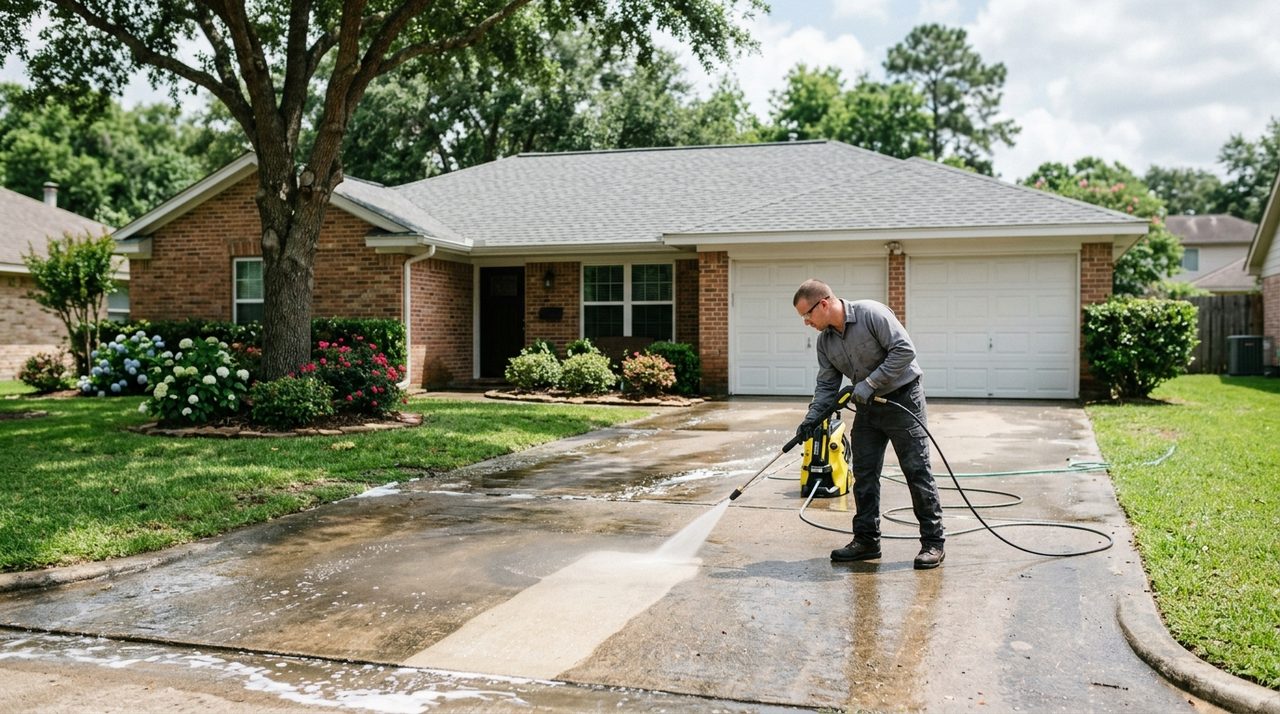
Waller, TX straddles two realities — newer subdivision homes in communities like Beacon Hill and aging rural properties on sprawling Waller County lots, all sitting on the same expansive black clay that plagues northwest Houston's exterior surfaces year-round. High humidity, heavy summer UV, and post-storm debris from events like the May 2024 derecho leave driveways, fences, and siding coated in algae, clay staining, and organic buildup that won't yield to a garden hose. Understanding which issues actually affect your specific address — and whether your parcel falls under the City of Waller or unincorporated Waller County — shapes every pressure-washing decision you'll make.
Ranked by verified Google rating × review volume × verification tier. How we rank →
Farm to Market, 31360 Waller Tomball Rd #2920, Waller, TX 77484
2403 Washington St, Waller, TX 77484
34074 Blinka Cir, Waller, TX 77484
39902 US-290 BUS, Waller, TX 77484
Why it matters to you
The expansive Beaumont/Houston Black clay underlying Waller County lots shrinks and swells dramatically with each rain-dry cycle, pushing mineral salts and red-clay mud up through slab driveways, patio edges, and foundation-level brick on homes of any era — from older ranch homes on rural acreage to slab-on-grade subdivision builds from the 2010s. The result is a persistent reddish-white efflorescence and clay-mud staining at the base of exterior surfaces that reappears season after season if only rinsed away without chemical treatment. On Waller's larger lots, where unpaved areas border concrete pads, the clay transfer is especially pronounced after heavy Northwest Harris and Waller County rain events.
What a good pro does
A thorough job on Waller-area concrete calls for a hot-water or chemical pre-treatment step using a low-pH efflorescence remover applied before any pressure rinse, not after — rinsing first just drives minerals deeper into porous concrete. Costs for oil or heavy mineral stain treatment typically run 20–40% above a standard driveway wash, so get an itemized quote upfront. Texas does not require a trade-specific license for this work, but confirm the operator carries general liability insurance, especially on larger rural lots where equipment access may involve driving across landscaped areas.
Why it matters to you
Waller's position northwest of Houston means it catches Gulf moisture without the urban heat-island effect that slightly dries out the inner loop — ambient humidity stays high enough that Gloeocapsa magma black algae and green mold colonize wood fences, fiber-cement siding, and brick mortar joints within a single season, particularly on the north and east faces of structures shaded by mature oaks common on older rural parcels. Newer subdivision homes in master-planned pockets of Waller are not exempt: their wood privacy fences — standard in post-1990s Texas construction — begin graying and molding within 12–18 months without treatment. Without a post-wash biocide, the same surfaces regrow visible algae in six to twelve months.
What a good pro does
On wood fences, pressure should stay below 1,200 PSI to avoid splintering the grain of weathered pine — a soft-brush attachment combined with a sodium hypochlorite-based cleaner diluted to appropriate concentration is standard practice. On siding and brick, a soft-wash system (under 500 PSI) with a post-rinse algaecide application extends the clean by suppressing spore regrowth. If the algaecide product used is classified as a pesticide by the Texas Department of Agriculture, the applicator must hold a TDA pesticide applicator license — ask operators directly before they begin.
Why it matters to you
The May 2024 derecho that tore through the northwest Houston corridor hit Waller County with sustained wind and debris loads, embedding tannic leaf stains, wind-driven dirt, and shredded organic material into every porous exterior surface — driveways, painted wood siding, and concrete patios especially. Unlike flood-line staining common in bayou-adjacent neighborhoods, Waller's FEMA Zone X designation means the damage is almost entirely surface organic staining from wind-deposited debris rather than mud-line flooding, but tannic stains bake into uncoated concrete quickly under Waller's intense summer UV and become very difficult to remove without chemical intervention. Older rural properties with large shade trees suffered the densest debris load.
What a good pro does
Tannic staining on concrete responds best to an alkaline degreaser or oxalic-acid-based cleaner applied with dwell time before pressure rinsing — cold-water rinsing alone will not lift tannins that have UV-set into surface pores. Operators working near Waller's roadside drainage ditches — which flow to area waterways — must contain and properly dispose of wash water containing degreasers or chemical cleaners per TCEQ stormwater rules; wastewater with detergents cannot be directed into drainage channels or storm inlets. This is not a City of Houston enforcement matter here, but TCEQ's TPDES rules apply statewide.
Sources: Texas Commission on Environmental Quality, FEMA National Flood Hazard Layer (NFHL)
Why it matters to you
Whether a Waller home is a 1980s ranch build or a 2015 Beacon Hill subdivision house, the dominant roofing material across the area is 3-tab or architectural asphalt shingles — and Houston's persistent humidity means Gloeocapsa magma black streaking appears on most roofs within two to three years, particularly on north-facing slopes with limited direct sun. High-pressure washing above 500 PSI blasts granules off shingles, accelerating aging and voiding manufacturer warranties on newer roofs — a costly mistake on homes where replacement costs in a rural-suburban Waller County location already carry logistics premiums given the distance from central Houston supply hubs. Some subdivision POAs or deed restrictions in Waller-area communities may cite roof appearance in violation notices, adding a compliance dimension.
What a good pro does
A legitimate roof cleaning in Waller uses a low-pressure soft-wash system delivering a sodium hypochlorite solution at around 1–3% concentration, applied from the ground or a low-profile spray, never a pressure lance pointed directly at shingles. The solution dwells, kills the algae at the root, and is rinsed gently — the black streaks fade over days to weeks as dead algae wash off with rain. No municipal permit is required from either the City of Waller or Waller County for this service, but verify any subdivision deed restrictions before scheduling, as some specifically address roof treatment methods.
Sources: Local HOA / deed restrictions (see area profile), International Residential Code (as adopted by City of Houston)
Hiring pressure washing in Waller? Waller sits in unincorporated and incorporated areas of Waller County northwest of Houston, featuring a mix of older rural properties and newer subdivision development. Homeowners here benefit from relatively low flood risk but should verify deed restrictions and permit jurisdiction on a parcel-by-parcel basis, as the regulatory landscape varies significantly across the area.
Building era
Not confirmed - housing stock spans multiple decades, with newer construction (2010s–2020s) appearing in subdivisions like Beacon Hill alongside older rural properties.
Typical style
Not confirmed - likely a mix of ranch-style homes on larger lots and newer suburban construction in master-planned communities.
Foundations
Not confirmed - slab-on-grade is typical for newer construction in the region; older properties may include pier-and-beam.
Common systems
Not confirmed - newer homes likely feature modern central HVAC and PEX plumbing; older rural properties may have aging systems requiring updates.
What that means for repairs
Not confirmed - older rural properties in the area likely drive demand for system upgrades (HVAC, plumbing, electrical), while newer subdivision homes may require cosmetic updates and outdoor living additions.
Permit jurisdiction
Not confirmed with certainty. Properties within the City of Waller would use the City of Waller permit office; properties in unincorporated Waller County would fall under Waller County engineering. Verify jurisdiction by parcel address.
HOA & deed restrictions
Not confirmed - some subdivisions in the Waller area may have mandatory HOAs or POAs, but no specific HOA was identified for the broader Waller community. Check deed and Waller County real property records or the TREC HOA Management Certificate database.
Historic districts
No City of Houston historic district designation confirmed. Waller is outside the City of Houston and HAHC jurisdiction.
Contractor note
Contractors should verify whether each job site falls within the City of Waller or unincorporated Waller County, as permit requirements and inspection processes differ. Deed restrictions, if any, should be confirmed through Waller County Clerk records before beginning exterior modifications.
FEMA flood zone
FEMA Zone X (low flood risk) - source: fema_nfhl. Specific bayou or creek proximity for individual parcels should be verified, but the overall area carries minimal federally designated flood risk.
Hurricane Harvey impact
Not confirmed - no street-level flood data or Harvey inundation records were found for the specific Waller neighborhood area. Check Harris County and Waller County flood claim records for parcel-specific Harvey impact.
Heat & humidity load
Houston-area summers bring sustained high heat and humidity. Homes in Waller, particularly older rural structures, may experience increased HVAC strain, moisture intrusion issues, and foundation movement during prolonged dry spells. Newer subdivision homes benefit from modern insulation and drainage but still require regular HVAC maintenance and attic ventilation checks.
Working with contractors here
Contractors working in Waller encounter a split market: newer subdivision homes needing warranty-era repairs, outdoor living additions, and fence installations, alongside older rural properties requiring full system overhauls including HVAC replacement, re-plumbing, and electrical panel upgrades. The low flood risk reduces demand for flood mitigation work, but foundation monitoring remains important given the expansive clay soils common across Waller County. Job scoping should account for potentially longer material delivery times given the area's distance from central Houston supply hubs, and contractors must confirm the applicable permit jurisdiction before starting work.
Local Tip
Always ask for a written estimate before work begins. Texas contractors are required to provide one on jobs over $1,000.
Waller sits in unincorporated and incorporated areas of Waller County northwest of Houston, featuring a mix of older rural properties and newer subdivision development. Homeowners here benefit from relatively low flood risk but should verify deed restrictions and permit jurisdiction on a parcel-by-parcel basis, as the regulatory landscape varies significantly across the area.
Source: U.S. Census Bureau, ACS 5-Year 2023
Most of Waller maps to FEMA Zone X (low mapped flood risk), but Houston's flash-flood reality means even low-risk blocks benefit from smart drainage and storm-hardened installs.
Source: FEMA National Flood Hazard Layer (NFHL). Flood zones vary by parcel — verify your individual FIRM panel.
Sources: City of Houston Permitting Center