Open Now
Hollyhock St, Richwood, TX 77531
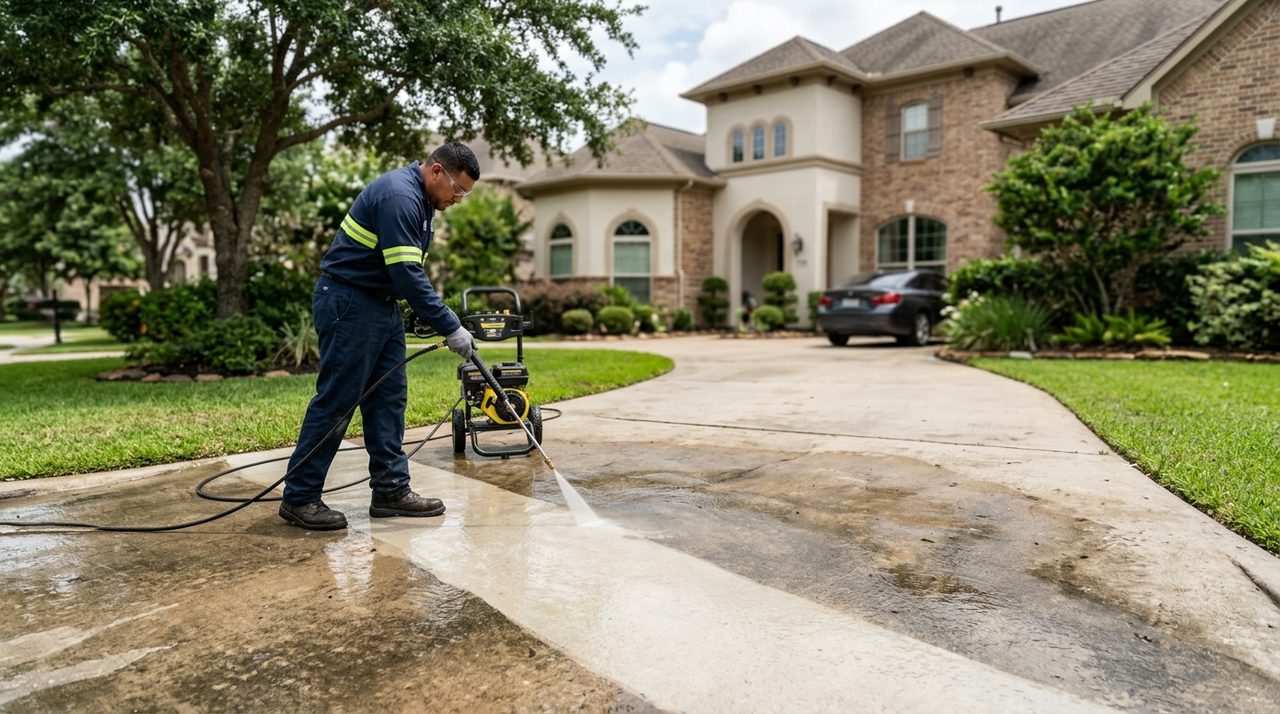
Clute's housing stock — mostly single-story brick-veneer ranch homes built between the 1950s and 1980s along the Brazosport petrochemical corridor — sits on expansive Brazoria County clay just a few miles from the Gulf Coast, creating a near-perfect environment for accelerated mold growth, mineral staining, and salt-air grime that accumulates far faster than in inland Houston neighborhoods. Although Clute maps largely to FEMA Zone X, Gulf tropical systems and the area's flat, low-lying drainage patterns mean even routine summer storms deposit mud and organic debris on every porous exterior surface. This page walks Clute homeowners through the specific pressure-washing challenges their 40- to 70-year-old homes actually face, what techniques address them correctly, and what local compliance considerations apply.
Ranked by verified Google rating × review volume × verification tier. How we rank →
Some highly-rated pros serve Clute from nearby and may not keep a Clute street address. Those are listed under "Also serving Clute" with their real city and distance, so you always know where each business is based.
Hollyhock St, Richwood, TX 77531
1440 Marlin Ave, Freeport, TX 77541
Highly-rated pros based nearby who cover Clute. Distance shown from the Clute area.
Serving Clute Based in Lake Jackson · 2.3 mi away
Serving Clute Based in Lake Jackson · 4.3 mi away
Serving Clute Based in Lake Jackson · 4.4 mi away
Why it matters to you
Clute sits roughly 10 miles from the Gulf of Mexico, meaning homes face both the metro's average annual humidity above 75 percent and an additional salt-air load that accelerates Gloeocapsa magma black algae and green mold growth on brick mortar joints, soffit boards, and foundation-level siding. Ranch-style homes from the 1960s and 1970s — which make up the majority of Clute's housing stock and have a census median year built of 1984 — often feature wide overhangs that trap moisture against north- and east-facing brick walls, keeping those surfaces damp enough for mold to recolonize within six to twelve months of a basic rinse.
What a good pro does
A qualified operator should apply a low-pressure soft-wash with a sodium hypochlorite-based biocide solution to brick and mortar rather than blasting with high pressure, which can erode decades-old mortar joints common in 1960s construction. A post-treatment biocide residual — not just a rinse — extends the clean by inhibiting regrowth through at least one Gulf Coast humid season. Texas does not require a state pressure-washing license, but operators applying algaecide or biocide products that qualify as pesticides under Texas Department of Agriculture definitions may need a TDA pesticide applicator credential; ask for documentation before work begins.
Why it matters to you
Clute's post-1960 tract homes are overwhelmingly slab-on-grade construction sitting directly on Brazoria County's expansive black clay, which shrinks during dry spells and swells after rain — a cycle that wicks mineral salts upward through concrete slabs, depositing white efflorescence on driveway edges and at foundation-level brick courses. After even moderate Gulf rain events, the same clay soil splashes rust-red mud staining onto the lower 18 inches of exterior brick, a pattern visible on nearly every older ranch home on a standard Clute subdivision lot with minimal landscaping setback from the slab edge.
What a good pro does
Standard cold-water rinsing will not dissolve mineral salt deposits; a properly mixed mild acid pre-treatment — typically a diluted phosphoric or muriatic acid solution — is needed before pressure washing to break the efflorescence bond on brick and concrete. For driveway slabs showing surface spalling that may trace back to the 2021 Winter Storm Uri freeze event or simply age, an operator should assess surface porosity before selecting PSI to avoid worsening any existing micro-cracks in the aged concrete. No City of Clute permit is required for routine residential pressure washing, but exterior chemical application near the storm-drain infrastructure that serves Clute's flat lots must comply with TCEQ stormwater discharge rules to keep wash water out of area drainage channels.
Sources: Texas Commission on Environmental Quality, FEMA National Flood Hazard Layer (NFHL)
Why it matters to you
Re-roofing is one of the most common jobs in Clute — a reflection of a housing stock where original or early-replacement three-tab shingles from the 1970s and 1980s are still in service on a significant share of homes. Those older shingles lose granules rapidly under high-pressure spray above 500 PSI, which can void any remaining manufacturer warranty and shorten remaining roof life just as homeowners are trying to avoid an expensive replacement. Yet Clute's Gulf Coast humidity means Gloeocapsa magma black streaks typically reappear within two to three years, making periodic cleaning a real maintenance need rather than purely cosmetic.
What a good pro does
The correct approach is a low-pressure soft-wash delivered at under 200 PSI with a diluted sodium hypochlorite solution that kills the algae at the root without mechanical granule removal. A reputable operator will walk the roof first to identify any storm-damaged or cupped shingles — common after Beryl in 2024 — that could be further loosened by even soft-wash water volume. Because Clute permit work runs through the City of Clute's own building department rather than Houston or Brazoria County, there is no municipal permit required for roof washing, but confirming any Woodshore or subdivision-level HOA deed restriction on approved cleaning methods is worth a quick check before scheduling.
Sources: Local HOA / deed restrictions (see area profile), International Residential Code (as adopted by City of Houston)
Why it matters to you
Even though most of Clute falls within FEMA Zone X, the area's position as a Brazoria County coastal community means tropical systems — including Hurricane Harvey in 2017 and Hurricane Beryl in 2024 — deposit tannic leaf stains, windblown dirt, and organic debris into every porous exterior material. Ranch homes here often feature wood privacy fencing along rear lot lines, and Clute's combination of 100-degree summers, heavy Gulf rain, and coastal wind causes untreated pine fence boards to gray and develop black mold within 12 to 18 months of installation, with storm events accelerating that timeline significantly.
What a good pro does
Wood fence washing should be performed at no more than 1,200 PSI to avoid splintering weathered pine grain, and the fence should be allowed to dry fully before any stain or sealant is applied — typically 48 to 72 hours in Clute's high-humidity climate, which can stretch longer in summer. For post-storm jobs on stucco or fiber-cement siding common on Clute's 1990s and 2000s infill homes, a detergent pre-soak loosens storm-deposited grime without the mechanical force that can crack weathered stucco. Wash water containing chemical degreasers or detergents must be directed away from Clute's storm-drain inlets under TCEQ stormwater rules, which apply equally within this incorporated city regardless of flood-zone designation.
Sources: Texas Commission on Environmental Quality, FEMA National Flood Hazard Layer (NFHL)
Hiring pressure washing in Clute? Clute is an incorporated Brazoria County city anchored by the Brazosport petrochemical corridor, with a housing stock largely built from the 1950s through the 1980s. Homeowners here contend with Gulf Coast humidity, low-lying drainage challenges, and aging ranch-style homes that frequently need roof, HVAC, and plumbing updates. Permit work runs through the City of Clute rather than Houston or the county, and individual subdivisions may carry their own deed restrictions or HOAs.
Building era
Primarily 1950s–1980s, with some newer 1990s–2020s subdivisions.
Typical style
Single-story ranch-style brick veneer homes dominate; later tracts feature contemporary suburban brick-and-siding designs; manufactured homes appear on semi-rural parcels.
Foundations
Predominantly slab-on-grade for post-1960 tract homes; some older pre-1960 frame houses and manufactured homes use pier-and-beam or block/pier systems.
Common systems
Original homes often have galvanized or copper plumbing, aging electrical panels (60–100 amp in older stock), and central HVAC units that may be undersized or past service life. Ductwork in attics is common and vulnerable to heat-related deterioration.
What that means for repairs
Kitchen and bathroom remodels in 1960s–1970s ranch homes are common, along with full HVAC replacements, re-roofing, and plumbing repiping to replace galvanized lines. Some homeowners elevate or flood-proof structures after repeated storm events.
Permit jurisdiction
City of Clute Permitting — Clute is an incorporated city with its own building codes, permits, and inspections independent of Houston or Brazoria County.
HOA & deed restrictions
No single city-wide mandatory HOA governs Clute. Individual subdivisions (e.g., Woodshore and others) may have their own mandatory HOAs or deed restrictions. Some older areas have no active association and rely solely on city code enforcement. Specific subdivision names are needed to confirm HOA status.
Historic districts
No City of Houston historic district designation confirmed. Clute is an independent city with no known local historic district overlay.
Contractor note
Contractors must pull permits through the City of Clute and comply with local building codes. Individual subdivisions may impose additional architectural or material restrictions via deed covenants, so confirming HOA requirements before starting exterior work is advisable.
FEMA flood zone
FEMA Zone X (low flood risk) per official NFHL data. However, Clute is relatively low-lying and traversed by drainageways; some parcels elsewhere in the city fall within Special Flood Hazard Areas. Proximity to Oyster Creek and coastal drainage corridors warrants parcel-level verification.
Hurricane Harvey impact
Brazoria County experienced major flooding during Hurricane Harvey in 2017, particularly along the Brazos River corridor and low-lying areas. Clute, in the Brazosport area, saw flooding but was not among the most devastated Brazoria County communities (Rosharon, parts of Angleton, and rural Brazos River subdivisions were harder hit). Specific street-level Harvey flood data for Clute is not well-documented in public sources — parcel-level FEMA claims data or Brazoria County records should be consulted for individual addresses.
Heat & humidity load
Gulf Coast humidity and extreme summer heat stress aging HVAC systems and accelerate attic ductwork deterioration in slab-on-grade ranch homes. Condensation issues and mold risk are elevated, especially in homes with original insulation and ventilation. Coastal proximity increases salt-air corrosion on exterior metals and roofing fasteners.
Working with contractors here
The most common jobs in Clute involve HVAC replacement, roof replacement, and plumbing repiping in 1960s–1980s ranch homes where original systems have reached or exceeded useful life. Slab foundation repair is a recurring need given the expansive clay soils and low-lying terrain. Exterior painting and siding repair are frequent due to Gulf Coast humidity and salt air exposure. Contractors should scope jobs assuming slab-on-grade construction unless confirmed otherwise, and should verify whether a specific subdivision's HOA requires architectural approval before beginning exterior modifications. Flood mitigation work — including French drains, grading improvements, and sump pump installations — is an emerging service need given the area's drainage challenges.
Local Tip
Always ask for a written estimate before work begins. Texas contractors are required to provide one on jobs over $1,000.
Clute is an incorporated Brazoria County city anchored by the Brazosport petrochemical corridor, with a housing stock largely built from the 1950s through the 1980s. Homeowners here contend with Gulf Coast humidity, low-lying drainage challenges, and aging ranch-style homes that frequently need roof, HVAC, and plumbing updates. Permit work runs through the City of Clute rather than Houston or the county, and individual subdivisions may carry their own deed restrictions or HOAs.
Source: U.S. Census Bureau, ACS 5-Year 2023
Most of Clute maps to FEMA Zone X (low mapped flood risk), but Houston's flash-flood reality means even low-risk blocks benefit from smart drainage and storm-hardened installs; as a Brazoria County coastal community, tropical surge and wind add a layer generic guidance misses.
Source: FEMA National Flood Hazard Layer (NFHL). Flood zones vary by parcel — verify your individual FIRM panel.
Sources: Local HOA / deed restrictions (see area profile)