2513 FM 646 Rd, Santa Fe, TX 77510
Best Plumbers in Santa Fe, TX
Santa Fe, TX sits squarely inside FEMA Zone AE along Galveston County's coastal plain, where the combination of high flood risk, a median home vintage of 1991 (U.S. Census Bureau, ACS 5-Year 2023), and SE Houston's expansive clay soils creates plumbing challenges that go well beyond the typical suburban service call. Homes built in the late 1980s through mid-1990s across this corridor frequently carry original copper supply lines and cast-iron drain stacks that are now approaching the end of their service lives—right as storm frequency and intensity are accelerating. Understanding which issues are most likely under a Santa Fe roof, and which permit body (City of Santa Fe or unincorporated Galveston County Engineering) governs your address, is the first step toward getting repairs done correctly.
Verified against Google Business data
Updated 2026
See the 10 Plumbers Serving Santa Fe 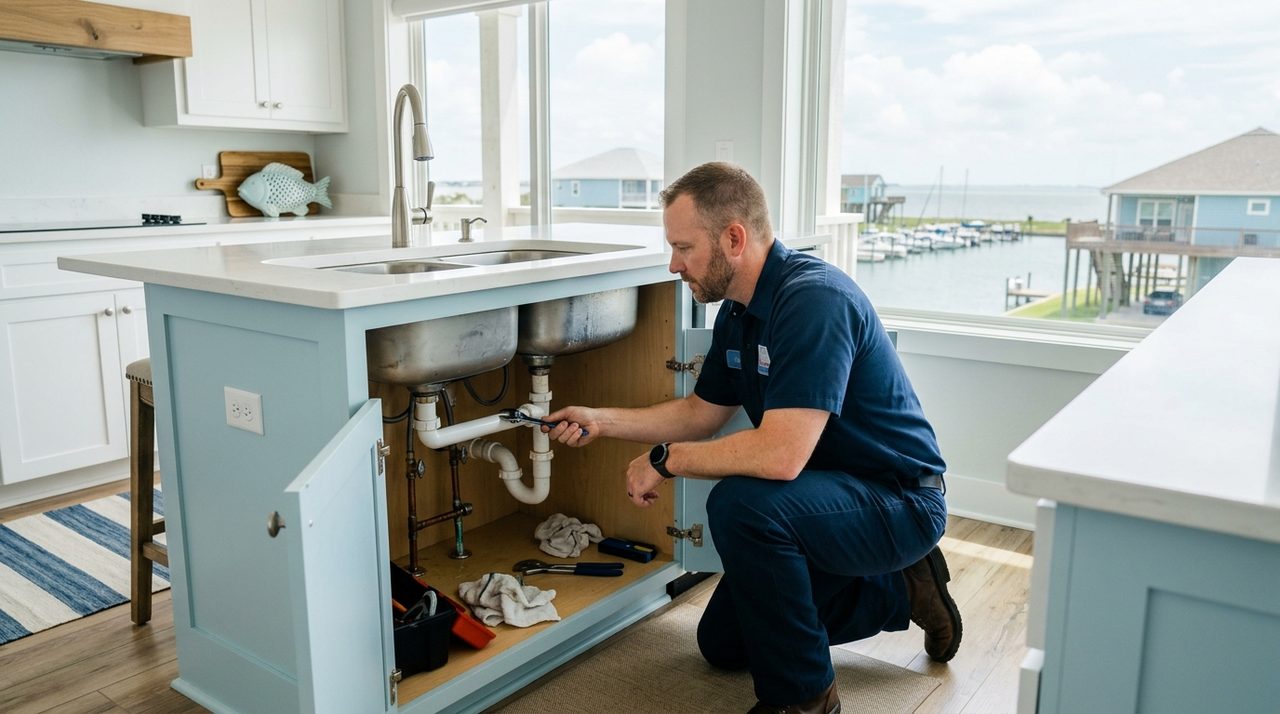
- Median home built
- 1991
- Median home value
- $290,200
- FEMA flood zone
- AE (high)
- Typical plumbing repair/replacement cost (est.)
- $900–$10,000+
- Most common local issue
- Post-flood sewer backflow and drain-line corrosion in Zone AE homes
Ranked by verified Google rating × review volume × verification tier. How we rank →
Some highly-rated pros serve Santa Fe from nearby and may not keep a Santa Fe street address. Those are listed under "Also serving Santa Fe" with their real city and distance, so you always know where each business is based.
Min rating:
10 resultsBased in Santa Fe
Open Now
13733 Hwy 6, Santa Fe, TX 77517
15820 Hwy 6, Santa Fe, TX 77517
Closed
13929 W 6th St, Santa Fe, TX 77517
13219 FM1764, Santa Fe, TX 77510
Closed
4118 Jackson St, Santa Fe, TX 77517
Closed
13205 Hwy 6, Santa Fe, TX 77510
Closed
11233 FM1764 suite f, Santa Fe, TX 77510
Also serving Santa Fe
Highly-rated pros based nearby who cover Santa Fe. Distance shown from the Santa Fe area.
Open Now
Serving Santa Fe Based in Dickinson · 5.1 mi away
Plumbers in Santa Fe: What You Should Know
Sewer Backflow and Drain Corrosion After Repeated Flood Events
Why it matters to you
Santa Fe's FEMA Zone AE designation means floodwaters from Galveston County bayous and tidal surge events routinely overwhelm the sanitary sewer system, pushing sewage back through floor drains and ground-floor toilets. Homes from the early 1990s vintage common here often have original hub-and-spigot cast-iron drain lines that have spent decades saturated with corrosive standing water, accelerating internal channeling and external pitting—failures that a camera inspection will confirm but that no homeowner can see from above the slab.
What a good pro does
A licensed plumber should perform a sewer camera inspection to document the condition of drain lines from cleanout to city tap, and install a properly rated backwater (check) valve on the main sewer lateral before the next storm season. Replacement of failed cast-iron runs with PVC DWV—either by open trench or pipe-bursting depending on yard access—typically runs $3,500–$10,000 in the Houston metro market (2024 estimate). Any sewer-line replacement in Santa Fe requires a permit from the correct jurisdiction (City of Santa Fe or Galveston County Engineering) and a post-work inspection; your plumber must hold a current Texas State Board of Plumbing Examiners (TSBPE) master or journeyman license to pull that permit.
Sources: FEMA National Flood Hazard Layer (NFHL), Harris County Flood Control District, Texas State Board of Plumbing Examiners, Municipal permit office (see area profile)
Slab-Leak Risk in Early-1990s Copper Supply Lines Under Galveston County Clay
Why it matters to you
The median Santa Fe home was built around 1991, squarely within the era of copper under-slab supply lines. Galveston County's coastal clay soil swells with every heavy rain event—events that are both frequent and intense in a Zone AE community—and shrinks back during dry spells, cyclically flexing slab-on-grade foundations and stressing the copper lines encased beneath them. Homeowners in Santa Fe who have never had a pressure-test inspection are running a significant risk of an undetected slow slab leak quietly eroding the subgrade beneath their foundation.
What a good pro does
A qualified plumber should perform an isolation pressure test to confirm whether under-slab copper lines hold pressure; electronic leak detection can localize the failure without unnecessary jackhammering. A single-line slab-leak repair with copper re-route runs approximately $1,500–$4,500 (2024 Houston-market estimate); homes with multiple aging copper runs may be better candidates for a full PEX repipe ($4,000–$12,000 for a typical 1,500–2,500 sq ft home), which eliminates future under-slab exposure entirely. Repipe work in Santa Fe triggers a permit—verify with the City of Santa Fe permit office or Galveston County Engineering whether your address falls inside city limits before the plumber schedules an inspection.
Sources: FEMA National Flood Hazard Layer (NFHL), Texas State Board of Plumbing Examiners, Municipal permit office (see area profile), International Residential Code (as adopted by City of Houston)
Gas Line Integrity After Beryl 2024 and Coastal Wind Events
Why it matters to you
Hurricane Beryl made landfall as a Category 1 storm in July 2024 on the upper Texas coast, producing sustained winds and structural movement across Galveston County communities including Santa Fe. CSST (corrugated stainless steel tubing) gas lines installed in homes built before 2010—which covers most of Santa Fe's housing stock—are vulnerable to fitting separation and micro-cracks when foundations shift or tree impacts transfer force to the structure. Gas leaks from post-storm settling can appear days or weeks after the storm passes, long after homeowners assume the danger has cleared.
What a good pro does
Texas law requires a licensed plumber or licensed engineer to perform a gas pressure test before a utility company restores gas service after a storm-related shutoff; this is not optional and is not a DIY item. A plumber should also inspect and, if needed, re-bond any pre-2010 CSST runs to current National Fuel Gas Code bonding requirements, which significantly reduce arc-fault ignition risk. Confirm that the plumber holds a valid TSBPE license—searchable on the TSBPE public lookup—before authorizing any gas-line work in your home.
Sources: Texas State Board of Plumbing Examiners, International Residential Code (as adopted by City of Houston), Municipal permit office (see area profile)
Water Heater Failure Accelerated by Hard Groundwater and Post-Flood Humidity
Why it matters to you
Much of Galveston County's water supply draws on Gulf Coast groundwater aquifers with moderate-to-high mineral hardness, and the near-100% relative humidity that follows every major flood event accelerates anode rod corrosion inside tank water heaters stored in garages or utility closets. Santa Fe homeowners with original 1990s-era gas tank water heaters are likely well past the 8–10 year service life that Houston's water chemistry and climate typically allow, and flood-related sediment contamination can shorten that window even further.
What a good pro does
Replacing a 50-gallon gas tank water heater in Santa Fe typically runs $900–$1,800 installed (2024 Houston-market estimate); upgrading to a tankless gas unit with exterior venting runs $2,000–$4,500 installed and eliminates the standing-tank humidity problem. Water heater replacement is a permitted trade in virtually every Galveston County jurisdiction—confirm whether the City of Santa Fe or Galveston County Engineering covers your address, as inspection timelines and code-adoption schedules differ between the two. Your plumber must hold a current TSBPE license to legally pull that permit.
Sources: Texas State Board of Plumbing Examiners, Municipal permit office (see area profile), Texas Commission on Environmental Quality
Plumbers in Santa Fe: What You Should Know
Hiring plumbers in Santa Fe? Santa Fe sits in Galveston County's FEMA AE high-risk flood zone, making water management the dominant concern for homeowners. Specific details about the neighborhood's housing stock, HOA governance, and permit jurisdiction remain difficult to confirm without a precise subdivision name or ZIP code. Homeowners should prioritize flood-resistant materials, elevated mechanical systems, and proper drainage when planning any renovation or repair.
- Housing era
- Not confirmed - check Galveston County Appraisal District records for primary build decades
- Foundation
- Not confirmed - slab-on-grade is typical for SE Houston and Galveston County areas, but…
- Flood zone
- FEMA Zone AE (high flood risk) - source
- Permits
- Not confirmed - if within the City of Santa Fe municipal limits, permits would…
Housing stock & systems
Building era
Not confirmed - check Galveston County Appraisal District records for primary build decades.
Typical style
Not confirmed - check Galveston County Appraisal District records for architectural styles.
Foundations
Not confirmed - slab-on-grade is typical for SE Houston and Galveston County areas, but verify with local inspection records.
Common systems
Not confirmed - typical SE Houston/Galveston County homes feature central AC systems, copper or PEX plumbing, and standard residential electrical panels, but specifics depend on build era.
What that means for repairs
Given the FEMA AE flood zone designation, flood mitigation upgrades such as elevated HVAC equipment, flood vents, and water-resistant building materials are likely common renovation priorities.
Permits & restrictions
Permit jurisdiction
Not confirmed - if within the City of Santa Fe municipal limits, permits would be handled by the City of Santa Fe; if in unincorporated Galveston County, permits fall under Galveston County Engineering. Verify the exact jurisdiction by address.
HOA & deed restrictions
Not confirmed - research could not verify whether a mandatory HOA, voluntary civic club, or no organized HOA governs this specific area. Check Harris County Clerk and Galveston County Clerk records for recorded deed restrictions.
Historic districts
No City of Houston historic district designation confirmed. Santa Fe is in Galveston County and likely outside City of Houston HAHC jurisdiction.
Contractor note
Contractors should confirm whether the property falls within the City of Santa Fe or unincorporated Galveston County, as permit requirements and floodplain development regulations differ significantly between the two jurisdictions.
Flood & weather
FEMA flood zone
FEMA Zone AE (high flood risk) - source: fema_nfhl. Properties in this zone face a 1% annual chance of flooding and require flood insurance for federally backed mortgages. Proximity to local bayous, creeks, or drainage channels could not be confirmed from available research.
Hurricane Harvey impact
Not confirmed from available research - Galveston County broadly experienced significant Harvey flooding in 2017, and the AE flood zone designation suggests this area is vulnerable, but specific street-level impact and recurring flood-prone areas could not be verified. Check Galveston County flood damage records and FEMA claims data for this area.
Heat & humidity load
Houston-area summers bring extreme heat and humidity that stress HVAC systems and promote mold growth, especially in flood-prone areas where moisture intrusion compounds seasonal humidity. Proper attic ventilation, dehumidification, and regular AC maintenance are critical for homes in this zone.
Working with contractors here
The FEMA AE flood zone designation means contractors working in Santa Fe should expect flood mitigation and storm damage repair to be among the most common project types. Elevated mechanical systems, foundation inspections for water damage, and mold remediation are frequent needs. Any substantial improvement or repair exceeding 50% of the structure's market value may trigger floodplain development requirements including elevation to base flood elevation. Contractors should verify the exact permit jurisdiction—City of Santa Fe versus unincorporated Galveston County—before bidding, as compliance requirements vary. Material selections should prioritize flood-resistant options below the base flood elevation per local floodplain ordinances.
Local Tip
Always ask for a written estimate before work begins. Texas contractors are required to provide one on jobs over $1,000.
About Santa Fe
Santa Fe sits in Galveston County's FEMA AE high-risk flood zone, making water management the dominant concern for homeowners. Specific details about the neighborhood's housing stock, HOA governance, and permit jurisdiction remain difficult to confirm without a precise subdivision name or ZIP code. Homeowners should prioritize flood-resistant materials, elevated mechanical systems, and proper drainage when planning any renovation or repair.
- Median year built
- 1991
- Median home value
- $290,200
- Owner-occupied
- 81%
- Population
- 12,828
- Housing units
- 5,207
- Median income
- $95,815
Source: U.S. Census Bureau, ACS 5-Year 2023
Flood & storm risk
FEMA Zone AEHigh flood riskMuch of Santa Fe maps to FEMA Zone AE (high flood risk), so flood-resilient detailing -- elevated equipment, water-tolerant materials, and drainage-first thinking -- is essential here, not optional; as a Galveston County coastal community, tropical surge and wind add a layer generic guidance misses.
Source: FEMA National Flood Hazard Layer (NFHL). Flood zones vary by parcel — verify your individual FIRM panel.
Houston Storm Readiness in Santa Fe
Hurricane & flooding
For homes in Santa Fe, TX facing direct Gulf or bay exposure, have a plumber verify that the water heater, pressure tank, and any below-floor mechanical plumbing are either elevated above the local FEMA base flood elevation or capable of being isolated and drained quickly before evacuation. Beryl 2024 reinforced that even a Category 1 landfall can push a damaging surge across low-lying coastal lots within hours of the forecast cone tightening. As a Galveston County community, Santa Fe may follow county rather than City of Houston storm rebuild rules.
Severe storms & hail
In Santa Fe, TX, gas flex connectors on outdoor appliances such as grills, generators, and pool heaters should be inspected by a plumber after every major severe-storm event because wind-launched debris can nick CSST sheathing without leaving an obvious dent. A licensed plumber with TDLR certification can perform a drop-pressure test on the exterior gas loop to confirm integrity before you reconnect appliances post-storm. Confirm the current FEMA panel for your Santa Fe parcel — the area maps to Zone AE, but adjacent lots can differ.
Ice storms & freezes
Coastal properties in Santa Fe, TX face a compounding freeze risk because salt-air corrosion weakens copper fittings over time, and a Uri-style hard freeze puts burst-pressure stress on pipe walls that are already pitted and thinned — have a plumber inspect all outdoor supply lines for corrosion-related wall loss before winter and replace any suspect sections with thicker-wall Type L copper or PEX. Uninsulated pipes on an exposed pier-and-beam coastal structure lose heat to wind chill far faster than inland homes, reaching burst temperatures in a fraction of the time. Confirm the current FEMA panel for your Santa Fe parcel — the area maps to Zone AE, but adjacent lots can differ.
Sources: FEMA National Flood Hazard Layer (NFHL), Ready.gov -- Hurricanes, CenterPoint Energy -- Storm Center, City of Houston -- Emergency Preparedness, Ready.gov -- Winter Weather, Harris County Flood Control District
Free Santa Fe Tools & Calculators
Houston-specific estimators to plan your project before you call a pro. All results are planning estimates — a licensed local pro confirms the details on site.
Houston Freeze Prep & Pipe Insulation Checklist
Open full tool & FAQ →Your freeze checklist — 4 tasks
- 1
Disconnect & drain every outdoor hose bib
Remove hoses, drain the spigots, and cover each with an insulated faucet sock. Un-drained hose bibs are the #1 burst point in a Houston freeze.
- 2
Insulate exposed pipes in the attic & garage
Wrap any pipe in an unconditioned space (attic runs, garage walls) with foam sleeves. Houston homes rarely insulate these because they only matter a few nights a year — which is exactly why they burst.
- 3
Open cabinet doors & keep a pencil-width drip
On hard-freeze nights, open kitchen/bath cabinets so warm air reaches the pipes and let faucets on exterior walls drip to relieve pressure.
- 4
Protect the attic/garage water heater & its lines
An attic or garage tank sits in unconditioned space. Insulate the cold-inlet and hot-outlet lines and confirm the emergency drain pan is clear so a leak doesn't reach the ceiling.
This is a planning estimate only — actual requirements depend on an on-site assessment by a licensed Houston pro. If a pipe has already burst, shut off your main water supply and call a licensed Houston plumber immediately — freeze bursts flood fast.
Frequently Asked Questions
Do I need a permit for a water heater replacement in Santa Fe, TX, and which office handles it?
Whether your home falls within the City of Santa Fe municipal limits or unincorporated Galveston County determines which office you call — City of Santa Fe for properties inside city limits, or Galveston County Engineering for unincorporated parcels. Either way, Texas requires a plumbing permit for water heater replacements, and the plumber must hold a current Texas State Board of Plumbing Examiners (TSBPE) license to pull it. Before any work begins, confirm your jurisdiction by address so you don't end up with a permit pulled from the wrong office, which can cause inspection failures and complications with homeowner's insurance claims.
Sources: Texas State Board of Plumbing ExaminersMunicipal permit office (see area profile)
My Santa Fe home is in FEMA Zone AE — does that change anything when a plumber replaces a sewer line or moves a cleanout?
Yes, Zone AE designation means any substantial improvement or repair may trigger Galveston County or City of Santa Fe floodplain development requirements, including the need to keep finished work at or above base flood elevation where feasible. A plumber working on sewer line replacement in AE-zoned Santa Fe should be familiar with local floodplain ordinances and may need to coordinate with the floodplain administrator before trenching or pipe-bursting work begins. Ask prospective plumbers specifically whether they have pulled permits on sewer work in Galveston County AE zones before — it's a different compliance conversation than suburban Harris County.
Sources: FEMA National Flood Hazard Layer (NFHL)Municipal permit office (see area profile)
How do I verify a plumber's license before hiring them in Santa Fe, TX?
Texas licenses all plumbers through the TSBPE, and the board maintains a free public license lookup at its website where you can search by name or license number to confirm the plumber holds a current, active journeyman or master plumber credential. Any plumber who pulls a permit — required for water heater swaps, repiping, sewer work, or gas line modifications in both the City of Santa Fe and unincorporated Galveston County — must be licensed through TSBPE. Skipping this check is risky in a post-disaster market like Santa Fe's, where demand after events like Beryl 2024 can attract unlicensed operators.
Is there a busy season for plumbers in Santa Fe, and how far out should I book after a storm?
Santa Fe sees two predictable demand spikes: hurricane season (June through November) drives post-flood sewer backflow and gas-line inspection calls, while any forecast freeze — even a brief one — triggers burst-pipe and repipe inquiries across Galveston County. After a named storm like Beryl 2024, licensed plumbers with AE-zone permit experience can be booked two to six weeks out as homeowners across SE Houston compete for the same small pool of qualified contractors. Scheduling inspections and non-emergency work like water heater replacements in late winter (February–March) or early spring typically means shorter waits and, anecdotally, less post-storm surge pricing.
My 1991-era Santa Fe home has never had a sewer camera inspection — is that worth doing before I list the house or start a renovation?
Homes built around 1991 in SE Houston and Galveston County commonly have original cast-iron drain stacks that are now past the 30-year mark, and repeated flooding in a Zone AE community accelerates external corrosion from soil saturation and hydrogen sulfide exposure. A sewer camera inspection (typically $150–$300 as an estimate) can reveal channeling, root intrusion, or partial collapses before they become emergency calls mid-renovation or a negotiating issue in a sale. Given that a full drain-line replacement from cleanout to city tap runs an estimated $3,500–$10,000-plus in the Houston market, catching a problem early almost always saves money.
Sources: Municipal permit office (see area profile)
What questions should I ask a Santa Fe plumber about backwater valve installation after the flooding we've had?
Ask whether the plumber has installed backwater (check) valves specifically in Galveston County AE-zone homes, since the high water table and low-slope drainage here affect valve placement and maintenance access differently than in higher-elevation suburbs. Confirm they will pull a permit with either the City of Santa Fe or Galveston County Engineering — backwater valve installation on the main sewer lateral is a permitted scope in virtually every Houston-metro jurisdiction. Also ask whether the valve location will remain accessible for the annual cleaning that Zone AE flood frequency makes practically mandatory, and whether installation would satisfy your flood insurer's mitigation documentation requirements.
Sources: Municipal permit office (see area profile)FEMA National Flood Hazard Layer (NFHL)