Serving Montrose Based in Midtown · 0.5 mi away
Best Plumbers in Montrose
Montrose's block-by-block mix of 1920s pier-and-beam bungalows, mid-century conversions, and 2000s-era slab-on-grade townhomes means no two plumbing calls here look alike — a galvanized drain collapse two doors down from a PEX-plumbed new build is a genuinely common scenario. All permitted plumbing work falls under the City of Houston Permitting Center, and on certain blocks an additional layer of deed-restriction review or HAHC historic district coordination can add time to what looks like a straightforward repipe or water heater swap. If your Montrose home still has its original cast-iron or galvanized lines, understanding what's actually under your floors and in your walls before a crisis hits is money well spent.
Verified against Google Business data
Updated 2026
See the 10 Plumbers Serving Montrose 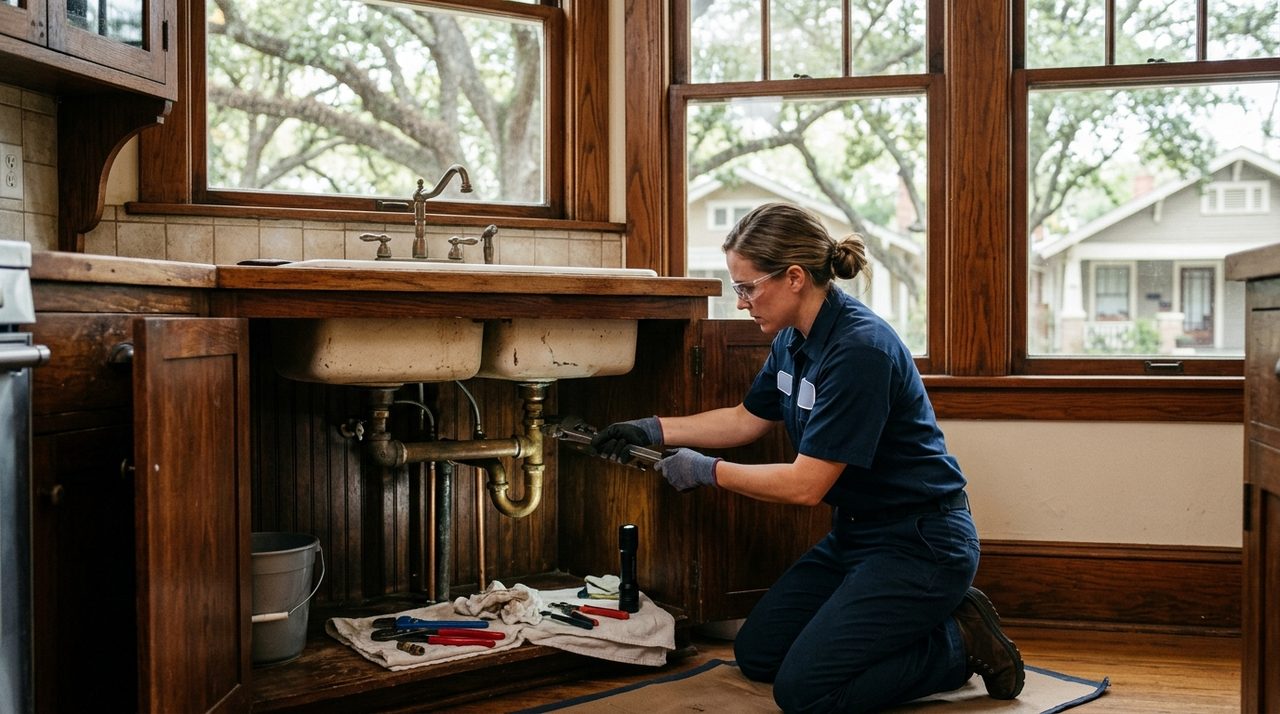
- Median home built
- 1996
- Median home value
- $599,500
- FEMA flood zone
- X (low)
- Typical cost (est.)
- $900–$12,000+
- Most common local issue
- Failing cast-iron / galvanized drain lines in pre-1975 bungalows
Ranked by verified Google rating × review volume × verification tier. How we rank →
Some highly-rated pros serve Montrose from nearby and may not keep a Montrose street address. Those are listed under "Also serving Montrose" with their real city and distance, so you always know where each business is based.
Min rating:
10 resultsAlso serving Montrose
Highly-rated pros based nearby who cover Montrose. Distance shown from the Montrose area.
Serving Montrose Based in Midtown · 0.5 mi away
Closed
Serving Montrose Based in River Oaks · 0.9 mi away
Closed
Serving Montrose Based in River Oaks · 1.1 mi away
Open Now
Serving Montrose Based in Midtown · 1.5 mi away
Open Now
Serving Montrose Based in Midtown · 1.6 mi away
Open Now
Serving Montrose Based in West University · 2.1 mi away
Closed
Serving Montrose Based in West University · 2.2 mi away
Closed
Serving Montrose Based in EaDo · 2.3 mi away
Closed
Serving Montrose Based in Midtown · 2.3 mi away
Plumbers in Montrose: What You Should Know
Corroded Cast-Iron and Galvanized Drain Lines in Pre-War Bungalows
Why it matters to you
A large share of Montrose's owner-occupied stock traces to the 1920s–1940s, when hub-and-spigot cast-iron and galvanized steel were the standard for drain, waste, and vent lines. After 80-plus years, these pipes corrode from the inside out — sewage channeling erodes the pipe bottom, root intrusions widen joints, and sections simply collapse — often with no warning beyond slow drains and sewer odors inside the home. The neighborhood's high water table and clay-rich Harris County soil accelerate external corrosion on any buried cast-iron runs.
What a good pro does
A qualified plumber should start with a sewer camera inspection to map the condition of every run before any renovation bid is finalized — Montrose gut-renovations routinely uncover collapsed mid-sections that inflate project budgets when discovered mid-demo. Full drain-line replacement from cleanout to city tap, whether by open trench or pipe-bursting, runs an estimated $3,500–$10,000 depending on run length and access; the replacing plumber must pull a City of Houston plumbing permit and schedule an inspection through the PWE office before backfill. Verify your plumber holds a current TSBPE master or journeyman license using the board's public lookup — this is required to pull a Houston permit.
Sources: City of Houston Permitting Center, Texas State Board of Plumbing Examiners
Whole-Home Repiping of Galvanized Supply Lines in Pier-and-Beam Homes
Why it matters to you
Montrose bungalows on pier-and-beam foundations frequently still carry their original galvanized steel supply lines, which corrode from the inside and progressively reduce water pressure and water quality — brownish water at the tap is a common first symptom. Unlike slab-on-grade homes where supply lines are encased in concrete, pier-and-beam construction gives plumbers crawl-space access to the underside of the home, which changes both the scope and the cost of a repipe significantly. Winter Storm Uri (February 2021) also exposed just how vulnerable uninsulated supply lines in open crawl spaces are to hard freezes, even in Houston's mild climate.
What a good pro does
Repiping a 1,500–2,000 sq ft pier-and-beam Montrose bungalow from galvanized to PEX typically runs an estimated $4,000–$9,000 installed, with the pier-and-beam access generally keeping costs toward the lower end compared to slab-on-grade re-routes that require jackhammering. The plumber must pull a City of Houston plumbing permit for a full repipe; inspections are required before walls or ceilings are closed. On any block that touches a locally designated Montrose historic district, confirm with the City of Houston Historic Preservation Office whether interior-only repipe work triggers HAHC review — exterior penetrations or vent terminations on a historic façade typically do.
Sources: City of Houston Permitting Center, Texas State Board of Plumbing Examiners, International Residential Code (as adopted by City of Houston)
Water Heater Permits and HOA/Deed-Restriction Complications on Townhome Lots
Why it matters to you
Montrose's wave of 2000s-era infill townhomes — slab-on-grade, typically three stories, often sharing zero-lot-line walls — introduced a different plumbing challenge: tankless water heaters with side-wall or rooftop venting that requires exterior penetrations. Unlike the neighborhood's bungalows, many of these townhomes sit within condo regimes or small HOAs (such as Montrose Place Townhomes Owners Association) where the exterior is common property, meaning a water heater upgrade that changes the vent termination location may require board approval before the plumber can proceed. Deed restrictions on nearby single-family lots also vary plat by plat and can restrict where gas meter relocations or exterior cleanout covers are placed.
What a good pro does
Before scheduling a water heater replacement or upgrade on any Montrose townhome, ask your plumber to confirm the venting route and check whether the exterior penetration changes — if it does, pull the recorded deed restrictions at the Harris County Clerk's office and contact any applicable condo board before work begins. The City of Houston requires a plumbing permit for water heater replacements regardless of fuel type; a 50-gallon gas tank replacement runs an estimated $900–$1,800 installed, while a tankless gas unit with new venting runs $2,000–$4,500 installed. Your plumber must hold a valid TSBPE license to pull the permit and must be present for the city inspection.
Sources: City of Houston Permitting Center, Texas State Board of Plumbing Examiners, Local HOA / deed restrictions (see area profile)
Gas Line Integrity Checks After Storm-Driven Foundation and Tree Impacts
Why it matters to you
Montrose's mature tree canopy — one of the inner Loop's defining features — turned into a liability during the May 2024 derecho and Hurricane Beryl (July 2024), with large live oaks and pines dropping onto structures across the neighborhood. Even moderate structural movement from a tree strike or a foundation shift on a pier-and-beam home can crack or pull apart CSST (corrugated stainless steel tubing) gas line fittings, particularly on lines installed before 2010 that may predate current bonding requirements. Because Montrose's owner-occupancy rate is only about 35 percent, rental property owners who were not on-site during storms may be unaware that a gas line needs inspection before utility reconnection.
What a good pro does
Texas law requires a licensed plumber or licensed engineer to perform a gas pressure test before CenterPoint Energy reconnects gas service to a storm-damaged structure — do not attempt to restore gas service yourself. A post-storm gas line inspection and pressure test from a TSBPE-licensed plumber typically takes two to four hours and provides written documentation for your insurer. If CSST fittings were damaged or if your home's CSST lacks proper bonding (ask your plumber to check during the inspection), the repair or retrofit must be permitted through the City of Houston PWE office before the line is re-pressurized.
Sources: Texas State Board of Plumbing Examiners, City of Houston Permitting Center, International Residential Code (as adopted by City of Houston)
Plumbers in Montrose: What You Should Know
Hiring plumbers in Montrose? Montrose is one of Houston's most architecturally diverse inner-loop neighborhoods, with housing stock ranging from early-20th-century bungalows to modern townhomes and mid-rise condos. Homeowners and contractors must navigate a complex overlay of deed restrictions, possible historic district review, and varied foundation types that change block by block. The absence of a single mandatory HOA means individual plat covenants and city codes are the primary regulatory framework.
- Housing era
- Mixed — ranging from 1920s–1940s original bungalows and cottages to 1970s–1980s apartment conversions and…
- Foundation
- Mixed — older homes are frequently pier-and-beam
- Flood zone
- FEMA Zone X (low flood risk) per official NFHL data
- Permits
- City of Houston Permitting Center (Montrose is within Houston city limits)
Housing stock & systems
Building era
Mixed — ranging from 1920s–1940s original bungalows and cottages to 1970s–1980s apartment conversions and 2000s–present new-construction townhomes.
Typical style
Highly heterogeneous: Craftsman bungalows, mid-century ranch, Victorian-era homes, contemporary townhomes, and multi-family conversions coexist within the same blocks.
Foundations
Mixed — older homes are frequently pier-and-beam; newer townhomes and infill construction are typically slab-on-grade.
Common systems
Older pier-and-beam homes often have galvanized or cast-iron plumbing, outdated electrical panels, and window-unit or older central HVAC systems. Newer townhomes feature modern HVAC, PEX plumbing, and updated electrical. The wide era range means system conditions vary dramatically by property.
What that means for repairs
Renovation activity is extremely common due to the prevalence of aging bungalows on high-value lots. Whole-home gut renovations, kitchen and bath modernizations, and foundation leveling on pier-and-beam structures are frequent. New-construction townhome infill on subdivided lots is also a major activity driver.
Permits & restrictions
Permit jurisdiction
City of Houston Permitting Center (Montrose is within Houston city limits).
HOA & deed restrictions
No single mandatory HOA governs all of Montrose. Specific sub-areas and condo regimes (e.g., Montrose Place Townhomes Owners Association, Montrose Place Homeowners Association) have mandatory membership. Deed restrictions are common and vary by plat — buyers and contractors should review recorded covenants at the Harris County Clerk's office.
Historic districts
Parts of Montrose fall within City of Houston locally designated historic districts, requiring HAHC design review and approval for exterior changes, demolitions, and new construction. Specific district names not confirmed in available research — check the City of Houston Historic Preservation Office for parcel-level status.
Contractor note
Contractors must verify whether a property sits within a locally designated historic district before beginning exterior work or demolition, as HAHC approval may be required. Additionally, individual deed restrictions may impose setback, height, or use limitations that differ from adjacent properties on the same street.
Flood & weather
FEMA flood zone
FEMA Zone X (low flood risk) per official NFHL data. However, Montrose's proximity to Buffalo Bayou and various drainage channels means flood risk can vary sharply by block and lot elevation. Property-level flood zone verification is strongly recommended.
Hurricane Harvey impact
Neighborhood-wide Harvey flood impact could not be confirmed from available research. Montrose is an inner-loop area where flooding during Harvey varied significantly by block and proximity to bayous and drainage infrastructure. Homeowners should check individual property flood history through Harris County Flood Control District records and FEMA claim databases.
Heat & humidity load
Older pier-and-beam homes in Montrose are prone to moisture intrusion, subfloor mildew, and HVAC strain during Houston's extreme summer humidity. Aging galvanized plumbing in pre-war homes is susceptible to condensation-related corrosion. Modern townhomes with tight building envelopes benefit from efficient HVAC but may require dehumidification support.
Working with contractors here
Montrose's extreme housing diversity means contractors encounter everything from 1920s pier-and-beam bungalow foundation repair to cutting-edge townhome warranty work. Plumbing repiping is common in pre-war homes still running galvanized or cast-iron lines. Electrical panel upgrades are frequently needed in older homes not designed for modern load demands. Historic district properties require HAHC coordination, which can add weeks to project timelines for exterior work. Contractors should always pull deed restrictions before scoping additions or accessory structures, as setback and height limits vary from lot to lot even on the same block.
Local Tip
Always ask for a written estimate before work begins. Texas contractors are required to provide one on jobs over $1,000.
About Montrose
Montrose is one of Houston's most architecturally diverse inner-loop neighborhoods, with housing stock ranging from early-20th-century bungalows to modern townhomes and mid-rise condos. Homeowners and contractors must navigate a complex overlay of deed restrictions, possible historic district review, and varied foundation types that change block by block. The absence of a single mandatory HOA means individual plat covenants and city codes are the primary regulatory framework.
- Median year built
- 1996
- Median home value
- $599,500
- Owner-occupied
- 34.9%
- Population
- 23,927
- Housing units
- 16,654
- Median income
- $102,003
Source: U.S. Census Bureau, ACS 5-Year 2023
Flood & storm risk
FEMA Zone XLow flood riskMost of Montrose maps to FEMA Zone X (low mapped flood risk), but Houston's flash-flood reality means even low-risk blocks benefit from smart drainage and storm-hardened installs.
Source: FEMA National Flood Hazard Layer (NFHL). Flood zones vary by parcel — verify your individual FIRM panel.
Houston Storm Readiness in Montrose
Hurricane & flooding
After any landfalling hurricane, Montrose homes on pier-and-beam or slab foundations can experience subtle soil movement that stresses water supply lines at their slab entry points — schedule a post-storm leak check with a plumber even if you see no visible damage. Harvey 2017 generated thousands of delayed slab-leak calls weeks after the storm as saturated soils shifted and dried unevenly under Houston foundations. In-city Montrose work falls under City of Houston floodplain and permitting rules.
Severe storms & hail
After a severe storm drops several inches of rain quickly in Montrose, watch your water meter for movement with all fixtures off, because the pressure differential from municipal system fluctuations during a storm can reveal a previously borderline slab leak. CenterPoint power outages that accompany severe storms also allow water heater temperatures to drop and then spike on restoration, occasionally loosening sediment-coated anode rods or accelerating existing corrosion — worth a plumber's check if your unit is more than eight years old. In-city Montrose work falls under City of Houston floodplain and permitting rules.
Ice storms & freezes
Gas line demand spikes sharply during extended freezes, and corroded or undersized flex connectors on furnaces and water heaters in Montrose can fail under that added thermal cycling stress — ask your plumber to inspect appliance connections and confirm that your water heater's temperature-pressure relief valve is functional before winter. A seized T&P valve is a code violation and a safety hazard that Uri-level conditions can push to failure. In-city Montrose work falls under City of Houston floodplain and permitting rules.
Sources: FEMA National Flood Hazard Layer (NFHL), Ready.gov -- Hurricanes, CenterPoint Energy -- Storm Center, City of Houston -- Emergency Preparedness, Ready.gov -- Winter Weather, Harris County Flood Control District
Free Montrose Tools & Calculators
Houston-specific estimators to plan your project before you call a pro. All results are planning estimates — a licensed local pro confirms the details on site.
Houston Freeze Prep & Pipe Insulation Checklist
Open full tool & FAQ →Your freeze checklist — 4 tasks
- 1
Disconnect & drain every outdoor hose bib
Remove hoses, drain the spigots, and cover each with an insulated faucet sock. Un-drained hose bibs are the #1 burst point in a Houston freeze.
- 2
Insulate exposed pipes in the attic & garage
Wrap any pipe in an unconditioned space (attic runs, garage walls) with foam sleeves. Houston homes rarely insulate these because they only matter a few nights a year — which is exactly why they burst.
- 3
Open cabinet doors & keep a pencil-width drip
On hard-freeze nights, open kitchen/bath cabinets so warm air reaches the pipes and let faucets on exterior walls drip to relieve pressure.
- 4
Protect the attic/garage water heater & its lines
An attic or garage tank sits in unconditioned space. Insulate the cold-inlet and hot-outlet lines and confirm the emergency drain pan is clear so a leak doesn't reach the ceiling.
This is a planning estimate only — actual requirements depend on an on-site assessment by a licensed Houston pro. If a pipe has already burst, shut off your main water supply and call a licensed Houston plumber immediately — freeze bursts flood fast.
Frequently Asked Questions
Do I need a permit just to replace a toilet or fix a leaking supply line in my Montrose bungalow?
Minor repairs like replacing a toilet flapper, a supply stop valve, or a showerhead fall below the City of Houston's permit threshold and don't require a permit. However, any work that involves cutting into drain lines, replacing a water heater, modifying a gas line, or repiping supply lines does require a plumbing permit through the City of Houston Permitting Center — and your plumber must hold a current TSBPE license to pull it. If your home sits in one of Montrose's locally designated historic districts, even interior work that involves opening exterior walls for access may trigger a conversation with the Houston Archaeological and Historical Commission before the permit is issued.
Sources: City of Houston Permitting CenterTexas State Board of Plumbing Examiners
My 1930s Montrose home has pier-and-beam construction — how does that change a plumbing repair compared to a slab-on-grade townhome two doors down?
On a pier-and-beam home, drain lines run beneath the floor in the crawl space, making camera inspections and repairs far more accessible than jackhammering through concrete on a slab. A plumber can often camera the full drain run, replace a corroded cast-iron section, or reroute a supply line without any concrete demolition — which typically keeps labor costs and timelines lower. The tradeoff is that the crawl space in older Montrose bungalows can be tight, sometimes under 18 inches of clearance, and accumulated soil moisture accelerates external pipe corrosion, so what looks like a small fix can reveal widespread deterioration once a plumber gets eyes on it.
How long does the City of Houston plumbing permit process typically take for a repipe in Montrose, and will there be an inspection?
The City of Houston Permitting Center (PWE) generally issues residential plumbing permits within one to three business days for straightforward jobs when submitted online, though permit timelines can stretch longer during post-storm demand surges like those seen after Hurricane Beryl in 2024. Once work is complete, a city plumbing inspector must sign off before walls are closed or systems are put back into service. Plan for the inspection scheduling to add at least two to five business days to your project timeline, and confirm with your plumber that they — not a subcontractor — hold the TSBPE master or journeyman license required to pull the permit.
Sources: City of Houston Permitting CenterTexas State Board of Plumbing Examiners
My Montrose condo has a homeowners association — do I need HOA approval before a plumber does work inside my unit?
Montrose has no single neighborhood-wide HOA, but condo regimes like Montrose Place Townhomes Owners Association do require architectural or board review for certain modifications. Interior plumbing repairs that stay entirely within your unit and don't alter common-area lines or shared walls typically don't require HOA sign-off, but relocating a water heater, adding a gas line for a range, or venting a tankless unit through an exterior wall often will. Pull your recorded deed restrictions from the Harris County Clerk's office and check your condo declaration before scheduling work — doing this before a plumber shows up avoids the cost of redoing compliant work that your HOA later flags.
Sources: Local HOA / deed restrictions (see area profile)
Montrose is mapped as FEMA Zone X — should I still worry about sewage backflow during heavy rain events?
FEMA Zone X means Montrose carries a low mapped flood risk from riverine or storm-surge sources, but Houston's capacity for extreme short-duration rainfall — the kind that overwhelmed city storm sewers during Harvey and even during routine summer deluges — can still surcharge the sanitary sewer system and push sewage back through the lowest floor drains or toilets in older homes. Pre-1975 Montrose bungalows without a backwater (check) valve on the main drain are especially vulnerable because cast-iron cleanout configurations often lack the fittings needed for easy valve retrofitting. A licensed plumber can camera your main line and install a backwater valve; the City of Houston Permitting Center requires a permit for this work.
Sources: FEMA National Flood Hazard Layer (NFHL)City of Houston Permitting Center
What's a realistic cost estimate and timeline for replacing galvanized supply lines with PEX in a 1,400-square-foot Montrose pier-and-beam bungalow?
For a home that size, a full PEX repipe — replacing all galvanized supply lines from the meter to fixtures — typically runs $4,000–$8,000 installed in the 2024 Houston market, though costs rise if walls must be opened in multiple rooms or if a historic district designation limits how access cuts are made and patched. On a pier-and-beam structure, plumbers can often run new PEX through the crawl space and up to fixtures with fewer wall openings than on a slab, which can keep the lower end of that range realistic. Add one to two weeks for the City of Houston permit to be issued, the work to be completed, and the inspection to be scheduled and passed — these are estimates and actual pricing varies by contractor, access conditions, and current demand.
Sources: City of Houston Permitting Center