Open Now
1411 N Alexander Dr, Baytown, TX 77520
Baytown's split housing stock — 1950s–1970s ranch homes near the Ship Channel corridor and 1990s–2010s brick-veneer tract subdivisions further inland — creates two very different painting problems: older wood-trimmed bungalows battling industrial-coastal humidity and pre-1978 lead-paint obligations, while newer stucco-accented homes in HOA communities like Sterling Point face clay-soil cracking cycles and mandatory color-approval waits before a brush ever touches the wall. Permits must run through Baytown's own municipal permitting office, not Houston or Harris County, a detail that catches out-of-area contractors regularly. Understanding which era and which governance zone your home falls into determines your real cost, timeline, and coating strategy.
Ranked by verified Google rating × review volume × verification tier. How we rank →
1411 N Alexander Dr, Baytown, TX 77520
511 W Main St # A, Baytown, TX 77520
Why it matters to you
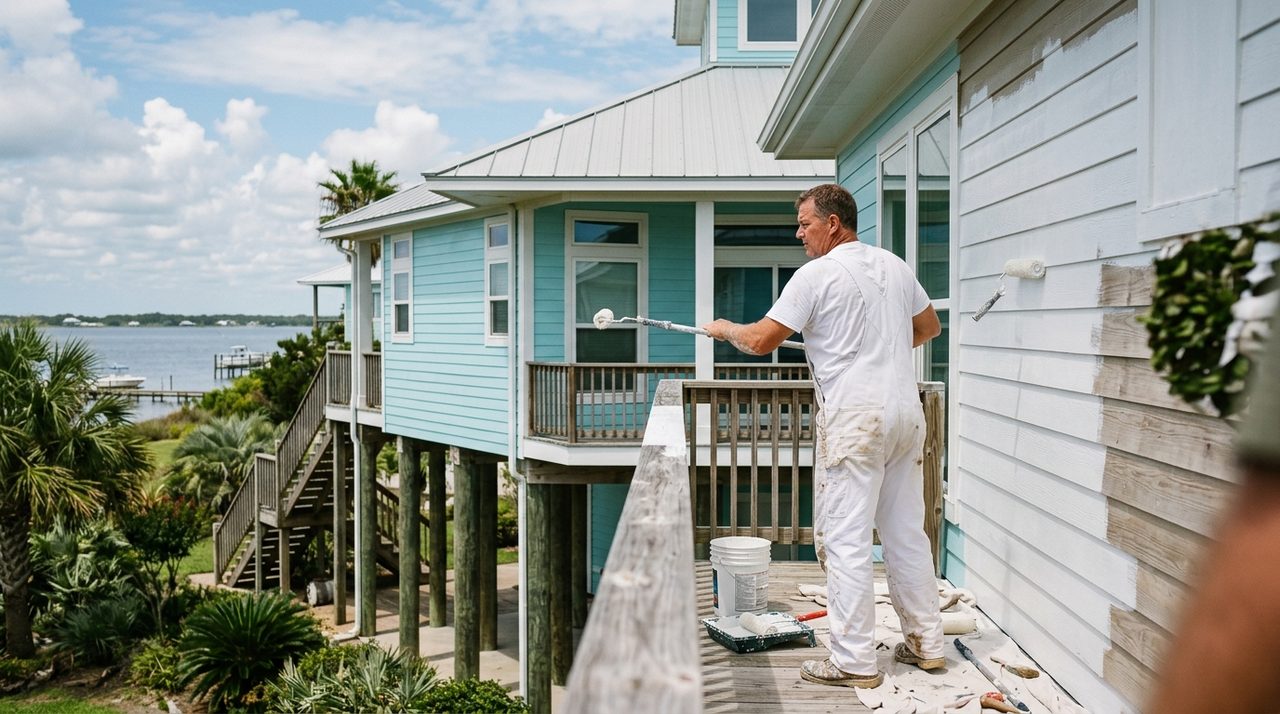
Baytown's position adjacent to the Houston Ship Channel and Galveston Bay drives sustained high humidity that is further loaded with airborne industrial particulates — a combination that accelerates paint film breakdown on the wood trim, fascia, and soffits common on 1950s–1970s ranch and bungalow homes near the older in-town neighborhoods. West- and south-facing elevations exposed to afternoon gulf breezes frequently see latex coatings blister and peel within 12–18 months when surface prep is inadequate, costing homeowners a premature repaint on a home already near the metro's median value of roughly $188,000.
What a good pro does
A qualified painter working in this environment should pressure-wash and let surfaces fully dry — typically 48–72 hours in Baytown's humidity — before applying a high-adhesion oil-based or 100% acrylic primer rated for coastal/industrial exposure; topcoats should be a premium exterior latex with a mildewcide additive. Ask for a written prep checklist before any contract is signed; skipping or rushing surface drying is the single most common reason repaints fail prematurely here.
Sources: Municipal permit office (see area profile)
Why it matters to you
A meaningful share of Baytown's in-town housing stock dates to the 1950s through early 1970s — well before the 1978 federal lead-paint ban — and many of these homes have never been fully stripped to bare substrate. Under the EPA Renovation, Repair, and Painting (RRP) Rule at 40 CFR 745, any firm that disturbs more than six square feet of painted surface in a pre-1978 home must hold EPA Lead-Safe Certified Firm status, and the individual doing the work must carry an EPA RRP Renovator certification; these requirements apply regardless of whether Baytown or Texas otherwise licenses painters as a trade.
What a good pro does
Before hiring any painter for scraping, sanding, or trim replacement on a Baytown home built before 1978, confirm the firm's EPA Lead-Safe Certified Firm number on the EPA's publicly searchable registry. A compliant contractor will set up poly containment, use HEPA vacuums, and dispose of paint chips and debris as regulated waste — costs for this level of prep push toward the upper end of the $3,500–$7,500 exterior repaint range and should be itemized in your estimate rather than buried or omitted.
Sources: EPA Lead Renovation, Repair and Painting (RRP) Rule, Texas Department of Licensing & Regulation
Why it matters to you
Baytown's 1990s–2010s tract subdivisions sit on the same expansive Beaumont/Houston Black clay that underlies the broader Harris County metro, and slab-on-grade foundations in these communities flex seasonally — shrinking during summer drought and swelling after Gulf rain events — telegraphing recurring hairline and step cracks through brick mortar joints, stucco accent banding, and interior drywall. Homeowners in Sterling Point, Independence Bend, and similar communities frequently repaint cracked areas only to see the same cracks reopen within one to two seasons because standard paint or rigid caulk cannot accommodate ongoing substrate movement.
What a good pro does
A painter addressing Baytown subdivision cracking should use an elastomeric bridging caulk rated for masonry movement — not standard paintable latex caulk — at all control joints and brick-mortar cracks before any topcoat goes on. Interior drywall cracks should be taped with fiberglass mesh and skim-coated before painting; simply filling with spackle creates a hard spot that re-cracks at the same line. If cracks are widening rather than static, that signals a foundation evaluation is needed first, which no amount of painting will solve.
Sources: International Residential Code (as adopted by City of Houston)
Why it matters to you
Baytown has no city-wide HOA, but newer subdivisions including Sterling Point (managed by Crest Management), The Park at Independence Bend, and Eastpoint Subdivision enforce recorded CC&Rs with Architectural Review Committees that require color submittals — and sometimes physical paint-chip samples — before any exterior painting may begin. Approval timelines in these communities commonly run two to six weeks, and starting work without ARC sign-off can result in mandatory repainting at the homeowner's expense. Because Baytown is an independent incorporated city, deed restriction enforcement here runs through the subdivision's own HOA board and applicable Texas Property Code §209 processes, not through any City of Houston channel.
What a good pro does
Before scheduling your painter, pull your subdivision's current approved color palette directly from your HOA management company — for Sterling Point, that is Crest Management — and submit the ARC application with paint brand, color name, and LRV (light reflectance value) as the committee requires. Build the approval window into your project calendar before booking a crew; a painter who is familiar with Baytown's specific HOA communities can help you pre-screen colors against the recorded palette to avoid a rejection round.
Sources: Local HOA / deed restrictions (see area profile), Municipal permit office (see area profile)
Hiring painters in Baytown? Baytown is an incorporated city east of Houston with a diverse housing stock ranging from 1950s-era non-HOA neighborhoods to modern master-planned HOA subdivisions. Homeowners should verify their specific subdivision's deed restrictions and HOA status, as governance varies block by block. Proximity to the Houston Ship Channel and coastal waterways means moisture management, corrosion resistance, and flood preparedness are critical home maintenance considerations.
Building era
Mixed: older in-town areas from 1950s–1970s; many HOA-managed subdivisions built 1990s–2010s.
Typical style
One- and two-story traditional brick or brick-veneer tract homes in newer subdivisions; ranch-style and bungalow homes in older non-HOA areas.
Foundations
Predominantly slab-on-grade in post-1970s subdivisions; some older homes may have pier-and-beam — not confirmed in research for specific neighborhoods.
Common systems
Older homes (1950s–1970s): original copper or galvanized plumbing, older electrical panels. Newer subdivisions (1990s–2010s): PEX or CPVC plumbing, 200-amp electrical panels, central HVAC with standard efficiency units.
What that means for repairs
Older non-HOA neighborhoods see plumbing re-pipes, panel upgrades, and foundation leveling. Newer HOA subdivisions focus on cosmetic updates and HVAC replacements as original systems age out of warranty.
Permit jurisdiction
City of Baytown Permitting — Baytown is an incorporated city with its own building codes and permit office, separate from Houston Permitting Center and Harris County Engineering.
HOA & deed restrictions
No single city-wide HOA. Multiple subdivision-level mandatory HOAs exist, including Sterling Point Community Association (managed by Crest Management), The Park at Independence Bend HOA, Eastpoint Subdivision HOA (219 homes), and Baytown Country Club Manor HOA. Older in-town areas may have no HOA or only informal civic clubs. Verify HOA status via Texas Property Code §209 management certificates for any specific address.
Historic districts
No City of Houston historic district designation confirmed. Baytown is an independent incorporated city and does not fall under HAHC jurisdiction.
Contractor note
Contractors must pull permits through the City of Baytown, not Houston or Harris County. HOA Architectural Review Committee approval may be required in subdivisions like Sterling Point or Independence Bend before exterior modifications begin.
FEMA flood zone
FEMA Zone X (low flood risk) per official NFHL API data at the queried point. However, Baytown is a large city and many areas near the San Jacinto River, Goose Creek, and Cedar Bayou carry higher flood designations. Property-specific FEMA lookups are strongly recommended.
Hurricane Harvey impact
Not confirmed from provided research with specific damage figures. Baytown's location near the San Jacinto River and coastal waterways made it vulnerable during Hurricane Harvey in 2017, and the broader region experienced significant flooding. Homeowners should check Harris County Flood Control District records for address-specific Harvey inundation data.
Heat & humidity load
Baytown's coastal proximity produces high humidity and salt-air exposure, accelerating corrosion on HVAC condensers, metal roofing components, and exterior hardware. Summer heat loads on older homes with original insulation and single-pane windows can strain HVAC systems significantly. Moisture intrusion and mold risk are elevated in older pier-and-beam structures.
Working with contractors here
Contractors in Baytown most commonly handle HVAC replacements, plumbing re-pipes, and foundation work — driven by the area's split between aging 1950s–1970s housing and maturing 1990s–2000s tract homes. Corrosion from the industrial and coastal environment creates above-average demand for exterior painting, metal component replacement, and roof maintenance. In HOA-managed subdivisions, contractors should confirm architectural committee requirements before beginning any visible exterior work, as communities like Sterling Point and Independence Bend enforce recorded CC&Rs. The City of Baytown's independent permitting process means contractors familiar only with Houston or unincorporated Harris County codes need to verify local requirements.
Local Tip
Always ask for a written estimate before work begins. Texas contractors are required to provide one on jobs over $1,000.
Baytown is an incorporated city east of Houston with a diverse housing stock ranging from 1950s-era non-HOA neighborhoods to modern master-planned HOA subdivisions. Homeowners should verify their specific subdivision's deed restrictions and HOA status, as governance varies block by block. Proximity to the Houston Ship Channel and coastal waterways means moisture management, corrosion resistance, and flood preparedness are critical home maintenance considerations.
Source: U.S. Census Bureau, ACS 5-Year 2023
Most of Baytown maps to FEMA Zone X (low mapped flood risk), but Houston's flash-flood reality means even low-risk blocks benefit from smart drainage and storm-hardened installs; risk climbs sharply on blocks nearest Galveston Bay and the Houston Ship Channel, where it varies parcel to parcel.
Source: FEMA National Flood Hazard Layer (NFHL). Flood zones vary by parcel — verify your individual FIRM panel.
Sources: Municipal permit office (see area profile)
Sources: EPA Lead Renovation, Repair and Painting (RRP) Rule
Sources: Local HOA / deed restrictions (see area profile)