Open Now
3919 Jeanetta St, Houston, TX 77063
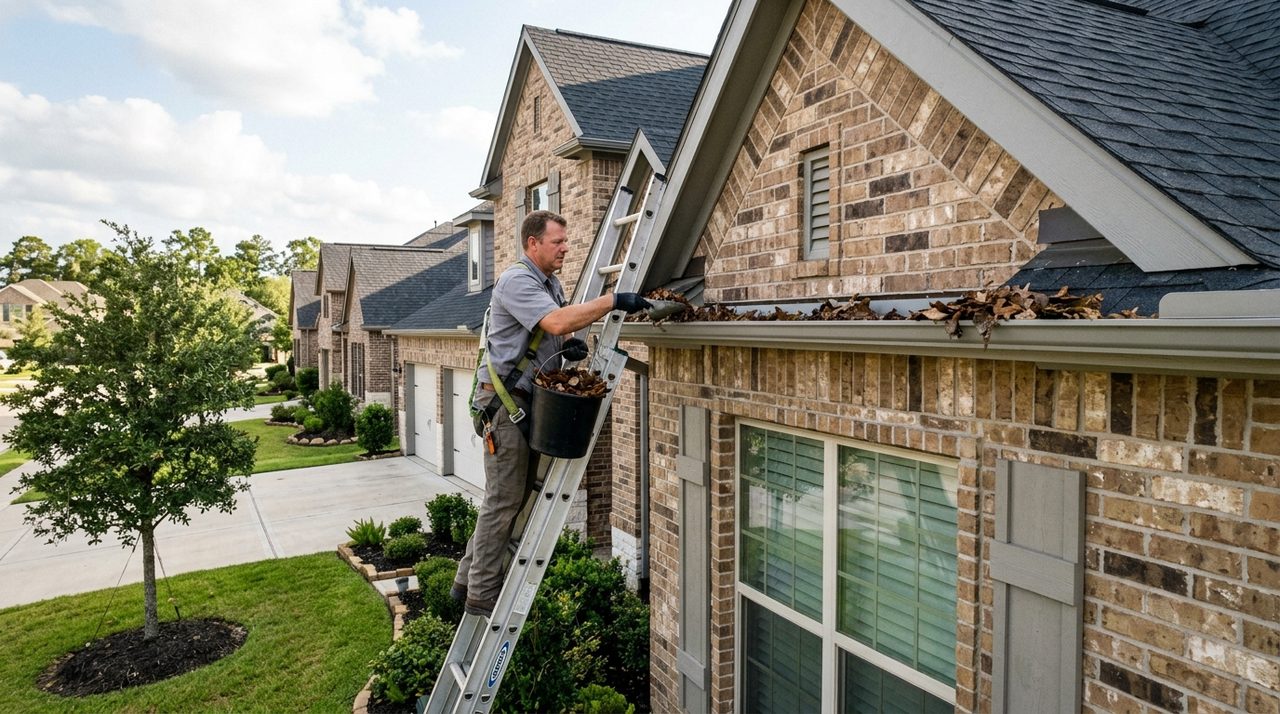
Briargrove's canopy of mature live oaks and established hardwoods shading its 1950s-era homes creates a near-constant debris load in gutters that likely predate modern K-style profiles — and when those gutters overflow against Houston's expansive clay soils, every extra gallon of water pooling at the foundation perimeter is a slab-movement risk. The Briargrove Homeowners Association actively enforces deed restrictions, meaning visible organic staining streaking down fascia boards or debris spilling over gutter edges can trigger a compliance notice before the next heavy rain rolls through. Understanding the specific pressure points for this neighborhood — aging gutter hardware, shaded north-facing roof planes, and an HOA with real enforcement authority — is what makes this page worth reading.
Ranked by verified Google rating × review volume × verification tier. How we rank →
Some highly-rated pros serve Briargrove from nearby and may not keep a Briargrove street address. Those are listed under "Also serving Briargrove" with their real city and distance, so you always know where each business is based.
3919 Jeanetta St, Houston, TX 77063
Highly-rated pros based nearby who cover Briargrove. Distance shown from the Briargrove area.
Serving Briargrove Based in Tanglewood · 2 mi away
Serving Briargrove Based in Westchase · 2.8 mi away
Serving Briargrove Based in Spring Branch · 4 mi away
Serving Briargrove Based in Spring Branch · 4 mi away
Serving Briargrove Based in Sharpstown · 4.2 mi away
Serving Briargrove Based in Meyerland · 4.5 mi away
Serving Briargrove Based in Brookhollow · 4.6 mi away
Serving Briargrove Based in Westchase · 4.6 mi away
Serving Briargrove Based in West University · 4.7 mi away
Why it matters to you
Briargrove homes built in the 1950s sit on Houston's Beaumont and Houston Black clay, which swells when wet and shrinks when dry — a cycle that drives differential slab movement over time. When gutters clog and spill water against the foundation perimeter rather than directing it to a downspout and away from the house, that repeated soil saturation directly worsens heave and settlement risk. Because many Briargrove homes blend original construction with modern updates, a shifting slab can stress newly renovated tile floors, door frames, and mechanical rough-ins simultaneously.
What a good pro does
A thorough gutter clean in Briargrove should include a downspout flush to confirm water is actually discharging away from the foundation — not just pooling at the elbow or splash block. Ask the crew to check downspout extensions and grade at each outlet; a competent operator will flag any discharge point that terminates within two feet of the foundation line. No City of Houston permit is required for routine cleaning or minor gutter repairs, but any downspout rerouting tied to a drainage improvement may warrant a conversation with the City of Houston Permitting Center.
Sources: Harris County Flood Control District, City of Houston Permitting Center
Why it matters to you
The Briargrove Homeowners Association, Inc. enforces deed restrictions on exterior appearance, and the consequences of deferred gutter cleaning are visible: organic tannin stains streaking down white or painted fascia boards, debris cascading over the gutter lip onto landscaping, and algae darkening soffit edges. With 1950s homes that have been significantly updated — often with fresh exterior paint and modern trim details — any staining stands out immediately against lighter finishes and draws HOA attention faster than it would on an older, weathered surface.
What a good pro does
Scheduling a gutter clean before each rainy season (typically ahead of May's peak storm months and again in late fall) gives homeowners a documented maintenance interval they can point to if an HOA dispute arises. A good crew will also wipe down the exterior face of the gutter channel and note any fascia board softness from prior overflow — soft fascia on a 1950s home may signal wood rot that needs repair before a violation notice escalates. Texas does not license gutter cleaners as a trade, so verify the operator carries general liability insurance before they access your roofline.
Sources: Local HOA / deed restrictions (see area profile)
Why it matters to you
Briargrove's mature tree canopy is one of its defining features, but it means many roof planes — particularly north- and east-facing sections — stay damp for extended periods after rain because direct sun never reaches them long enough to dry the gutter channel. Houston's average relative humidity exceeds 75% for most of the year, and that persistent moisture inside a shaded gutter breeds algae, mold, and lichen films that eventually form a hydrophobic mat. Once that mat forms, even a relatively light debris load will cause the gutter to pond water rather than drain, and the biological film itself becomes as obstructive as the leaves on top of it.
What a good pro does
Standard leaf-blowing alone will not remove a biological mat; the gutter channel needs hand-scooping followed by a pressurized flush to break up the film and confirm the outlet is clear. For Briargrove homes with heavy canopy shading, plan on cleaning at least twice annually — once in late spring after the live oak drop and pollen season, and once in the fall. Operators who apply a dilute algaecide rinse after the flush extend the interval before regrowth, which is worth asking about specifically for gutters on north-facing Briargrove roof sections.
Sources: Harris County Flood Control District
Why it matters to you
Original gutters on 1950s Briargrove homes — or those installed decades ago before the neighborhood's renovation wave — are often mounted with spike-and-ferrule hangers rather than modern hidden brackets. These spikes work their way out of the fascia over decades of thermal expansion, heavy debris loads, and the occasional ice event like Winter Storm Uri in February 2021, when debris-laden gutters in Harris County froze solid and pulled hangers outward. A gutter with even slight pitch misalignment from a loosened hanger will pool water at the low point, accelerating clog formation and biological buildup between cleaning visits.
What a good pro does
During a cleaning visit, a diligent crew should walk the roofline and note any sections where the gutter has visibly pulled away from the fascia, sagged, or lost pitch — problems common on homes of this era in Briargrove. Re-spiking or replacing spike-and-ferrule hangers with screw-in brackets is a minor repair that does not require a City of Houston permit and typically costs a modest add-on to the cleaning invoice. Estimated cleaning costs for a Briargrove single-story home run $100–$175; two-story homes with greater linear footage typically run $175–$275, with hardware repairs quoted separately.
Sources: City of Houston Permitting Center, International Residential Code (as adopted by City of Houston)
Hiring gutter cleaning in Briargrove? Briargrove is a well-established 1950s subdivision in west Houston with tree-lined streets, an active mandatory HOA, and a housing stock that increasingly blends original mid-century construction with significant modern updates. Homeowners here frequently navigate renovation projects that must satisfy both City of Houston permitting requirements and Briargrove HOA deed restrictions. The aging infrastructure—plumbing, electrical, and HVAC—drives steady demand for upgrades and whole-home remodels.
Building era
1950s, with ongoing renovations and some teardown-rebuilds in subsequent decades.
Typical style
Older homes with modern updates; specific architectural style breakdown (ranch, traditional, mid-century modern) not confirmed in available research.
Foundations
Not confirmed - check with local inspectors; both slab-on-grade and pier-and-beam are common in 1950s-era Houston subdivisions.
Common systems
Homes of this era typically feature galvanized or cast-iron drain lines, copper supply piping, older electrical panels (potentially 100-amp or fuse boxes in un-renovated homes), and central HVAC systems that may have been retrofitted or replaced multiple times.
What that means for repairs
Significant teardown and rebuild activity is common in established west Houston neighborhoods like Briargrove, alongside whole-home remodels that modernize kitchens, bathrooms, and mechanical systems while preserving lot footprints under HOA guidelines.
Permit jurisdiction
City of Houston Permitting Center (Briargrove is within Houston city limits).
HOA & deed restrictions
Mandatory HOA: Briargrove Homeowners Association, Inc. (also referenced as Briargrove Property Owners Association). The association actively enforces deed restrictions and community rules. Specific recorded deed restriction details not confirmed - check Harris County Clerk records.
Historic districts
No City of Houston historic district designation confirmed.
Contractor note
Contractors must obtain City of Houston permits for structural, electrical, plumbing, and mechanical work, and should verify project plans comply with Briargrove HOA deed restrictions before beginning exterior modifications or new construction.
FEMA flood zone
FEMA Zone X (low flood risk) - source: fema_nfhl. Briargrove is located in west Houston; specific bayou or creek proximity details were not confirmed in available research.
Hurricane Harvey impact
Specific Hurricane Harvey (2017) flooding data for Briargrove was not confirmed in available research. Recurring flood-prone streets or blocks could not be identified from provided sources. Homeowners should check Harris County Flood Control District records and individual property flood history for site-specific risk.
Heat & humidity load
Houston's extreme summer heat and humidity place heavy demands on HVAC systems in 1950s-era homes, which may have inadequate insulation, single-pane windows, or undersized ductwork. Contractors should expect high seasonal demand for AC repairs, attic insulation upgrades, and weatherization work. Foundation movement from clay soil expansion and contraction during summer drought cycles is also a recurring concern.
Working with contractors here
Briargrove's 1950s housing stock generates consistent demand for plumbing re-pipes (replacing galvanized and cast-iron lines), electrical panel upgrades, and HVAC system replacements. Whole-home remodels and teardown-rebuilds are common as homeowners invest in modernizing aging properties on desirable lots. Contractors should be prepared to coordinate with the Briargrove HOA on exterior work, including fencing, roofing materials, and driveway modifications. Foundation repair is a frequent need given the age of homes and Houston's expansive clay soils. Job scoping should account for potential asbestos or lead paint in original construction materials, requiring proper testing and abatement procedures.
Local Tip
Always ask for a written estimate before work begins. Texas contractors are required to provide one on jobs over $1,000.
Briargrove is a well-established 1950s subdivision in west Houston with tree-lined streets, an active mandatory HOA, and a housing stock that increasingly blends original mid-century construction with significant modern updates. Homeowners here frequently navigate renovation projects that must satisfy both City of Houston permitting requirements and Briargrove HOA deed restrictions. The aging infrastructure—plumbing, electrical, and HVAC—drives steady demand for upgrades and whole-home remodels.
Source: U.S. Census Bureau, ACS 5-Year 2023
Most of Briargrove maps to FEMA Zone X (low mapped flood risk), but Houston's flash-flood reality means even low-risk blocks benefit from smart drainage and storm-hardened installs.
Source: FEMA National Flood Hazard Layer (NFHL). Flood zones vary by parcel — verify your individual FIRM panel.
Even in Briargrove where mapped flood risk is lower, Harvey 2017 proved that clogged gutters during multi-day tropical rainfall contribute to soffit rot and fascia damage that compounds repair costs. Clear gutters and secure all gutter hangers before hurricane season so the system stays attached under the high-wind loading that accompanies Gulf storms. In-city Briargrove work falls under City of Houston floodplain and permitting rules.
In Briargrove, keep gutters clear through spring and fall severe seasons so that even a 3-inch-per-hour thunderstorm cell drains cleanly off the roof without backing up behind the gutter lip. A trained technician can also reattach any sections that show movement after high-wind events, preventing the progressive hanger failure that lets entire runs sag and separate. In-city Briargrove work falls under City of Houston floodplain and permitting rules.
In Briargrove, hard freezes are infrequent but severe when they arrive — Uri 2021 left gutters across the metro cracked at end caps and separated at seams because standing debris water froze and expanded. A pre-freeze cleaning in November removes that moisture reservoir and keeps the system intact through thaw and the spring severe-storm season that follows. With a median build year of 1978, the older building stock here is more exposed to hard-freeze damage than newer construction. Confirm the current FEMA panel for your Briargrove parcel — the area maps to Zone X, but adjacent lots can differ.
Sources: FEMA National Flood Hazard Layer (NFHL), Ready.gov -- Hurricanes, CenterPoint Energy -- Storm Center, City of Houston -- Emergency Preparedness, Ready.gov -- Winter Weather, Harris County Flood Control District
Houston-specific estimators to plan your project before you call a pro. All results are planning estimates — a licensed local pro confirms the details on site.
Disconnect & drain every outdoor hose bib
Remove hoses, drain the spigots, and cover each with an insulated faucet sock. Un-drained hose bibs are the #1 burst point in a Houston freeze.
Insulate exposed pipes in the attic & garage
Wrap any pipe in an unconditioned space (attic runs, garage walls) with foam sleeves. Houston homes rarely insulate these because they only matter a few nights a year — which is exactly why they burst.
Open cabinet doors & keep a pencil-width drip
On hard-freeze nights, open kitchen/bath cabinets so warm air reaches the pipes and let faucets on exterior walls drip to relieve pressure.
Protect the attic/garage water heater & its lines
An attic or garage tank sits in unconditioned space. Insulate the cold-inlet and hot-outlet lines and confirm the emergency drain pan is clear so a leak doesn't reach the ceiling.
This is a planning estimate only — actual requirements depend on an on-site assessment by a licensed Houston pro. If a pipe has already burst, shut off your main water supply and call a licensed Houston plumber immediately — freeze bursts flood fast.
Sources: City of Houston Permitting Center
Sources: FEMA National Flood Hazard Layer (NFHL)Harris County Flood Control District
Sources: Local HOA / deed restrictions (see area profile)