16023 E Freeway Service Rd Ste 62, Channelview, TX 77530
Best Foundation Repair in Highlands, TX
Highlands' predominantly 1960s–1980s slab-on-grade ranch homes sit atop Harris County's expansive Beaumont Black clay, and decades of wet-dry cycling along the San Jacinto River corridor have made foundation movement a routine reality for homeowners here — not an exception. Because Highlands is unincorporated, every foundation repair permit runs through the Harris County Engineering Department, not the City of Houston, a distinction that trips up contractors unfamiliar with the area. This page explains the specific soil, plumbing, and flood-saturation issues driving foundation damage in Highlands and what a properly scoped repair looks like.
Verified against Google Business data
Updated 2026
See the 10 Foundation Repair Serving Highlands 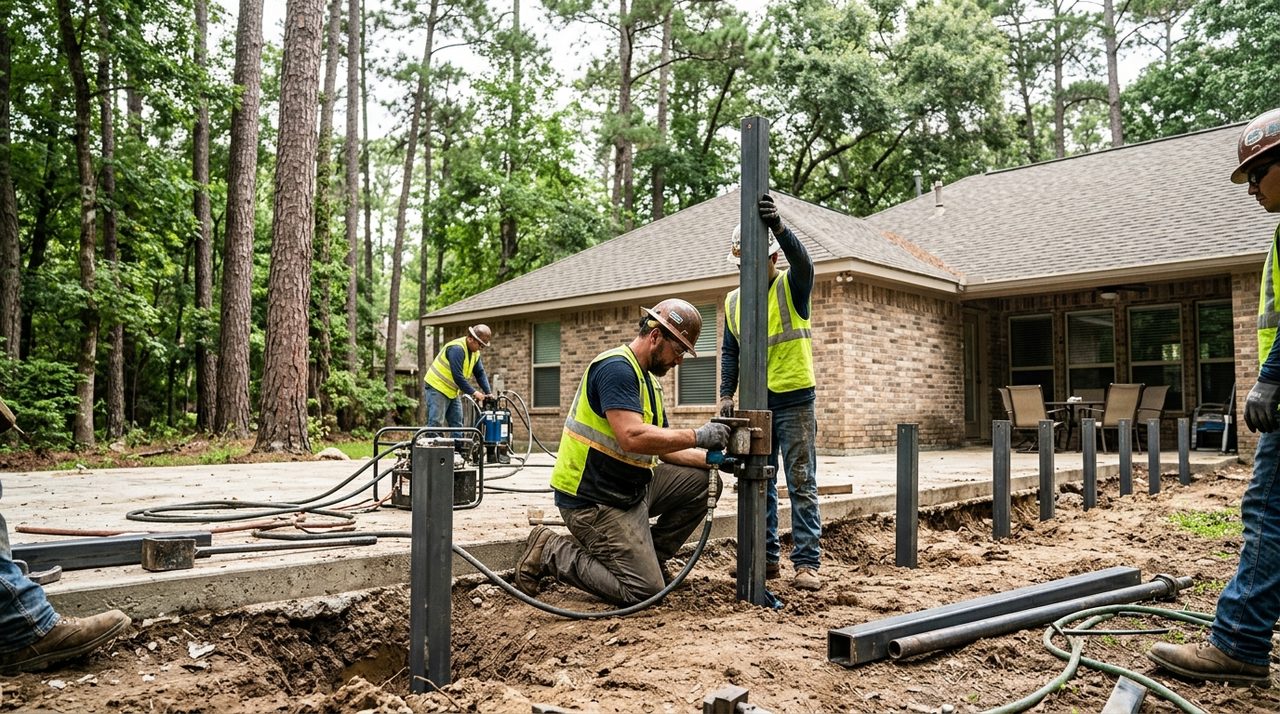
- Median home built
- 1978
- Median home value
- $191,400
- FEMA flood zone
- X (low)
- Typical cost (est.)
- $3,500–$25,000
- Most common local issue
- Perimeter void formation on 1960s–1980s slabs during summer drought cycles
Ranked by verified Google rating × review volume × verification tier. How we rank →
Some highly-rated pros serve Highlands from nearby and may not keep a Highlands street address. Those are listed under "Also serving Highlands" with their real city and distance, so you always know where each business is based.
Min rating:
10 resultsBased in Highlands
Closed
201 S Main St, Highlands, TX 77562
Also serving Highlands
Highly-rated pros based nearby who cover Highlands. Distance shown from the Highlands area.
Serving Highlands Based in Baytown · 2.3 mi away
Serving Highlands Based in Baytown · 2.5 mi away
Open Now
Serving Highlands Based in Baytown · 5.7 mi away
Serving Highlands Based in Crosby · 5.9 mi away
Closed
Serving Highlands Based in Baytown · 6 mi away
Closed
Serving Highlands Based in Baytown · 6.2 mi away
Closed
Serving Highlands Based in Crosby · 6.7 mi away
Serving Highlands Based in Galena Park · 6.8 mi away
Foundation Repair in Highlands: What You Should Know
Beaumont Clay Drying Out Under Aging Ranch Slabs Between Rain Events
Why it matters to you
Highlands' ranch-style homes built between 1960 and 1985 sit directly on Beaumont Black clay — one of the most expansive clay formations in North America. The area's hot summers routinely bake exposed perimeter soil, causing it to pull away from the slab edge and leave the foundation's outer beam unsupported. On a home with a median build year of 1978 and a modest lot canopy, this gap can open several inches wide before a homeowner notices cracking in brick veneer or door frames that won't close squarely.
What a good pro does
A qualified contractor will probe the perimeter with a moisture meter and a steel rod to map void locations before recommending any underpinning. For perimeter voids alone, polyurethane foam injection ($2,000–$5,000 estimated for a moderate job) or targeted mudjacking ($800–$2,500 per section, estimated) can restore support without the cost of full pier installation. Equally important: the contractor should advise on a soaker-hose schedule along the foundation perimeter so the clay stays at a consistent moisture level through future dry spells.
Sources: Harris County Flood Control District, International Residential Code (as adopted by City of Houston)
Cracked Under-Slab Cast-Iron Drain Lines Left Behind After Winter Storm Uri
Why it matters to you
Many Highlands homes built before 1985 still have original cast-iron under-slab drain lines, and Winter Storm Uri (February 2021) cracked or shifted those pipes in thousands of Harris County homes. In Highlands, where the typical home is nearly 50 years old, slow post-Uri leaks that were never fully remediated continue to saturate the clay directly beneath the slab — causing localized heave in one area and settlement in another. This pattern produces confusing crack patterns that look like soil shrinkage but are actually driven by a plumbing failure.
What a good pro does
Before signing any foundation repair contract, insist on a hydrostatic plumbing test ($250–$400 estimated) performed by a plumber licensed through the Texas State Board of Plumbing Examiners (TSBPE). If the test fails, the under-slab line must be repaired or re-routed first — otherwise pier work will address the symptom while the saturating leak continues. Harris County Engineering Department permits are required for both the plumbing and foundation repair scopes when work is performed in unincorporated Highlands.
Sources: Texas State Board of Plumbing Examiners, Municipal permit office (see area profile), International Residential Code (as adopted by City of Houston)
San Jacinto Floodplain Saturation Triggering Post-Storm Settlement on Lower Blocks
Why it matters to you
While most of Highlands maps to FEMA Zone X, parcel-level flood risk climbs sharply on lots nearest the San Jacinto River and Cedar Bayou, and even Zone X blocks experienced extended standing water after Hurricane Harvey (2017) and Hurricane Beryl (2024). Days of saturation reconsolidate the Beaumont clay, stripping its load-bearing capacity and causing settlement that may not fully manifest until weeks after the water recedes — long after homeowners have moved back in and assumed the structure is fine.
What a good pro does
Homeowners on lower-lying blocks should treat any significant storm event as a trigger for a professional foundation inspection, not just a visual walk-around. A good contractor will verify current floodplain status parcel-by-parcel through the Harris County Flood Control District (HCFCD) before scoping repairs, because a home that qualifies as a 'substantial improvement' under FEMA rules may need to meet elevation requirements as part of any structural repair — a requirement that affects both the repair method and the permit pathway through Harris County Engineering.
Sources: FEMA National Flood Hazard Layer (NFHL), Harris County Flood Control District, Municipal permit office (see area profile)
Navigating Harris County Permits — and Choosing the Right Pier Method — on a Pre-2000 Slab
Why it matters to you
Because Highlands is unincorporated Harris County, foundation repair permits are pulled through the Harris County Engineering Department, not the City of Houston's Development Services portal — a distinction that excludes contractors who exclusively work inside Beltway 8 and are unfamiliar with Harris County's separate inspection scheduling and code interpretations. Compounding this, many 1970s–1980s Highlands homes already received pressed concrete piling repairs in the 1990s, and those legacy pilings are now settling themselves, leaving homeowners facing a second repair decision with three competing methods on the table.
What a good pro does
Require every contractor bidding the job to specify pier type, count, and target depth in writing, and confirm they have pulled permits through Harris County Engineering — not the City of Houston — for comparable past projects. Steel push piers ($1,200–$1,800 per pier, 8–16 piers typical, estimated) reach deeper load-bearing strata than pressed pilings and are generally preferred over the legacy pressed-piling method for a Highlands ranch home where the first repair has already failed. Texas has no standalone state license for foundation repair contractors, so insurance verification — general liability and workers' comp — and confirmed permit status are your primary vetting tools.
Sources: Municipal permit office (see area profile), Texas Department of Licensing & Regulation, International Residential Code (as adopted by City of Houston)
Foundation Repair in Highlands: What You Should Know
Hiring foundation repair in Highlands? Highlands is an unincorporated community in northeast Harris County with a housing stock dominated by 1960s–1980s ranch-style homes on slab foundations. Proximity to the San Jacinto River and Cedar Bayou creates significant flood risk for many parcels despite some areas mapping outside the 100-year floodplain. Homeowners here frequently need foundation work, aging HVAC replacement, and flood-related repairs, with permits handled through Harris County rather than the City of Houston.
- Housing era
- Primarily 1960s–1980s, with scattered pre-1960 homes and post-2000 infill
- Foundation
- Predominantly concrete slab-on-grade
- Flood zone
- FEMA Zone X (low flood risk) at the sampled point per official NFHL API
- Permits
- Harris County Engineering Department (unincorporated Harris County)
Housing stock & systems
Building era
Primarily 1960s–1980s, with scattered pre-1960 homes and post-2000 infill.
Typical style
One-story ranch and traditional brick homes with low-pitch roofs and attached carports or garages; some manufactured/mobile homes on larger rural lots.
Foundations
Predominantly concrete slab-on-grade; pier-and-beam found on older pre-1960 structures and homes in low-lying areas near bayous and the San Jacinto River.
Common systems
Original or first-generation replacement central HVAC systems; copper or galvanized steel plumbing in older homes transitioning to PEX in renovations; 100–150 amp electrical panels common in pre-1980s homes, often in need of upgrade.
What that means for repairs
Kitchen and bathroom updates are common as original finishes from the 1960s–1970s age out. Flood damage remediation drives significant gut-renovation and elevation work in lower-lying parcels. Electrical panel upgrades are frequently triggered by insurance requirements or HVAC replacements.
Permits & restrictions
Permit jurisdiction
Harris County Engineering Department (unincorporated Harris County).
HOA & deed restrictions
No single area-wide mandatory HOA exists for Highlands. HOA presence is subdivision-specific; many properties have no HOA but may have recorded deed restrictions at the plat or lot level. Verify HOA status on a parcel-by-parcel basis through Harris County Clerk records.
Historic districts
No City of Houston historic district designation confirmed. Highlands is unincorporated Harris County with no known local historic protections.
Contractor note
Highlands is unincorporated, so Harris County building codes and permitting apply rather than City of Houston rules. Contractors should verify floodplain status for each parcel through HCFCD, as substantial improvement thresholds may trigger elevation or flood-proofing requirements even if the sampled point shows Zone X.
Flood & weather
FEMA flood zone
FEMA Zone X (low flood risk) at the sampled point per official NFHL API. However, the Highlands area includes significant 100-year and 500-year floodplain zones near the San Jacinto River and Cedar Bayou channels. Flood risk varies dramatically by parcel; individual FEMA determinations should be obtained for any specific property.
Hurricane Harvey impact
East Harris County near the San Jacinto River experienced significant flooding during Hurricane Harvey in 2017. While public summaries do not explicitly isolate Highlands by name with street-level detail, the community's proximity to the San Jacinto River and Cedar Bayou strongly suggests moderate to significant impact in low-lying portions. Not confirmed at the street level — check Harris County Flood Control District records and individual property disclosure histories.
Heat & humidity load
Aging HVAC systems in 1960s–1980s homes struggle with Houston's extreme summer heat and humidity, driving high service call volume from May through October. Poor attic ventilation and original single-pane windows in unrenovated homes increase cooling loads. Humidity-related issues including mold, wood rot, and condensation in ductwork are common given proximity to waterways.
Working with contractors here
Contractors in Highlands most commonly handle HVAC replacement, re-roofing, plumbing re-pipes, and foundation repair on aging 1960s–1980s slab homes. Flood damage restoration and mold remediation are recurring specialties given the area's proximity to the San Jacinto River and low-lying bayou corridors. Many homes still have original galvanized plumbing and undersized electrical panels, so whole-house re-pipes and panel upgrades are frequent companion jobs during renovations. Scoping should account for the mix of slab and pier-and-beam foundations, as access and repair methods differ significantly. Because the area is unincorporated, contractors must navigate Harris County permitting processes, which differ from City of Houston requirements in inspection scheduling and code interpretations.
Local Tip
Always ask for a written estimate before work begins. Texas contractors are required to provide one on jobs over $1,000.
About Highlands
Highlands is an unincorporated community in northeast Harris County with a housing stock dominated by 1960s–1980s ranch-style homes on slab foundations. Proximity to the San Jacinto River and Cedar Bayou creates significant flood risk for many parcels despite some areas mapping outside the 100-year floodplain. Homeowners here frequently need foundation work, aging HVAC replacement, and flood-related repairs, with permits handled through Harris County rather than the City of Houston.
- Median year built
- 1978
- Median home value
- $191,400
- Owner-occupied
- 75.6%
- Population
- 7,339
- Housing units
- 2,970
- Median income
- $54,524
Source: U.S. Census Bureau, ACS 5-Year 2023
Flood & storm risk
FEMA Zone XLow flood riskMost of Highlands maps to FEMA Zone X (low mapped flood risk), but Houston's flash-flood reality means even low-risk blocks benefit from smart drainage and storm-hardened installs; risk climbs sharply on blocks nearest the San Jacinto River, where it varies parcel to parcel.
Source: FEMA National Flood Hazard Layer (NFHL). Flood zones vary by parcel — verify your individual FIRM panel.
Houston Storm Readiness in Highlands
Hurricane & flooding
Wind-driven rain during a hurricane can saturate soil on the windward side of your home while the leeward side stays dry, creating differential moisture conditions beneath your slab that show up as sticking doors weeks later in Highlands, TX. Schedule a Zip-Level elevation reading after any named storm passes so a foundation professional can distinguish normal seasonal movement from storm-induced settlement requiring pier work. Because Highlands drains toward the San Jacinto River, block-level runoff can differ sharply from the mapped zone.
Severe storms & hail
Hail itself does not crack a concrete foundation, but the insurance repair process — contractors dropping equipment, vibrating compactors near the structure — can disturb marginally stable piers in Highlands, TX. Coordinate a brief foundation check with a TDLR-licensed contractor before and after any major roof or exterior repair project that involves heavy equipment operating near your home. As a Harris County community, Highlands may follow county rather than City of Houston storm rebuild rules.
Ice storms & freezes
In Highlands, TX, where mapped flood risk is low, the primary post-freeze foundation threat is not surface water but slab-leak-driven soil saturation — Uri 2021 caused widespread pipe failures that fed water silently under slabs for days before homeowners noticed. After any hard freeze, have a plumber pressure-test your lines first, then schedule a foundation elevation check if any under-slab leak is confirmed. With a median build year of 1978, the older building stock here is more exposed to hard-freeze damage than newer construction. Because Highlands drains toward the San Jacinto River, block-level runoff can differ sharply from the mapped zone.
Sources: FEMA National Flood Hazard Layer (NFHL), Ready.gov -- Hurricanes, CenterPoint Energy -- Storm Center, City of Houston -- Emergency Preparedness, Ready.gov -- Winter Weather, Harris County Flood Control District
Free Highlands Tools & Calculators
Houston-specific estimators to plan your project before you call a pro. All results are planning estimates — a licensed local pro confirms the details on site.
Houston Soil & Tree Proximity Risk Calculator
Open full tool & FAQ →Grouped by mature root aggression & water demand.
Trunk center to the nearest exterior wall.
Moderate risk
The root zone likely reaches your foundation's soil during Houston's dry summers, when clay shrinks most. Watch for sticking doors and diagonal cracks, keep soil moisture even with a soaker hose during drought, and have a foundation pro evaluate if you see any movement.
Find a Houston foundation pro →This is a planning estimate only — actual requirements depend on an on-site assessment by a licensed Houston pro. Guidance is based on general species root behavior in expansive clay, not a soil test.
Houston Freeze Prep & Pipe Insulation Checklist
Open full tool & FAQ →Your freeze checklist — 4 tasks
- 1
Disconnect & drain every outdoor hose bib
Remove hoses, drain the spigots, and cover each with an insulated faucet sock. Un-drained hose bibs are the #1 burst point in a Houston freeze.
- 2
Insulate exposed pipes in the attic & garage
Wrap any pipe in an unconditioned space (attic runs, garage walls) with foam sleeves. Houston homes rarely insulate these because they only matter a few nights a year — which is exactly why they burst.
- 3
Open cabinet doors & keep a pencil-width drip
On hard-freeze nights, open kitchen/bath cabinets so warm air reaches the pipes and let faucets on exterior walls drip to relieve pressure.
- 4
Protect the attic/garage water heater & its lines
An attic or garage tank sits in unconditioned space. Insulate the cold-inlet and hot-outlet lines and confirm the emergency drain pan is clear so a leak doesn't reach the ceiling.
This is a planning estimate only — actual requirements depend on an on-site assessment by a licensed Houston pro. If a pipe has already burst, shut off your main water supply and call a licensed Houston plumber immediately — freeze bursts flood fast.
Frequently Asked Questions
Do I need a permit from Harris County for foundation pier work on my Highlands ranch home, and how is that process different from City of Houston permitting?
Because Highlands is unincorporated, your foundation repair permit goes through the Harris County Engineering Department — not the City of Houston Permitting Center. Harris County has its own inspection scheduling and code-interpretation process, and contractors who primarily work inside Houston's city limits are sometimes unfamiliar with county workflows, which can delay your project. Before signing a contract, ask the contractor to confirm they have pulled permits in unincorporated Harris County before and verify permit status directly with the county office rather than taking the contractor's word.
Sources: Municipal permit office (see area profile)
My Highlands home was built in 1971 and still has original cast-iron drain lines. Should I get a plumbing test before a foundation contractor starts installing piers?
Yes — for homes in Highlands built before roughly 1985, cast-iron under-slab drain lines are common and can degrade or crack over decades, especially after Winter Storm Uri freeze-burst events. A hydrostatic plumbing test (estimated at $250–$400) performed by a TSBPE-licensed plumber can confirm whether a slow leak is saturating the clay under your slab and causing the settlement, meaning pier installation alone won't stop the movement. Foundation contractors in Texas are not plumbing licensees, so insist on that test as a separate step before any structural repair contract is finalized.
My block in Highlands maps to FEMA Zone X, so does flooding near the San Jacinto River area still affect my foundation?
FEMA Zone X means your parcel is outside the mapped 100-year floodplain, but flood risk in Highlands climbs sharply on blocks closest to the San Jacinto River and Cedar Bayou, and official flood maps don't always capture the parcel-level variation in this corridor. Even without standing water reaching your slab, prolonged drainage saturation after a heavy storm event can temporarily soften the clay bearing layer and accelerate settlement on a slab that was already stressed by prior drought cycles. Before a foundation contractor finalizes their scope, check your specific parcel's drainage and elevation history through HCFCD flood data rather than relying solely on the FEMA zone designation.
Sources: FEMA National Flood Hazard Layer (NFHL)Harris County Flood Control District
When is the worst season to discover foundation cracks in Highlands, and does timing affect when I should schedule a repair?
In Highlands, the most alarming-looking cracks typically appear in late summer and early fall after the clay has dried and contracted through Houston's drought season — doors stick, brick mortar gaps open, and diagonal drywall cracks widen. Paradoxically, getting an evaluation during peak dry conditions gives you and the contractor the clearest picture of maximum differential movement, making it a good time to document and bid the work. Actual pier installation can be scheduled any season, but avoid signing a contract right after a heavy rain event when temporarily swollen clay can mask how much settlement has actually occurred.
Does Highlands have HOA restrictions I need to worry about before a foundation company trenches around my perimeter?
Highlands has no single area-wide mandatory HOA, but deed restrictions can exist at the subdivision or individual plat level, so your property may have recorded restrictions even without an active HOA association enforcing them. Check your deed and run a title search through Harris County Clerk records to confirm whether any architectural or landscaping restrictions apply to exterior excavation work before the contractor begins. If no recorded restrictions exist on your parcel, Harris County Engineering Department permitting is the only approval hurdle you face.
Sources: Local HOA / deed restrictions (see area profile)
A contractor quoted me pressed concrete pilings and another quoted steel push piers for my 1978 Highlands slab — why are the prices and methods so different, and which is typical here?
Pressed concrete pilings were the dominant Houston-area method from the 1970s through the 1990s and remain in active use; they typically run $3,500–$9,000 for an average ranch slab depending on piling count, making them the lower upfront cost option. Steel push piers reach deeper load-bearing soil and are generally considered more reliable on Houston's deep clay profiles but run $1,200–$1,800 per pier installed, often totaling $10,000–$25,000 for a typical job — these are estimates, and quotes vary widely. For a 1978 Highlands home where original pressed pilings may already exist and be partially failing, ask each contractor to specify the target depth, the soil layer they are bearing on, and whether they recommend a hydrostatic plumbing test before installation; a written scope with pier count, depth, and warranty terms lets you compare proposals on equal footing.