Closed
Serving Oak Forest Based in Lazybrook / Timbergrove · 1.3 mi away
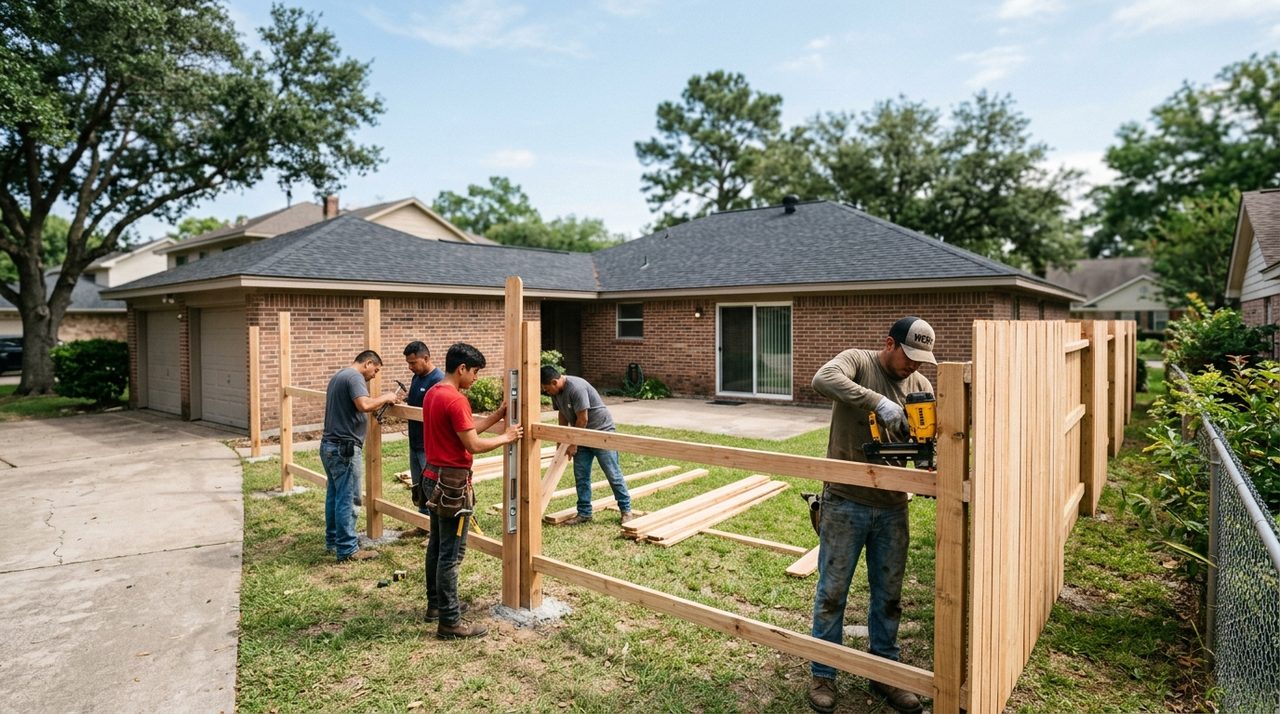
Oak Forest's 1940s–1960s ranch homes sit on Houston's native Beaumont clay, meaning fence posts that look solid in spring can be visibly leaning by late summer — a cycle that repeats with every wet-dry season. Add the City of Houston permit requirements, section-by-section deed restrictions across Oak Forest's 18 voluntary-association blocks, and the wind damage left behind by events like the May 2024 derecho, and a fence replacement here involves more moving parts than most homeowners expect. This page breaks down exactly what those local realities mean for your project budget and decisions.
Ranked by verified Google rating × review volume × verification tier. How we rank →
Some highly-rated pros serve Oak Forest from nearby and may not keep a Oak Forest street address. Those are listed under "Also serving Oak Forest" with their real city and distance, so you always know where each business is based.
Highly-rated pros based nearby who cover Oak Forest. Distance shown from the Oak Forest area.
Serving Oak Forest Based in Lazybrook / Timbergrove · 1.3 mi away
Serving Oak Forest Based in Lazybrook / Timbergrove · 1.6 mi away
Serving Oak Forest Based in Acres Homes · 2.4 mi away
Serving Oak Forest Based in Brookhollow · 2.8 mi away
Serving Oak Forest Based in Brookhollow · 2.8 mi away
Serving Oak Forest Based in Brookhollow · 2.8 mi away
Serving Oak Forest Based in The Heights · 3.3 mi away
Serving Oak Forest Based in Spring Branch · 3.5 mi away
Serving Oak Forest Based in Garden Oaks · 3.8 mi away
Serving Oak Forest Based in Lazybrook / Timbergrove · 4.4 mi away
Why it matters to you
Oak Forest sits on native Beaumont/Houston Black clay, which shrinks noticeably during the long dry stretches common to Houston summers and then swells back when fall rains arrive. That seasonal movement works against standard concrete collars around fence posts, progressively tilting or cracking footings on fence lines installed at typical Houston depths of 18–24 inches — a cycle that accelerates on the aging original fence lines still present on many mid-century lots throughout the neighborhood.
What a good pro does
A knowledgeable installer in Oak Forest should set posts a minimum of 30 inches deep into undisturbed clay, use tube-form concrete footings that extend below the most active shrink-swell zone, and — for corner and gate posts bearing extra tension — consider over-sizing the post diameter. Asking for a post depth confirmation before the crew starts digging is a reasonable homeowner request on any Oak Forest job.
Sources: International Residential Code (as adopted by City of Houston)
Why it matters to you
Unlike a master-planned suburb with a single set of HOA rules, Oak Forest has recorded deed restrictions that differ block by block across 18 separate sections — and the Oak Forest Homeowners Association is entirely voluntary, so there is no single architectural review committee enforcing them. That means your neighbor's fence height or material choice may be governed by different recorded language than your own lot, and relying on what you see around you to judge what is allowed is a real risk, especially for new-construction infill lots where deed restrictions may have been re-recorded.
What a good pro does
Before committing to a fence material or height, pull the recorded deed restrictions for your specific Oak Forest section through the Harris County Clerk's office — a reputable fence contractor working regularly in the neighborhood will already know to ask which section you are in and should be able to flag any height or material language that applies. City of Houston permit rules apply on top of any deed restriction requirements, so both need to be cleared before work starts.
Sources: City of Houston Permitting Center, Local HOA / deed restrictions (see area profile)
Why it matters to you
Oak Forest is fully within Houston city limits, which means the City of Houston Permitting Center — not a suburban municipal office — governs fence work here. Texas does not license fence contractors at the state level, so essentially anyone can legally bid the job, but the City of Houston requires a permit for fences exceeding 6 feet in height, and unpermitted work can result in a stop-work order or forced removal on a property with Oak Forest's high owner-occupancy rate (71 percent per the ACS) and visible street presence.
What a good pro does
If your project involves a fence over 6 feet — common when homeowners add a foot of lattice or trellis above a standard privacy board — confirm the permit requirement with the City of Houston Permitting Center before work begins. A contractor who dismisses the permit question outright on a taller fence is a red flag in this jurisdiction; the cost of the permit is minor compared to a forced teardown on a $543,000 median-value Oak Forest home.
Sources: City of Houston Permitting Center, Municipal permit office (see area profile)
Why it matters to you
The May 2024 derecho pushed gusts exceeding 100 mph through parts of northwest Houston, and Oak Forest — positioned in the NW quadrant of the metro — saw widespread fence panel failures across original board-on-board sections that had no wind-relief gaps and posts set at shallow depths consistent with mid-century installation practice. Solid 6-foot privacy panels act like sails in high-wind events, and older posts embedded in cracked clay footings offer little resistance when the load arrives.
What a good pro does
When replacing storm-damaged fence sections, a wind-conscious installation includes posts set at adequate depth with proper concrete collars, and either a board-on-board layout with a small gap between pickets to reduce wind load or structural-grade post sizes on corner and gate anchor points. Homeowners with TWIA or private wind-coverage policies should document existing damage with photos before removal begins, as full storm-replacement estimates in the Houston metro for an average suburban lot have typically run $3,000–$8,000 depending on material and linear footage.
Sources: Texas Windstorm Insurance Association (TWIA), International Residential Code (as adopted by City of Houston)
Hiring fence builders in Oak Forest? Oak Forest is a large, deed-restricted neighborhood of 1940s–1960s homes experiencing significant renovation and new construction activity. Homeowners here navigate a mix of aging original systems and modern rebuilds, with no mandatory HOA but recorded deed restrictions that vary by section. Contractors should expect a wide range of project scopes, from updating original mid-century infrastructure to full teardown-and-rebuild jobs.
Building era
1940s–1960s, with ongoing new construction infill.
Typical style
Mid-century ranch-style homes predominate among original stock; newer construction varies in style. Specific architectural breakdown not confirmed in available sources.
Foundations
Not confirmed from available sources. Likely a mix of slab-on-grade and pier-and-beam consistent with the era, but homeowners should verify on a per-property basis.
Common systems
Original homes may have galvanized or cast-iron drain plumbing, older electrical panels (60–100 amp), and window-unit or early central HVAC systems. Updated and rebuilt homes typically feature modern systems.
What that means for repairs
Oak Forest sees heavy renovation activity driven by the desirability of the location and the aging of original 1950s–1960s housing stock. Common projects include full kitchen and bathroom remodels, re-plumbing from galvanized to copper or PEX, electrical panel upgrades, and complete teardown-rebuilds on original lots.
Permit jurisdiction
City of Houston Permitting Center (Oak Forest is within Houston city limits).
HOA & deed restrictions
No mandatory HOA. The Oak Forest Homeowners Association (OFHA) is a voluntary, non-mandatory civic association covering 18 sections. Recorded deed restrictions exist across most sections and vary by block/section.
Historic districts
No City of Houston historic district designation confirmed. HAHC Certificates of Appropriateness are not known to be required.
Contractor note
Contractors should review the applicable section's recorded deed restrictions before beginning exterior work or additions, as restrictions vary across Oak Forest's 18 sections and may govern setbacks, outbuildings, and use. No HAHC review is required, but City of Houston permitting rules apply in full.
FEMA flood zone
FEMA Zone X (low flood risk) per official NFHL data. However, buyers and contractors are advised to verify flood zone status on a per-property basis, especially for lots near bayous or drainage channels.
Hurricane Harvey impact
Specific Harvey 2017 flood impact data for Oak Forest was not confirmed in available sources. Neighborhood guides advise verifying flood zone status near bayous, suggesting some pockets may carry elevated risk, but widespread significant flooding was not documented in the research reviewed.
Heat & humidity load
Original 1950s–1960s homes with aging HVAC systems are particularly vulnerable during Houston's extreme summer heat. Contractors should expect seasonal demand spikes for AC repair, attic insulation upgrades, and weatherization projects. Older pier-and-beam foundations may also see moisture-related issues during humid summer months.
Working with contractors here
Oak Forest's mid-century housing stock drives steady demand for whole-house updates including re-plumbing, electrical upgrades, and HVAC replacement. The neighborhood's popularity and rising property values fuel frequent teardown-rebuild projects, requiring contractors to navigate City of Houston permitting for new construction. Renovation jobs on original homes often uncover outdated wiring, galvanized plumbing, and inadequate insulation, so thorough pre-project inspections are essential for accurate scoping. Contractors should also be aware that deed restrictions vary across Oak Forest's 18 sections, potentially affecting fence heights, accessory structures, and exterior modifications. The voluntary nature of the HOA means enforcement of deed restrictions may be driven by individual neighbors or section-level efforts rather than a centralized authority.
Local Tip
Always ask for a written estimate before work begins. Texas contractors are required to provide one on jobs over $1,000.
Oak Forest is a large, deed-restricted neighborhood of 1940s–1960s homes experiencing significant renovation and new construction activity. Homeowners here navigate a mix of aging original systems and modern rebuilds, with no mandatory HOA but recorded deed restrictions that vary by section. Contractors should expect a wide range of project scopes, from updating original mid-century infrastructure to full teardown-and-rebuild jobs.
Source: U.S. Census Bureau, ACS 5-Year 2023
Most of Oak Forest maps to FEMA Zone X (low mapped flood risk), but Houston's flash-flood reality means even low-risk blocks benefit from smart drainage and storm-hardened installs.
Source: FEMA National Flood Hazard Layer (NFHL). Flood zones vary by parcel — verify your individual FIRM panel.
Sources: City of Houston Permitting CenterLocal HOA / deed restrictions (see area profile)
Sources: Local HOA / deed restrictions (see area profile)
Sources: Municipal permit office (see area profile)
Sources: FEMA National Flood Hazard Layer (NFHL)Harris County Flood Control District
Sources: City of Houston Permitting Center